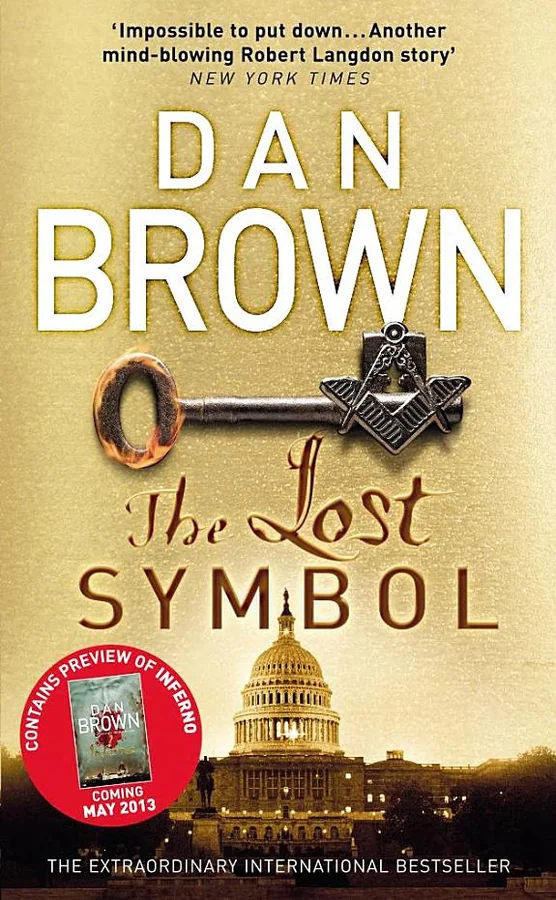
The Lost Symbol
 75
75

The Lost Symbol
Dan Brown’s "The Lost Symbol" operates on a familiar engine: Robert Langdon, the peripatetic symbologist, finds himself ensnared in a labyrinth of ancient secrets and modern threats. The novel's strength lies in its meticulous layering of Masonic lore and Washington D.C.'s architectural symbolism, making the city itself a character. Brown excels at presenting complex historical and esoteric concepts in an accessible, albeit simplified, manner. However, the narrative occasionally falters under the weight of its own intricate plotting, with certain twists feeling less like organic developments and more like necessities for plot progression. The climax, while aiming for a grand revelation concerning the "Lost Symbol," may leave some readers desiring a more profound esoteric payoff than the one ultimately delivered. Nevertheless, for its sheer inventiveness in blending real-world historical curiosities with fictional urgency, the book offers an engaging, if occasionally surface-level, exploration of hidden knowledge.
📝 Description
75
Dan Brown's 2013 novel, The Lost Symbol, places Robert Langdon in Washington D.C. facing a mystery.
Robert Langdon, the symbologist from Harvard, finds himself embroiled in a complex puzzle in Washington D.C. following his arrival at the U.S. Capitol Building. The story quickly escalates into a race against time, connecting ancient symbols with a powerful secret society. Brown weaves a narrative that pulls the reader through historical landmarks and architectural clues.
The novel appeals to those who appreciate thrillers that blend historical elements with conspiracy theories and symbolic interpretations. Its focus on Freemasonry, hidden meanings in art and architecture, and American history makes it particularly engaging for readers interested in these subjects. The plot uses these elements to build suspense and drive the investigation forward.
This novel situates itself within a popular fictional engagement with Freemasonry and esoteric traditions, particularly as they relate to the founding of the United States. It draws on concepts like Gnosticism and the symbolic language of Masonic rituals, presenting them as keys to unlocking a hidden secret. The narrative frames these historical and symbolic elements as part of a contemporary chase, influenced by figures and beliefs associated with American founding myths.
💡 Why Read This Book?
• Understand the symbolic significance of Washington D.C.'s architecture, particularly as it relates to Masonic traditions and the city's founding, offering a unique lens on American history. • Explore the fictionalized interpretation of esoteric societies and their purported pursuit of ancient knowledge, providing a digestible entry point into discussions of hidden wisdom. • Experience a rapid-fire narrative that connects historical figures like George Washington and Albert Pike to a contemporary quest for a powerful, symbolic secret.
⭐ Reader Reviews
Honest opinions from readers who have explored this book.
❓ Frequently Asked Questions
What is the significance of the "Lost Symbol" in Dan Brown's novel?
In "The Lost Symbol," the titular "Lost Symbol" refers to a powerful, ancient secret related to human potential and esoteric knowledge, believed to be hidden by the Freemasons and sought by the antagonist Mal'akh.
Which real-world locations are central to "The Lost Symbol"?
The novel prominently features Washington D.C., with key scenes set in the U.S. Capitol Building, the Washington Monument, the Library of Congress, and various Masonic lodges.
Who is the primary antagonist in "The Lost Symbol"?
The main antagonist is a mysterious, tattooed man known as Mal'akh, who is driven by a twisted quest for power and seeks to unlock the secrets of the "Lost Symbol".
What role does Freemasonry play in the book?
Freemasonry is central to the plot, with the book exploring its rituals, symbols, and historical connection to the founding of Washington D.C. and the search for the "Lost Symbol".
Is "The Lost Symbol" based on true events or historical conspiracies?
While inspired by historical elements, Masonic traditions, and esoteric symbolism, "The Lost Symbol" is a work of fiction. The specific plot and characters are invented by Dan Brown.
What esoteric concepts are explored in "The Lost Symbol"?
The book touches upon Gnostic beliefs, Hermetic principles, and the power of ancient symbols, framing them within a fictional search for ultimate human understanding and spiritual enlightenment.
🔮 Key Themes & Symbolism
Masonic Symbolism and Ritual
The narrative is steeped in the symbolism and history of Freemasonry. It explores iconic Masonic symbols like the Square and Compasses, the All-Seeing Eye, and the Double Eagle, linking them to the founding of Washington D.C. and the pursuit of esoteric knowledge. The book depicts fictionalized Masonic rituals and secret initiations, framing them as keys to unlocking ancient wisdom and power, particularly concerning the "Lost Symbol" itself.
The Power of Symbols
Central to the plot is the idea that symbols possess immense power, capable of shaping perception, revealing hidden truths, and influencing human potential. Robert Langdon's expertise lies in deciphering these symbols, which are presented as a universal language connecting ancient mystics to modern seekers. The novel suggests that understanding these symbols is crucial to accessing a deeper level of consciousness and unlocking humanity's latent abilities.
Ancient Wisdom and Modern Quest
The book posits the existence of a profound, ancient wisdom passed down through secretive traditions, particularly Freemasonry. The narrative follows a desperate race to find this wisdom, symbolized by the "Lost Symbol," which is believed to hold the secret to unlocking human potential. This quest bridges historical esoteric practices with a contemporary, high-stakes thriller, suggesting that ancient secrets remain relevant and powerful today.
Gnostic and Hermetic Influences
While primarily focused on Freemasonry, "The Lost Symbol" incorporates elements of Gnostic and Hermetic philosophy. The concept of achieving spiritual enlightenment through hidden knowledge and the pursuit of gnosis (direct spiritual knowledge) echoes Gnostic traditions. Hermetic principles, such as "As Above, So Below," are implicitly referenced in the interconnectedness of symbols, the macrocosm (universe), and the microcosm (human being).
💬 Memorable Quotes
Direct passages from the work, attributed to the author.
“Symbols are the language of power.”
— This captures the core theme that symbols are not mere representations but active forces holding significant meaning and influence, central to Langdon's deciphering.
“Freedom and secrecy are intertwined.”
— The narrative suggests that true freedom, particularly the freedom of knowledge or power, is often guarded by secrecy, a principle embodied by the hidden societies within the book.
“The greatest discoveries lie within.”
— This reflects the internal journey presented in the book, where the ultimate "Lost Symbol" or secret is not an external object but a realization of inner potential.
💡 Key Ideas
Editorial paraphrase of the work's core concepts — not direct quotes.
The mind is a powerful thing. It can create realities.
This quote highlights the book's exploration of the mind's capacity to shape perception and manifest outcomes, aligning with esoteric concepts of consciousness and manifestation.
Ancient wisdom holds the key to future understanding.
This paraphrase reflects the novel's premise that forgotten or hidden esoteric knowledge from the past is essential for unlocking modern potential and solving contemporary mysteries.
🌙 Esoteric Significance
Tradition
The work draws heavily from Western Esotericism, specifically Freemasonry, Gnosticism, and Hermeticism. It presents these traditions not as academic subjects but as active, living sources of power and hidden knowledge. While departing from strict academic or initiatory practice, it interprets Masonic rituals and symbols through a lens of personal transformation and the pursuit of 'gnosis' or higher consciousness, aligning with modern esoteric interests in self-discovery.
Symbolism
Key symbols include the pyramid, representing completion and the hidden structure of reality; the All-Seeing Eye, signifying divine awareness and enlightenment; and the Square and Compasses, embodying the balance of the material and spiritual realms. The "Lost Symbol" itself is presented as a potent, perhaps even divine, representation of human potential and cosmic understanding, sought through initiatory processes.
Modern Relevance
Contemporary thinkers and practitioners in fields like consciousness studies, New Age spirituality, and even certain branches of psychology find resonance in the novel's exploration of symbols and the mind's power. The book's accessible portrayal of esoteric ideas encourages a wider audience to engage with concepts previously confined to specialized circles, sparking interest in ancient wisdom traditions and their potential application to modern life.
👥 Who Should Read This Book
• Enthusiasts of Dan Brown's previous works like "The Da Vinci Code" will find a familiar blend of historical puzzles, secret societies, and fast-paced action. • Readers intrigued by Masonic history, Washington D.C.'s architecture, and the symbolism embedded within American founding myths will discover a fictionalized exploration of these topics. • Those new to esoteric concepts will encounter accessible introductions to symbolism, ancient wisdom traditions, and the idea of hidden knowledge within a thrilling narrative.
📜 Historical Context
Published in 2013, Dan Brown’s "The Lost Symbol" arrived amidst a continued public fascination with conspiracy theories and esoteric history, fueled by earlier successes like "The Da Vinci Code." The novel taps into the rich symbolic range of Washington D.C., a city deliberately designed with Masonic and Neoplatonic influences. Its plot directly engages with the history and mythology surrounding Freemasonry, particularly figures like Albert Pike and George Washington, and the esoteric interpretations of architectural landmarks such as the Capitol Building and the Washington Monument. This era saw a surge in popular non-fiction works exploring similar themes, such as the widespread interest in the Gnostic Gospels and ancient mystery schools. While Brown fictionalizes heavily, his work resonated with readers exploring these historical currents. The reception, while commercially successful, often saw critics questioning the historical accuracy and the depth of the esoteric concepts presented, a common critique of Brown's blend of fact and fiction.
📔 Journal Prompts
The Capitol Building's architectural symbolism as a key to unlocking hidden potential.
Mal'akh's transformation and the pursuit of the "Lost Symbol."
Interpreting the power of symbols as presented by Robert Langdon.
The connection between ancient wisdom and modern technological advancements.
Reflecting on the concept of 'gnosis' within the novel's narrative arc.
🗂️ Glossary
Freemasonry
A fraternal organization that traces its origins to the late 16th century. It is known for its use of symbolic rituals and its historical association with the Enlightenment and the shaping of Western institutions and architecture.
Gnosticism
A collection of religious ideas and systems that emerged in the early Christian era, emphasizing direct, intuitive spiritual knowledge (gnosis) as the path to salvation. Gnostics often viewed the material world as flawed or evil.
Hermeticism
A philosophical and religious tradition based primarily upon writings attributed to Hermes Trismegistus. It advocates for understanding the universe through esoteric principles, often summarized by the maxim 'As Above, So Below'.
The All-Seeing Eye
A symbol often depicted as an eye within a triangle, surrounded by rays of light. It represents divine providence, spiritual enlightenment, and the idea that a higher power is always watching.
The Washington Monument
An obelisk built to commemorate George Washington. In the context of the book, its design and placement are imbued with symbolic meaning related to Masonic principles and American destiny.
Obelisk
A tall, four-sided, narrow tapering monument which ends in a pyramid-like shape or pyramidion at the top. Obelisks have been used in many cultures as symbolic representations of the sun and cosmic energy.
Noetic Sciences
The study of consciousness and the universe. It explores the potential of the mind to influence the physical world and the interconnectedness of all things, often drawing on esoteric and spiritual traditions.
This book appears in 1 collection
🔮 Readers Also Liked
Browse all →






From the “Freemasonry” Collection
View all →




More Free Freemasonry & Secret Societies Books
View all →