Ancient Mysteries Tarot Deck
 78
78

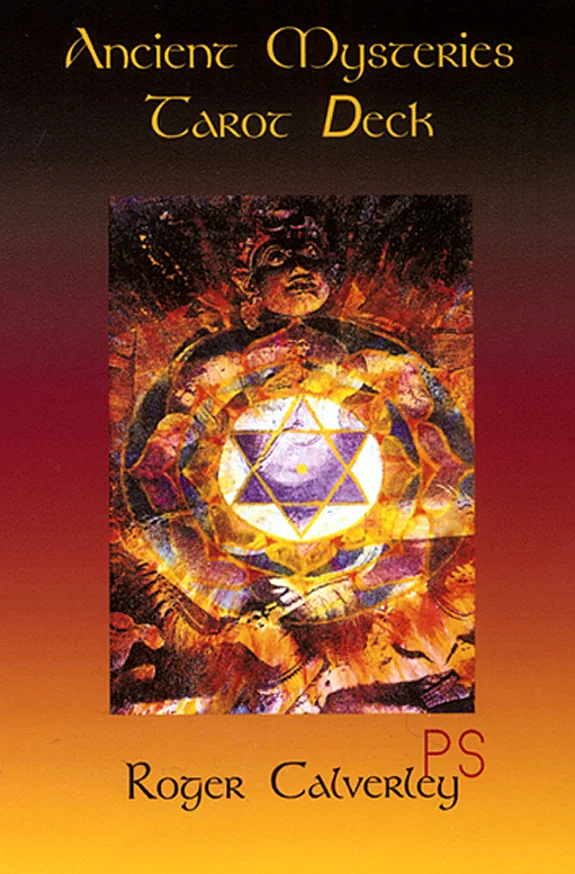
Ancient Mysteries Tarot Deck
Roger Calverley's Ancient Mysteries Tarot Deck (2004) attempts a bold synthesis, linking tarot's archetypes to the sacred art of ancient Mystery Schools. The ambition is commendable, and the deck's visual language, particularly in the Major Arcana, often succeeds in evoking a sense of primal, ritualistic power drawn from Egyptian, Greek, Mesopotamian, and Indian sources. This approach offers a refreshing alternative to more modern, psychologized tarot decks. However, the execution sometimes feels more academic than intuitive. While the Minor Arcana's elemental associations with megaliths and sacred springs are conceptually interesting, the visual translation can occasionally lack the immediate symbolic clarity needed for rapid divination. The strength lies in its scholarly foundation and its commitment to ancient symbolism. The limitation is that this depth may require significant prior knowledge to fully unlock its divinatory potential. A passage depicting the sacred geometry inherent in the Egyptian-inspired "Hierophant" card exemplifies the deck's potential for deep study, though its direct applicability in a quick reading might be less apparent. This deck is best suited for the dedicated scholar of esoteric traditions.
📝 Description
78
Roger Calverley's 2004 Ancient Mysteries Tarot Deck connects tarot symbolism to ancient esoteric practices.
Published in 2004, the Ancient Mysteries Tarot Deck by Roger Calverley offers a distinct approach to tarot divination and spiritual initiation. This 78-card deck intentionally bridges traditional tarot imagery with the esoteric traditions of ancient civilizations. Its designs draw extensively from the sacred art and iconography of major historical cultures, aiming to link users with the original meanings behind tarot pictures.
The deck is suited for dedicated students of esotericism, comparative mythology, and ancient religions. It appeals to those seeking a tarot tool for personal spiritual growth and initiation, beyond simple divination. Tarot readers who are tired of modern interpretations and want to connect with the historical and ritualistic foundations of the practice will find this deck especially relevant. The imagery is informed by the Mystery Schools of ancient Egypt, Greece, Mesopotamia, and India, societies known for their initiatory rites and esoteric teachings.
This deck situates tarot within a lineage of ancient wisdom practices, specifically referencing the Mystery Schools of Egypt, Greece, Mesopotamia, and India. These schools focused on initiatory rites and esoteric teachings designed for spiritual transformation. The deck's Minor Arcana further connect to primordial energies through elemental associations with megaliths, sacred fountains, and stone temples, grounding the practice in the earth's sacred geography. It views tarot as a universal language that mirrors the rites of passage found in these ancient traditions.
💡 Why Read This Book?
• Understand tarot as an initiatory system by exploring its parallels with the rites of the ancient Egyptian Mystery Schools, a core concept detailed within the deck's framework. • Connect with the elemental forces through the Minor Arcana's unique visual language, which associates sacred fountains and megaliths with the four classical elements, offering a grounded perspective. • Gain insight into the esoteric symbolism of Mesopotamia and India, as the Major Arcana's imagery draws directly from the sacred temple art of these ancient cultures, enriching your understanding.
⭐ Reader Reviews
Honest opinions from readers who have explored this book.
❓ Frequently Asked Questions
What ancient cultures are represented in the Ancient Mysteries Tarot Deck?
The deck draws inspiration from the sacred temple art and Mystery Schools of Egypt, Greece, Mesopotamia, and India, aiming to connect tarot symbolism with these ancient traditions.
How do the Minor Arcana differ in this deck?
Instead of traditional pip imagery, the Minor Arcana in this deck portray megaliths, sacred fountains, and stone temples to represent the four sacred elements, linking them to earth and water symbolism.
Is Roger Calverley's book required to use the tarot deck?
While the deck is designed for divination and initiation, Roger Calverley's accompanying book, 'Ancient Mysteries Tarot,' provides detailed background and describes the process, enhancing the user's understanding.
What is the primary purpose of the Ancient Mysteries Tarot Deck?
The deck is crafted for both divination and initiation, seeking to reconnect users with the magical and spiritual roots of tarot as understood through ancient esoteric practices.
When was the Ancient Mysteries Tarot Deck first published?
The Ancient Mysteries Tarot Deck was first published on April 15, 2004.
What specific elements are used to represent the four sacred elements in the Minor Arcana?
The Minor Arcana use images of megaliths, sacred fountains, and stone temples to portray the four sacred elements, linking them to ancient earth and water symbolism.
🔮 Key Themes & Symbolism
Initiation and Mystery Schools
The deck frames tarot as a tool for initiation, mirroring the structured spiritual progression found in ancient Mystery Schools from Egypt, Greece, Mesopotamia, and India. This theme posits that the cards are not merely for fortune-telling but for guiding the practitioner through stages of spiritual understanding and transformation, akin to the secret rites of antiquity. The Major Arcana are intended to represent archetypal keys unlocked through this initiatory process.
Elemental Symbolism in Sacred Geography
A distinctive feature is the representation of the four sacred elements within the Minor Arcana. Instead of conventional suit imagery, the deck employs depictions of megaliths, sacred fountains, and stone temples. This approach grounds the elemental forces in tangible, ancient sacred sites, suggesting a direct connection between the earth's energy, natural landmarks, and spiritual power, fostering a geomantic understanding of the elements.
Cross-Cultural Esoteric Resonance
The deck emphasizes the universality of esoteric wisdom by drawing from diverse ancient traditions. By integrating iconography from Egyptian, Greek, Mesopotamian, and Indian sacred art, it highlights common threads in humanity's spiritual quest. This theme suggests that the archetypes and symbols within tarot are not confined to one culture but echo across epochs and geographies, serving as a universal language.
Tarot as Ancient Sacred Art
This theme positions the tarot deck itself as a revival of ancient sacred art forms. The visual design of the Major Arcana is explicitly based on the sacred temple art of ancient civilizations. This elevates the deck beyond a mere divination tool to a work of art intended to channel the spiritual essence and aesthetic principles of these historical esoteric traditions.
💬 Memorable Quotes
Direct passages from the work, attributed to the author.
“Images of the Major Arcana are based on sacred temple art from the Mystery Schools of Egypt, Greece, Mesopotamia and India.”
— This statement highlights the deck's foundational principle: to anchor tarot archetypes in the visual language and spiritual context of ancient initiatory traditions, distinguishing it from decks with more modern or European medieval influences.
“Images of megaliths, sacred fountains and stone temples are used to portray the four sacred elements in the Minor Arcana.”
— This explains the deck's unique approach to the Minor Arcana, connecting elemental symbolism to ancient earth-based sacred sites and natural phenomena, offering a distinct perspective on elemental correspondences.
“The background and the process of which is described in detail in his book, Ancient Mysteries Tarot.”
— This points to the existence of supplementary material that elaborates on the theoretical underpinnings and practical application of the deck, suggesting a comprehensive system for users seeking deeper engagement.
“This unique deck links tarot with the magic of its ancient roots.”
— This phrase expresses the deck's core mission: to revive the perceived original magical and spiritual efficacy of tarot by connecting it directly to the esoteric practices and aesthetics of antiquity.
💡 Key Ideas
Editorial paraphrase of the work's core concepts — not direct quotes.
Roger Calverley has crafted this deck for divination and initiation.
This quote clarifies the dual purpose of the deck, indicating it's designed not only for predicting future events but also as a tool for personal spiritual growth and ceremonial practice, akin to ancient rites.
🌙 Esoteric Significance
Tradition
This deck aligns with the Western Esoteric tradition, particularly its Hermetic and Gnostic leanings, by seeking to revive ancient initiatory practices. It departs from purely Kabbalistic or Theosophical interpretations by grounding its symbolism directly in the visual language of the ancient Mystery Schools of Egypt, Greece, Mesopotamia, and India. It positions tarot not merely as a symbolic map but as a functional tool for spiritual ascent, mirroring ancient rites of passage.
Symbolism
Key symbols include sacred geography, represented by megaliths and stone temples in the Minor Arcana, linking the elements to tangible places of power. The Major Arcana's reliance on ancient temple art from Egypt and Mesopotamia imbues them with the archetypal weight and ritualistic function these images originally held. The concept of the Mystery Schools themselves serves as a meta-symbol for hidden knowledge and structured spiritual progression.
Modern Relevance
Contemporary practitioners of comparative mythology, ancient religions, and Hermeticism find value in this deck for its scholarly approach. It appeals to those seeking to move beyond modern psychological interpretations of tarot and reconnect with its potentially older, ritualistic applications. Thinkers and practitioners interested in geomancy, sacred sites, and the cross-cultural study of initiation rites may also draw inspiration from its unique elemental and archetypal representations.
👥 Who Should Read This Book
• Students of comparative mythology and ancient religions: Gain visual representations of esoteric concepts drawn directly from the Mystery Schools of Egypt, Greece, Mesopotamia, and India. • Tarot practitioners seeking historical depth: Explore a deck that consciously links tarot symbolism to its ancient roots, moving beyond modern interpretations for a more grounded divinatory practice. • Initiatory spiritual seekers: Utilize a tool designed not just for prediction but for personal spiritual development, echoing the structured rites of passage found in ancient esoteric traditions.
📜 Historical Context
The Ancient Mysteries Tarot Deck emerged in 2004, a period when interest in esoteric traditions and alternative spiritualities was well-established, yet a consistent demand persisted for tools that directly engaged with historical esoteric practices. Roger Calverley's work taps into a lineage of esoteric scholarship that sought to uncover the 'original' meaning of tarot, often looking to ancient Egypt or pre-Christian European traditions, as exemplified by figures like A.E. Waite and Eliphas Lévi in earlier eras. Unlike the more psychological interpretations popularized in the mid-to-late 20th century, exemplified by the work of Mary K. Greer or Rachel Pollack's focus on narrative, Calverley's deck emphasizes a direct link to the ritualistic and symbolic systems of ancient Mystery Schools. Its reception was likely within niche circles of dedicated tarot scholars and practitioners interested in comparative mythology and ancient religions, appreciating its scholarly approach rather than a purely intuitive or modern mystical bent.
📔 Journal Prompts
The sacred temple art of Egypt, Mesopotamia, and India depicted in the Major Arcana: What archetypal resonance does it hold for your inner journey?
Megaliths and sacred fountains as elemental symbols: How do these terrestrial images connect with your personal understanding of the four elements?
The concept of Mystery Schools: Reflect on the journey of initiation as presented by the deck's framework.
The connection between tarot and ancient magic: Explore how ritualistic intent might amplify the deck's divinatory power.
Comparing ancient Egyptian iconography with a specific Major Arcana card: What new layers of meaning emerge?
🗂️ Glossary
Mystery Schools
Ancient secretive religious and philosophical societies (e.g., in Egypt, Greece, India) that offered initiatory rites and esoteric teachings to members, aiming for spiritual enlightenment or transformation.
Sacred Fountains
Natural springs or man-made sources of water revered in ancient cultures for their perceived purity, healing properties, or connection to deities and elemental forces, often used in rituals.
Megaliths
Large prehistoric stones, such as standing stones or dolmens, often arranged in patterns or structures (like Stonehenge) and believed to have held ritualistic or astronomical significance in ancient societies.
Sacred Temple Art
Iconography, murals, sculptures, and architectural elements found within ancient temples, imbued with religious and esoteric meaning, serving as visual aids for worship, ritual, and teaching.
Initiation
A formal process or ceremony marking a person's entry into a new stage of life, a group, or a system of knowledge, often involving symbolic rites and imparting of secrets or spiritual understanding.
Esotericism
Systems of belief and practice concerned with hidden knowledge, spiritual insight, and transcendent realities, often transmitted through initiation and requiring dedicated study, as opposed to exoteric or common knowledge.
Ancient Roots
Refers to the origins and foundational influences of a practice or belief system, in this context, linking tarot to the earliest known spiritual and magical traditions of antiquity.
This book appears in 1 collection
🔮 Readers Also Liked
Browse all →

From the “Mystery Schools” Collection
View all →
More Free Occult Philosophy Books
View all →