Angels and Demons
 80
80

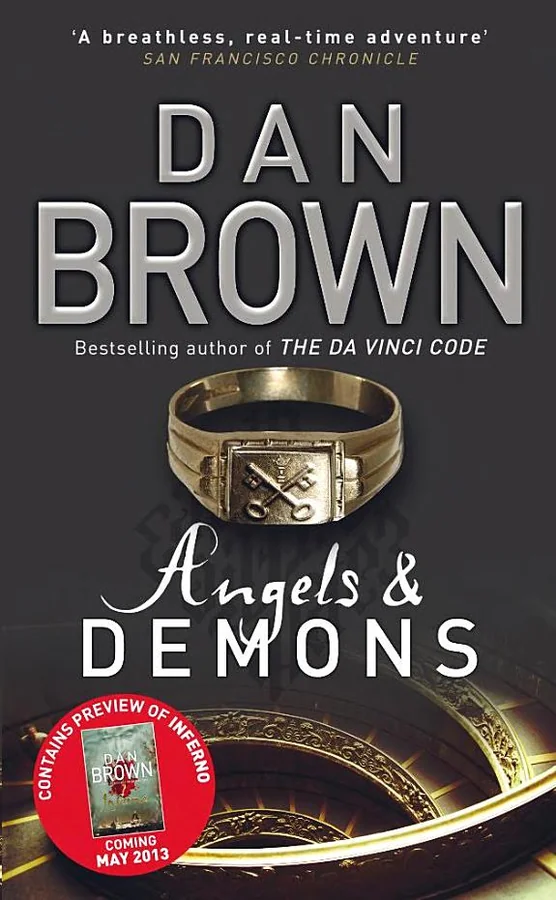
Angels and Demons
Dan Brown's Angels & Demons presents a breathless chase across Rome, ostensibly about preventing a devastating attack on the Vatican. The strength lies in its relentless pacing and the clever integration of historical sites and symbols, transforming familiar locations into stages for intrigue. However, the characterizations often feel secondary to the plot's machinations, serving more as vehicles for exposition than fully realized individuals. The reliance on convenient discoveries and the somewhat predictable nature of the antagonist's grand plan, while thrilling in the moment, can feel less impactful upon reflection. The work's exploration of the Illuminati, though fictionalized, does spark curiosity about historical secret societies. Ultimately, it's a tightly plotted adventure that prioritizes puzzle-solving and rapid movement over deep character study.
📝 Description
80
Dan Brown's 2000 novel, Angels & Demons, plunges symbologist Robert Langdon into a Vatican crisis.
Published in 2000, Angels & Demons follows Harvard symbologist Robert Langdon as he is called to the Vatican. His arrival coincides with the murder of a physicist and the disappearance of stolen antimatter. Langdon must race against time to avert a disaster planned by the Illuminati, a historical secret society. The narrative weaves through Rome's landmarks, integrating them into the urgent plot.
This thriller appeals to readers who enjoy mysteries grounded in historical and religious symbolism. It specifically engages those interested in the Vatican, clandestine organizations, and the dialogue between scientific discovery and spiritual belief. The book examines a fictionalized conflict between these forces through its characters and narrative structure.
Angels & Demons draws on popular fascination with historical secret societies and the perceived conflicts between science and religion. The novel uses the legend of the Illuminati, a real historical group, as a primary antagonist, tapping into widespread interest in hidden knowledge and powerful cabals. It juxtaposes this with scientific concepts like antimatter, framing a narrative where ancient mysteries and modern discoveries collide within the influential setting of the Catholic Church.
💡 Why Read This Book?
• Understand the fictionalized historical rivalry between the Catholic Church and the Illuminati, a concept explored through the narrative’s central conflict and the specific symbolism associated with the latter. • Experience a fast-paced chase through Rome's iconic landmarks, learning about their historical significance as depicted in the novel, such as St. Peter's Square and Castel Sant'Angelo. • Grasp the fictionalized scientific threat of antimatter, a real scientific concept, as it drives the plot's urgency and forms the core of the antagonist's destructive plan.
⭐ Reader Reviews
Honest opinions from readers who have explored this book.
❓ Frequently Asked Questions
Is Angels & Demons based on real Illuminati history?
While Dan Brown's novel features the Illuminati, it is a fictionalized account. The historical Illuminati were a real Enlightenment-era secret society founded in Bavaria in 1776, but their actual history and influence differ significantly from the portrayal in the book.
What is the significance of the 'antimatter' in Dan Brown's Angels & Demons?
In Angels & Demons, antimatter is presented as a potent, destructive weapon stolen from CERN. It represents a tangible scientific threat that fuels the novel's urgency, with its countdown to annihilation forming the central crisis.
Which real locations are featured in Angels & Demons?
The book prominently features real locations in Rome, including St. Peter's Square, the Vatican Museums, Castel Sant'Angelo, and various ancient churches, which serve as key settings for the unfolding mystery and chase.
Who is Robert Langdon in Angels & Demons?
Robert Langdon is the protagonist, a symbologist from Harvard University. He is called to the Vatican to decipher clues left by the murdered physicist and help prevent the impending disaster.
What is the main conflict in Angels & Demons?
The primary conflict involves Robert Langdon racing against time to stop the Illuminati from carrying out a devastating attack on the Vatican using stolen antimatter, following the murder of a CERN scientist.
When was Angels & Demons first published?
Angels & Demons was first published on March 25, 2000, by Pocket Books, preceding Dan Brown's later novel, The Da Vinci Code.
🔮 Key Themes & Symbolism
Illuminati Conspiracy
The novel heavily features the Illuminati, a historical secret society known for its opposition to religious and state power. Brown presents a fictionalized resurgence of this group, portraying them as seeking revenge against the Catholic Church. The narrative ties in symbols and historical connections, suggesting a deep-seated, ancient conflict between enlightenment ideals and religious dogma, though the portrayal is largely speculative and designed for dramatic effect.
Science vs. Religion
A core theme is the perceived conflict between scientific advancement and religious faith. The stolen antimatter, a product of modern physics at CERN, becomes the instrument of destruction aimed at the heart of Catholicism. Protagonist Robert Langdon, a symbologist, often acts as a bridge, attempting to reconcile these seemingly opposing forces through understanding symbols and history.
Vatican and Papal Succession
The book is set against the backdrop of the Vatican and the election of a new Pope following the death of a pontiff. This provides a dramatic stage for the Illuminati's plot, highlighting the Church's vulnerability and the intense political and spiritual atmosphere surrounding papal conclaves. The historical and architectural significance of the Vatican itself plays an important role in the narrative.
Symbolism and Iconography
As a symbologist, Robert Langdon deciphers various symbols integral to the plot. These include the Illuminati's own emblem, the 'earthly elements' used as markers in Rome, and religious iconography. The book uses these symbols not just as plot devices but to explore historical narratives and secret meanings attributed to them by various groups.
💬 Memorable Quotes
Direct passages from the work, attributed to the author.
“The church says the Bible was written for our guidance, not our governance.”
— This highlights the theme of religious interpretation and authority. It questions the absolute control of religious institutions, suggesting a space for individual understanding and a separation of spiritual guidance from temporal power.
“We are not what we seem. We are always much more.”
— This statement speaks to the deeper meaning and secret identities prevalent in the novel. It suggests that characters, and perhaps even institutions, possess layers of complexity and concealed motives beyond their outward appearances.
“Science and religion are not enemies, but branches of the same tree.”
— This concept, often explored through Robert Langdon's perspective, posits a reconciliation between scientific inquiry and spiritual belief. It suggests that both seek truth and understanding, albeit through different methodologies and frameworks.
💡 Key Ideas
Editorial paraphrase of the work's core concepts — not direct quotes.
The path to heaven, as that angel said, is a long, rocky and uneven one. I can assure you, I’m well aware of that.
This line reflects the novel's exploration of faith and the arduous nature of spiritual or moral journeys. It hints at the sacrifices and challenges characters face, aligning with the book's themes of struggle against powerful forces.
The greatest, most insidious, and most dangerous weapon in the world is the human mind.
This quote underscores the novel's focus on intellect, conspiracy, and the power of ideas. It suggests that human ingenuity, particularly when driven by malice or a misguided sense of purpose, poses the greatest threat.
🌙 Esoteric Significance
Tradition
While not strictly adhering to a single esoteric tradition, Angels & Demons draws heavily from the lore surrounding historical secret societies like the Illuminati and Freemasonry, often associated with Hermeticism and Enlightenment-era occultism. It popularizes concepts of hidden knowledge, symbolic language, and ancient conspiracies that have roots in Western esoteric thought. The work positions itself as exploring these hidden currents within mainstream history and religious institutions.
Symbolism
The novel prominently features the Illuminati's ambigram symbol, which reads the same forwards and backward, representing duality and hidden truths. The 'path of illumination' itself, marked by specific churches in Rome, acts as a symbolic journey. Furthermore, the concept of antimatter serves as a potent modern symbol for uncontrollable, destructive potential, contrasted with the established order of the Church.
Modern Relevance
The work's enduring popularity speaks to a modern fascination with uncovering hidden narratives and questioning established power structures, whether religious or scientific. It continues to be relevant for discussions about the intersection of faith, science, and conspiracy in popular culture, influencing how many readers perceive historical secret societies and religious symbolism.
👥 Who Should Read This Book
• Readers interested in fast-paced thrillers that incorporate historical landmarks and religious symbolism, particularly those intrigued by the Vatican and secret societies. • Enthusiasts of puzzle-solving and code-breaking narratives who enjoy seeing complex clues unravelled against a ticking clock. • Individuals curious about fictional explorations of the perceived historical tensions between science and religion, and the lore surrounding groups like the Illuminati.
📜 Historical Context
Published in 2000, Angels & Demons arrived during a period of heightened interest in conspiracy theories and historical revisionism, fueled partly by the digital age's accessibility of information and misinformation. Dan Brown tapped into this zeitgeist, presenting a fictionalized narrative that blended real history with sensational speculation. The novel's focus on the Illuminati, a historical Bavarian secret society founded in 1776, resonated with a public fascinated by hidden powers and ancient conflicts. While the Catholic Church has faced scrutiny throughout history, Brown's depiction of its vulnerability to a resurgent Illuminati offered a dramatic, albeit fictional, counter-narrative. The book's reception was largely positive among popular audiences, contributing to the thriller genre's fascination with religious and historical secrets, a trend also seen in works by authors like Umberto Eco, though Eco's approach was more scholarly and less overtly sensational.
📔 Journal Prompts
The Illuminati's perceived quest for 'enlightenment' versus the Church's established dogma.
Robert Langdon's reliance on symbology to navigate crises.
The symbolic significance of antimatter as a plot device.
The historical backdrop of Rome and its role in the narrative.
The tension between scientific discovery and religious doctrine presented in the book.
🗂️ Glossary
Illuminati
A historical secret society founded in Bavaria in 1776, known for its Enlightenment ideals and opposition to superstition and religious influence. The novel presents a fictionalized, contemporary version seeking revenge.
Antimatter
A substance composed of antiparticles, which annihilates upon contact with ordinary matter, releasing immense energy. In the book, it's a stolen weapon.
Robert Langdon
The protagonist, a Harvard symbologist specializing in religious iconography and secret societies, who investigates the central mystery.
Vatican
The headquarters of the Roman Catholic Church, a sovereign city-state within Rome, serving as a primary setting and target in the novel.
Ambigram
A word or graphic design that can be read in more than one direction or from more than one perspective. The Illuminati symbol in the book is an ambigram.
Path of Illumination
In the novel, a symbolic route through Rome marked by four churches, each associated with one of the 'ancient brotherhood's' scientific elements.
Papal Conclave
The assembly of Roman Catholic cardinals convened to elect a new Pope. The novel's events occur during such a conclave.
This book appears in 1 collection
🔮 Readers Also Liked
Browse all →





From the “Illuminati” Collection
View all →




More Free Freemasonry & Secret Societies Books
View all →