Night Shift

 76
76

Night Shift
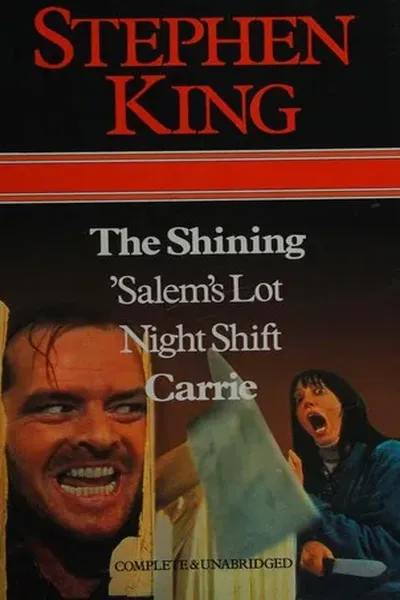
Evander Ashcroft here. Stephen King's "Night Shift" (1960) is less a collection of jump scares and more a chilling examination of how the mundane can curdle into the horrific. The strength lies in King's early, unvarnished prose, which conjures atmosphere with stark efficiency. Consider the story "Graveyard Shift," which masterfully builds tension through claustrophobia and the suggestion of unseen horrors lurking in the subterranean darkness. It’s a potent example of his ability to create dread from primal fears. A notable limitation, however, is the unevenness in pacing across some of the shorter pieces; a few feel underdeveloped, leaving the reader wanting more substance. The concept of the "Lude," as explored in "The Lude," hints at a potent, almost elemental force of corruption, which King handles with a visceral, unsettling touch. Ultimately, "Night Shift" offers a fascinating glimpse into the genesis of a master storyteller, showcasing raw talent even if not every tale achieves peak impact.
📝 Description
76
Stephen King's "Night Shift" debuted in 1960 with unsettling tales of the uncanny.
Originally published in 1960, "Night Shift" collects short stories that examine the darker, often supernatural, facets of ordinary existence. These narratives move beyond simple ghost stories to engage with psychological horror, the uncanny, and the disturbing results of human choices. The book demonstrates King's early skill with suspense and his talent for creating vivid, frequently unsettling scenes from common settings. The characters often face forces they cannot understand, leading to unavoidable and typically bleak conclusions.
This collection suits readers who prefer literary horror focusing on psychological dread and existential unease over jump scares or explicit gore. Those interested in the early work of a major figure in modern horror will find "Night Shift" a worthwhile study. Readers drawn to themes of fate, the intrusion of the unnatural into daily life, and the hidden currents of American small-town existence will find these stories particularly resonant. It appeals to a desire for a more thoughtful and atmospheric approach to the macabre.
Published in 1960, "Night Shift" appeared during a time of renewed interest in literary horror, influenced by writers like Shirley Jackson and Richard Matheson. The post-war era saw a growing appetite for psychological thrillers and supernatural narratives that tapped into public anxieties. King's early stories contributed to this trend by centering on the internal struggles of characters confronted by external, often inexplicable, dangers. This period also marked the increased availability of paperback anthologies, which helped disseminate such collections.
💡 Why Read This Book?
• Gain insight into the early thematic preoccupations of Stephen King, particularly his fascination with the unsettling nature of ordinary settings as seen in "The Lawnmower Man" from 1960. • Experience how King uses the concept of the uncanny to generate suspense, a technique prominent in stories where familiar objects or places become sources of dread. • Understand the psychological underpinnings of fear as depicted in "Night Shift," where characters confront internal anxieties amplified by external, often supernatural, events.
⭐ Reader Reviews
Honest opinions from readers who have explored this book.
❓ Frequently Asked Questions
When was Stephen King's "Night Shift" first published?
"Night Shift" by Stephen King was first published in 1960. This early collection predates his more widely known novels and showcases his foundational style.
What kind of horror does "Night Shift" feature?
The collection leans into psychological horror and the uncanny, exploring unsettling situations and the darker aspects of human nature rather than relying solely on gore.
Are these stories connected to King's later works?
While "Night Shift" was published in 1960 and predates many of his major novels, the thematic elements and narrative techniques foreshadow his later successes, offering a glimpse into his developing craft.
What are some common themes in "Night Shift"?
Common themes include the intrusion of the supernatural into everyday life, the consequences of human actions, fate, and the psychological impact of fear and isolation.
Is "Night Shift" a good starting point for new Stephen King readers?
It can be, particularly for those interested in his early development. However, readers new to King might prefer to start with his more famous novels to get a fuller picture of his career.
What is the significance of the 1960 publication date for "Night Shift"?
The 1960 publication places "Night Shift" within a specific era of horror literature, influenced by contemporaries and reflecting post-war anxieties, showing King's place in that literary tradition.
🔮 Key Themes & Symbolism
The Uncanny in the Mundane
"Night Shift" excels at transforming the familiar into the terrifying. King demonstrates an early mastery of the uncanny, where everyday objects, locations, or situations take on a sinister quality. This often occurs through subtle shifts in perception or the introduction of an inexplicable element, as seen in stories where a seemingly harmless object begins to exhibit malevolent behavior. The collection explores how the veneer of normalcy can crack under the pressure of the inexplicable, revealing underlying anxieties and fears that resonate with the reader's own experiences of the world around them.
Fate and Inevitable Consequences
A pervasive theme in "Night Shift" is the sense of inescapable fate or the long shadow cast by past actions. Characters often find themselves trapped by circumstances beyond their control, seemingly destined for a grim outcome regardless of their choices. This exploration of predestination adds a layer of existential dread to the narratives. The collection suggests that certain paths are set, and attempts to deviate or escape only lead back to the predetermined conclusion, highlighting a bleak view of agency and the often-unseen forces that shape human lives.
Psychological Erosion Under Duress
King frequently examines how extreme situations and supernatural encounters erode a character's psychological stability. The stories portray individuals grappling with terror, isolation, and the breakdown of rational thought when confronted with the inexplicable. This focus on internal struggle distinguishes "Night Shift" from more superficial horror. The narratives often culminate not just in physical peril, but in the complete unraveling of the protagonist's mind, showing how the human psyche can be the ultimate battleground for fear and despair.
The Intrusive Supernatural
The collection is marked by the intrusion of the supernatural or the overtly bizarre into otherwise ordinary lives. These intrusions are rarely explained away; they simply manifest, disrupting the status quo and forcing characters to confront forces they cannot comprehend. Whether it's a malevolent entity, a cursed object, or a distortion of reality, the supernatural element acts as a catalyst for exploring human vulnerability. This approach emphasizes the fragility of our perceived reality and the ever-present possibility of the unknown breaking through.
💬 Memorable Quotes
Direct passages from the work, attributed to the author.
“He saw the familiar streetlights, but they seemed to cast shadows that writhed.”
— This interpretation highlights the uncanny transformation of the ordinary. The streetlights, symbols of safety and order, are distorted, their shadows becoming animate and menacing, reflecting a character's psychological distress or the pervasive sense of dread.
“Some things, once unleashed, could never be put back.”
— This sentiment speaks to the theme of irreversible consequences and the dangerous nature of forbidden knowledge or actions. It suggests that certain events or forces, once set in motion, have a life of their own and cannot be contained or undone.
“He realized he had always been walking towards this moment, even when he thought he was going elsewhere.”
— This captures the theme of fate and destiny. It suggests a predetermined path, where all actions, even those perceived as random or unrelated, ultimately converge towards a specific, often unavoidable, outcome.
💡 Key Ideas
Editorial paraphrase of the work's core concepts — not direct quotes.
The basement was a place where things went to die.
This paraphrased concept captures the oppressive atmosphere of many settings in "Night Shift." It suggests a primal fear of the hidden, the decaying, and the forgotten, often located in liminal spaces like basements, symbolizing the subconscious or the repressed.
The silence in the old house was louder than any scream.
This quote emphasizes the psychological horror of isolation and anticipation. The oppressive silence becomes a palpable entity, amplifying fear and suggesting that the true terror lies not in what is heard, but in what is felt and imagined.
🌙 Esoteric Significance
Tradition
While "Night Shift" does not explicitly align with a single esoteric tradition like Hermeticism or Gnosticism, its exploration of the uncanny and the intrusion of malevolent forces into the mundane world echoes themes found in folk magic and certain branches of occultism. The collection taps into a primal understanding of unseen influences and the psychological impact of confronting entities or circumstances that defy rational explanation. It speaks to an intuitive apprehension of hidden powers and the idea that reality is more porous than commonly believed, a concept explored across various mystical paths.
Symbolism
The collection frequently employs the symbolism of liminal spaces – basements, abandoned houses, dark roads – as thresholds between the known and the unknown, the safe and the dangerous. Shadows are often depicted as animated or sentient, representing repressed fears or encroaching malevolence. Furthermore, ordinary objects, when imbued with sinister intent, become potent symbols of how the familiar can be corrupted, turning everyday life into a source of dread and reflecting a symbolic breakdown of order.
Modern Relevance
Contemporary horror fiction and psychological thrillers continue to draw inspiration from King's early methods of creating atmosphere and dread through the uncanny. Thinkers and practitioners exploring the psychology of fear, the nature of consciousness, and the impact of narrative on perception find value in King's deconstruction of the mundane. Modern horror films and literature that focus on existential dread and the subversion of everyday expectations owe a debt to the groundwork laid by collections like "Night Shift."
👥 Who Should Read This Book
• Aspiring horror writers seeking to understand foundational techniques for building suspense and atmosphere from ordinary settings. • Readers interested in literary analysis of post-war American fiction, particularly works that explore psychological unease and the supernatural. • Fans of Stephen King curious about the origins of his storytelling style and thematic preoccupations, as showcased in this 1960 collection.
📜 Historical Context
Stephen King's "Night Shift," first published in 1960, emerged during a fertile period for American horror literature. The post-war era saw a surge in psychological thrillers and supernatural narratives that tapped into societal anxieties, with authors like Shirley Jackson (e.g., "The Haunting of Hill House," 1959) and Richard Matheson (e.g., "Shock Waves," 1959) exploring the darker aspects of the human psyche and the unsettling intrusion of the unknown. King's collection, while predating his major novelistic successes, contributed to this trend by focusing on the uncanny and the erosion of normalcy in everyday settings. The rise of paperback anthologies in the mid-20th century also played a crucial role, making collections like "Night Shift" widely accessible and fostering a new generation of readers keen on speculative fiction. This period was characterized by a growing literary acceptance of genre fiction, allowing for more nuanced and psychologically complex explorations of fear than might have been possible decades prior.
📔 Journal Prompts
The oppressive silence of the old house, as described in "The Lude."
The uncanny transformation of familiar objects into sources of dread.
Characters' descent into psychological distress when facing the inexplicable.
The concept of an inescapable, predetermined fate.
The symbolic significance of the subterranean spaces in "Graveyard Shift."
🗂️ Glossary
The Uncanny
A psychological concept referring to the feeling of unease or dread evoked by something that is simultaneously familiar and foreign, often blurring the lines between the real and the unreal.
Liminal Space
A transitional or in-between place, such as a doorway, threshold, or a deserted road, often associated with psychological ambiguity and the potential for supernatural encounters.
Psychological Horror
A subgenre of horror that focuses on the mental and emotional states of characters, using suspense, dread, and internal conflict to create fear rather than relying solely on gore or jump scares.
Folk Magic
A broad category of magical beliefs and practices originating from common people, often passed down through oral tradition and tied to specific cultural contexts and superstitions.
Predestination
The doctrine that all events have been willed by God, usually with reference to the eventual fate of the individual soul. In literature, it refers to a sense of inescapable destiny.
Atmosphere
The overall mood or feeling of a literary work, created through setting, description, tone, and the reader's psychological response to these elements.
The Lude
A concept from one of the stories, representing an amorphous, corrupting entity or force that preys on the psyche and environment.
🔮 Readers Also Liked
Browse all →








More by Stephen King
All books →

More Free Occult Philosophy Books
View all →