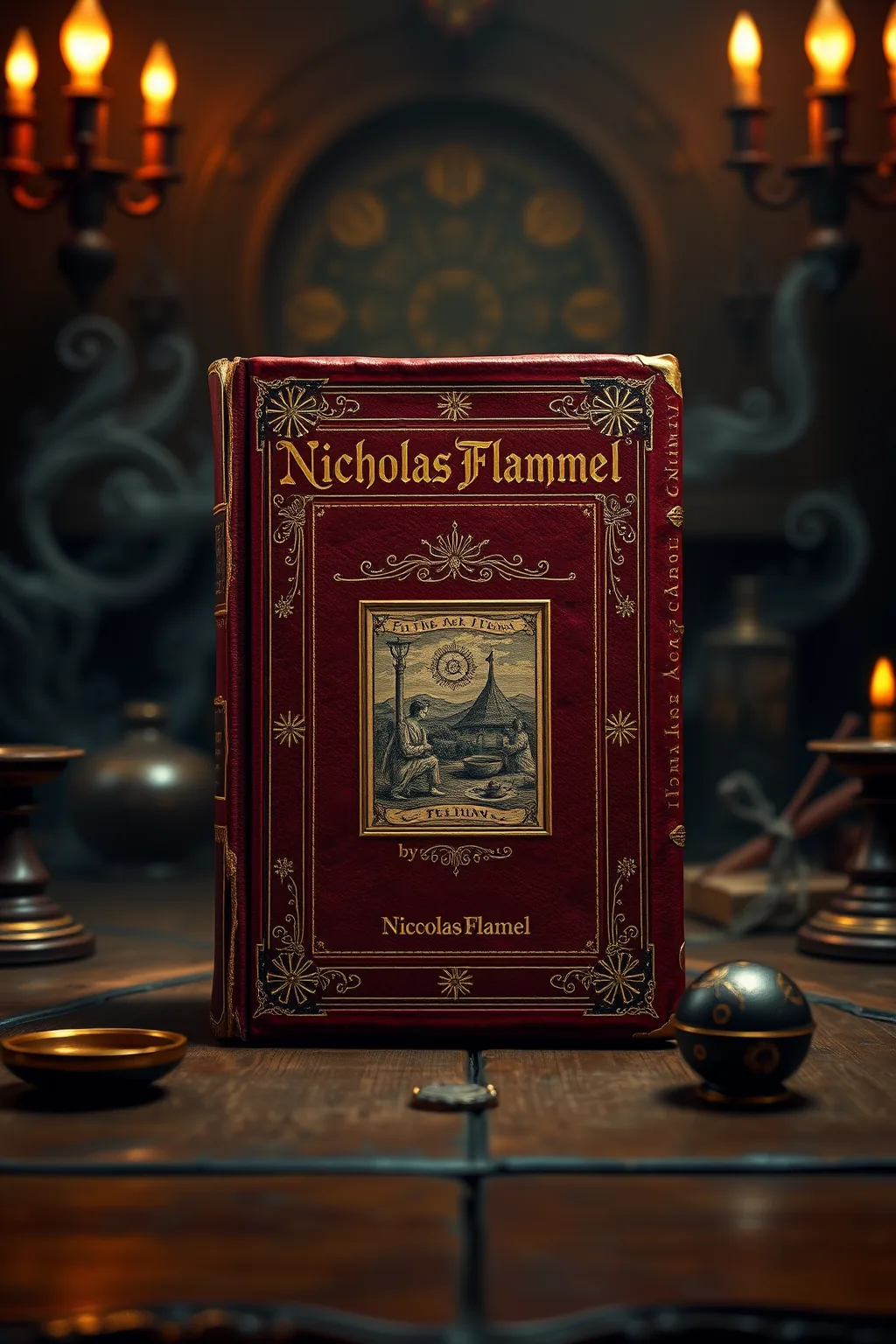
Nicholas Flammel
 62
62

Nicholas Flammel


Review by Celeste Moreau (Divination & Symbolism Reviewer) — Nicolas Flamel's 'Nicholas Flamel' is a masterclass in alchemical symbolism and hermetic philosophy. The book is a treasure trove of esoteric insights, offering readers a profound glimpse into the mystical practices of medieval alchemists. Flamel's meticulous detailing of alchemical processes and his deep understanding of the transformative power of symbols make this work a must-read for serious scholars and practitioners of the occult. The intended audience is those who are already familiar with the basics of alchemy and are seeking a deeper, more nuanced understanding of its principles.
📝 Description
62
Nicolas Flamel's 1404 treatise outlines the philosophical and spiritual aspects of alchemy.
This text, attributed to the 14th-century alchemist Nicolas Flamel, discusses the theoretical underpinnings of the Great Work. It presents alchemy not merely as a chemical process but as a path toward spiritual transformation. The author details alchemical symbolism and the stages involved, likening the transmutation of metals to the purification of the soul. The book aims to guide those interested in hermetic philosophy toward a deeper understanding of existence.
Flamel's writings focus on the philosophical implications of alchemical practice. He emphasizes that true alchemy requires both intellectual comprehension and inner spiritual development. The text serves as a guide to interpreting alchemical allegories, suggesting that the secrets of the universe are mirrored within the human spirit. It encourages a contemplative approach to understanding the interconnectedness of all things.
This work belongs to the Western esoteric tradition, specifically within the lineage of Hermeticism and alchemy that flourished from antiquity through the Renaissance. It draws upon concepts found in earlier alchemical texts and philosophical traditions, aiming to codify and transmit a particular understanding of alchemical theory. The text sits alongside other foundational alchemical writings that sought to reveal hidden knowledge about the cosmos and humanity's place within it.
💡 Why Read This Book?
Read 'Nicholas Flamel' to unravel the mysteries of alchemy and its profound symbolism. Ideal for seekers of hidden knowledge, scholars of hermeticism, and practitioners of the occult, this book offers a rich exploration of the alchemical journey. It is a guide for those who wish to understand the philosophical significance of transmutation and the inner alchemy that transforms the spirit.
⭐ Reader Reviews
Honest opinions from readers who have explored this book.
❓ Frequently Asked Questions
What is the main theme of 'Nicholas Flamel'?
The main theme is the alchemical process of transformation, both of matter and spirit. It delves into the hidden knowledge and symbolism that underlie alchemical practices.
Is this book suitable for beginners in alchemy?
While 'Nicholas Flamel' is a foundational text, it is best suited for those with some prior knowledge of alchemy and hermeticism.
How does 'Nicholas Flamel' relate to modern esoteric practices?
The book's exploration of symbolism and transformation continues to influence modern practitioners of alchemy and other esoteric traditions.
What makes 'Nicholas Flamel' a significant work in alchemy?
Flamel's detailed descriptions of alchemical processes and his deep understanding of symbolism make it a cornerstone of alchemical literature.
Can 'Nicholas Flamel' be read as a philosophical text?
Absolutely. The book's exploration of the transformation of matter and spirit offers profound philosophical insights into the nature of existence and change.
🔮 Key Themes & Symbolism
Alchemical Transformation
The book delves deeply into the alchemical process of transformation, exploring how both matter and spirit can be transmuted. This theme is central to Flamel's work, offering readers a glimpse into the profound symbolism and hidden knowledge that underlie alchemical practices.
Symbolism in Alchemy
Flamel's use of symbolism is intricate and complex. Each symbol in the text holds a universe of meaning, inviting readers to contemplate the deeper layers of existence and the transformative power of symbols.
Hermetic Philosophy
The book is grounded in hermetic philosophy, exploring the interconnectedness of all things and the transformative power of knowledge. Flamel's work is a journey into the heart of hermetic wisdom, urging readers to seek the hidden truths that lie beneath the surface of reality.
💬 Memorable Quotes
Direct passages from the work, attributed to the author.
“Every symbol holds a universe of meaning.”
— Flamel's use of symbolism is profound, inviting readers to delve deeper into the mysteries of alchemy.
“The alchemist's work is never done, for transformation is an eternal process.”
— This reflects the ongoing nature of the alchemical journey, where transformation is a continuous and never-ending process.
💡 Key Ideas
Editorial paraphrase of the work's core concepts — not direct quotes.
The true work of the alchemist is the transformation of the self.
This quote underscores the inner alchemy that Flamel's work encourages, where the transformation of the spirit is as important as the transformation of matter.
The quest for hidden knowledge is the journey of a lifetime.
This quote highlights the enduring search for esoteric truths that lies at the heart of alchemy.
In the heart of the alchemist lies the key to the universe.
This quote emphasizes the inner alchemy that Flamel's work promotes, where the transformation of the self is central to understanding the deeper layers of existence.
🌙 Esoteric Significance
Tradition
This book belongs to the Hermetic tradition, which emphasizes the interconnectedness of all things and the transformative power of knowledge. It draws on ancient Egyptian and Greek philosophies, blending them with medieval alchemical practices to create a collection of esoteric wisdom.
Symbolism
Key symbols in the book include the Philosopher's Stone, the Ouroboros, and the alchemical symbols for various elements and processes. Each symbol holds a universe of meaning, inviting readers to contemplate the deeper layers of existence and the transformative power of symbols.
Modern Relevance
The book's exploration of symbolism and transformation continues to influence modern practitioners of alchemy and other esoteric traditions. Its insights into the alchemical journey are still relevant today, offering a profound guide for those seeking to understand the deeper layers of existence.
👥 Who Should Read This Book
Beginners in alchemy will find 'Nicholas Flamel' to be a foundational text, offering a comprehensive introduction to the mysteries of the alchemical process. Scholars of hermeticism will appreciate the book's deep exploration of symbolism and its philosophical significance. Spiritual seekers will find inspiration in the book's emphasis on the transformation of the spirit, while practitioners of the occult will value its insights into the transformative power of alchemy.
📜 Historical Context
Nicolas Flamel's 'Nicholas Flamel' was written during the late medieval period, a time when alchemy was at the forefront of scientific and philosophical inquiry. The book's detailed descriptions of alchemical processes and its deep exploration of symbolism made it an important work in the development of alchemical thought. Its influence can be seen in the works of later alchemists and in the enduring fascination with alchemy and its mysteries.
📔 Journal Prompts
How does the concept of alchemical transformation resonate with your own journey?
What symbols in 'Nicholas Flamel' hold the most meaning for you and why?
How can you apply the principles of inner alchemy to your daily life?
What insights into the nature of existence have you gained from reading this book?
How does 'Nicholas Flamel' challenge or confirm your beliefs about the transformative power of knowledge?
🗂️ Glossary
Alchemy
The medieval practice of transforming base metals into gold, often seen as a metaphor for spiritual transformation.
Hermeticism
A philosophical tradition based on the writings attributed to Hermes Trismegistus, emphasizing the interconnectedness of all things.
Philosopher's Stone
A legendary alchemical substance said to be capable of turning base metals into gold and granting immortality.
Ouroboros
A symbol of a serpent swallowing its own tail, representing the eternal cycle of life, death, and rebirth.
Inner Alchemy
The process of spiritual transformation and self-discovery through the practice of alchemy.
This book appears in 3 collections
🔮 Readers Also Liked
Browse all →








More by Nicolas Flamel
All books →


From the “Hermeticism” Collection
View all →








More Free Alchemy & Hermeticism Books
View all →