Modern Pagan
 84
84

Modern Pagan
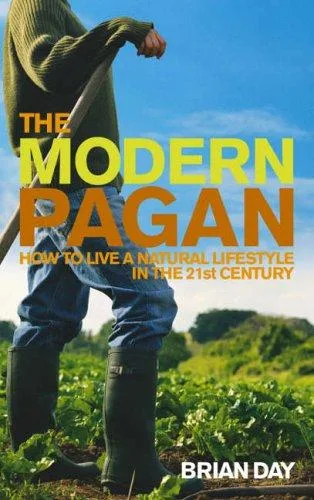
Brian Day’s Modern Pagan offers a welcome departure from sensationalized accounts of witchcraft and earth-based spirituality. Instead of focusing on sensationalism, Day presents a measured overview of contemporary Paganism, highlighting its intellectual and practical diversity. The work’s strength lies in its systematic categorization of various Pagan traditions, providing clarity for newcomers and a useful comparative framework for those already immersed.
A notable limitation, however, is the book's publication date. While foundational for its time, the rapid evolution of online Pagan communities and the increasing academic engagement with these topics since 2011 means some developments might not be fully captured. For instance, the chapter discussing the role of the internet in Pagan networking feels somewhat constrained by the technological landscape of the late 2000s. Despite this, Day’s analysis of the tension between reconstructionist and eclectic approaches remains particularly insightful. The verdict: a solid, if slightly dated, introduction to the varied landscape of modern Pagan belief.
📝 Description
84
Brian Day's 2011 book, Modern Pagan, examines contemporary spiritual paths outside mainstream religions.
Modern Pagan presents a view of contemporary Pagan practices that moves past simple stereotypes. Brian Day looks at the wide variety of beliefs and rituals that make up modern spiritual paths separate from established religions. The book argues that Paganism is not one single thing, but a changeable system shaped by what individuals and groups understand about nature, myths, and magic.
This book is for people interested in or already involved with spiritualities outside the norm. It aims to give a clear understanding of modern Pagan identities, whether the reader is an academic, a spiritual seeker, or someone just trying to understand a growing cultural trend. The author's approach is analytical but still easy to follow for readers interested in spiritual and cultural shifts.
Published in 2011, Modern Pagan arrived during a time of significant growth and change in Neopaganism. Following earlier work by figures like Gerald Gardner and the rise of Wicca, the early 21st century saw many distinct Pagan paths emerge, including Druidry and Asatru. Day's book places this expansion within a larger trend of interest in spirituality outside traditional religious structures, a development also seen in academic and popular writing on new religious movements.
💡 Why Read This Book?
• Gain a structured understanding of the diverse spectrum of modern Pagan paths, moving beyond common misconceptions. You'll learn to differentiate between traditions like Wicca, Asatru, and eclectic Paganism, as detailed in the book's categorization of practices. • Explore the concept of 're-enchantment' as presented by Day, understanding how contemporary Pagans seek to reintegrate sacredness into everyday life and natural environments, a core theme discussed throughout the text. • Grasp the historical trajectory of modern Paganism since its mid-20th century resurgence, appreciating how movements like those influenced by Gerald Gardner paved the way for the diverse landscape examined in the 2011 publication.
⭐ Reader Reviews
Honest opinions from readers who have explored this book.
❓ Frequently Asked Questions
What is the primary focus of Brian Day's "Modern Pagan"?
Brian Day's "Modern Pagan" focuses on the diverse beliefs, practices, and historical development of contemporary Pagan spiritualities, moving beyond stereotypes to offer a structured overview of various traditions that emerged in the late 20th and early 21st centuries.
When was "Modern Pagan" first published, and what was the context?
The book was first published in 2011. This was a period of significant growth and diversification within Neopaganism, following earlier foundational work in the mid-20th century and seeing an explosion of distinct paths.
Does the book cover specific Pagan traditions?
Yes, "Modern Pagan" examines various traditions, including but not limited to Wicca, Druidry, and Asatru. It contrasts reconstructionist and eclectic approaches within these and other emergent Pagan paths.
Is "Modern Pagan" suitable for beginners interested in Paganism?
Absolutely. The book provides a grounded, analytical, and accessible introduction to modern Paganism, making it ideal for beginners seeking to understand the nuances and diversity of these spiritualities without resorting to sensationalism.
What key concepts are explored in "Modern Pagan"?
Key concepts include reconstructionism, animism, the re-enchantment of the world, the role of ritual in community and identity formation, and the philosophical distinctions between various Pagan traditions.
How does the book address the evolution of Paganism?
Day's work contextualizes the expansion of Paganism against a backdrop of growing interest in alternative spiritualities. It discusses how adherents adapt ancient myths and practices to contemporary concerns, reflecting an evolving spiritual landscape.
🔮 Key Themes & Symbolism
The Spectrum of Pagan Practice
Modern Pagan meticulously maps the diverse terrain of contemporary Paganism, moving beyond the monolithic image often presented in popular culture. Day distinguishes between reconstructionist traditions, which aim to revive ancient practices (like Asatru or Hellenic Polytheism), and eclectic paths, where individuals draw from multiple sources to create personal spiritual frameworks. This exploration highlights how modern adherents engage with nature, myth, and magic, often adapting them to contemporary social and ecological realities, showcasing the fluidity and personal expression inherent in these spiritual paths since the mid-20th century.
Re-Enchantment and Animism
A central theme is the concept of 're-enchantment' – the process by which modern individuals seek to restore a sense of the sacred and magical to the world. Day connects this to animistic worldviews, where spirit is perceived as inherent in all things, living and non-living. The book examines how Pagan practitioners cultivate relationships with nature, spirits of place, and the elements, fostering a worldview that challenges materialistic perspectives and emphasizes interconnectedness. This perspective offers an alternative to secularization, finding meaning and magic in the mundane.
Ritual, Identity, and Community
Modern Pagan underscores the vital role of ritual in shaping both individual identity and communal bonds within Pagan movements. Day analyzes how structured ceremonies, seasonal celebrations (like Sabbats and Esbats), and personal devotional practices serve to connect adherents to their chosen traditions, to nature's cycles, and to each other. The book illustrates how shared rituals create a sense of belonging and reinforce collective values, providing a framework for spiritual growth and cultural transmission, particularly in the context of movements that often exist outside established institutions.
Historical Roots and Modern Evolution
The work traces the lineage of modern Paganism, acknowledging foundational figures and movements of the mid-20th century, such as Gerald Gardner's influence on Wicca. It then charts the subsequent diversification into a multitude of paths throughout the late 20th and early 21st centuries. Day contextualizes this evolution within broader societal shifts, including increased interest in spirituality outside traditional religions and the impact of global communication. This historical perspective is crucial for understanding the dynamic and ever-changing nature of contemporary Paganism.
💬 Memorable Quotes
Direct passages from the work, attributed to the author.
“The diversity of modern Paganism means there is no single dogma or practice that defines it.”
— This statement emphasizes the decentralized and individualistic nature of many contemporary Pagan paths. It highlights that adherence is often based on personal conviction and chosen practices rather than strict adherence to a unified doctrine.
“Reconstructionist Pagans seek to revive ancient practices, while eclectic Pagans draw from various sources.”
— This succinctly captures a fundamental division within modern Paganism. It explains the differing approaches to tradition: one focused on historical accuracy and revival, the other on syncretism and personal spiritual synthesis.
“Animism posits that spirit is present in all things, fostering a deep connection to the natural world.”
— This interpretation of animism highlights its core tenet: the inherent vitality and sacredness of the non-human world. It suggests that this worldview encourages a respectful and reciprocal relationship between humans and their environment.
“Ritual serves to create community and reinforce shared identity among practitioners.”
— This highlights the social function of religious and spiritual practice. It suggests that communal rituals are essential for building solidarity, transmitting values, and fostering a sense of belonging within Pagan groups.
“Modern Paganism reflects a broader cultural trend towards seeking meaning outside established religious institutions.”
— This contextualizes Paganism within wider societal shifts. It suggests that the growth of these alternative spiritualities is part of a larger movement of individuals exploring diverse avenues for spiritual fulfillment beyond traditional religious frameworks.
🌙 Esoteric Significance
Tradition
Modern Pagan fits within the broader contemporary esoteric landscape, particularly the resurgence of Earth-based and nature-centered spiritualities that gained momentum in the 20th century. While not strictly aligned with Hermeticism or Kabbalah, it shares with them an emphasis on symbolic language, ritual practice, and the pursuit of direct spiritual experience. It represents a departure from the more theosophically or ceremonial magic-focused traditions, instead drawing inspiration from perceived ancient European polytheistic and nature-based religions.
Symbolism
Key symbols explored include the cycle of seasons (representing life, death, and rebirth), the elements (earth, air, fire, water, often symbolizing fundamental forces and states of being), and various representations of the divine, such as the Horned God and the Triple Goddess in Wicca. These symbols function not merely as abstract representations but as active forces and focal points for ritual, connecting practitioners to natural processes and archetypal energies.
Modern Relevance
The work remains relevant for contemporary thinkers and practitioners exploring animism, ecological spirituality, and the philosophical underpinnings of nature-based religions. It informs discussions on religious pluralism and the growing number of individuals identifying as spiritual but not religious (SBNR). Modern Pagan provides a framework for understanding groups and individuals who are currently engaged in reconstructing ancient traditions or forging new spiritual paths focused on immanence and the sacredness of the natural world.
👥 Who Should Read This Book
• Individuals new to Paganism seeking a comprehensive, non-sensationalized overview of its diverse forms and historical development since the mid-20th century. • Students of comparative religion or sociology of religion interested in understanding contemporary alternative spiritual movements and their organizational structures. • Practitioners of various Pagan paths looking for a framework to contextualize their own beliefs and practices within the broader spectrum of modern Paganism.
📜 Historical Context
Published in 2011, Brian Day's Modern Pagan emerged during a period of significant Neopagan expansion and diversification. The late 20th and early 21st centuries witnessed the proliferation of various paths—from Wicca, influenced heavily by figures like Gerald Gardner in the 1950s, to the resurgence of interest in Norse traditions (Asatru) and Celtic paths (Druidry). Day's work arrived as Paganism was increasingly studied by scholars of new religious movements, moving from the fringes into more academic discourse. This era saw a growing counter-cultural interest in spirituality outside Abrahamic faiths, partly fueled by accessible literature and the nascent internet. While authors like Ronald Hutton were already providing critical historical analyses of witchcraft and Paganism, Day's book offered a more direct overview of contemporary practices, addressing the landscape shaped by figures and movements that had gained prominence since the 1970s. The reception was generally positive among those seeking a clear, non-sensationalized introduction to the subject.
📔 Journal Prompts
Reflect on the concept of 're-enchantment' as presented in the book. How might you apply this to your daily life or immediate surroundings?
Consider the distinction between reconstructionist and eclectic Paganism. Which approach, if any, aligns more with your personal spiritual inclinations and why?
Analyze the role of ritual in community building, drawing examples from the book's discussion of Pagan practices.
Explore your personal connection to the natural world. How do concepts like animism, discussed in Modern Pagan, resonate with your experiences?
Consider the historical context of modern Paganism's growth post-Gerald Gardner. How does understanding this history inform your perspective on contemporary spiritual exploration?
🗂️ Glossary
Neopaganism
A modern religious movement characterized by the revival or reinterpretation of pre-Christian, nature-based, or polytheistic traditions.
Reconstructionism
A branch of Neopaganism focused on reviving ancient, pre-Christian religious practices and beliefs as accurately as possible, often based on historical and archaeological evidence.
Eclectic Paganism
A form of Paganism where individuals create their own spiritual paths by drawing from a variety of different traditions, mythologies, and practices.
Animism
The belief that spirits inhabit natural objects and phenomena, such as plants, animals, rocks, and weather events.
Re-enchantment
The process of restoring a sense of the sacred, magical, or spiritual to the world, often as a response to secularization and materialism.
Wicca
A contemporary Pagan religion characterized by the worship of a Goddess and a God, often involving seasonal rituals and magic, heavily influenced by Gerald Gardner.
Asatru
A modern revival of the pre-Christian religion of the Norse and Germanic peoples, focusing on the worship of the Æsir and Vanir pantheon.
🔮 Readers Also Liked
Browse all →





![Histoire de M. Oufle, par abbé Bordelon Cretouchée et réduite par M. G.] et la Description du sabbat. ... 1793: Iss 140](/img/thumb/histoire-de-m-oufle-par-abb-bordelon-cretouch-e-et-r-duite-par-m-g-et-la-description-du-sabbat-1793-iss-140-bordelon-laurent-1653-1730.webp)
More Free Witchcraft & Paganism Books
View all →





![D. [i. e., Doktor] Balthasar Bekkers reformierten Predigers in Amsterdam bezauberte Welt. ... 1781: Vol 2 Iss 81](/img/thumb/d-i-e-doktor-balthasar-bekkers-reformierten-predigers-in-amsterdam-bezauberte-welt-1781-vol-2-iss-81-bekker-balthasar-1634-1698.webp)