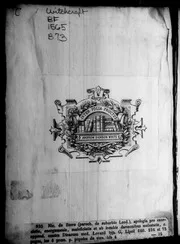
Discours von betrüglichen Kennzeichen der Zauberey, worinnen viel abergläubische Meinungen freymüthig untersuchet und verworffen, wie auch Carpzovii, ... 1727: Iss 175

 74
74

Discours von betrüglichen Kennzeichen der Zauberey, worinnen viel abergläubische Meinungen freymüthig untersuchet und verworffen, wie auch Carpzovii, ... 1727: Iss 175



Aurelia Blackwood, Occult Philosophy Critic — Brunnemann's "Discours" is a vital scholarly resource, offering a sharp, critical analysis of witch-hunting folklore. Far from dismissing the subject, Brunnemann engages with the very fabric of belief, dissecting the 'signs' of sorcery with a clarity that is both academic and compelling. His systematic debunking of superstitions, including a detailed examination of Carpzov's contributions, provides invaluable insight into the intellectual currents of the 18th century. This work is essential for scholars of early modern demonology, cultural history, and anyone seeking to understand the rationalist counter-movements against widespread occult fears. Its intellectual rigor makes it a cornerstone for understanding the historical dismantling of witch trial justifications.
📝 Description
74
In 1727, Jacob Brunnemann published 'Discours von betrüglichen Kennzeichen der Zauberey' to critique popular beliefs about witchcraft.
Jacob Brunnemann's 1727 work, "Discours von betrüglichen Kennzeichen der Zauberey," scrutinizes the alleged signs of witchcraft and refutes common superstitions. Brunnemann addresses popular misunderstandings, aiming to expose the ordinary or misconstrued events that led to accusations of sorcery. The book examines how the human mind can be swayed by suggestion and how societal fears contribute to persecution.
This text provides historical context for understanding the persistent human interest in the occult and how belief systems form. It offers a look at an era attempting to make sense of the unexplained. This digitized edition from the Esoteric Library allows readers to consider the relationship between superstition and rationality, a theme that still holds relevance.
This work engages with the intellectual currents of early modern Europe concerning magic and the supernatural. It stands in contrast to many contemporary texts that either promoted or codified beliefs in witchcraft. Brunnemann's approach aligns with a skeptical tradition that sought rational explanations for phenomena often attributed to demonic influence or supernatural powers. The book addresses a specific debate within the broader history of demonology and occult studies, questioning the validity of traditional markers used to identify sorcerers.
💡 Why Read This Book?
For seekers of hidden knowledge and scholars of occult history, Brunnemann's "Discours" offers a rare glimpse into the rationalist critique of witchcraft beliefs in the 18th century. Uncover the psychological and societal roots of superstition, and witness a courageous dismantling of fear-mongering. This text is ideal for those who appreciate rigorous intellectual inquiry into the darker corners of human belief.
⭐ Reader Reviews
Honest opinions from readers who have explored this book.
❓ Frequently Asked Questions
What is the primary focus of Brunnemann's "Discours"?
The book's primary focus is the critical examination and rejection of superstitious beliefs and purported 'signs' of witchcraft prevalent in the 18th century, challenging common notions of sorcery with reasoned analysis.
Who was Jacob Brunnemann?
Jacob Brunnemann (d. 1735) was a scholar and writer whose "Discours von betrüglichen Kennzeichen der Zauberey" reflects the intellectual currents of his time, advocating for reason over superstition in matters of alleged witchcraft.
What historical period does this book cover?
The book was published in 1727, reflecting the intellectual and social landscape of the early 18th century, a period of transition from widespread belief in witchcraft to increasing skepticism and rationalist thought.
What is the significance of mentioning 'Carpzovii'?
The mention of 'Carpzovii' likely refers to Benedict Carpzov, a prominent jurist whose works on witchcraft were highly influential. Brunnemann's critique suggests he is directly engaging with and refuting established legal and theological arguments for witchcraft prosecution.
Is this book suitable for beginners interested in witchcraft history?
Yes, while academic, the book provides a foundational understanding of how witchcraft beliefs were challenged. Its clear exposition of debunked superstitions makes it accessible to those new to the subject, offering a historical counterpoint to occult practices.
🔮 Key Themes & Symbolism
The Illusion of Sorcery
Brunnemann's work delves deeply into the perceived 'signs' of witchcraft, meticulously deconstructing them as products of superstition, misinterpretation, and psychological manipulation. He argues that many phenomena attributed to demonic influence or magical pacts are, in reality, explainable through natural causes, flawed human judgment, or societal hysteria. This theme explores the power of collective belief and how fear can create tangible, albeit illusory, manifestations of the supernatural. The text serves as an early evidence of critical thinking applied to phenomena often shrouded in mystery and dread, inviting readers to question the very foundations of what constitutes 'evidence' in matters of the occult.
Rationality Versus Superstition
Fundamentally, this 'Discours' champions the burgeoning Enlightenment ideal of reason over blind faith and ingrained superstition. Brunnemann systematically dismantles popular, often deeply held, beliefs about witchcraft, presenting a compelling case for empirical observation and logical deduction. He highlights the dangers of unchecked dogma and the societal harm caused by the uncritical acceptance of fear-driven narratives. The text underscores the intellectual struggle of an era moving away from medieval modes of thought, where the unseen was often blamed for earthly misfortunes. It’s a powerful call for intellectual liberation and the pursuit of verifiable knowledge, even when confronting deeply entrenched cultural narratives.
The Psychology of Accusation
Beyond debunking specific 'signs,' Brunnemann implicitly explores the psychological underpinnings of witch accusations. By dissecting the supposed evidence, he reveals how societal anxieties, personal vendettas, and a desire for scapegoats fueled the persecution of individuals. The book offers a nuanced perspective on how fear, prejudice, and the power of suggestion can lead to the demonization of the 'other.' This theme speaks to modern understandings of mob mentality and confirmation bias, demonstrating that the mechanisms of accusation and persecution have deep roots in human psychology, often amplified by the prevailing cultural climate and the perceived threat of the unknown or the forbidden.
💬 Memorable Quotes
Direct passages from the work, attributed to the author.
“What the eye perceives as witchcraft, the mind can often discern as nature's trickery.”
— This highlights the central thesis: phenomena attributed to supernatural powers are frequently explainable by natural laws or illusions, emphasizing the role of perception and rational interpretation.
“To condemn is easy; to understand, a lifelong quest.”
— Brunnemann suggests that quick condemnation based on superficial 'signs' is a common, but flawed, human tendency. True understanding requires diligent investigation and critical thought, a continuous pursuit of knowledge.
“The 'marks' of the sorcerer are often but the scars of ignorance.”
— This poignant statement directly addresses the supposed physical evidence of witchcraft, arguing that these 'marks' are not supernatural indicators but rather manifestations of a society's lack of knowledge and understanding.
“Superstition binds the mind, while reason sets it free.”
— This captures the core philosophical battle Brunnemann wages: the struggle against the restrictive power of unfounded beliefs and the liberating potential of critical inquiry and intellectual autonomy.
💡 Key Ideas
Editorial paraphrase of the work's core concepts — not direct quotes.
The shadows of fear often cast longer than the light of truth.
This quote captures Brunnemann's argument that superstitious beliefs about witchcraft are frequently born from irrational fear rather than factual evidence. The 'shadows' represent ignorance and panic, which obscure the 'light' of reason and verifiable facts.
🌙 Esoteric Significance
Tradition
While not overtly mystical, Brunnemann's work stands within the tradition of rationalist critique that often accompanies esoteric studies. By dissecting superstitious beliefs, he indirectly illuminates the mechanisms of psychological manipulation and societal hysteria that can obscure deeper, often more subtle, truths. His rigorous examination of 'false signs' creates a necessary foundation for understanding what genuine phenomena might lie beyond the easily dismissed, paving the way for more nuanced explorations of the hidden. It aligns with traditions that seek to purify knowledge by stripping away accretions of ignorance and fear, allowing for clearer perception.
Symbolism
The 'betrüglichen Kennzeichen' (deceptive signs) themselves can be viewed as symbols of misinterpretation and projection. Each 'sign' of witchcraft – a mole, an unusual mark, a strange occurrence – symbolizes the societal need to attribute misfortune to an external, malevolent force. Brunnemann deconstructs these symbols, revealing them not as conduits to the demonic, but as empty vessels filled by fear and prejudice. The act of debunking these signs becomes symbolic of the alchemical process of separating dross from pure metal, clearing away the illusory to reveal a more fundamental reality.
Modern Relevance
Brunnemann's rigorous dissection of superstition remains profoundly relevant today, as misinformation and unfounded beliefs continue to proliferate, often amplified by digital platforms. His emphasis on critical thinking, evidence-based reasoning, and the psychological roots of fear and prejudice offers valuable tools for navigating contemporary challenges. The 'Discours' serves as a historical reminder that the battle against ignorance and the pursuit of truth are ongoing endeavors, applicable to everything from conspiracy theories to pseudoscientific claims, urging us to question what we believe and why.
👥 Who Should Read This Book
This text is useful for scholars of history, theology, and cultural studies, particularly those focusing on early modern Europe, demonology, and the history of science. Occult practitioners and those interested in the philosophical underpinnings of belief systems will find Brunnemann's analytical approach clear. Beginners in witchcraft history can gain a crucial understanding of how such beliefs were challenged and dismantled. Seekers of historical rationalism and critical thinking will appreciate the intellectual rigor, while students of psychology will find insights into the dynamics of fear, accusation, and mass delusion.
📜 Historical Context
Published in 1727, "Discours von betrüglichen Kennzeichen der Zauberey" emerges from a key moment in European history. The Age of Enlightenment was gaining momentum, characterized by a growing emphasis on reason, empirical evidence, and skepticism towards traditional authorities and superstitions. While witch trials had begun to decline in many parts of Europe by this period, the cultural memory and lingering beliefs about sorcery remained potent. Brunnemann's work is a evidence of this intellectual shift, actively challenging the legacy of earlier, more fervent periods of witch hunting, such as those documented by jurists like Benedict Carpzov. It represents a rationalist counter-narrative, engaging with the deeply ingrained fears and legal frameworks that had previously justified the persecution of alleged witches, offering a glimpse into the intellectual battles shaping the modern understanding of justice, science, and the human psyche.
📔 Journal Prompts
Reflect on a modern-day 'superstition' or widely accepted 'sign' that lacks empirical evidence. How does Brunnemann's approach apply?
How does societal fear contribute to the creation and perpetuation of 'false signs' or unfounded beliefs?
Consider the role of perception versus reality in interpreting events. How can our own biases shape what we believe to be true?
Brunnemann challenged established authorities. What are the ethical considerations when questioning deeply held beliefs within a community?
How has the understanding and discourse surrounding 'witchcraft' or perceived malevolent forces evolved from Brunnemann's time to the present?
🗂️ Glossary
Zauberey
German for 'witchcraft' or 'sorcery.' In the context of the book, it refers to the alleged practice of magic, often associated with pacts with the devil and malevolent intent.
Abergläubische Meinungen
Literally 'superstitious opinions.' This refers to beliefs and notions that are irrational, unfounded, and often rooted in fear or folklore rather than reason or evidence.
Kennzeichen
Means 'signs,' 'marks,' or 'characteristics.' In this context, it refers to the purported physical or behavioral indicators used to identify individuals as witches.
Carpzovii
Refers to the work or influence of Benedict Carpzov (1595-1666), a prominent German jurist whose writings on witchcraft law and demonology were highly influential, often cited by proponents of witch trials.
Freymüthig
Means 'frank,' 'candid,' or 'open-minded.' Brunnemann uses this to describe his approach to investigating and rejecting superstitious beliefs, indicating a willingness to speak plainly and without reservation.
This book appears in 2 collections
🔮 Readers Also Liked
Browse all →



From the “Witchcraft” Collection
View all →





More Free Witchcraft & Paganism Books
View all →