Enchanted Feminism
 81
81

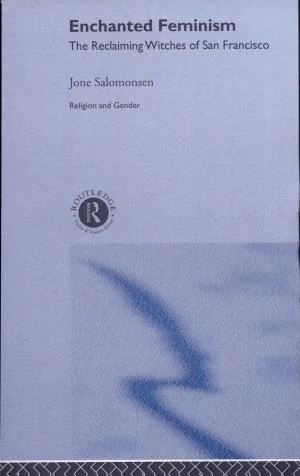
Enchanted Feminism
Jone Salomonsen's "Enchanted Feminism" offers a sober, critical lens on the complex relationship between feminist theory and contemporary pagan spiritualities. Rather than romanticizing the Goddess movement, Salomonsen interrogates its theoretical foundations, particularly its engagement with feminist discourse. The book's strength lies in its academic rigor, meticulously dissecting how feminist ideas were adopted, adapted, and sometimes distorted within pagan circles. A particular point of interest is the nuanced exploration of how the concept of the 'divine feminine' became both a source of empowerment and a site of ideological contention. However, the work can sometimes feel overly academic, potentially alienating readers seeking more experiential insights into pagan practice. The dense theoretical analysis, while valuable, may obscure the lived realities of practitioners for those not steeped in feminist philosophy. Despite this, "Enchanted Feminism" remains an essential, if challenging, contribution to understanding modern esoteric movements.
📝 Description
81
Jone Salomonsen's 2001 book examines how feminist theory shaped contemporary paganism.
Published in 2001, Enchanted Feminism by Jone Salomonsen analyzes the connections between modern paganism, particularly the Goddess movement, and feminist thought. Salomonsen looks at how feminist ideas have affected spiritual practices and beliefs within contemporary paganism, focusing on concepts of the divine feminine. The book goes beyond simple descriptions, examining the ideological foundations and historical paths of these spiritual traditions. It is aimed at academics in religious studies, gender studies, and cultural anthropology, as well as pagans and witches interested in the theoretical underpinnings of their practices. Those seeking a deeper understanding of how feminist critiques have both influenced and been influenced by modern esoteric movements will find this work valuable. The analytical approach is also suited for individuals involved in academic discussions about religion and spirituality.
Salomonsen's work emerged during a time of considerable academic and public attention on the Goddess movement and its relation to feminism, a trend that grew significantly from the 1970s. The book engages with scholars who debated the historical existence of ancient matriarchal societies and the role of women in early religions. It addresses late 20th century discussions about essentialism versus social constructionism in feminist spirituality. Published in 2001, the book contributes to the scholarly conversation that followed earlier major works on feminist theology and paganism.
This book situates itself within the academic study of contemporary paganism and its engagement with Western feminist thought. It arose from a period where scholars and practitioners alike were re-evaluating traditional religious structures and developing new spiritualities, often centered on female divinity. Salomonsen's work addresses the specific intellectual currents within the Goddess movement, a significant development in modern Paganism since the latter half of the 20th century, and its critical dialogue with feminist theory.
💡 Why Read This Book?
• Gain a critical understanding of how feminist ideologies have shaped contemporary paganism, moving beyond simplistic portrayals, as explored through Salomonsen's analysis of the 'divine feminine' concept. • Understand the historical development and academic debates surrounding the Goddess movement since the late 20th century, particularly its engagement with scholars of religion and gender. • Discern the difference between theoretical constructions of femininity within spiritual movements and the lived experiences of practitioners, a distinction crucial for nuanced study.
⭐ Reader Reviews
Honest opinions from readers who have explored this book.
❓ Frequently Asked Questions
What is the primary focus of Jone Salomonsen's "Enchanted Feminism"?
The book critically examines how feminist theory has influenced and been integrated into contemporary pagan spiritualities, particularly the Goddess movement, analyzing its ideological underpinnings and historical evolution.
When was "Enchanted Feminism" first published?
Jone Salomonsen's "Enchanted Feminism" was first published in 2001, placing it within a significant period of academic discourse on feminist spirituality.
Who would benefit most from reading "Enchanted Feminism"?
Scholars of religion, gender studies, and cultural anthropology, along with practitioners of contemporary witchcraft and Neo-Paganism interested in the theoretical aspects of their spiritual paths, would find this book valuable.
Does the book discuss specific pagan traditions?
Yes, the work analyzes various pagan traditions, focusing on how the concept of the 'Goddess' and 'divine feminine' has been interpreted and utilized within them.
What academic debates does "Enchanted Feminism" engage with?
It engages with late 20th-century debates on essentialism versus social constructionism within feminist spirituality and the historical understanding of matriarchal societies.
Is "Enchanted Feminism" an academic text or a practical guide?
It is primarily an academic and critical text, offering theoretical analysis and historical context rather than practical instructions for spiritual practice.
🔮 Key Themes & Symbolism
Feminist Ideology in Paganism
This theme explores the deep integration of feminist thought into the fabric of contemporary paganism, especially the Goddess movement. Salomonsen investigates how feminist critiques of patriarchy and traditional religious structures were adopted and transformed within these spiritual contexts. The book examines the ideological work performed by concepts like the 'divine feminine,' which served as a powerful symbol of empowerment and a departure from male-dominated religious imagery, while also scrutinizing potential essentialist tendencies within this framework.
The 'Goddess' as a Symbol
The book critically analyzes the concept of the 'Goddess' not as a singular deity, but as a potent symbol within feminist spirituality. Salomonsen dissects its various interpretations and uses across different pagan traditions, highlighting how it functions as a tool for reclaiming female power and challenging patriarchal religious narratives. The work probes the complexities of this symbol, considering its construction, historical resonances, and its role in shaping both individual and collective spiritual identity for practitioners.
Historical Development of Feminist Spirituality
Salomonsen traces the evolution of feminist spirituality and Neo-Paganism, particularly from the late 20th century onwards. This theme addresses how the movement responded to and was shaped by broader feminist discourse and academic scholarship. It examines the historical trajectory of these spiritual paths, noting shifts in focus, internal debates, and their reception within both academic and religious communities. The book provides context for understanding the contemporary range of these traditions.
Critique of Essentialism
A significant aspect of "Enchanted Feminism" involves Salomonsen's critical examination of essentialist arguments within feminist spirituality. The work questions the tendency to posit inherent, universal feminine qualities or a singular 'feminine nature,' particularly when linked to the divine. By analyzing these claims, the book encourages a more nuanced understanding of gender and spirituality, differentiating between symbolic representation and potentially rigid biological or spiritual determinism prevalent in some discourse.
💬 Memorable Quotes
Direct passages from the work, attributed to the author.
“The Goddess has become a symbol of feminist empowerment.”
— This highlights the central role of the Goddess figure as a tool for reclaiming agency and challenging patriarchal religious structures within feminist paganism.
“Feminist theory provided a critical framework for interpreting and practicing spirituality.”
— This indicates how academic feminist ideas were instrumental in shaping the intellectual and ideological range of modern pagan movements seeking alternatives to established religions.
“The construction of the divine feminine is a complex ideological process.”
— This points to the book's analytical approach, suggesting that the concept of the divine feminine is not straightforward but rather a product of specific cultural and theoretical influences.
“Practitioners often navigate diverse interpretations of paganism.”
— This acknowledges the varied nature of contemporary pagan practice and belief, underscoring the multiplicity of ways individuals engage with spiritual traditions.
“Academic critique is necessary for understanding spiritual movements.”
— This emphasizes the book's scholarly intent, asserting the value of rigorous analysis in comprehending the dynamics and ideologies of groups like the Goddess movement.
🌙 Esoteric Significance
Tradition
While not adhering to a single lineage, "Enchanted Feminism" critically engages with the modern esoteric milieu, particularly the Goddess movement and contemporary witchcraft. It fits within the broader field of Western Esotericism by analyzing the formation of new spiritual traditions that draw upon feminist and pagan ideals. The work departs from purely devotional or practical texts by offering a scholarly deconstruction of the ideological underpinnings of these practices, focusing on their relationship with secular feminist thought and academic discourse.
Symbolism
The book centrally analyzes the 'Goddess' as a potent symbol, representing a reclamation of the feminine principle and a challenge to patriarchal religious structures. It also implicitly touches upon symbols of earth-based spirituality and cyclical time, common in Neo-Paganism, by examining how these concepts are interpreted through a feminist lens. The divine feminine, in its varied manifestations, serves as a key symbolic locus for understanding the movement's aims and internal dynamics.
Modern Relevance
Contemporary scholars and practitioners of feminist spirituality, ecofeminism, and critical studies of New Religious Movements continue to draw upon Salomonsen's work. Thinkers exploring the intersection of gender, religion, and social justice in the 21st century find "Enchanted Feminism" a crucial reference for understanding the historical and theoretical context of these fields. Its analytical approach remains relevant for contemporary discussions on identity, spirituality, and the ongoing negotiation between tradition and modern social movements.
👥 Who Should Read This Book
• Scholars of religion and gender studies seeking to understand the theoretical frameworks behind contemporary feminist spiritual movements. • Practitioners of Neo-Paganism and witchcraft interested in a critical analysis of the ideological underpinnings of the Goddess movement. • Cultural critics and anthropologists examining the intersection of social movements, belief systems, and the construction of meaning in modern societies.
📜 Historical Context
Published in 2001, "Enchanted Feminism" emerged during a period when academic and popular interest in contemporary Paganism and the Goddess movement, which had gained momentum since the 1970s, was being critically examined. Jone Salomonsen's work engaged with ongoing scholarly debates concerning the relationship between feminism and spirituality, particularly the ways in which feminist theory was adopted, adapted, or contested within these new religious movements. The book participated in a broader intellectual current that sought to understand the social and ideological construction of gender and divinity in non-traditional religious forms. It followed foundational works by scholars and practitioners like Starhawk and Margot Adler, offering a more theoretically grounded analysis. This period also saw critical engagement from various perspectives, including critiques of potential essentialism within feminist spirituality, a point Salomonsen directly addresses, distinguishing her work from earlier celebratory accounts and positioning it within a more analytical framework of religious studies.
📔 Journal Prompts
The concept of the 'divine feminine' as a symbol of empowerment requires careful examination.
Reflect on the historical context of feminist ideas influencing spiritual practices.
Analyze the distinction between symbolic representation and essentialist claims in spiritual discourse.
Consider the diverse interpretations of paganism by its practitioners.
Evaluate the role of academic critique in understanding contemporary spiritual movements.
🗂️ Glossary
Goddess Movement
A contemporary spiritual movement, often associated with Neo-Paganism, that centers on the worship and veneration of female deities, emphasizing the divine feminine and often critiquing patriarchal religious structures.
Feminist Theory
A body of theory and activism that critiques patriarchy and advocates for gender equality, encompassing diverse perspectives on gender, power, and social structures.
Divine Feminine
The concept of the sacred or divine embodied in feminine principles, qualities, or deities, often used in feminist spirituality as a counterpoint to patriarchal religious traditions.
Neo-Paganism
A broad term for modern spiritual or religious movements that seek to revive or reinterpret pre-Christian European religions, often incorporating elements of nature worship, magic, and polytheism.
Patriarchy
A social system in which males hold primary power and predominate in roles of political leadership, moral authority, social privilege, and control of property.
Essentialism
The belief that individuals or groups possess inherent, unchanging qualities or essences, often applied to gender in discussions about 'feminine nature'.
Ideology
A system of ideas and ideals, especially one which forms the basis of economic or political theory and policy, or a set of beliefs.
🔮 Readers Also Liked
Browse all →






More by Jone Salomonsen
All books →
More Free Witchcraft & Paganism Books
View all →![ERIC ED085284: World History. Volumes I and II. [Sahuarita High School Career Curriculum Project].](/img/thumb/eric-ed085284-world-history-volumes-i-and-ii-sahuarita-high-school-career-curriculum-project-eric.webp)