Neoplatonism After Derrida

 83
83

Neoplatonism After Derrida
Stephen Gersh's Neoplatonism After Derrida is a rigorous intellectual exercise, a necessary undertaking for anyone invested in the long arc of Western metaphysical thought. Gersh excels at meticulously tracing the conceptual lines connecting Plotinus's hypostases with Derrida's critiques of logocentrism. The strength lies in its granular textual analysis, revealing unexpected resonances between ancient emanations and postmodern différance. However, the book's dense prose and highly specialized focus can be a significant barrier for all but the most dedicated scholars. A passage that particularly exemplifies Gersh's method is the comparison of the Neoplatonic ascent to the One with Derrida's dismantling of foundational presence, a complex but rewarding juxtaposition. Ultimately, this is an indispensable, albeit demanding, contribution to the history of philosophy.
📝 Description
83
Stephen Gersh's 2006 book examines Neoplatonism's engagement with Jacques Derrida's deconstruction.
Neoplatonism After Derrida analyzes how Jacques Derrida's deconstructive philosophy interacts with ancient Neoplatonic thought. Published in 2006, this study connects thinkers like Plotinus and Iamblichus to 20th-century critical theory. Gersh demonstrates how Derrida's methods, which challenged metaphysical assumptions, offered new ways to read Neoplatonic concepts.
The book is aimed at advanced students and academics in philosophy, literature, religious studies, and classics. A prior understanding of both Neoplatonism and deconstruction is beneficial for grasping its arguments. It speaks to those interested in the evolution of ideas and how ancient philosophical systems are revisited in contemporary intellectual debates. Gersh's work emerged during a period of active scholarly discussion about the connections between ancient philosophy and postmodern approaches, specifically considering how Derrida's critiques of presence and metaphysics might illuminate or alter interpretations of Neoplatonic metaphysics.
This work situates itself within the lineage of philosophical inquiry that traces esoteric traditions through later intellectual movements. Neoplatonism, with its hierarchical cosmology and emphasis on divine unity, has long been a source for mystical and philosophical traditions. Gersh's analysis shows how these ancient ideas, particularly their metaphysical structures, were re-examined through the critical lens of post-structuralism. It highlights how seemingly distant philosophical systems can inform each other, revealing continuities and transformations in how fundamental questions about reality and knowledge are addressed.
💡 Why Read This Book?
• Gain a nuanced understanding of how Jacques Derrida's deconstructive critiques engage with ancient Neoplatonic concepts like the One and emanation, as explored in the text's analysis of Plotinus. • Appreciate the complex reception of classical philosophy in 20th-century thought by examining Gersh's detailed argumentation, specifically referencing the intellectual currents of the late 20th century. • Discover how seemingly disparate philosophical systems, Neoplatonism and post-structuralism, can be brought into dialogue, offering fresh perspectives on metaphysical foundations as presented in the book's comparative approach.
⭐ Reader Reviews
Honest opinions from readers who have explored this book.
❓ Frequently Asked Questions
What is the primary philosophical tradition discussed in relation to Derrida?
The primary tradition is Neoplatonism, an influential school of thought that emerged in the 3rd century CE, with key figures like Plotinus and Iamblichus. The book examines how its concepts are reinterpreted through Derrida's deconstructive lens.
When was Neoplatonism After Derrida first published?
The work was first published in 2006, placing it within a period of significant scholarly engagement between classical philosophy and contemporary critical theory.
Who is the author of Neoplatonism After Derrida?
The author is Stephen Gersh, an established scholar in the field of classical philosophy and its reception.
What specific philosophical method is central to the book's analysis of Neoplatonism?
The central method is deconstruction, as developed by Jacques Derrida. The book uses this critical approach to interrogate the metaphysical underpinnings of Neoplatonic thought.
Does the book discuss specific Neoplatonic texts or figures?
Yes, the book engages with key Neoplatonic figures such as Plotinus and Iamblichus, analyzing their core doctrines and their potential for deconstructive critique.
What is the core intellectual tension explored in the book?
The core tension lies in applying a philosophy (deconstruction) that critiques metaphysical foundations to a system (Neoplatonism) that is itself a highly developed metaphysical structure.
🔮 Key Themes & Symbolism
Deconstruction of The One
This theme investigates how Derrida's critical apparatus, which often targets notions of absolute presence and unified origin, is applied to the Neoplatonic concept of 'The One.' Gersh explores whether deconstruction can dismantle Plotinus's ultimate principle or if it inadvertently highlights its philosophical persistence. The analysis hinges on the paradoxical nature of attempting to speak about that which is beyond being and intellect, a challenge inherent in both Neoplatonism and deconstructive discourse.
Emanation and Différance
The book draws parallels between the Neoplatonic model of emanation, where reality flows from The One through successive hypostases (Nous, Soul), and Derrida's concept of 'différance.' Gersh examines how the structured, hierarchical unfolding of reality in Neoplatonism can be read through the lens of Derrida's critique of stable meaning and presence, suggesting that even ancient metaphysical systems contain elements of deferral and play.
Metaphysical Foundations Under Scrutiny
A central concern is how Derrida's critique of Western metaphysics, particularly his challenge to logocentrism and the metaphysics of presence, impacts the understanding of Neoplatonic thought. The work questions the very possibility of reconstructing or interpreting Neoplatonism without falling into the metaphysical assumptions that Derrida sought to expose, thus placing the stability and integrity of these ancient philosophical frameworks under critical review.
Reception and Reinterpretation
This theme focuses on the historical and intellectual process by which ancient philosophical ideas are received and transformed by later thinkers. Gersh's study exemplifies this by showing how a 3rd-century CE philosophical system is brought into dialogue with a late 20th-century critical theory, demonstrating the dynamic and often unexpected ways in which philosophical traditions continue to inform and challenge one another across millennia.
💬 Memorable Quotes
Direct passages from the work, attributed to the author.
“The Neoplatonic ascent to the One and Derrida's critique of presence.”
— This highlights a core comparison: how the Neoplatonic journey toward an ineffable ultimate reality might be re-examined through Derrida's philosophical method that questions stable foundations and absolute origins.
“Plotinus's hypostases as a structured hierarchy.”
— This points to the specific Neoplatonic doctrine of emanating principles (Intellect, Soul) and suggests it will be analyzed for its internal logic and potential fissures when viewed through a deconstructive framework.
“The challenge of speaking about the ineffable.”
— This acknowledges a fundamental difficulty shared by both Neoplatonism (describing The One) and deconstruction (disrupting established meanings), suggesting the book explores this shared linguistic and conceptual predicament.
“Derrida's questioning of logocentrism.”
— This refers to Derrida's critique of philosophies that privilege speech and immediate presence over writing and mediation, a concept Gersh likely applies to Neoplatonic attempts to articulate ultimate reality.
“The philosophical legacy of ancient thinkers.”
— This emphasizes the book's focus on how ancient philosophical ideas, specifically from Neoplatonism, continue to exert influence and provoke new interpretations in modern intellectual discourse.
🌙 Esoteric Significance
Tradition
While Neoplatonism itself is a foundational philosophical system for many esoteric traditions, this work engages with it through the secular, critical lens of post-structuralist philosophy. It doesn't directly present Neoplatonism as an esoteric practice but rather analyzes its philosophical underpinnings. The significance lies in how it deconstructs the very metaphysical claims that esoteric traditions often rely upon, potentially offering a critical re-evaluation for modern practitioners or scholars of Hermeticism and Kabbalah.
Symbolism
The book implicitly engages with symbols of unity and hierarchy central to Neoplatonism, such as 'The One' and the emanative sequence of hypostases (Intellect, Soul). These represent not just philosophical concepts but also mystical ideals of divine order and ascent. By applying deconstruction, Gersh probes the stability and linguistic representation of these symbols, questioning their absolute authority and revealing underlying complexities.
Modern Relevance
Contemporary thinkers exploring the intersection of continental philosophy and spirituality, as well as scholars of comparative mysticism, may find this work clear. It provides a critical framework for understanding how ancient metaphysical systems can be re-examined in light of modern philosophical challenges, potentially informing current discussions within New Age thought or contemporary hermeneutic approaches to esoteric texts.
👥 Who Should Read This Book
• Advanced philosophy students and academics: Those studying 20th-century critical theory (particularly Derrida) and ancient philosophy (specifically Neoplatonism) will find a rigorous academic bridge between these fields. • Comparative religion scholars: Researchers interested in the historical reception and reinterpretation of classical thought in later intellectual movements will benefit from Gersh's detailed analysis. • Students of Western Esotericism: Individuals seeking a critical, philosophical perspective on the metaphysical underpinnings of traditions influenced by Neoplatonism, such as Hermeticism, can use this book for intellectual deconstruction.
📜 Historical Context
Published in 2006, Stephen Gersh's *Neoplatonism After Derrida* arrived at a time when the engagement between classical philosophy and postmodern theory was a vibrant field of scholarship. Thinkers like Pierre Hadot had already begun re-contextualizing ancient philosophy as a way of life, while the influence of figures such as Michel Foucault and Jacques Derrida reshaped humanities departments globally. Gersh's work directly confronts the implications of Derrida's deconstructive project for understanding the metaphysical architecture of Neoplatonism, a school of thought with figures like Plotinus and Iamblichus that had profoundly shaped Western thought for centuries. While some scholars might have seen deconstruction as antithetical to the systematic metaphysics of Neoplatonism, Gersh sought to explore the productive tensions and reinterpretations that arise from their juxtaposition. The book contributes to a broader trend of re-examining foundational texts through contemporary critical lenses, moving beyond traditional historical scholarship to explore conceptual dialogues across epochs.
📔 Journal Prompts
The Neoplatonic concept of 'The One' and its linguistic representation.
Plotinus's hierarchical emanation versus Derrida's concept of différance.
The implications of deconstruction for understanding metaphysical foundations.
The philosophical journey from ancient Athens to 20th-century Paris.
How does the critique of logocentrism affect the interpretation of mystical texts?
🗂️ Glossary
Neoplatonism
A school of philosophy that emerged in the 3rd century CE, heavily influenced by Plato. Key figures include Plotinus, Porphyry, and Iamblichus. It posits a transcendent, ultimate reality (The One) from which all existence emanates.
Deconstruction
A critical approach to philosophy and literature, primarily associated with Jacques Derrida. It involves analyzing texts to reveal their internal contradictions, hidden assumptions, and reliance on binary oppositions, often challenging notions of stable meaning and presence.
The One
The supreme principle in Neoplatonism, a transcendent, utterly simple, and ineffable source from which all reality emanates. It is beyond being and thought.
Emanation
The Neoplatonic doctrine that reality flows or proceeds from The One in a series of descending levels or hypostases (e.g., Intellect, Soul), without diminishing The One itself.
Hypostases
The distinct levels or substances that emanate from The One in Neoplatonic cosmology, most notably Intellect (Nous) and Soul (Psyche), which mediate between The One and the material world.
Logocentrism
A term used by Derrida to describe the Western philosophical tradition's tendency to privilege speech, reason, and immediate presence over writing and mediation.
Différance
A key Derridean concept that combines 'to differ' and 'to defer.' It signifies that meaning is not fixed but is produced through a play of differences and is perpetually deferred, never fully present.
🔮 Readers Also Liked
Browse all →









More by Stephen Gersh
All books →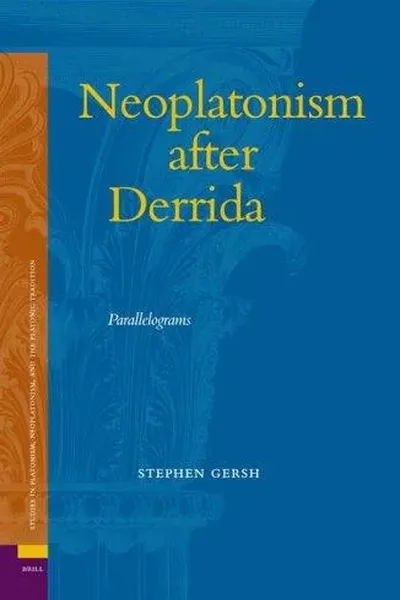



More Free Occult Philosophy Books
View all →