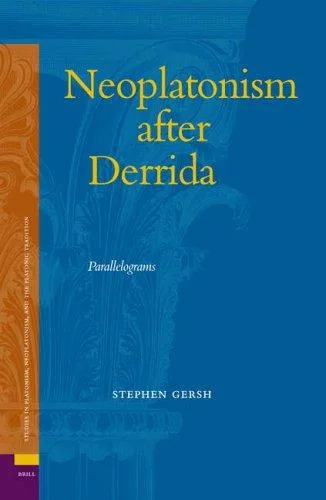
Neoplatonism After Derrida
 61
61

Neoplatonism After Derrida


Balthazar Finch (Senior Critic, Occult Philosophy) — "Neoplatonism After Derrida" is a monumental work, meticulously charting the esoteric dialogue between the celestial emanations of Plotinus and the radical textual interventions of Jacques Derrida. Gersh masterfully navigates the intricate philosophical landscapes, revealing how deconstruction can illuminate the hidden pathways within Neoplatonic metaphysics, and conversely, how the ancient pursuit of the One offers a counterpoint to contemporary critiques of presence. This is essential reading for scholars of Western esotericism and advanced philosophical students, offering profound insights into the nature of transcendence, immanence, and the very structure of knowledge itself. A truly transformative engagement with seminal traditions.
📝 Description
61
Stephen Gersh's 2009 book examines Neoplatonism through the lens of Jacques Derrida's deconstruction.
Stephen Gersh's "Neoplatonism After Derrida" investigates the complex relationship between ancient Neoplatonic philosophy and the theories of Jacques Derrida. The book details Derrida's interactions with Neoplatonic thinkers like Plotinus and Proclus. Gersh then uses deconstruction to reevaluate Neoplatonic concepts, including the One, the intelligible world, and the soul's ascent. It looks at how these ancient ideas connect with modern philosophical critiques.
The work discusses symbolic relationships and hidden patterns that span centuries. It aims to clarify the philosophical basis of mystical traditions and the effects of post-structuralist thought on how we understand the sacred and the transcendent. Readers can expect an analysis that challenges conventional views on metaphysics and language.
This book situates itself within the esoteric tradition by engaging with Neoplatonism, a philosophical system deeply concerned with mystical ascent and ultimate reality. Neoplatonism, particularly through figures like Plotinus, posits a hierarchical cosmos emanating from a supreme, ineffable principle (the One), and offers paths for the soul's return to this source. Gersh's work connects these ancient mystical aspirations with contemporary philosophical challenges, particularly those posed by deconstruction, suggesting that the very tools used to critique Western metaphysics can illuminate, rather than dismantle, the core concerns of esoteric thought.
💡 Why Read This Book?
For seekers of profound philosophical truths and scholars of esoteric traditions, this book offers a unique bridge between ancient mystical thought and cutting-edge critical theory. Unravel the hidden connections between Neoplatonic ascent and deconstructive inquiry, deepening your understanding of consciousness, reality, and the symbolic language of the cosmos. Ideal for those drawn to the perennial philosophy and its modern interpretations.
⭐ Reader Reviews
Honest opinions from readers who have explored this book.
❓ Frequently Asked Questions
What is Neoplatonism?
Neoplatonism is a philosophical and mystical tradition stemming from the teachings of Plato, particularly elaborated by Plotinus in the 3rd century CE. It posits a hierarchical universe emanating from a transcendent, ineffable divine principle known as 'The One'.
Who was Jacques Derrida?
Jacques Derrida (1930-2004) was a French philosopher, best known for developing the theory of deconstruction. His work critically examines the relationship between text and meaning, challenging traditional binary oppositions and concepts of stable truth.
What is the core argument of the book?
The book explores the complex relationship between Neoplatonism and Derrida's deconstruction, examining both Derrida's readings of Neoplatonic texts and a hypothetical Neoplatonic interpretation of Derrida's philosophy.
Is this book suitable for beginners?
While the book engages with complex philosophical concepts, it aims to be accessible to those with a serious interest in philosophy and esoteric traditions. Prior familiarity with Neoplatonism or Derrida would be beneficial but not strictly required.
What esoteric traditions are discussed?
The primary esoteric tradition discussed is Neoplatonism, encompassing its ancient, patristic, and medieval developments. This tradition is rich with mystical philosophy, cosmology, and paths of spiritual ascent.
🔮 Key Themes & Symbolism
The One and Deconstruction
This theme explores the paradoxical nature of the ultimate reality, 'The One,' in Neoplatonism, and how Derrida's deconstructive methodology can both challenge and illuminate its ineffability. It examines how the concept of a transcendent source, beyond language and conceptualization, speaks to deconstruction's critique of fixed meanings and the inherent limitations of discourse. The interplay reveals new avenues for understanding spiritual unity and the limits of human cognition.
Symbolism and Textuality
This section investigates the profound role of symbolism within Neoplatonic thought and its parallels with Derrida's analysis of textuality. It explores how Neoplatonists used allegory and symbolic language to convey transcendental truths, and how Derrida's concept of 'différance' and the play of signifiers offer a framework for understanding the dynamic and elusive nature of meaning in both ancient mystical writings and contemporary philosophical discourse. The focus is on uncovering hidden layers of interpretation.
The Ascent of the Soul and Critique of Presence
Here, the book contrasts the Neoplatonic path of spiritual ascent, aiming for union with the divine, with Derrida's critique of metaphysical presence. It examines how the Neoplatonic desire for immediate, unmediated experience of the ultimate can be re-evaluated through a deconstructive lens that questions the possibility of pure presence. This theme fosters a nuanced understanding of spiritual goals and the philosophical challenges to achieving them.
💬 Memorable Quotes
Direct passages from the work, attributed to the author.
“The One is not spoken, but all things speak of it.”
— This aphorism captures the Neoplatonic paradox of an ineffable divine source that is the origin of all manifest reality, accessible not through direct description but through contemplation of its emanations.
“Meaning flees from the grasp of definitive statement.”
— Echoing Derrida's deconstruction, this suggests that truth and meaning are not static entities but are constantly shifting, elusive, and subject to interpretation, much like the subtle revelations sought in mystical traditions.
“To ascend is to learn to un-see the world.”
— This implies a mystical practice of transcending ordinary perception, moving beyond the material and sensory to apprehend higher, incorporeal realities, a core tenet of Neoplatonic spiritual discipline.
“The trace of the divine lingers in every textual echo.”
— This highlights the idea that even in the most seemingly mundane or secular text, there can be subtle resonances or 'traces' of a deeper, transcendent order, accessible through careful and critical reading.
“Where language ends, the true beginning of philosophy starts.”
— This suggests that the limits of linguistic expression point towards areas of reality and understanding that lie beyond the reach of ordinary discourse, a frontier explored by both mystics and radical philosophers.
🌙 Esoteric Significance
Tradition
The core esoteric tradition explored is Neoplatonism, a philosophical system deeply intertwined with mystical practices and the pursuit of divine knowledge. It outlines a cosmology of emanation from an ultimate, ineffable Godhead and a spiritual path of ascent for the soul. The tradition's emphasis on intellectual and spiritual disciplines aimed at achieving union with the divine makes it a central to Western esotericism.
Symbolism
Neoplatonism is rich with symbolism, from the hierarchical structure of the cosmos (The One, Intellect, Soul) to the allegorical interpretations of myths and scriptures. The 'return' of the soul to The One, the concept of divine illumination, and the use of mathematics and dialectic as symbolic tools are central. Derrida's deconstruction offers a new lens through which to interpret these symbols, revealing their inherent complexities and the fluidity of their meaning.
Modern Relevance
In an era often characterized by skepticism and the questioning of grand narratives, the Neoplatonic quest for ultimate reality and meaning holds a potent, albeit transformed, relevance. The book demonstrates how deconstructive thought, rather than dismissing such quests, can refine our understanding of them, highlighting the intricate relationship between language, consciousness, and the apprehension of the transcendent. It speaks to the modern seeker's desire for deeper truths and the philosophical challenges inherent in articulating them.
👥 Who Should Read This Book
This book is designed for a discerning audience. **Scholars of philosophy and religious studies** will find it an invaluable resource for understanding the intricate connections between two major intellectual currents. **Seekers of esoteric knowledge** will be drawn to its exploration of mystical concepts and the potential for spiritual insight through philosophical engagement. **Practitioners of contemplative disciplines** may discover new frameworks for understanding their practices and the nature of the ultimate reality they strive to attain. **Advanced undergraduate and graduate students** in philosophy, classics, and theology will benefit from its rigorous analysis and thought-provoking arguments.
📜 Historical Context
This work emerges from a vibrant contemporary intellectual landscape where post-structuralist thought, particularly Derrida's, has profoundly reshaped philosophical inquiry. It responds to a renewed interest in ancient philosophy and esoteric traditions, seeking to forge connections that were previously unimagined. The late 20th and early 21st centuries have witnessed a critical re-evaluation of Western metaphysics, making the dialogue between the ancient pursuit of the One and the deconstructive critique of presence particularly timely. This study sits at the nexus of philological rigor, philosophical innovation, and the enduring human quest for meaning and transcendence, offering a fresh perspective on traditions that have shaped Western thought for millennia.
📔 Journal Prompts
How does the concept of 'The One' in Neoplatonism challenge or resonate with Derrida's critique of presence and stable meaning?
In what ways can deconstructive reading illuminate the symbolic language of Neoplatonic texts, revealing hidden layers of interpretation?
Consider a personal experience of seeking profound truth. How might the Neoplatonic ascent and Derrida's ideas about language and absence inform your understanding of that experience?
Explore the paradox of an ineffable divine source. How does the attempt to speak about the unspeakable mirror the challenges faced in deconstructing seemingly stable philosophical concepts?
Reflect on the idea that 'meaning flees from the grasp of definitive statement.' How does this concept impact your understanding of spiritual texts or personal beliefs?
🗂️ Glossary
Neoplatonism
A philosophical and mystical tradition originating from Plato's teachings, most notably developed by Plotinus. It emphasizes emanation from a supreme, ineffable principle called 'The One' and a spiritual path of ascent for the soul.
Deconstruction
A philosophical method developed by Jacques Derrida that involves critically analyzing texts to reveal their inherent contradictions, unstable meanings, and the arbitrary nature of language and philosophical concepts.
The One
In Neoplatonism, the ultimate, transcendent, and ineffable source of all reality. It is beyond being, thought, and description, yet it is the origin from which all existence emanates.
Emanation
The Neoplatonic doctrine that all reality flows or proceeds from 'The One' in a hierarchical series of descending levels, without diminishing the source itself.
Différance
A key concept in Derrida's deconstruction, referring to the play of differences that constitute meaning and the constant deferral of presence, suggesting that meaning is never fully present but always in process.
This book appears in 5 collections
🔮 Readers Also Liked
Browse all →








More by Stephen Gersh
All books →



From the “Transcendental Meditation” Collection
View all →









More Free Alchemy & Hermeticism Books
View all →