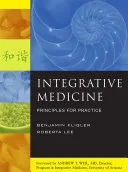
Integrative Medicine: Principles for Practice
 74
74

Integrative Medicine: Principles for Practice
Benjamin Kligler and Roberta Anne Lee’s "Integrative Medicine: Principles for Practice" arrives not as a gentle introduction, but as a clinical roadmap. Its strength lies in its commitment to evidence and applicability for primary care settings, a crucial distinction from more theoretical explorations of CAM. The section on developing clinical protocols, for instance, offers concrete steps rather than vague aspirations. However, the book occasionally struggles to fully capture the esoteric essence that often underpins many CAM modalities, sometimes presenting them with a pragmatism that might feel reductive to practitioners steeped in deeper traditions. The 2012 publication date means some of the referenced research is now dated, though the core principles remain robust. Ultimately, it is a valuable, if somewhat dry, compendium for clinicians ready to operationalize integrative care.
📝 Description
74
Benjamin Kligler and Roberta Anne Lee published Integrative Medicine: Principles for Practice in 2012.
This 2012 volume presents a framework for combining conventional medicine with complementary and alternative medicine (CAM). It aims to be a practical guide for primary care providers, moving beyond a simple list of CAM practices. The book seeks to connect different healing philosophies with current medical practice, focusing on actionable strategies.
The target audience includes family medicine and primary care physicians looking to enhance their treatment options. Allied health professionals, medical students, and researchers interested in the evidence behind integrative healthcare will also find it useful. The work is intended for clinicians who wish to understand and apply CAM within their existing practices, prioritizing clinical effectiveness.
Integrative medicine saw increased attention in the late 20th and early 21st centuries due to patient interest in CAM and a desire for more holistic care. This book appeared as research into CAM began to mature. It reflects the ongoing effort to find common ground and evidence-based integration between established medicine and alternative traditions.
While not strictly esoteric, this book engages with traditions that lie outside mainstream Western biomedicine. It addresses the integration of practices often found in holistic health, traditional Chinese medicine, Ayurveda, and various forms of mind-body healing. The work acknowledges a patient desire for approaches that treat the whole person, a concept central to many ancient healing systems. It attempts to bridge the empirical rigor demanded by modern medicine with the broader, often less quantifiable, principles found in these complementary paths.
💡 Why Read This Book?
• You will learn to identify specific evidence-based CAM modalities that can be safely integrated into primary care, as detailed in sections discussing clinical protocols. • You will gain a framework for evaluating and applying complementary therapies, moving beyond anecdotal evidence to a clinically authoritative approach exemplified by the book's case studies. • You will understand the principles of patient-centered care that form the bedrock of integrative medicine, drawing from the foundational concepts outlined by Kligler and Lee since the 2012 publication.
⭐ Reader Reviews
Honest opinions from readers who have explored this book.
❓ Frequently Asked Questions
What is the primary audience for "Integrative Medicine: Principles for Practice"?
The book is primarily intended for family medicine and primary care providers. It also serves as a valuable resource for allied health professionals, medical students, and researchers interested in the evidence base and practical application of integrative healthcare.
When was "Integrative Medicine: Principles for Practice" first published?
The first edition of "Integrative Medicine: Principles for Practice" was published on September 1, 2012.
Does the book only review CAM modalities, or does it offer practical guidance?
The book goes far beyond a simple review of CAM modalities. It offers an evidence-based and clinically authoritative guide with case studies immediately applicable to clinical practice, focusing on practical integration.
What is the main goal of integrative medicine as presented in this book?
The main goal is to integrate complementary and alternative medicine (CAM) with traditional medical treatment, representing the next generation in the evolving field of integrative medicine, aiming for a more holistic patient approach.
Are the concepts in the book theoretical or clinically applicable?
The book emphasizes concepts and case studies that are immediately applicable to clinical practice. It is designed as a guide for providers to implement integrative strategies effectively.
Who are the main authors of this foundational text?
The primary authors are Benjamin Kligler and Roberta Anne Lee. Their work aims to provide a structured approach to integrative medicine for practitioners.
🔮 Key Themes & Symbolism
Evidence-Based CAM Integration
This theme centers on the rigorous evaluation of complementary and alternative medicine (CAM) modalities. It moves beyond anecdotal evidence to establish a framework for understanding which CAM therapies possess a verifiable impact on health outcomes. The work emphasizes the importance of research and clinical data in guiding the integration of these practices into conventional medical settings. It's about discerning efficacy and safety, ensuring that integrative approaches are grounded in scientific understanding, not just popular belief, making it relevant for practitioners seeking reliable methods.
Patient-Centered Primary Care
The core of integrative medicine, as presented here, is a profound shift towards treating the whole person, not just isolated symptoms. This involves understanding the patient's lifestyle, emotional well-being, and personal beliefs as integral components of their health journey. Primary care providers are encouraged to foster collaborative relationships, empowering patients to actively participate in their healing process. This holistic perspective ensures that medical interventions are tailored to individual needs, promoting long-term wellness beyond disease management.
Clinical Protocol Development
This theme addresses the practical challenges of implementing integrative strategies within existing healthcare systems. It focuses on creating structured protocols that guide clinicians in safely and effectively incorporating CAM therapies alongside conventional treatments. The book provides actionable steps and case studies, illustrating how to navigate potential interactions, manage patient expectations, and build a comprehensive integrative practice. This pragmatic approach is crucial for bridging the gap between theoretical knowledge and real-world application in clinical settings.
Bridging Medical Traditions
The work acts as a crucial bridge between the established Western medical paradigm and the diverse range of complementary and alternative healing traditions. It seeks common ground, identifying areas where these different approaches can synergistically enhance patient care. Rather than viewing them as competing systems, the book advocates for a unified approach that leverages the strengths of each. This fosters a more comprehensive and inclusive model of healthcare that respects multiple pathways to wellness.
💬 Memorable Quotes
Direct passages from the work, attributed to the author.
“The book represents the next generation in the evolving field of integrative medicine.”
— This statement positions the work as a significant advancement, suggesting it moves beyond earlier, perhaps more rudimentary, attempts at integrating CAM and conventional medicine. It implies a more sophisticated, evidence-based, and clinically applicable approach.
“Features a unique approach and case studies immediately applicable to clinical practice.”
— This highlights the practical utility of the text, emphasizing that it provides concrete examples and methods that healthcare providers can directly implement in their daily work, rather than remaining purely theoretical.
“Far more than a review of CAM modalities, this is an evidence-based and clinically authoritative guide.”
— This asserts the book's depth and credibility, distinguishing it from superficial overviews. It underscores a commitment to scientific rigor and practical, reliable guidance for medical professionals.
“By integrating complementary and alternative medicine (CAM) with traditional medical treatment...”
— This succinctly defines the core mission of the book: to create a synthesis between established medical practices and various forms of alternative or complementary therapies, aiming for enhanced patient outcomes.
“An evidence-based and clinically authoritative guide for family medicine and primary care providers.”
— This directly states the book's intended audience and its foundational principles. It emphasizes the blend of scientific support and practical clinical relevance that the authors aim to deliver.
🌙 Esoteric Significance
Tradition
While "Integrative Medicine: Principles for Practice" is grounded in conventional scientific evidence, its embrace of holistic patient care and the integration of diverse healing modalities subtly aligns with perennialist philosophical currents found in esoteric traditions. It acknowledges the interconnectedness of mind, body, and spirit, a concept central to Hermeticism and Theosophy. The work departs from purely materialistic interpretations of health, implicitly validating the efficacy of non-pharmacological and non-surgical interventions that often form the bedrock of esoteric healing practices.
Symbolism
The book does not heavily rely on overt esoteric symbolism but implicitly engages with the concept of balance and harmony, central motifs in many esoteric systems. The integration of 'light' (conventional medicine) and 'shadow' (CAM) can be seen as a metaphorical representation of alchemical unification, seeking a perfected whole from disparate parts. The emphasis on the 'whole person' carries the Hermetic principle of 'As Above, So Below,' suggesting that internal and external states of being are deeply interconnected and mutually influential.
Modern Relevance
Contemporary thinkers and practitioners in fields like functional medicine, mind-body medicine, and even certain branches of psychotherapy draw directly from the principles articulated in this book. The emphasis on evidence-based integration and patient-centered care has become a central to many modern holistic health movements. Schools and institutes dedicated to integrative medicine training continue to reference the foundational concepts presented by Kligler and Lee, underscoring the work's lasting impact on the evolution of healthcare paradigms.
👥 Who Should Read This Book
• Primary care physicians seeking to incorporate evidence-based complementary and alternative medicine (CAM) into their practice will find actionable protocols and case studies. • Allied health professionals and medical students interested in understanding the scientific basis and practical application of integrative healthcare will gain a foundational text. • Researchers exploring the intersection of conventional medicine and CAM will benefit from the book's structured approach to evidence evaluation and clinical integration.
📜 Historical Context
Published in September 2012, "Integrative Medicine: Principles for Practice" emerged during a period of burgeoning acceptance and academic scrutiny of complementary and alternative medicine (CAM). The early 21st century saw a growing patient demand for holistic care, prompting medical institutions to explore ways to integrate these modalities. This book arrived as the field was maturing, moving beyond fringe status towards more evidence-based frameworks. It reflected the ongoing dialogue between conventional biomedicine and diverse healing traditions, seeking to establish common ground and practical applications. Key contemporaries like Andrew Weil had already popularized aspects of integrative health, but Kligler and Lee's work aimed for a more clinical, protocol-driven approach specifically for primary care providers. The reception was generally positive within circles advocating for broader healthcare options, though mainstream skepticism towards CAM persisted, creating a landscape where such authoritative guides were crucial for bridging divides.
📔 Journal Prompts
Integrative Medicine's emphasis on patient-centered care necessitates a deep understanding of individual needs.
The challenge of evidence-based CAM integration requires careful discernment of therapeutic efficacy.
Reflect on the concept of bridging medical traditions in your own healing journey.
Consider how the practical application of clinical protocols can transform patient outcomes.
Explore the holistic perspective of treating the whole person beyond symptom management.
🗂️ Glossary
Integrative Medicine
A healthcare approach that combines conventional medical treatments with complementary and alternative medicine (CAM) therapies, emphasizing a holistic and patient-centered perspective.
Complementary and Alternative Medicine (CAM)
A broad range of healing philosophies, practices, and therapies that are not typically part of standard Western medical care, used either alongside (complementary) or instead of (alternative) conventional treatments.
Evidence-Based Practice
An approach to healthcare decision-making that integrates the best available research evidence with clinical expertise and patient values.
Primary Care Provider
A healthcare professional who provides general medical care, often serving as the first point of contact for patients within the healthcare system.
Holistic Approach
A philosophy of healthcare that considers the whole person—mind, body, and spirit—rather than focusing solely on specific symptoms or diseases.
Clinical Protocol
A detailed plan of care that outlines specific steps and guidelines for managing a particular health condition or implementing a therapeutic intervention.
Patient-Centered Care
A model of healthcare that emphasizes the patient's individual needs, preferences, and values in all aspects of their medical treatment and decision-making.