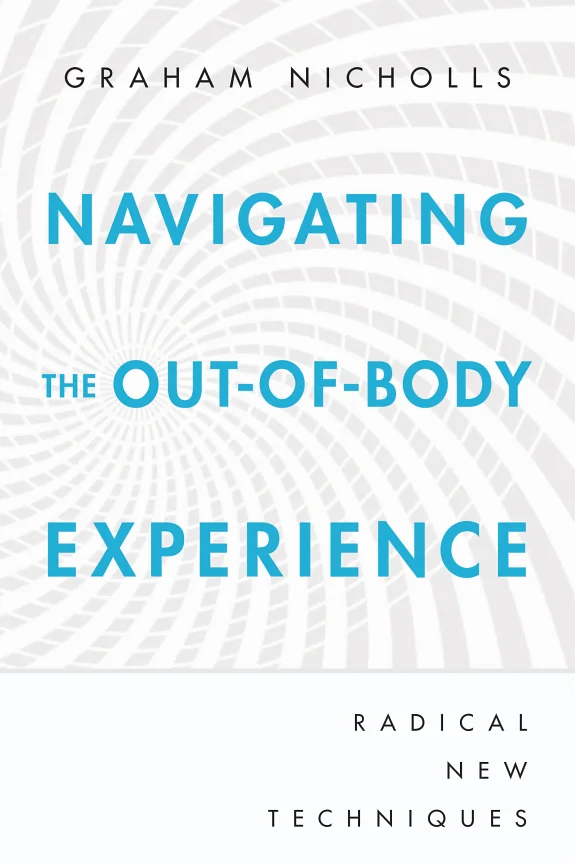
Navigating the Out-of-Body Experience
 74
74

Navigating the Out-of-Body Experience
Graham Nicholls’s *Navigating the Out-of-Body Experience* presents a refreshingly rational take on astral projection. Instead of relying on arcane lore, Nicholls grounds his methods in personal practice and psychological insight, making the often-elusive OBE feel attainable. His detailed breakdown of preparatory techniques, particularly the emphasis on mental focus and relaxation, is a notable strength. The work is particularly effective in demystifying the experience, framing it as an extension of conscious awareness rather than a supernatural event. However, the book could benefit from more extensive case studies to illustrate the diversity of experiences readers might encounter. A particularly illuminating section discusses the role of expectation and belief in facilitating the separation state. Ultimately, Nicholls delivers a credible and actionable guide for the serious explorer of consciousness.
📝 Description
74
Graham Nicholls's 2012 book details a structured method for achieving out-of-body experiences.
Published in 2012, Graham Nicholls's *Navigating the Out-of-Body Experience* provides a practical methodology for entering and understanding altered states of consciousness. It moves past sensationalism to offer a structured approach to what is commonly called astral projection. The book details techniques developed through Nicholls's two decades of personal research and experimentation. This work is intended for individuals curious about non-physical realities and those seeking a systematic method to induce out-of-body states. It appeals to readers interested in self-discovery through consciousness exploration, particularly those who appreciate a grounded, science-informed perspective. The book is suitable for both beginners and those with prior experience in psychic or spiritual development.
The core idea is that out-of-body experiences (OBEs) are achievable through specific mental and physical preparations. Nicholls emphasizes a personalized approach, encouraging readers to adapt techniques to their individual psychologies. He also examines the nature of consciousness, suggesting that OBEs provide a unique avenue for self-understanding. The work presents a framework for consciously directing these experiences, moving beyond passive observation.
Nicholls's approach emerged during a period of renewed public and academic interest in consciousness studies and parapsychology. While astral projection has roots in ancient traditions, his 2012 publication framed the subject within a modern context, incorporating psychological interpretations and empirical observation. This contrasts with earlier, more purely mystical accounts found in esoteric literature, positioning the work as a bridge between traditional concepts and contemporary understanding.
💡 Why Read This Book?
• You will learn specific mental and physical techniques, detailed in chapters like "Preparing to Leave the Body," to reliably induce altered states of consciousness, moving beyond vague astral projection advice. • You will gain a scientifically-informed perspective on out-of-body experiences, understanding them through Nicholls’s framework of consciousness exploration, as discussed in the book's introduction. • You will develop a personalized strategy for self-discovery by applying the book's methods to explore your own psychological makeup during non-physical states, a core aim outlined by Nicholls.
⭐ Reader Reviews
Honest opinions from readers who have explored this book.
❓ Frequently Asked Questions
What is Graham Nicholls's background in out-of-body experiences?
Graham Nicholls has dedicated over twenty years to studying and experiencing out-of-body phenomena. He has systematically documented his own experiences and those of others, leading to the development of the practical techniques presented in his 2012 book.
Is Navigating the Out-of-Body Experience suitable for beginners?
Yes, the book is designed to be accessible to newcomers. It provides a step-by-step guide with clear explanations and techniques that can be adapted to individual needs, making it a good starting point for those new to OBE exploration.
Does the book offer scientific explanations for OBEs?
Nicholls approaches OBEs with a science-based perspective, integrating psychological insights and empirical observation. While not strictly a scientific treatise, it frames the experience within a rational, understandable context rather than purely mystical terms.
What are some key techniques taught in the book?
The book details specific methods for relaxation, visualization, and developing mental focus. Techniques include 'the rope technique' and focusing on subtle sensations to facilitate the separation from the physical body.
Can this book help with self-discovery?
Absolutely. Nicholls suggests that exploring out-of-body states offers unique insights into one's own psychology, strengths, and subconscious patterns, thereby facilitating a deeper process of self-understanding.
When was Navigating the Out-of-Body Experience first published?
The book was first published on April 8, 2012, making it a contemporary guide to understanding and experiencing astral projection.
🔮 Key Themes & Symbolism
Systematic OBE Induction
The core of Nicholls' work lies in clarifying the out-of-body experience (OBE) by presenting it as an achievable state through disciplined practice. He details specific techniques for relaxation, mental focus, and cultivating the necessary mindset for separation. Unlike more intuitive or faith-based approaches, Nicholls emphasizes a methodical, almost scientific, process, encouraging readers to experiment and adapt his methods to their unique psychological makeup. The book provides a practical framework for those seeking to consciously leave their physical body.
Consciousness and Self-Discovery
Nicholls posits that OBEs are not merely extraordinary events but extensions of consciousness that offer profound opportunities for self-exploration. By engaging with non-physical states, individuals can gain unique insights into their own minds, psychological patterns, and inner potential. The book frames these experiences as a powerful tool for personal growth, suggesting that understanding the nature of consciousness beyond the physical body leads to a more comprehensive self-awareness and a richer understanding of reality.
Bridging Esotericism and Psychology
This work stands out by attempting to reconcile traditional esoteric concepts of astral projection with modern psychological understanding. Nicholls avoids purely mystical or religious interpretations, instead focusing on the subjective experience and its psychological correlates. He presents OBEs as phenomena understandable through focused intention and altered states of awareness, making the esoteric accessible to a contemporary audience interested in verifiable personal experience rather than dogma. The 2012 publication date places it in a context of ongoing dialogue between spiritual and scientific inquiry.
Practical Application
The emphasis throughout *Working through the Out-of-Body Experience* is on practical application. Nicholls provides actionable advice and techniques derived from his extensive personal research, aiming to equip readers with the tools necessary to initiate and manage their own OBEs. The book is structured to guide the reader through preparation, induction, and the experience itself, fostering confidence and competence. This focus on tangible results makes it a valuable resource for serious practitioners.
💬 Memorable Quotes
Direct passages from the work, attributed to the author.
“OBEs are not supernatural events but extensions of consciousness.”
— This interpretation frames out-of-body experiences not as breaches of natural law, but as natural, albeit less common, states of awareness accessible through specific mental disciplines.
“The key is to develop a consistent, focused intention.”
— This highlights Nicholls's belief that success in achieving an OBE hinges on disciplined mental effort and a clear, unwavering aim, rather than passive hoping or wishing.
“Adapt the techniques to your own psychological makeup.”
— This suggests a personalized approach to OBE induction, acknowledging that individual differences in personality and mental processing require tailored methods for optimal results.
“Preparation is as crucial as the induction attempt itself.”
— This emphasizes the importance of the entire process, from relaxation to mental readiness, underscoring that the moments leading up to an OBE are critical for its successful manifestation.
“Exploring non-physical states provides unique self-knowledge.”
— This points to the therapeutic and developmental potential of OBEs, suggesting they offer a distinct pathway to understanding oneself beyond the limitations of ordinary physical awareness.
🌙 Esoteric Significance
Tradition
Nicholls's work operates within the broader Hermetic and esoteric traditions that explore consciousness beyond the physical body, often termed astral projection or out-of-body experience (OBE). While not strictly adhering to any single lineage like Kabbalah or Gnosticism, it shares the Hermetic principle of 'as above, so below,' applying it to the internal field of consciousness. His methodical approach departs from purely mystical or religious frameworks, offering a more psychological and experiential interpretation that appeals to modern Western esotericism's drive to integrate esoteric knowledge with empirical understanding.
Symbolism
While Nicholls’s work is less focused on overt symbolism than traditional esoteric texts, the core 'symbol' is the out-of-body state itself. This state represents liberation from physical constraints, symbolizing expanded consciousness and the potential for direct perception of non-physical realities. The techniques he describes, such as visualization and focusing on subtle energies, act as symbolic gateways. The 'rope' often mentioned in OBE literature, for instance, becomes a tangible imagined tool for separation, symbolizing the aspirant's will and focused intent to transcend ordinary awareness.
Modern Relevance
Nicholls's practical and psychologically-informed approach to OBEs is highly relevant to contemporary consciousness research, lucid dreaming communities, and modern esoteric practitioners. Thinkers and groups exploring non-ordinary states of consciousness, such as those involved in transpersonal psychology or groups like the International Academy of Consciousness (IAC), find value in his systematic methods. His work provides a bridge for those interested in the experiential aspects of spirituality and consciousness exploration who seek concrete techniques rather than solely philosophical or theological discourse.
👥 Who Should Read This Book
• Aspiring explorers of consciousness seeking a structured, practical guide to inducing and understanding out-of-body experiences, moving beyond anecdotal accounts. • Individuals interested in self-discovery through altered states of consciousness who appreciate a rational, psychologically-informed perspective on OBEs. • Practitioners of meditation and mindfulness looking to deepen their practice by exploring the potential of focused intention and awareness beyond the physical body.
📜 Historical Context
Graham Nicholls's *Working through the Out-of-Body Experience*, published in 2012, arrived during a period of resurgence for consciousness studies, building upon earlier explorations in parapsychology and esoteric traditions. While figures like Sylvan Muldoon and Robert Monroe had extensively documented OBEs in the mid-20th century, Nicholls’s work distinguished itself by its direct engagement with psychological principles and a more accessible, step-by-step methodology. It emerged in an era where online communities were fostering new dialogues around lucid dreaming and astral projection, often challenging the more dogmatic or purely spiritual interpretations prevalent in earlier Theosophical or Rosicrucian literature. Nicholls’s grounded approach, emphasizing personal experimentation over adherence to rigid doctrine, positioned his book as a practical guide for a new generation of seekers interested in empirical exploration of consciousness, distinct from the metaphysical speculations of earlier authors like Helena Blavatsky.
📔 Journal Prompts
The role of focused intention in initiating separation.
Developing a personal preparatory routine for OBEs.
Interpreting the psychological insights gained from non-physical states.
Assessing the effectiveness of the 'rope technique' for your practice.
The relationship between physical relaxation and mental alertness during an OBE attempt.
🗂️ Glossary
Out-of-Body Experience (OBE)
A subjective experience in which a person feels to be temporarily separate from their physical body and to perceive their body and the surrounding environment from a vantage point outside their physical self.
Astral Projection
Often used interchangeably with OBE, this term implies a projection of consciousness or a non-physical body (often termed the astral body) into a non-physical realm or plane of existence.
Separation Stage
The critical phase during an OBE attempt where the consciousness detaches or feels detached from the physical body, leading to the ability to perceive from an external viewpoint.
Vibrational State
A common precursor to separation in OBEs, characterized by intense physical vibrations or buzzing sensations felt throughout the body.
Mental Focus
The ability to concentrate the mind intensely on a specific objective or sensation, considered crucial by Nicholls for initiating and navigating OBEs.
Psychological Makeup
An individual's unique combination of personality traits, mental processes, and emotional characteristics, which Nicholls suggests influences their approach to and experience of OBEs.
Consciousness Exploration
The deliberate investigation of different states or levels of awareness, including ordinary waking consciousness, dreaming, meditation, and out-of-body experiences.
This book appears in 1 collection
🔮 Readers Also Liked
Browse all →








From the “Out-of-Body Experience” Collection
View all →






More Free Occult Philosophy Books
View all →