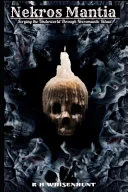
Nekros Mantia
 80
80

Nekros Mantia
R. H. Whisenhunt’s Nekros Mantia arrives not with a whisper but a direct challenge to conventional notions of mortality and the hereafter. The author tackles the weighty subject of post-mortem existence with a refreshing pragmatism, aiming to demystify spirit communication rather than cloak it in ornate, inaccessible language. A notable strength lies in its methodical approach to spirit discernment; the emphasis on verifiable identification methods is crucial for anyone serious about engaging with entities beyond the veil. However, the book occasionally leans into a tone that borders on prescriptive, potentially overlooking the deeply personal and varied nature of spiritual encounters. The section detailing safeguards against deception, while necessary, could benefit from more nuanced exploration of potential psychological projection versus genuine external influence. Whisenhunt’s directness in addressing the Underworld is commendable, offering a practical, if somewhat stark, roadmap for the initiated or the truly curious. It is a focused manual for those prepared to confront the unknown.
📝 Description
80
R H Whisenhunt's Nekros Mantia (2023) offers practical methods for interacting with the afterlife.
Nekros Mantia addresses fundamental questions about existence after death and the possibility of communicating with spirits. The book provides readers with techniques to verify the identities of entities encountered in the post-mortem realm, aiming to reduce fear and misinformation surrounding the subject. It is written for those who question the nature of death and consciousness, seeking knowledge beyond speculation or established dogma.
This work is suitable for serious students of occult knowledge, including those interested in necromancy, mediumship, and spirit communication. It also contains relevant material for individuals studying comparative religion, eschatology, or historical cultural practices concerning the deceased. The author emphasizes a critical approach, requiring verifiable methods and safety protocols for engaging with these sensitive topics.
Published in 2023, Nekros Mantia connects to a long history of spiritual inquiry into the underworld and communication with the dead, seen in ancient Egyptian texts, Greek Orphic traditions, and global shamanism. The book counters modern materialistic views, aligning with a resurgence of interest in esoteric traditions and consciousness studies that began in the late 19th century. Whisenhunt's approach is direct, focusing on practical application rather than extensive philosophical discourse.
💡 Why Read This Book?
• Gain practical techniques for safe spirit communication, learning methods to verify entity identities as outlined in the book's approach to necromantic practices. • Understand the structure and nature of the 'Underworld' as described by Whisenhunt, moving beyond abstract theological concepts to a more tangible spiritual geography. • Develop critical discernment skills for spiritual encounters, directly applying the book's guidance on discerning authentic spirits from deceptive ones, a core principle of its occult framework.
⭐ Reader Reviews
Honest opinions from readers who have explored this book.
❓ Frequently Asked Questions
What is Nekros Mantia's primary focus regarding the afterlife?
Nekros Mantia primarily focuses on the practical aspects of the afterlife, aiming to answer questions about life after death and the possibility of safe, effective communication with spirits. It emphasizes discernment and verification of encountered entities.
Who is the author, R. H. Whisenhunt, and what is their background?
Information on R. H. Whisenhunt's specific background is not detailed in the book's initial release, but the text itself serves as the primary indicator of their expertise in esoteric traditions and spirit communication.
How does Nekros Mantia differ from religious teachings on the afterlife?
Unlike many religions that rely on faith and dogma, Nekros Mantia offers a practical, methodological approach to understanding and interacting with the afterlife, focusing on verifiable techniques and personal discernment rather than belief systems.
What does the book mean by 'Underworld'?
The 'Underworld' in Nekros Mantia refers to the realm accessible after physical death, presented not as a mythological hell but as a spiritual landscape with its own inhabitants and dynamics, which the book guides readers to explore.
Are there safety precautions discussed for communicating with spirits?
Yes, a significant portion of Nekros Mantia is dedicated to safety. It provides methods and principles for ensuring that spirit communication is conducted safely and effectively, with an emphasis on identifying and avoiding deception.
When was Nekros Mantia first published?
Nekros Mantia was first published on February 3, 2023, making it a contemporary work engaging with long-standing esoteric inquiries.
🔮 Key Themes & Symbolism
Spirit Discernment
A core theme is the critical necessity of discerning the true identity of spirits encountered post-mortem. Whisenhunt posits that not all spiritual communications are what they seem, and the book offers practical, observable criteria for verification. This moves beyond passive reception of messages to an active, critical engagement, ensuring the practitioner is interacting with the intended entity and not a deceptive force or misidentified presence.
The Nature of the Underworld
Nekros Mantia re-conceptualizes the 'Underworld' as an accessible spiritual dimension rather than a purely mythological construct. The work explores its structure, its inhabitants, and the principles governing interaction within it. This perspective invites practitioners to view the post-mortem realm as a place of exploration and potential communication, requiring specific knowledge and protocols for safe navigation.
Practical Necromancy
The book functions as a practical manual for engaging with the deceased, a branch of magic often referred to as necromancy. It explains the process, offering actionable steps for communication, emphasizing safety, efficacy, and ethical considerations. This theme positions the work within occult traditions that seek direct experience and manipulation of spiritual forces.
Post-Mortem Existence
Fundamentally, Nekros Mantia addresses the perennial question of what happens after death. It asserts that consciousness persists and that the transition is a state of being that can be understood and, to some extent, interacted with. This theme challenges both materialistic finality and passive religious eschatology, advocating for an active understanding of the soul's journey.
💬 Memorable Quotes
Direct passages from the work, attributed to the author.
“Is it possible to communicate with those who have gone before us?”
— This question expresses the book's central inquiry, framing spirit communication not as a matter of faith but as a practical possibility that the text aims to illuminate and facilitate.
“How can you be sure the spirit is who they claim to be?”
— This highlights the book's emphasis on critical discernment and verification in spirit interactions, a key element for ensuring safety and authenticity in esoteric practices.
“Get ready to begin a study into the Underworld.”
— This serves as an invitation and a warning, signaling that the book intends to guide the reader through the complexities and potential dangers of exploring the field of the dead.
“Learn how the different [entities] operate.”
— This suggests that the work provides insight into the varied nature and operational principles of spiritual entities encountered in the post-mortem realm, offering a structured understanding.
“Is there life after death?”
— This is the foundational query that drives the entire exploration within the book, positioning it as a direct response to one of humanity's most enduring existential questions.
🌙 Esoteric Significance
Tradition
Nekros Mantia can be situated within the broader tradition of Western Esotericism, particularly its practical, operative branches that focus on interacting with non-physical entities. While not explicitly Gnostic or Kabbalistic, its emphasis on discernment and the structure of non-physical realms aligns with principles found across many esoteric lineages that posit a complex cosmology beyond the material world. It leans heavily into the practical application of necromancy, a practice with historical roots in various grimoires and folk magic.
Symbolism
The 'Underworld' itself functions as a central symbol, representing not a place of eternal damnation but a transitional spiritual landscape. The concept of 'spirits' embodies the persistent nature of consciousness after death, and the need for 'discernment' symbolizes the practitioner's critical faculty and ethical responsibility when engaging with these energies or intelligences. The book's focus on 'safe and effective' communication suggests a symbolic framework where intention, ritual, and knowledge act as protective wards.
Modern Relevance
In contemporary practice, Nekros Mantia speaks to a growing segment of individuals seeking direct experience with the spiritual rather than relying solely on established religious dogma or academic study. Its practical, almost instructional tone is relevant to modern occultists, solitary practitioners, and those exploring altered states of consciousness or mediumship. The book's emphasis on critical verification appeals to a modern audience often skeptical of unsubstantiated claims within the esoteric field.
👥 Who Should Read This Book
• Individuals curious about verifiable spirit communication: Those who question traditional religious explanations of the afterlife and seek practical, methodical guidance on safely contacting and discerning spirits. • Students of comparative esoteric traditions: Readers interested in how different cultures and occult systems approach death, the spirit world, and necromancy, seeking a modern interpretation. • Practitioners of ceremonial magic or witchcraft: Those already engaged in occult practices who wish to expand their understanding and application of working with entities and the post-mortem realms.
📜 Historical Context
The publication of Nekros Mantia in 2023 places it within a contemporary resurgence of interest in esoteric subjects, occultism, and consciousness studies, often fueled by digital dissemination and a reaction against purely materialistic worldviews. While R. H. Whisenhunt's specific lineage is not explicitly detailed, the work engages with a tradition that has roots stretching back to ancient shamanic practices, Greek mystery cults, and later Hermetic and ceremonial magic traditions. This renewed engagement with the spirit world carries the spiritualist movements of the 19th century, though Whisenhunt's approach appears more focused on practical application and less on spiritualist phenomena. It stands apart from the more philosophical or theoretical works of contemporaries like Lon Milo DuQuette or authors associated with the Golden Dawn, offering a more direct, almost manual-like guide to interacting with the deceased, potentially drawing from grimoire traditions without necessarily adhering to their historical strictures.
📔 Journal Prompts
The concept of the Underworld as a navigable spiritual landscape.
Discernment methods for verifying spirit identity.
Personal reflections on the possibility of post-mortem communication.
Ethical considerations when interacting with departed entities.
The reader's own questions about life after death.
🗂️ Glossary
Nekros Mantia
The title itself, likely a portmanteau suggesting 'death' (nekros) and 'divination' or 'knowledge' (mantia), indicating the book's focus on understanding and communicating with the deceased.
Underworld
In the context of this book, refers to the spiritual realm or dimension accessible after physical death, conceptualized as a place for exploration and interaction with spirits.
Spirit Discernment
The practice of critically evaluating and verifying the identity and nature of spiritual entities encountered during communication, ensuring authenticity and safety.
Necromancy
A branch of magic focused on communicating with the dead or spirits of the dead, often for purposes of divination, knowledge, or influence.
Entity
A general term used in the book to refer to any non-physical consciousness or intelligence encountered, including spirits of the deceased, elementals, or other spiritual beings.
Safe and Effective Communication
The book's guiding principle for spirit interaction, emphasizing protocols and methods that minimize risk and maximize the clarity and authenticity of the exchange.
Post-Mortem
Relating to the period after death; the book applies this term to the state of consciousness and existence following the cessation of physical life.