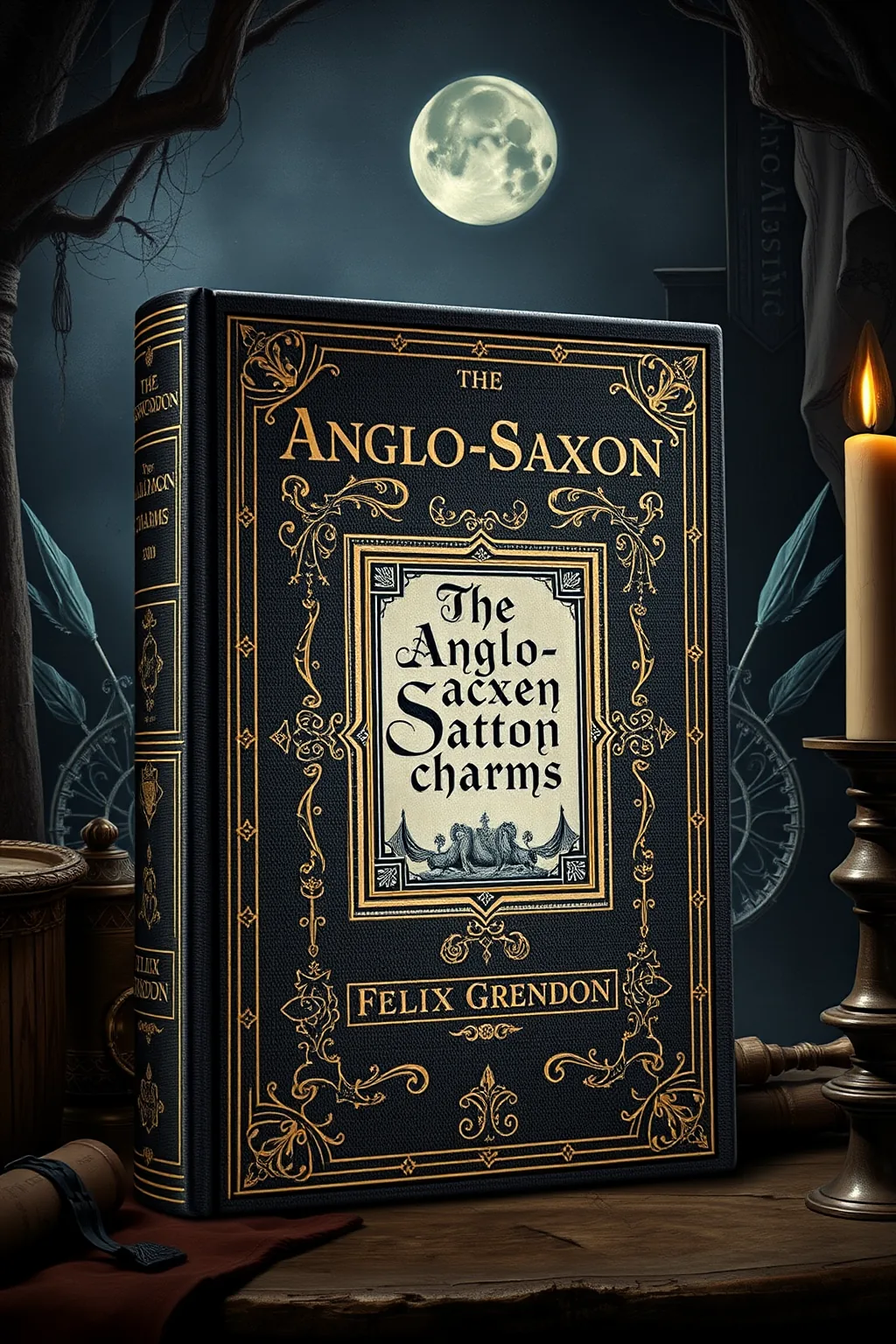
The Anglo-Saxon charms
 61
61

The Anglo-Saxon charms


Balthazar Finch (Senior Critic, Occult Philosophy) — Felix Grendon's 'The Anglo-Saxon Charms' is a cornerstone for any serious student of European folk magic. Grendon's scholarship illuminates the profound spiritual and practical applications of these ancient incantations, moving beyond mere linguistic curiosity to reveal deep esoteric wisdom. The collection showcases a sophisticated system of healing, protection, and spiritual invocation, deeply rooted in pre-Christian animism and nascent Christian symbolism. Its strength lies in its contextualization, allowing readers to grasp the worldview from which these potent spells emerged. This is essential reading for occult historians, ritualists, and anyone fascinated by the enduring power of ancient magical practices.
📝 Description
61
Felix Grendon's 1914 collection reveals Anglo-Saxon spells for daily life.
This book gathers Anglo-Saxon charms as recorded by Felix Grendon. It shows how these incantations were part of everyday existence in early England, used for everything from healing ailments to protection. Grendon reconstructs these historical practices, highlighting their connection to nature, spirits, and sympathetic magic.
The collection presents verses that unlock rituals and symbols from a past worldview. It is intended for anyone interested in the origins of Western esoteric traditions. The book provides a look into the mystical beliefs of a people whose lives were intertwined with magic. It is useful for academics seeking original texts, those interested in magical practices, and individuals curious about ancient spiritual forces.
This work sits within the study of Western esotericism by documenting pre-Christian magical traditions. The Anglo-Saxon charms represent a direct link to folk magic and belief systems that persisted before and during the Christianization of Britain. They offer insight into a worldview where the spiritual and material realms were closely connected, and where ritual and spoken word held significant power over natural and supernatural forces. The collection demonstrates the continuity of certain magical concepts and practices that influenced later European occult traditions.
💡 Why Read This Book?
This book offers a direct portal to the mystical worldview of the Anglo-Saxons, revealing potent, ancestral magic. It's ideal for seekers of historical spellcraft, practitioners seeking to connect with ancient healing and protective rites, and scholars of early European esotericism. Uncover forgotten wisdom and the deep spiritual currents of a bygone era.
⭐ Reader Reviews
Honest opinions from readers who have explored this book.
❓ Frequently Asked Questions
What is the primary purpose of the Anglo-Saxon charms?
The Anglo-Saxon charms served multifarious purposes, encompassing healing physical ailments, protecting against illness and misfortune, invoking spiritual aid, and ensuring prosperity. They were integral to daily life, acting as a bridge between the mundane and the magical realms.
Are these charms still relevant today?
Many find these charms resonate with modern spiritual practices, offering insights into sympathetic magic, nature-based rituals, and the power of intent. Their symbolic language and underlying principles can be adapted and explored by contemporary practitioners seeking ancestral connections.
What kind of language do the charms use?
The charms are written in Old English, often employing poetic meter, alliteration, and vivid imagery. They frequently invoke divine figures, natural elements, and mythical creatures, creating a powerful, resonant incantatory effect.
Who was Felix Grendon?
Felix Grendon was a scholar and translator dedicated to preserving and interpreting ancient texts. His work on the Anglo-Saxon charms is highly regarded for its scholarly rigor and sensitive approach to the material's cultural and spiritual significance.
Can these charms be performed as rituals?
While the original context and intent are paramount, many elements of these charms can be studied and adapted for personal ritualistic exploration. Understanding the historical context and symbolic layers is crucial for respectful engagement.
🔮 Key Themes & Symbolism
The Symbiotic Relationship with Nature
The Anglo-Saxon charms reveal a profound, almost symbiotic relationship between humanity and the natural world. Plants, herbs, stones, and celestial bodies are not merely resources but active participants imbued with spiritual power. The incantations often draw upon the inherent qualities of these elements, believing their essence could be transferred or invoked to achieve specific magical outcomes. This theme underscores a worldview where the veil between the physical and spiritual is thin, and the forces of nature are seen as potent allies or formidable adversaries in the human journey.
The Power of the Spoken Word and Intent
Central to these ancient practices is the potent force of the spoken word. The Anglo-Saxon charms are not simply spells; they are carefully crafted linguistic artifacts designed to manifest reality. The precise enunciation, the rhythm, and the symbolic weight of the words were believed to hold immense power. This theme highlights a sophisticated understanding of psychosomatic influence and the directed energy of consciousness, where focused intent, amplified by incantation, could shape events, influence health, and repel negative forces. It speaks to an era where language was seen as a direct conduit to the divine and the magical.
Bridging Pagan and Christian Mysticism
This collection offers a fascinating glimpse into the transitional period of Anglo-Saxon England, where ancient pagan beliefs and the newly introduced Christian faith intertwined. Many charms exhibit a syncretic blend, invoking both old Germanic deities and the Christian God, Christ, and saints. This theme explores how the magical worldview adapted, incorporating new spiritual figures and narratives while retaining core elements of earlier animistic and shamanistic practices. It reveals a dynamic spiritual landscape where different cosmologies coexisted and merged, creating unique forms of folk religion and ritual.
💬 Memorable Quotes
Direct passages from the work, attributed to the author.
“Wið tæflan, wið þæs deofles galdor.”
— Translating to 'Against dice, against the devil's sorcery,' this highlights the practical application of charms for warding off specific forms of misfortune or malevolent influence, including perceived demonic interference.
“I will sing thee a song of the nine twigs, which were made for the venom.”
— This evokes the potent use of natural elements (twigs) in conjunction with sonic magic (song) to counteract poison, reflecting a deep belief in the healing and protective properties of the natural world.
💡 Key Ideas
Editorial paraphrase of the work's core concepts — not direct quotes.
Nine are the charms that were sung when the serpent came into the house.
This quote signifies the structured nature of ancient magic, with specific incantations developed for particular threats, like the symbolic representation of poison or danger by a serpent.
Take thou the wormwood, and thou shalt be whole.
A direct example of medicinal magic, this quote illustrates the reliance on specific herbs like wormwood for healing, emphasizing the belief in their inherent curative powers through ritualistic use.
Christ on the rood, he did all these.
This line demonstrates the integration of Christian figures into magical practice, showing how Christ's divine power was invoked to validate and empower the efficacy of the charms.
🌙 Esoteric Significance
Tradition
These charms offer a direct window into the pre-Christian and early Christian folk magic traditions of Northern Europe. They represent a lineage of animistic and shamanistic practices, where the spiritual world was understood as immanent within nature and accessible through ritualistic means. The syncretic nature also points to the Hermetic principle of 'as above, so below,' and the early development of a localized European magical system that would later influence broader Western esoteric traditions.
Symbolism
Key symbols include the number nine (often representing completion or stages of a process), various plants and herbs (wormwood, mugwort, yarrow) seen as conduits of natural power, animals (serpents, wolves) representing specific threats or energies, and celestial bodies. The cross and Christian figures represent the infusion of divine protection and authority into the magical framework, signifying a potent blend of older and newer spiritual paradigms.
Modern Relevance
The Anglo-Saxon charms hold significant relevance for modern practitioners interested in ancestral magic, nature-based spirituality, and the power of focused intention. They provide a rich source of inspiration for creating personal rituals, understanding the historical roots of herbalism and healing arts, and exploring the efficacy of spoken incantations. The emphasis on sympathetic magic and the interconnectedness of all things resonates deeply with contemporary ecological and holistic philosophies.
👥 Who Should Read This Book
This collection is essential for scholars of early English history, linguistics, and folklore, offering invaluable primary source material. For occult practitioners and students of esoteric traditions, it provides a direct link to ancestral European magic, particularly its healing and protective aspects. Seekers of spiritual wisdom will find a profound connection to the worldview of a bygone era. Beginners interested in the roots of Western magic will discover accessible yet potent examples of ancient spellcraft, while seasoned practitioners can glean insights into the enduring power of ritual and the spoken word.
📜 Historical Context
The Anglo-Saxon period (roughly 5th to 11th centuries) was a time of profound cultural and societal transformation in Britain. Emerging from the withdrawal of Roman influence, Anglo-Saxon tribes established kingdoms, developed unique languages and legal systems, and gradually adopted Christianity. This era witnessed a complex interplay between indigenous pagan beliefs, rooted in animism and Germanic mythology, and the incoming Christian doctrine. The 'Anglo-Saxon Charms' are a vital proof of this unique syncretism, showcasing how magical practices, medicine, and spiritual beliefs were interwoven. They reflect a society deeply connected to the land, its rhythms, and its unseen forces, where the spoken word held significant power and the boundaries between the physical and spiritual were fluid. This period laid the groundwork for much of English literature, law, and cultural identity.
📔 Journal Prompts
Reflect on a time when you felt a strong connection to nature. What elements did you observe, and how did they make you feel?
Consider a personal challenge you are facing. How might you articulate your intention to overcome it using focused language and imagery?
Imagine you are living in Anglo-Saxon times. What threats or blessings would you seek to ward off or invoke using these types of charms?
Explore the symbolism of a particular plant or herb from the charms. What properties do you associate with it, and how might they be used metaphorically?
How does the integration of Christian elements in some charms reflect the spiritual range of the time? How do you see different belief systems interacting in your own life or society?
🗂️ Glossary
Galdor
An Old English term referring to a spell, incantation, or magical song. It signifies the power and efficacy attributed to spoken words in shaping reality or influencing events.
Wið
An Old English preposition meaning 'against' or 'with.' It is frequently used at the beginning of charms to denote their purpose, such as 'wið febris' (against fever).
Wormwood
A bitter herb, known scientifically as *Artemisia absinthium*, historically used in medicine and magic for its perceived healing and protective properties, particularly against illness and evil spirits.
Nine
A significant number in Anglo-Saxon and Germanic folklore, often associated with completion, stages of a process, or mystical potency. Many charms are organized into sets of nine.
Witchcraft
In the context of Anglo-Saxon charms, this refers to a broad range of magical practices, often distinguished by intent. The term can encompass both benevolent and malevolent forms of spellcasting and ritual.
This book appears in 3 collections
🔮 Readers Also Liked
Browse all →





From the “Ritual Magic” Collection
View all →







More Free Magic & Ritual Books
View all →