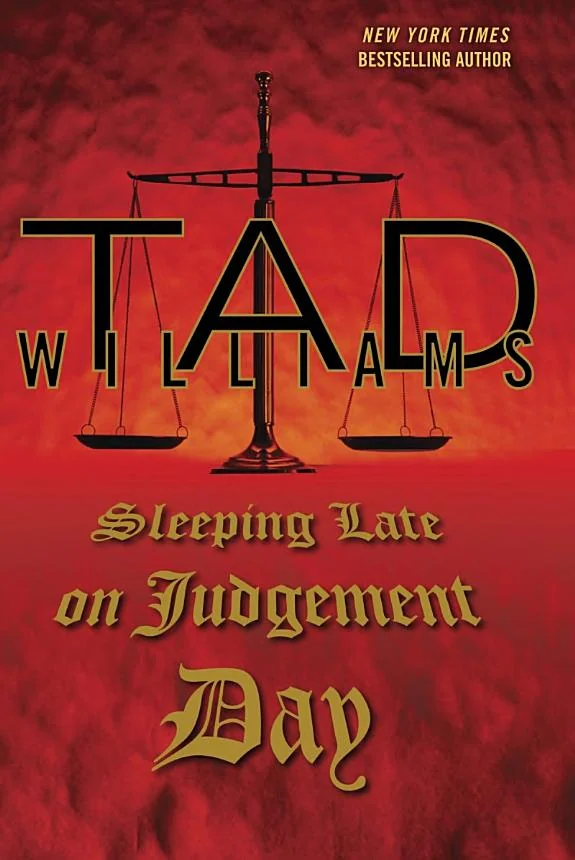
Sleeping Late on Judgement Day
 79
79

Sleeping Late on Judgement Day
Tad Williams's *Sleeping Late on Judgement Day* presents Bobby Dollar in a particularly precarious position, a proof of the author's skill in placing his protagonist in increasingly dire circumstances. The introduction of an amnesiac friend, a figure from Bobby's past whose very existence is a puzzle, injects a compelling layer of mystery. Williams excels at depicting the grim, bureaucratic nature of infernal dealings, making Hell feel less like a pit of fire and more like a particularly unpleasant corporate office. However, the pacing occasionally falters, with certain subplots feeling less urgent than the central mystery surrounding Bobby's friend. The resolution of the memory loss plotline, while functional, doesn't quite achieve the emotional resonance one might expect after the build-up. Despite these minor quibbles, the novel offers a solid continuation of Bobby Dollar's often-beleaguered existence, anchored by strong character work and imaginative world-building.
It remains a compelling read for those invested in Bobby's ongoing celestial and infernal entanglements.
📝 Description
79
Published in 2014, Sleeping Late on Judgement Day is the third Bobby Dollar novel.
This installment of Tad Williams's Bobby Dollar series follows Bobby, a fallen angel working as a reaper. He brokers deals with demons and other supernatural beings. The story picks up after a failed rescue attempt in Hell, where Bobby tried to save his demon girlfriend. He must now deal with the consequences and confront an amnesiac old friend.
The narrative places Bobby at the crossroads of divine and infernal powers. His work as a reaper involves guiding souls and mediating cosmic disputes. This position forces him to confront the weight of his past actions and the challenge of preserving his identity amidst the machinations of Hell and Heaven.
The novel engages with theological concepts and classical mythology within an urban fantasy setting. It explores the nature of angelic and demonic hierarchies, and the blurred lines between good and evil. Bobby Dollar's role as a mediator between cosmic forces touches on themes of free will and predestination within a supernatural framework. The book draws on established lore concerning Hell and Heaven, but places these traditional elements in a contemporary context.
⭐ Reader Reviews
Honest opinions from readers who have explored this book.
❓ Frequently Asked Questions
What is Bobby Dollar's role in Tad Williams's series?
Bobby Dollar is a fallen angel who acts as a "reaper," a supernatural entity tasked with guiding souls and mediating disputes between various cosmic factions, including demons and angels.
When was Sleeping Late on Judgement Day first published?
The novel was first published in 2014, making it the third book in the Bobby Dollar series.
Who is the antagonist in Sleeping Late on Judgement Day?
While not a singular antagonist, the narrative involves interactions with the Grand Duke of Hell and explores the consequences of Bobby's past actions in the infernal realms.
Does Sleeping Late on Judgement Day continue the story from the previous book?
Yes, it directly follows the events of the previous Bobby Dollar novel, with Bobby dealing with the repercussions of his failed attempt to rescue his demon girlfriend.
What is the main mystery introduced in this book?
The central mystery revolves around an old friend of Bobby Dollar's who has inexplicably lost his memory, prompting Bobby to investigate the cause and implications of this condition.
Is this book suitable for new readers of Tad Williams?
While it can be read independently, it's best enjoyed as part of the Bobby Dollar series, as it builds upon established characters and plotlines from earlier books.
🔮 Key Themes & Symbolism
Memory and Identity
The novel intensely scrutinizes how memory shapes identity, particularly through the introduction of a key character who has lost his past. Bobby Dollar himself grapples with his angelic origins and his current role, questioning his own nature and allegiances. This theme is central to the plot, as Bobby must uncover the truth behind his friend's amnesia, which has far-reaching consequences across infernal and mortal realms. The work posits that without memory, one's very essence is in peril.
The Bureaucracy of Hell
Tad Williams portrays Hell not as a chaotic inferno, but as a complex, often mundane, bureaucratic system. The Grand Duke of Hell is a figure of authority within this structure, and Bobby Dollar's interactions often involve navigating protocols and political machinations rather than simple good-versus-evil confrontations. This detailed depiction of infernal administration adds a unique, almost corporate, layer to the supernatural elements, highlighting the structured nature of even the most malevolent cosmic powers.
Consequences of Action
A recurring motif is the inescapable nature of past actions and their ripple effects. Bobby Dollar's failed rescue mission in Hell from the previous book directly impacts the events and his relationships in *Sleeping Late on Judgement Day*. The narrative explores how decisions, especially those made by beings with immense power or long lifespans, carry significant weight and can alter the fabric of reality, affecting not just the individual but those around them.
Moral Ambiguity
The series consistently blurs the lines between good and evil. Bobby Dollar, a fallen angel, operates in a morally grey area, working with demons and angels alike. His personal relationships, particularly with his demon girlfriend, challenge traditional notions of divine and infernal alignment. The book examines the idea that morality is not always black and white, especially when survival, duty, and personal desires come into play in the supernatural world.
💬 Memorable Quotes
Direct passages from the work, attributed to the author.
“He had failed to rescue his demon girlfriend from the Grand Duke of Hell.”
— This is a foundational plot point, establishing Bobby Dollar's personal stakes and the dangerous environment he inhabits. It underscores his willingness to defy infernal powers for personal reasons, setting the stage for further complications.
“An old friend has mysteriously lost his memory.”
— This introduces the central mystery of the novel. The loss of memory is presented as an unnatural affliction, hinting at supernatural interference and a puzzle that Bobby must solve, impacting his understanding of his own past and present.
“The narrative explores the structured, almost bureaucratic, nature of Hell.”
— This interpretation highlights a key aspect of Williams's world-building, presenting Hell as an organized system rather than pure chaos, with established hierarchies and procedures that Bobby must contend with.
💡 Key Ideas
Editorial paraphrase of the work's core concepts — not direct quotes.
Bobby Dollar found himself caught between celestial and infernal forces.
This paraphrased concept captures Bobby's perpetual predicament. As a fallen angel working in the supernatural world, he is constantly navigating conflicting loyalties and demands from both Heaven and Hell.
The consequences of past failures weigh heavily on Bobby.
This summarizes the thematic exploration of causality and responsibility within the story, showing how previous events, like the failed rescue, continue to shape Bobby's present circumstances and challenges.
🌙 Esoteric Significance
Tradition
The series, and *Sleeping Late on Judgement Day* in particular, draws heavily from Christian demonology and angelology, but reinterprets these traditions through a modern, secularized lens. It engages with the Gnostic concept of a flawed creation and a complex divine/infernal bureaucracy. While not strictly adhering to any single esoteric lineage, it borrows motifs and figures from Abrahamic religions, presenting a unique cosmology that blends biblical lore with contemporary urban fantasy sensibilities.
Symbolism
The figure of the "reaper" itself is a potent symbol, representing a liminal entity tasked with managing transitions between life and death, and in Bobby's case, between divine and infernal jurisdictions. Hell is depicted symbolically as a place of convoluted rules and contracts, reflecting themes of enslavement through obligation. Bobby's own status as a fallen angel symbolizes the inherent fallibility within even celestial beings and the struggle for redemption or self-definition.
Modern Relevance
Contemporary readers interested in comparative mythology and the re-imagining of religious narratives find value in Williams's work. Thinkers and writers exploring the intersection of theology and secular society, or those interested in the deconstruction of traditional good-vs-evil dichotomies in fiction, can draw parallels. The series' depiction of supernatural beings grappling with mundane problems and complex personal relationships offers a modern allegory for human struggles with identity and morality.
👥 Who Should Read This Book
['• Readers interested in the theological underpinnings of urban fantasy, seeking a series that engages directly with angelology and demonology beyond surface-level portrayals.', '• Fans of character-driven supernatural fiction who appreciate protagonists operating in morally ambiguous spaces and dealing with complex personal relationships.', '• Those who enjoy intricate world-building and narratives that explore the political and bureaucratic structures within fictional supernatural realms, particularly Hell.']
📜 Historical Context
Published in 2014, *Sleeping Late on Judgement Day* arrived during a period of significant maturity for the urban fantasy genre. Authors like Jim Butcher had already demonstrated the commercial viability of blending supernatural elements with contemporary settings. Tad Williams, however, distinguished himself by grounding his narratives in deeper theological and mythological frameworks, moving beyond the typical vampire and werewolf tropes to engage with angelic hierarchies and infernal politics. The year 2014 saw continued output from established urban fantasy authors, but Williams’s focus on a fallen angel protagonist working through the complex machinations of Hell offered a distinct flavour. His work often competes for reader attention with more overtly action-oriented series, but appeals to those seeking richer lore and more intricate plotting. The reception for the Bobby Dollar series generally highlighted Williams's world-building and character depth, positioning it as a more literary entry within the genre.
📔 Journal Prompts
Bobby Dollar's failed rescue in Hell and its lingering consequences.
The significance of the amnesiac old friend and memory loss.
The nature of Hell as a bureaucratic system.
Bobby Dollar's identity as a fallen angel.
The moral complexities faced by supernatural beings.
🗂️ Glossary
Reaper
In this series, a reaper is a supernatural entity, often an angel, tasked with guiding souls and mediating disputes between various cosmic factions, including Heaven and Hell.
Fallen Angel
An angel who has lost their heavenly status, often due to disobedience or rebellion. Bobby Dollar is a fallen angel navigating his existence outside of direct divine command.
Grand Duke of Hell
A high-ranking demonic official within the infernal hierarchy, possessing significant authority and influence in Hell's complex political structure.
Amnesia
The loss of memory. In the context of the book, it is presented as a mysterious affliction affecting a key character, driving the plot's central mystery.
Infernal Hierarchy
The structured system of ranks and authorities within Hell, as depicted in the novel, featuring various demons and entities with specific roles and powers.
Celestial Forces
The powers and entities associated with Heaven and the divine realm, often in opposition or negotiation with infernal forces.
Demon Girlfriend
A romantic partner who is a demon. This relationship highlights the blurring of lines between good and evil for the protagonist, Bobby Dollar.
This book appears in 1 collection
🔮 Readers Also Liked
Browse all →









From the “Angels” Collection
View all →

More Free Occult Philosophy Books
View all →