Worlds before our own
 73
73

Worlds before our own
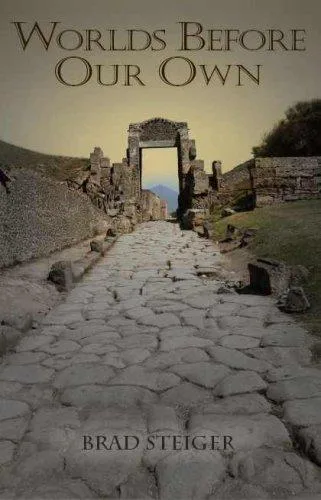
Brad Steiger’s 1978 exploration of pre-human epochs, Worlds Before Our Own, offers a broad sweep across speculative history. Steiger compiles a wide array of anecdotal evidence, from purported archaeological impossibilities to psychic channeling claims, aiming to establish a case for advanced, non-human civilizations on Earth long before recorded history. His strength lies in the sheer volume of material he marshals, presenting a compelling if sometimes uncritical overview of esoteric theories popular in the late 20th century. A notable limitation is the reliance on sources that lack rigorous verification, often presenting speculation as fact without sufficient scholarly skepticism. The discussion of "psychic archaeology" and the idea that consciousness might hold imprinted memories of lost civilizations, for example, feels particularly speculative. Ultimately, Worlds Before Our Own functions less as a rigorous academic text and more as an expansive catalog of ideas for those inclined to question conventional timelines.
📝 Description
73
Brad Steiger's 1978 book, Worlds Before Our Own, examines evidence for civilizations predating recorded human history.
Published in 1978, Worlds Before Our Own by Brad Steiger investigates phenomena suggesting intelligent life and civilizations existed on Earth before recorded history. The book gathers accounts and theories about ancient astronauts, lost continents, and psychic echoes of forgotten eras. Steiger compiles a wide array of evidence, including archaeological puzzles and alleged extraterrestrial encounters, to support the idea of a more complex and ancient timeline for sentient beings on our planet. This work is intended for readers interested in ancient mysteries, early human history, and the boundaries of scientific and historical understanding. It appeals to those who question standard accounts of human development and are open to speculative ideas about Earth's past. Readers fascinated by UFOlogy, legendary lost civilizations, and the possibility of advanced ancient technologies will find material for contemplation.
Worlds Before Our Own appeared during a period of heightened public interest in UFOs and ancient mysteries, following works like Erich von Däniken's Chariots of the Gods?. The late 1970s saw a growing challenge to established scientific and historical paradigms, with authors proposing alternative origins for civilization and consciousness. This era was marked by a burgeoning New Age movement and an openness to non-mainstream interpretations of ancient texts and artifacts. Steiger's book fits within this tradition of questioning conventional history and exploring speculative theories about humanity's deep past.
💡 Why Read This Book?
• Gain exposure to early speculative theories on pre-human civilizations, including Steiger's compilation of ancient astronaut hypotheses that influenced later works. • Understand the historical context of late 20th-century esoteric thought, specifically how authors like Steiger engaged with archaeological anomalies and psychic phenomena in 1978. • Explore the concept of "antediluvian civilizations" and the idea of lost advanced societies, as presented through Steiger’s eclectic collection of evidence.
⭐ Reader Reviews
Honest opinions from readers who have explored this book.
❓ Frequently Asked Questions
What kind of evidence does Brad Steiger present in Worlds Before Our Own?
Brad Steiger compiles a diverse range of evidence, including alleged archaeological anomalies, ancient texts interpreted as records of advanced technology, accounts of psychic impressions of past eras, and theories about extraterrestrial influence on early Earth.
When was Worlds Before Our Own first published, and what was the intellectual climate like?
The book was first published in 1978. This period saw rising public interest in UFOs and alternative historical theories, influenced by authors like Erich von Däniken and the burgeoning New Age movement.
Does the book discuss specific lost civilizations?
Yes, the work explores concepts related to lost civilizations, often referencing legends and theories surrounding places like Atlantis and Lemuria, proposing they were remnants of technologically advanced pre-human societies.
What is the central argument of Worlds Before Our Own?
The central argument is that Earth has been home to sophisticated civilizations, possibly non-human or extraterrestrial in origin, long before the accepted timeline of human history, and that evidence of these exists today.
Who is Brad Steiger, and what is his background?
Brad Steiger (1936-2021) was a prolific author known for his extensive work in the fields of UFOlogy, paranormal phenomena, and alternative history. He published over 170 books exploring mysteries and the unexplained.
Can Worlds Before Our Own be considered a scientific text?
No, Worlds Before Our Own is not considered a scientific text. It presents speculative theories and compiles anecdotal accounts rather than adhering to rigorous scientific methodology or peer review.
🔮 Key Themes & Symbolism
Pre-Human Civilizations
The book posits the existence of advanced civilizations on Earth that predated current human history by vast epochs. Steiger compiles accounts and theories suggesting these societies, potentially of non-terrestrial origin, possessed technologies and knowledge far beyond what is conventionally understood. This theme challenges standard archaeological and historical timelines, proposing that remnants and influences of these ancient worlds might still be discoverable through unconventional means, including psychic impressions and reinterpreted ancient myths.
Ancient Astronaut Theory
A significant focus is placed on the Ancient Astronaut theory, exploring the idea that extraterrestrial beings visited Earth in antiquity and influenced human development or even established their own civilizations here. Steiger gathers evidence from various cultures, interpreting myths, religious texts, and archaeological findings as proof of these interactions. The book suggests that many perceived human advancements were seeded or directly imparted by these cosmic visitors.
Psychic Archaeology
Steiger studies the concept of 'psychic archaeology,' which suggests that the consciousness or psychic energy of past civilizations can leave imprints on the environment or collective unconscious. This allows for the possibility of accessing memories or information about these forgotten worlds through mediumship, trance states, or intuitive insights. The book uses such phenomena to fill gaps where conventional evidence is lacking, proposing a non-physical dimension to historical inquiry.
Lost Continents and Cataclysms
The theme of lost continents, such as Atlantis and Lemuria, is central to the book's exploration of pre-human eras. Steiger examines theories that these were highly advanced societies destroyed by cataclysmic events, leaving behind only fragmented legends and elusive physical evidence. This narrative frames Earth's history as one punctuated by cycles of advanced civilization rise and fall, with humanity inheriting a world shaped by these ancient upheavals.
💬 Memorable Quotes
Direct passages from the work, attributed to the author.
“Many ancient myths speak of golden ages and wise progenitors.”
— Steiger interprets these widespread 'golden age' narratives not as mere allegories but as fragmented memories or historical accounts of advanced societies that existed in Earth's distant past, possibly before or alongside early human development.
“Archaeological anomalies challenge conventional timelines.”
— This represents the core argument that unexplained artifacts or structures—like certain megalithic constructions or out-of-place objects—suggest a history of human or non-human intelligence far more ancient and sophisticated than mainstream science accepts.
“Psychic impressions can offer glimpses into forgotten epochs.”
— Steiger suggests that individuals with psychic sensitivity can sometimes perceive echoes or residual energies from past civilizations, providing a complementary, non-physical avenue for exploring Earth's deep history.
“The Earth has known many cycles of creation and destruction.”
— This reflects a cyclical view of history prevalent in many esoteric traditions, implying that humanity is not the first or only advanced intelligence to inhabit the planet, but rather a part of a much larger, recurring cosmic or geological process.
💡 Key Ideas
Editorial paraphrase of the work's core concepts — not direct quotes.
The past is not dead; it is not even past.
This quote, often attributed to William Faulkner but widely adopted in esoteric circles, expresses the book's premise that ancient histories and civilizations are not simply gone but continue to influence the present, accessible through various means.
🌙 Esoteric Significance
Tradition
The work draws heavily from the speculative branches of esoteric thought that emerged in the late 19th and 20th centuries, particularly those influenced by Theosophy and the subsequent development of ancient astronaut theories. It aligns with traditions that posit a hidden, non-material history of Earth and humanity, often suggesting interventions by non-terrestrial intelligences or advanced precursor civilizations. Steiger's approach departs from strict Hermetic or Gnostic lineages by focusing on external interventions and physical evidence, albeit interpreted through a lens of mystery and the unexplained, rather than solely internal spiritual alchemy or divine revelation.
Symbolism
The book frequently references symbols associated with ancient civilizations, such as pyramids, ancient sky maps, and depictions of flying objects in rock art. These are interpreted not just as cultural artifacts but as evidence of advanced knowledge, possibly extraterrestrial in origin. For example, the ubiquitous serpent motif across cultures is sometimes presented as a symbol for extraterrestrial visitors or cosmic energies. The concept of the 'World Tree' or cosmic axis, common in many mythologies, is recontextualized as a representation of ancient transportation systems or connections between Earth and other dimensions/planets.
Modern Relevance
Steiger's compilation continues to inform contemporary discussions within the ancient astronaut community and fringe archaeology. Thinkers and researchers in fields like archaeoastronomy and alternative history often cite his work as foundational, alongside von Däniken's. Modern proponents of theories regarding lost civilizations like Atlantis and Mu, as well as those exploring the possibility of ancient advanced technologies, can find traces of Steiger's arguments in their own research. The book's broad, speculative approach remains relevant for those seeking to connect disparate pieces of evidence into a grand, unconventional narrative of Earth's past.
👥 Who Should Read This Book
• Enthusiasts of ancient mysteries and speculative history seeking an overview of theories concerning pre-human civilizations and extraterrestrial influence. • Readers interested in the historical development of fringe theories, particularly those popularized in the late 20th century regarding UFOs and lost worlds. • Individuals exploring alternative interpretations of ancient myths, archaeological anomalies, and religious texts beyond conventional academic frameworks.
📜 Historical Context
Worlds Before Our Own emerged in 1978, a period ripe with popular fascination for alternative histories and extraterrestrial contact. This era was heavily influenced by Erich von Däniken's "Chariots of the Gods?" (1968), which had popularized the ancient astronaut theory. Steiger's work tapped into this growing public appetite for explanations that diverged from mainstream archaeology and history. The intellectual currents of the time included the burgeoning New Age movement, which encouraged exploration of consciousness, psychic phenomena, and non-Western spiritual traditions. Simultaneously, the UFOlogy community was actively investigating sightings and alleged encounters, often seeking to connect them with ancient mysteries. While Steiger’s work found a receptive audience among proponents of these ideas, it faced criticism from academic circles that adhered to established scientific and historical methodologies. The book's approach, blending anecdotal evidence with speculative interpretation, positioned it firmly within the field of popular esoteric literature rather than academic discourse.
📔 Journal Prompts
The concept of "antediluvian civilizations" and their potential technologies.
Reflect on the interpretation of ancient myths as historical records of advanced societies.
Consider the evidence presented for "psychic archaeology" and memory imprints of the past.
Analyze the arguments for extraterrestrial influence on Earth's early history.
Explore the cyclical view of history presented, involving cycles of creation and destruction.
🗂️ Glossary
Antediluvian Civilizations
Societies believed to have existed on Earth before a great flood or cataclysm, often depicted as highly advanced and ancient, predating current human history.
Ancient Astronaut Theory
The hypothesis that extraterrestrial beings visited Earth in antiquity and were responsible for, or influenced, human technological and cultural development, as interpreted from ancient texts and artifacts.
Psychic Archaeology
A speculative field that proposes accessing information about past civilizations through psychic means, such as channeling or perceiving residual energy imprints.
Megalithic Anomalies
Large ancient stone structures or artifacts that challenge conventional explanations regarding their construction, purpose, or age, often cited as evidence for advanced ancient capabilities.
Lost Continents
Mythical or hypothetical landmasses, such as Atlantis or Lemuria, believed to have existed in the distant past and been destroyed by natural disasters, often associated with advanced precursor civilizations.
Cyclical History
A perspective that views history not as linear progression but as a series of recurring cycles of rise and fall, creation and destruction, often applied to civilizations and planetary ages.
Non-Terrestrial Intelligence
A broad term encompassing any intelligent life originating from outside of Earth, including extraterrestrials and potentially beings from other dimensions.
🔮 Readers Also Liked
Browse all →








More by Brad Steiger
All books →




More Free Occult Philosophy Books
View all →