Best Remedies
 72
72

Best Remedies
The "Best Remedies" offers a commendable effort to synthesize medical advice with historical healing practices. Its strength lies in the sheer breadth of conditions covered, presenting a structured approach to common ailments that acknowledges both scientific research and traditional wisdom. The inclusion of home care strategies, especially for age-related issues, provides practical, actionable advice for many readers. However, the work sometimes struggles to offer the depth required for truly complex conditions, occasionally leaning towards generalized recommendations. A notable passage discusses the use of ginger for nausea, referencing both its antiemetic properties backed by modern studies and its long history in Asian medicine. While comprehensive for its scope, it serves best as an introductory guide rather than an exhaustive medical text. It provides a solid foundation for exploring self-care options.
📝 Description
72
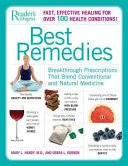
Published December 27, 2007, 'Best Remedies' offers 103 home care solutions.
'Best Remedies' presents a curated collection of 103 methods for common health issues. The editors of Reader's Digest compiled this guide, which draws from both current medical knowledge and established healing practices. Its publication in late 2007 coincided with a rise in public interest in integrative medicine and holistic health.
The book targets individuals who want to manage everyday health concerns using a mix of conventional and alternative methods. It is especially helpful for those looking into home treatments for age-related conditions and general wellness. The core idea is 'integrative care,' which supports blending Western medicine with supportive therapies. This encourages patients to take a more active role in their recovery by learning about the many choices for handling different ailments.
While marketed as a general health guide, 'Best Remedies' taps into a long tradition of household medical almanacs and compendiums that have historically included folk remedies and traditional healing practices alongside more orthodox advice. Its inclusion of 'time-honored healing traditions' alongside 'contemporary medical science' reflects a persistent current in Western esotericism that seeks to synthesize diverse knowledge systems. This approach acknowledges the value placed on embodied experience and ancestral knowledge, often found in traditions that predate or run parallel to modern scientific paradigms.
💡 Why Read This Book?
• Gain practical home care strategies for 103 common ailments, integrating scientific research with traditional healing methods as detailed in the 2007 publication. • Understand the benefits of combining conventional and alternative therapies for managing age-related diseases, informed by the book's focus on integrative care. • Discover accessible recommendations for personal well-being, leveraging the work's presentation of diverse healing traditions for everyday health concerns.
⭐ Reader Reviews
Honest opinions from readers who have explored this book.
❓ Frequently Asked Questions
What is the primary focus of "Best Remedies"?
The primary focus of "Best Remedies" is to provide a comprehensive guide for treating 103 common ailments. It draws on both current medical research and ancient healing traditions to offer recommendations for home care, including addressing age-related diseases.
When was "Best Remedies" first published?
"Best Remedies" was first published on December 27, 2007. This date places it within a period of increasing interest in integrative health approaches.
Does "Best Remedies" only cover alternative therapies?
No, "Best Remedies" specifically aims to combine traditional and alternative therapies. It integrates up-to-date medical research with ancient healing traditions, offering a balanced perspective on treatment options.
What kind of ailments does the book address?
The book addresses 103 common ailments. This includes a range of health concerns, with specific attention paid to age-related diseases, offering home care solutions.
Who are the editors of "Best Remedies"?
The editors of "Best Remedies" are listed as the Editors of Reader's Digest. The work compiles information from various sources, as is typical for publications by this editorial group.
Is "Best Remedies" a medical textbook?
"Best Remedies" is best described as a reference guide for home care, not a formal medical textbook. It provides recommendations and information for general well-being and common ailments, integrating diverse healing practices.
🔮 Key Themes & Symbolism
Integrative Home Care
The core of "Best Remedies" lies in its advocacy for "integrative care." This theme emphasizes that effective health management can and should draw from multiple sources. It moves beyond a singular reliance on Western pharmaceuticals to incorporate the wisdom of ancient healing traditions and natural remedies. The book presents this approach as a practical, empowering strategy for individuals to take an active role in their own well-being, especially when dealing with chronic or age-related conditions, suggesting that a balanced application of various therapies yields the best results.
Bridging Science and Tradition
A significant theme is the deliberate effort to bridge the perceived divide between modern medical science and historical healing practices. The work demonstrates how ancient traditions, often passed down through generations, are increasingly being validated or understood through contemporary research. By presenting both, it aims to build trust in less conventional methods while grounding them in scientific plausibility. This approach respects the longevity and effectiveness of traditional remedies while acknowledging the advancements and diagnostic capabilities of modern medicine.
Holistic Approach to Ailments
The book champions a holistic view of health, treating the individual rather than just isolated symptoms. For each of the 103 common ailments covered, it explores a range of contributing factors and potential treatments that consider the body, mind, and spirit. This perspective is particularly evident in its discussion of age-related diseases, where it moves beyond purely physiological explanations to include lifestyle, diet, and emotional well-being as integral components of care. The goal is to foster overall vitality and resilience.
Empowerment Through Knowledge
"Best Remedies" functions as a tool for patient empowerment. By providing accessible information on a wide array of health issues and their potential treatments, it equips readers with the knowledge to make informed decisions. The emphasis on home care encourages self-sufficiency and proactive engagement with one's health. This theme underscores the idea that understanding various therapeutic options, from herbal remedies to specific lifestyle adjustments, allows individuals to become more confident and capable managers of their own health journey.
💬 Memorable Quotes
Direct passages from the work, attributed to the author.
“Recommendations for treating 103 common ailments.”
— This concise statement from the original blurb captures the book's primary objective: providing a broad, practical toolkit for everyday health concerns. It highlights the comprehensive nature of the content, suggesting a wide range of issues are addressed.
“Draws on up-to-date medical research and ancient healing traditions.”
— This phrase emphasizes the book's dual approach, aiming to validate traditional remedies with contemporary scientific inquiry. It signals an effort to bridge conventional and alternative medicine, offering readers a balanced perspective grounded in both historical wisdom and modern understanding.
“Coverage of age-related diseases.”
— This specific mention points to a key area of focus within the book, acknowledging the health challenges that often accompany aging. It suggests the work offers tailored advice for a demographic often seeking long-term health management strategies.
“Benefits of home care that combines traditional and alternative therapies.”
— This highlights the book's core philosophy: empowering individuals through self-care. It explicitly states the value of integrating diverse healing modalities within the home environment, promoting a proactive and personalized approach to wellness.
“A reference that includes coverage of age-related diseases.”
— This frames the book as a reliable resource for specific health needs. By mentioning its inclusion of age-related diseases, it targets a significant demographic and suggests the depth of information available for particular life stages.
🌙 Esoteric Significance
Tradition
While not explicitly tied to a single esoteric lineage like Hermeticism or Gnosticism, "Best Remedies" draws heavily from the broader tradition of folk healing and natural medicine, which often incorporates animistic, shamanic, and herbalist principles found across many indigenous and pre-modern cultures. These traditions frequently view illness not just as a physical imbalance but as a disruption of vital energies or a disharmony with the natural world, concepts that resonate with esoteric thought. The work's emphasis on home care and the body's innate healing capacity aligns with vitalistic philosophies common in esoteric traditions.
Symbolism
The book's symbolism is primarily found in its embrace of natural elements and processes. Plants, herbs, and natural remedies represent the 'green language' or 'materia medica' of terrestrial magic and alchemy, suggesting that earthly substances hold potent, inherent healing virtues. Water, often discussed in relation to hydration and cleansing, symbolizes purification and flow, essential for maintaining energetic balance. The concept of 'age-related diseases' itself can be seen symbolically as a natural cycle, implying that wisdom and specific care are required to navigate these stages, mirroring alchemical processes of transformation and refinement.
Modern Relevance
Contemporary thinkers and practitioners in fields like integrative nutrition, functional medicine, and herbalism frequently reference the principles found in works like "Best Remedies." Modern herbalists, for example, continue to explore the synergistic effects of plant compounds, often validating traditional uses through scientific study. Wellness coaches and holistic health practitioners also utilize the book's approach, emphasizing lifestyle, diet, and mind-body connections. The book's enduring relevance lies in its foundational role in popularizing the idea that a comprehensive, multi-faceted approach to health is not only possible but often superior.
👥 Who Should Read This Book
• Individuals seeking practical, evidence-informed home remedies for common health issues, who appreciate a balanced perspective that includes both scientific research and historical healing practices. • Those interested in managing age-related diseases or chronic conditions through integrative care, looking for strategies that combine conventional medical advice with alternative therapies. • Aspiring practitioners of natural health or self-care enthusiasts who want a comprehensive reference guide to a wide range of ailments and their potential natural treatments.
📜 Historical Context
Published in late 2007, "Best Remedies" emerged during a period when public interest in complementary and alternative medicine (CAM) was reaching new heights. The early 2000s saw a surge in books and media exploring holistic health, driven by consumer dissatisfaction with purely symptom-focused Western medicine and a growing desire for more natural or personalized approaches. This era was marked by the establishment of institutions like the National Center for Complementary and Alternative Medicine (NCCAM) within the U.S. National Institutes of Health in 1998, signaling a move towards greater scientific investigation of CAM. "Best Remedies" tapped into this cultural current, aiming to provide a practical synthesis for a broad audience. It directly competed with a burgeoning market of health guides, but its unique selling proposition was the explicit combination of rigorous medical research with ancient healing traditions, a contrast to purely faith-based or pseudoscientific texts that also populated the wellness landscape. The work benefited from the widespread availability of information and a general openness to diverse healing modalities, a stark contrast to earlier decades where such integration might have faced greater skepticism.
📔 Journal Prompts
Home care strategies for common ailments, as presented in the 2007 publication.
The integration of ancient healing traditions with up-to-date medical research.
Age-related diseases and the benefits of combining therapies.
Exploring the concept of "integrative care" for personal well-being.
How traditional and alternative therapies can support health at home.
🗂️ Glossary
Integrative care
An approach to health that combines conventional medical treatments with complementary and alternative therapies. It emphasizes a holistic view of the patient and aims to utilize the most appropriate methods from various disciplines for optimal health outcomes.
Ancient healing traditions
Systems of medicine and wellness practices that have been developed and passed down through generations in various cultures, often relying on natural remedies, spiritual practices, and empirical observation over long periods.
Age-related diseases
Health conditions that tend to become more common or severe as a person gets older, such as arthritis, osteoporosis, certain cardiovascular diseases, and cognitive decline.
Home care
Medical or therapeutic practices that can be administered or managed by an individual or their family within their own residence, often focusing on comfort, symptom management, and supportive treatments.
Alternative therapies
Health treatments used instead of conventional medical treatments. Examples include special diets, herbal treatments, acupuncture, meditation, and yoga.
Esoteric
Relating to or dealing with occult or mystical subjects. In the context of Esoteric Library, it refers to literature exploring hidden knowledge, spiritual practices, and non-mainstream belief systems.
Materia medica
A body of collected knowledge about the properties of drugs or remedies, especially one that is the subject of study in pharmacology or herbalism. In traditional contexts, it refers to the substances used for healing.