Mindfulness-Oriented Interventions for Trauma
 71
71

Mindfulness-Oriented Interventions for Trauma
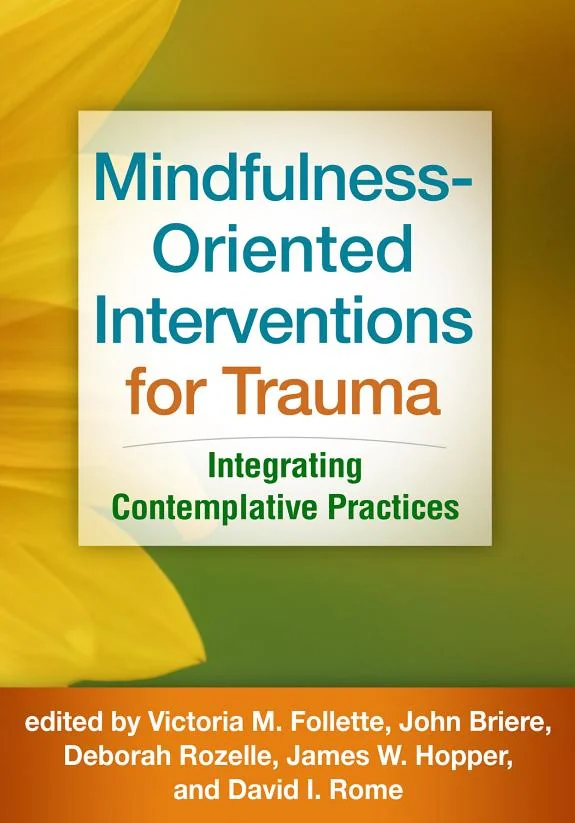
Victoria M. Follette, John Briere, and Deborah Rozelle present a sober, clinical examination of mindfulness techniques applied to trauma. The book’s strength lies in its direct engagement with established therapeutic frameworks like ACT and DBT, grounding esoteric concepts in empirical research and clinical utility. The authors avoid sensationalism, focusing instead on the practical challenges and adaptive strategies for working with traumatized populations. A notable section discusses the careful pacing required when introducing mindfulness, acknowledging how hypervigilance in trauma survivors can make initial contemplative practices feel overwhelming, rather than calming. However, some readers might find the dense academic style and lack of illustrative case studies, beyond brief mentions, a hindrance to fully grasping the nuances of application. It offers a valuable, if academically rigorous, perspective on a growing field. The work serves as a competent manual for clinicians seeking to integrate these methods.
📝 Description
71
Victoria M. Follette, John Briere, and Deborah Rozelle published Mindfulness-Oriented Interventions for Trauma in 2017.
This 2017 volume details practical ways to use mindfulness and contemplative practices in therapy for trauma survivors. It moves past theory to show clinicians how to adjust established methods for those who have experienced trauma. The book is for mental health professionals such as therapists, counselors, and psychologists looking for evidence-based tools to improve trauma treatment. Researchers interested in how contemplative practices relate to trauma recovery will also find it useful, as will advanced students in clinical psychology. The integration of mindfulness into Western psychotherapy became prominent in the late 20th and early 21st centuries. This book appears when these methods are increasingly seen as effective for difficult psychological issues like PTSD.
The formal use of mindfulness in Western psychotherapy grew from ancient contemplative traditions. This book connects those historical roots to modern clinical practice. It arrives at a time when these approaches, once on the fringes, are now recognized for their utility in addressing complex psychological states stemming from trauma. The work bridges the gap between contemplative disciplines and contemporary therapeutic models.
💡 Why Read This Book?
• Learn specific adaptations of MBSR and ACT for trauma survivors, understanding how these established modalities differ from their general applications, as detailed in the introductory chapters. • Gain insight into the neurobiological underpinnings that make mindfulness particularly effective for trauma, referencing research discussed regarding interoception and emotional regulation. • Discover practical strategies for implementing mindful self-compassion (MSC) techniques, moving beyond simple relaxation to foster resilience and self-acceptance in the face of traumatic memories, as outlined in later sections.
⭐ Reader Reviews
Honest opinions from readers who have explored this book.
❓ Frequently Asked Questions
What specific mindfulness therapies are detailed in 'Mindfulness-Oriented Interventions for Trauma'?
The book details several key therapies including Mindfulness-Based Stress Reduction (MBSR), Acceptance and Commitment Therapy (ACT), Dialectical Behavior Therapy (DBT), Mindfulness-Based Cognitive Therapy (MBCT), and Mindful Self-Compassion (MSC), explaining their integration for trauma survivors.
When was 'Mindfulness-Oriented Interventions for Trauma' first published?
This foundational text was first published on September 28, 2017, reflecting a convergence of research and clinical practice in mindfulness-based trauma treatment.
Who are the primary authors of this work on trauma and mindfulness?
The primary authors are Victoria M. Follette, John Briere, and Deborah Rozelle, bringing extensive clinical and research experience to the subject of trauma-informed mindfulness.
How does this book address the unique challenges of trauma survivors with mindfulness practices?
It emphasizes tailoring interventions, acknowledging that trauma can lead to hypervigilance or dissociation, and explains how practices are adapted to avoid re-traumatization and promote safety.
Is this book suitable for individuals new to mindfulness or trauma therapy?
While grounded in research, the book is primarily aimed at clinicians and researchers. Beginners might benefit from introductory texts before engaging with the specific clinical applications presented here.
What is the core research basis for the interventions discussed?
The interventions are grounded in accumulated clinical wisdom and empirical research, particularly concerning the efficacy of contemplative practices in modifying stress responses and emotional regulation patterns.
🔮 Key Themes & Symbolism
Trauma and the Contemplative Mind
This work posits that ancient contemplative practices, now codified into modern therapeutic modalities, offer a unique pathway to addressing the deep-seated effects of trauma. It explores how the disciplined attention cultivated through mindfulness can help individuals reclaim agency over their internal states, which are often disrupted by traumatic experiences. The book frames these interventions not merely as stress reduction tools, but as methods for re-establishing a connection with the self and the present moment, often fractured by past events.
Integration of Western Psychology and Eastern Practice
A central theme is the deliberate synthesis of Western psychological frameworks, particularly those dealing with trauma, and Eastern contemplative traditions. The book details how methodologies like ACT and DBT, developed within Western clinical psychology, are enhanced and informed by principles derived from practices such as MBSR. This fusion aims to create a more holistic approach to healing, acknowledging both the cognitive and somatic impacts of trauma.
Adaptive Therapeutic Modalities
The core of the book lies in its exposition of adaptive therapeutic modalities. It moves beyond a one-size-fits-all approach, emphasizing the necessity of tailoring interventions like Mindful Self-Compassion (MSC) to the specific needs and vulnerabilities of trauma survivors. This includes recognizing potential triggers and adjusting the intensity and focus of practices to foster safety and gradual healing, rather than overwhelm.
Research-Informed Clinical Application
Underpinning all discussions is a commitment to evidence-based practice. The authors meticulously reference research findings that support the efficacy of mindfulness-oriented interventions in treating trauma-related conditions. This rigorous approach ensures that the presented techniques are not speculative but are grounded in empirical data, providing a solid foundation for clinicians seeking effective treatment strategies.
💬 Memorable Quotes
Direct passages from the work, attributed to the author.
“Mindfulness-based interventions can be tailored to this population's needs.”
— This statement highlights the core thesis: that standard mindfulness protocols require careful modification when applied to trauma survivors, respecting their unique sensitivities and histories.
“Integrating mindfulness and other contemplative practices into clinical work with trauma survivors.”
— This describes the fundamental aim of the book, positioning contemplative practices as integral tools within a clinical context specifically designed for those who have endured trauma.
“Grounded in research and accumulated clinical wisdom.”
— This phrase emphasizes the dual foundation of the book's content, indicating that its recommendations stem from both empirical studies and the practical experience of seasoned clinicians.
“Showcases treatment approaches that can be tailored.”
— This points to the book's function as a guide, presenting a variety of therapeutic methods that practitioners can adapt and apply flexibly to individual client circumstances.
“Mindfulness-based stress reduction (MBSR), acceptance and commitment therapy (ACT), dialectical behavior therapy (DBT), mindfulness-based cognitive therapy (MBCT), and mindful self-compassion (MSC).”
— This lists key modalities discussed, signifying the breadth of techniques explored for their potential in trauma recovery and therapeutic integration.
🌙 Esoteric Significance
Tradition
While not strictly adhering to a single esoteric lineage, this work draws heavily from Buddhist contemplative traditions, particularly Vipassanā meditation, which forms the bedrock of MBSR and MBCT. Its integration into psychotherapy can be seen as a modern manifestation of the Hermetic principle of 'As Above, So Below,' applying inner contemplative states to affect outer psychological well-being. It represents a secularized, yet profoundly potent, distillation of practices historically used for spiritual liberation, now reframed for psychological healing.
Symbolism
The core symbolism lies in the concept of 'presence' itself—the mindful awareness of the present moment. For trauma survivors, whose minds often oscillate between intrusive past memories and anxious future projections, reclaiming the present symbolizes a return to self-possession and safety. The 'breath' serves as a constant, grounding anchor, a universal symbol of life and continuity that can be accessed even amidst distress, facilitating a connection to the vital force often suppressed by trauma.
Modern Relevance
Contemporary thinkers and practitioners in fields ranging from clinical psychology to neuroscience continue to draw upon the foundations laid by works like this. Schools of thought emphasizing somatic experiencing, trauma-informed yoga, and even certain transpersonal psychology approaches echo its emphasis on embodied awareness and mindful self-regulation. The ongoing exploration of neuroplasticity further validates the book's premise that intentional mental practices can reshape the brain's response to stress and trauma.
👥 Who Should Read This Book
• Mental health clinicians (therapists, counselors, psychologists) seeking to enhance their trauma treatment toolkit with evidence-based mindfulness techniques. • Researchers investigating the efficacy and mechanisms of contemplative practices in addressing psychological distress and recovery from adverse experiences. • Advanced students in clinical psychology, counseling, or social work programs looking for authoritative texts on contemporary trauma therapies.
📜 Historical Context
Published in 2017, "Mindfulness-Oriented Interventions for Trauma" emerged during a period of significant growth in the application of contemplative practices within Western psychotherapy. The late 20th century saw the popularization of Mindfulness-Based Stress Reduction (MBSR) by Jon Kabat-Zinn, which paved the way for its integration into various clinical fields. By the 2010s, approaches like Acceptance and Commitment Therapy (ACT), developed by Steven C. Hayes, and Dialectical Behavior Therapy (DBT), pioneered by Marsha M. Linehan, were already established, incorporating mindfulness principles to address severe psychological distress. This book arrived as research began to more robustly support the efficacy of these mindfulness-infused therapies for conditions like PTSD, distinguishing itself by focusing specifically on the nuances of trauma treatment. It joined a growing body of literature that sought to bridge the gap between ancient meditative traditions and modern psychotherapeutic practice, often engaging with or implicitly critiquing more purely cognitive or psychodynamic approaches.
📔 Journal Prompts
The adaptive nature of Acceptance and Commitment Therapy (ACT) for trauma.
Mindful self-compassion (MSC) as a counterpoint to trauma-induced self-criticism.
The role of interoception in trauma recovery.
Integrating Dialectical Behavior Therapy (DBT) skills into mindfulness practice.
The foundational principles of Mindfulness-Based Stress Reduction (MBSR) for survivors.
🗂️ Glossary
Mindfulness-Based Stress Reduction (MBSR)
An 8-week program developed by Jon Kabat-Zinn, integrating mindfulness meditation, body awareness, and yoga to help individuals manage stress, anxiety, and pain.
Acceptance and Commitment Therapy (ACT)
A psychotherapeutic approach that uses mindfulness and acceptance strategies to help individuals live a meaningful life by accepting difficult thoughts and feelings.
Dialectical Behavior Therapy (DBT)
A comprehensive behavioral treatment protocol designed initially for borderline personality disorder, emphasizing emotion regulation, distress tolerance, interpersonal effectiveness, and mindfulness.
Mindfulness-Based Cognitive Therapy (MBCT)
A therapeutic approach combining cognitive therapy principles with mindfulness meditation practices, primarily used for preventing relapse in recurrent depression.
Mindful Self-Compassion (MSC)
An approach that cultivates kindness, common humanity, and mindfulness towards oneself, particularly during times of suffering or perceived failure.
Trauma Survivors
Individuals who have experienced or witnessed events that are deeply distressing or disturbing, leading to psychological or emotional harm.
Contemplative Practices
A broad range of techniques, often rooted in spiritual traditions, designed to cultivate focused attention, awareness, and insight, such as meditation and prayer.
This book appears in 1 collection
🔮 Readers Also Liked
Browse all →







From the “Mindfulness” Collection
View all →









More Free Occult Philosophy Books
View all →