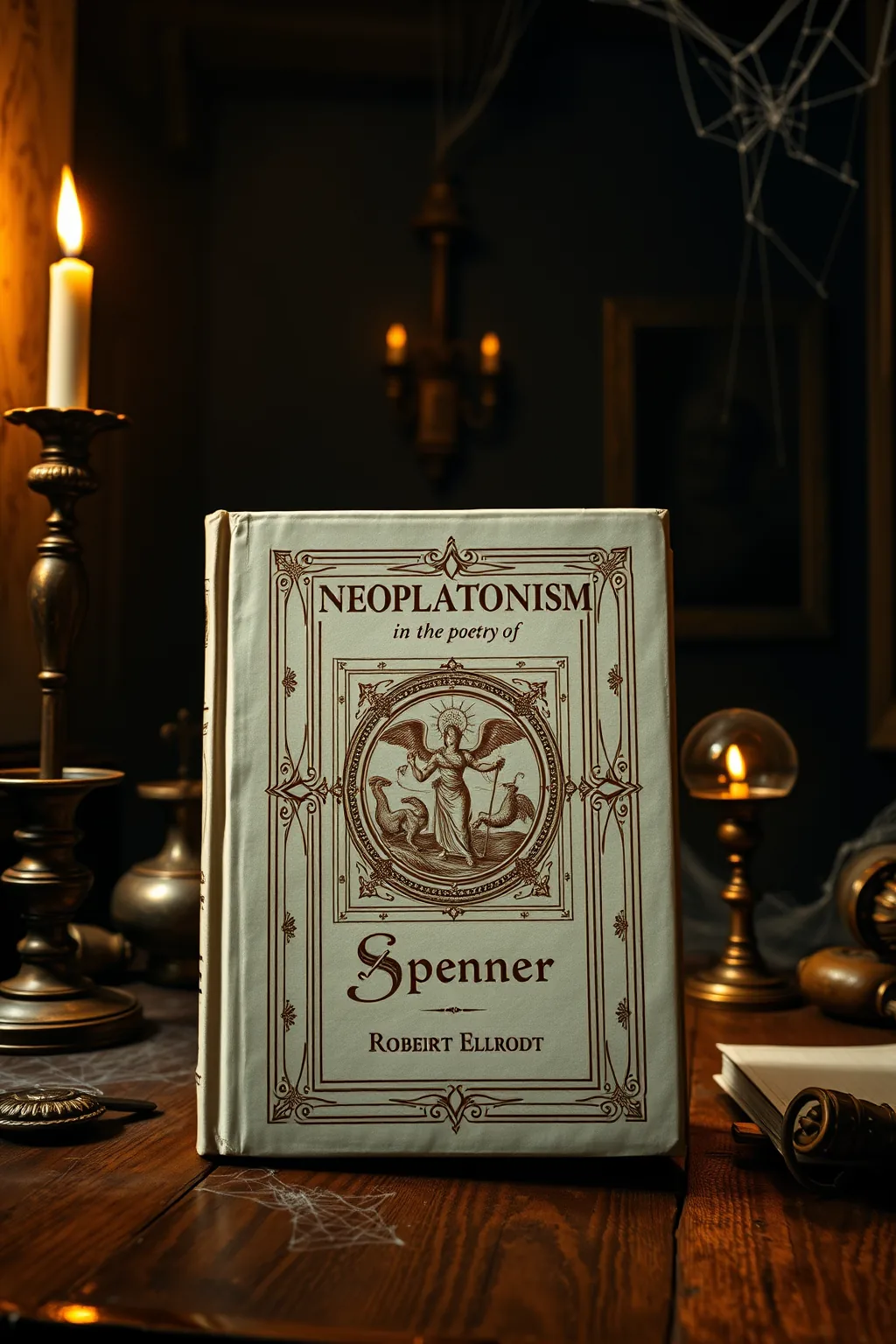
Neoplatonism in the poetry of Spenser

 72
72

Neoplatonism in the poetry of Spenser
Ellrodt’s rigorous exploration of Neoplatonism in Spenser’s poetry offers a foundational text for understanding the intellectual architecture of the Elizabethan poet. The book excels in its systematic dissection of how specific Platonic doctrines, such as the concept of the One and the soul's journey, manifest in "The Faerie Queene" and other works. A particular strength lies in tracing the transmission of these ideas through Renaissance Neoplatonists, illuminating Spenser’s direct engagement with these traditions. However, for readers unacquainted with primary Neoplatonic texts or Spenser's oeuvre, the density of philosophical exegesis might present a steep learning curve. The detailed analysis of specific passages, while invaluable for specialists, occasionally risks overshadowing the sheer poetic artistry it seeks to illuminate. Ellrodt’s work remains a crucial, if demanding, resource for serious scholarship.
📝 Description
72
Robert Ellrodt's 1960 study examines Neoplatonism's influence on Spenser's poetry.
Published in 1960, Robert Ellrodt's work meticulously examines the integration of Neoplatonic philosophy into Edmund Spenser's poetry. Ellrodt traces the transmission of these ideas, particularly through figures like Marsilio Ficino and Plotinus, and analyzes how they shape Spenser's cosmology, his views on love and beauty, and his allegorical structures. The book details Spenser's use of concepts such as the soul's ascent, the hierarchy of being, divine love, and the One, demonstrating their active function within his poetic narratives. This study emerged during a time of renewed scholarly interest in the intellectual frameworks of the Renaissance, offering a focused philosophical analysis of the synthesis between classical Neoplatonism and Elizabethan literary production. It is a valuable resource for students and scholars of Renaissance literature and the history of ideas seeking to understand the philosophical underpinnings of Spenser's major works, including "The Faerie Queene."
Ellrodt's study situates itself within the tradition of Renaissance Neoplatonism, a philosophical current that sought to reconcile Platonic thought with Christian theology. This intellectual movement, heavily influenced by thinkers like Plotinus and later Marsilio Ficino, permeated the era's understanding of the cosmos, human consciousness, and divine love. Renaissance poets like Spenser often engaged with these ideas, using them to construct complex allegorical systems and explore spiritual journeys. Ellrodt's work clarifies how these esoteric philosophical concepts were not merely abstract but actively shaped the structure and meaning of significant English poetry.
💡 Why Read This Book?
• Gain a precise understanding of how Neoplatonic concepts like the hierarchy of being directly structure Spenser's allegorical world, moving beyond general philosophical influence. • Learn how Edmund Spenser transmuted the philosophical ideas of Plotinus and Marsilio Ficino into concrete poetic imagery and narrative in "The Faerie Queene." • Appreciate the intellectual climate of the Renaissance, specifically how classical philosophy was synthesized with Christian thought by poets in the 16th century.
⭐ Reader Reviews
Honest opinions from readers who have explored this book.
❓ Frequently Asked Questions
What specific Neoplatonic concepts does Robert Ellrodt identify in Spenser's poetry?
Ellrodt's work focuses on concepts such as the Platonic Forms, the ascent of the soul towards the One, divine beauty, and the hierarchy of being, all central tenets of Neoplatonism as revived in the Renaissance.
Which philosophers were most influential on Spenser according to Ellrodt?
The book emphasizes the influence of Plotinus, the foundational Neoplatonist, and Renaissance interpreters like Marsilio Ficino, whose work made classical philosophy accessible to a wider audience.
How does Neoplatonism explain the structure of 'The Faerie Queene'?
Ellrodt demonstrates how the poem's allegorical framework and its exploration of virtues are informed by Neoplatonic ideas about the soul's journey through various stages of perfection and understanding.
When was 'Neoplatonism in the Poetry of Spenser' first published?
The original publication date for Robert Ellrodt's study was 1960, positioning it within mid-20th-century scholarship on Renaissance literature and philosophy.
Is this book suitable for beginners in Spenser studies?
While comprehensive, the book assumes a certain familiarity with Spenser's poetry and philosophical discourse. It is best suited for advanced students or scholars seeking in-depth analysis.
What is the relationship between Spenser's poetry and Neoplatonic cosmology?
Ellrodt details how Spenser's depiction of the universe, divine order, and human potential is deeply rooted in the Neoplatonic cosmology that posits a unified, hierarchical reality emanating from the divine One.
🔮 Key Themes & Symbolism
The One and Emanation
Ellrodt meticulously unpacks how Spenser's poetry reflects the Neoplatonic doctrine of the One, the ultimate, ineffable source from which all reality emanates. The book illustrates how this concept informs Spenser's understanding of divine perfection and the ordering of the cosmos. Readers can trace how the idea of a singular, transcendent principle underlies the many-sided allegorical structures and the search for ultimate truth within Spenser's verse, particularly in his portrayal of divine love and beauty.
The Soul's Ascent
A central theme is the Neoplatonic journey of the soul, its descent into the material world, and its subsequent ascent back towards spiritual purity and divine union. Ellrodt shows how Spenser employs this motif to chart the moral and spiritual development of his characters, especially in "The Faerie Queene." The exploration of virtues and vices becomes a map for the soul's arduous but ultimately rewarding path towards enlightenment and reunification with the divine.
Divine Beauty and Love
The book examines Spenser's treatment of beauty and love through a Neoplatonic lens, where physical beauty is seen as a stepping stone to apprehending divine beauty and love. Ellrodt analyzes how Spenser integrates the Neoplatonic idea of love as a force that draws the soul upward, transforming earthly affections into a contemplation of the absolute Good. This philosophical framework provides a deeper understanding of the amorous and ethical dimensions within Spenser's poetic explorations.
Allegory and Philosophical Structure
Ellrodt argues that Spenser's intricate allegorical systems are not arbitrary but are deeply informed by Neoplatonic hierarchies and metaphysical principles. The work details how abstract philosophical concepts are rendered tangible through poetic figures and narrative. Understanding this connection reveals how Spenser uses allegory to convey complex philosophical truths about reality, human nature, and the divine, making his poetry a vehicle for profound metaphysical inquiry.
💬 Memorable Quotes
Direct passages from the work, attributed to the author.
“The soul's journey towards divine contemplation is a key thematic element.”
— This interpretation points to Ellrodt's analysis of how Spenser's characters and narratives often depict an ascent, mirroring the Neoplatonic path of spiritual purification and return to the divine.
“Renaissance Neoplatonists like Ficino provided the philosophical bridge.”
— This emphasizes Ellrodt's focus on the transmission of classical philosophy, showing how figures such as Marsilio Ficino were crucial in making Neoplatonic thought accessible to poets like Spenser in the 16th century.
“The concept of divine beauty fuels the poetic imagination.”
— This captures Ellrodt's exploration of how Neoplatonic ideals of beauty, as a reflection of the divine, serve as a primary inspiration and thematic driver within Spenser's poetry.
💡 Key Ideas
Editorial paraphrase of the work's core concepts — not direct quotes.
The poetry of Spenser is illuminated by the doctrine of the One.
This paraphrased concept highlights Ellrodt's central argument: that Spenser's intricate poetic universe is fundamentally structured by the Neoplatonic concept of a singular, ultimate source of all being.
Spenser's allegories are grounded in metaphysical hierarchies.
This paraphrased idea underscores Ellrodt's view that the complex allegorical structures in Spenser's work are not merely decorative but are built upon specific Neoplatonic concepts of cosmic order and being.
🌙 Esoteric Significance
Tradition
This work engages with the Hermetic and Neoplatonic traditions, tracing their transmission and adaptation within Christian thought during the Renaissance. While not a manual of esoteric practice, it illuminates how metaphysical concepts, central to these lineages, were sophisticatedly integrated into English poetry. Ellrodt's analysis reveals how Spenser’s verse functioned as a vehicle for exploring complex spiritual and philosophical ideas, aligning with the broader Hermetic aim of understanding the divine through correspondence and intellectual ascent.
Symbolism
Ellrodt's study highlights the Neoplatonic symbolism of the 'One' as the ultimate, ineffable source, often symbolized by light or pure being, from which all existence emanates. The 'Soul's Ascent' is another key symbolic journey depicted, representing the spiritual progression from material ignorance towards divine knowledge and unity. These symbolic frameworks, derived from Plotinus and others, are shown to be integral to Spenser's allegorical method, providing a philosophical grammar for his poetic universe.
Modern Relevance
Contemporary scholars and practitioners interested in Western Esotericism, comparative literature, and the history of philosophy continue to draw upon Ellrodt's foundational work. His meticulous tracing of Neoplatonic ideas in Spenser provides a case study for understanding how complex metaphysical systems can be embedded within artistic expression. Modern thinkers exploring the intersection of spirituality, philosophy, and art find in this analysis a robust example of how ancient wisdom traditions informed later creative and intellectual endeavors.
👥 Who Should Read This Book
• Students of Renaissance Literature: Those studying Edmund Spenser's "The Faerie Queene" or "The Shepheardes Calendar" will gain crucial insights into the philosophical underpinnings of these complex works. • Philosophy Enthusiasts: Individuals interested in the history of Western philosophy, particularly Neoplatonism and its influence, will appreciate the detailed textual analysis. • Comparative Scholars: Researchers examining the cross-pollination of classical thought, Christian theology, and poetic expression in the 16th century will find this a vital resource.
📜 Historical Context
Robert Ellrodt's "Neoplatonism in the Poetry of Spenser," first published in 1960, emerged during a fertile period of Renaissance scholarship. The mid-20th century saw a renewed interest in the intellectual history underpinning literary works, moving beyond purely stylistic or biographical analyses. Ellrodt’s study contributed to a broader scholarly conversation about the integration of classical philosophy, particularly Neoplatonism, into Christian thought and English literature of the 16th century. This period was marked by robust engagement with thinkers like Plotinus and his Renaissance interpreters, such as Marsilio Ficino, whose ideas were being re-examined and their influence on figures like Spenser meticulously charted. While earlier critics like E.M.W. Tillyard had explored the Elizabethan world picture, Ellrodt offered a more focused philosophical dissection of Spenser's engagement with specific Neoplatonic doctrines, situating his work within a trajectory that valued deep textual and philosophical exegesis. The reception of such works affirmed the importance of understanding the philosophical underpinnings of canonical English poetry.
📔 Journal Prompts
The concept of the One in Spenser's cosmology.
Spenser's allegorical representation of the Soul's Ascent.
The role of divine beauty in Spenser's amorous poetry.
How Neoplatonic hierarchies shape Spenser's world-building.
Ficino's influence on Spenser's philosophical vocabulary.
🗂️ Glossary
Neoplatonism
A philosophical system originating in antiquity, based on the teachings of Plato but developed significantly by Plotinus and others, emphasizing a transcendent One from which all reality emanates and to which the soul strives to return.
The One
In Neoplatonism, the ultimate, absolute, and ineffable source of all existence; a perfect, unchanging unity from which all multiplicity arises through a process of emanation.
Emanation
The Neoplatonic concept describing the process by which reality flows or proceeds from the One in a hierarchical series, without diminishing the One itself.
Hierarchy of Being
A Neoplatonic concept positing a structured universe, from the divine One down through intellect, soul, and finally matter, with each level dependent on the one above it.
Soul's Ascent
The Neoplatonic spiritual journey where the soul purifies itself and ascends through intellectual and contemplative stages to achieve union with the divine or the One.
Marsilio Ficino
A key Italian philosopher and humanist of the Renaissance who translated Plato and Plotinus into Latin, playing an important role in reviving Neoplatonism in 16th-century Europe.
Allegory
A literary device where characters, events, or settings represent abstract ideas or moral qualities, often used by Spenser to convey complex philosophical and spiritual concepts.
🔮 Readers Also Liked
Browse all →









More by Robert Ellrodt
All books →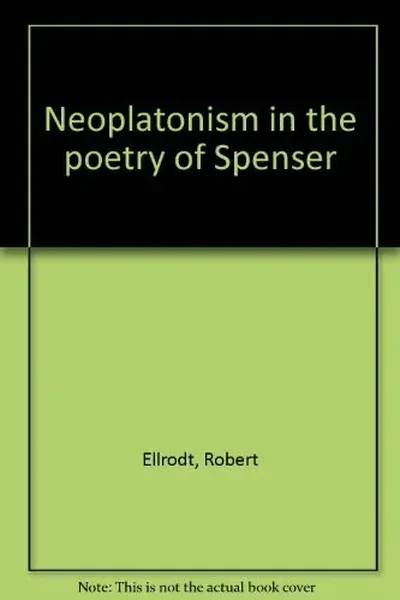

More Free Occult Philosophy Books
View all →