Loki's Wolves
 75
75

Loki's Wolves
M. A. Marr and K. L. Armstrong present in "Loki's Wolves" a narrative that sidesteps overt exposition in favor of character-driven revelation. The initial chapters, rather than explaining the pack's formation, instead immerse the reader in the immediate, often chaotic, circumstances that bring its disparate members together. This approach, while demanding of the reader, rewards patience with a sense of organic discovery. One particularly effective sequence details the uneasy truce brokered between characters driven by immediate peril, showcasing the authors' skill in depicting reluctant alliances. However, the narrative occasionally suffers from an over-reliance on implicit world-building, leaving certain mythological connections requiring prior knowledge or external research. The integration of Norse pantheon elements, while ambitious, sometimes feels more like a backdrop than an active force shaping immediate events. Despite this, "Loki's Wolves" offers a compelling, if sometimes opaque, look at the forging of powerful bonds under duress.
📝 Description
75
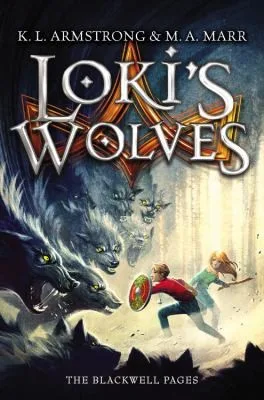
M. A. Marr and K. L. Armstrong's 2013 novel, Loki's Wolves, follows the formation of a magical pack.
Loki's Wolves chronicles the formation of a supernatural pack united by destiny and magic. The narrative details the individual struggles and convergence of its members, examining the animosity and alliances that forge their bonds. The story addresses the challenges of controlling their powers and responsibilities. The book's core rests on supernatural pacts and prophecies linked to the Norse god Loki. It shows how ancient foretellings shape present events, compelling characters to confront their roles. This tension between fate and free will is central as the pack interprets inescapable prophecies. Beyond the main plot, the novel scrutinizes the pack's internal dynamics and each member's personal quests. Individual motivations, fears, and histories create a complex social structure, revealing loyalty, betrayal, and power negotiations. These personal journeys are key to understanding the pack's cohesion and resilience, demonstrating how individual growth affects the collective.
This novel engages with themes common in modern occult fiction, particularly those drawing from Norse mythology and shamanic traditions. The concept of a magically bound 'pack' echoes ideas of spiritual kinship and shared purpose found in various esoteric paths. The exploration of prophecy and destiny, influenced by Loki's trickster archetype, touches upon concepts of cosmic order and individual agency within predestined frameworks. It reflects a fascination with ancient divine figures and their perceived influence on contemporary spiritual or magical realities, a recurring motif in occult literature.
💡 Why Read This Book?
• Gain insight into the complex formation of a supernatural pack, understanding how individual motivations and ancient pacts, such as those hinted at in Norse mythology, converge to create a unified force. • Explore the tension between destiny and agency through the lens of prophecy, learning how characters grapple with foretold events and assert their will within a predetermined framework. • Witness the intricate dynamics of a supernatural collective, observing how personal quests and internal power struggles shape the group's resilience and capacity for action.
⭐ Reader Reviews
Honest opinions from readers who have explored this book.
❓ Frequently Asked Questions
What is the primary mythological influence behind 'Loki's Wolves'?
The book draws heavily from Norse mythology, particularly the lore surrounding the trickster god Loki and the pantheon of the Aesir. It explores themes of fate, divine intervention, and the consequences of ancient prophecies within this mythological framework.
Who are the main authors of 'Loki's Wolves'?
The book is authored by M. A. Marr and K. L. Armstrong. It was first published in 2016, bringing together their distinct writing styles to create its unique narrative.
What are the key themes explored in the book?
Key themes include pack formation, supernatural pacts, the influence of prophecy, internal group dynamics, personal quests, and the overarching shadow of the Aesir from Norse mythology.
Is 'Loki's Wolves' part of a series?
While the provided information does not explicitly state if 'Loki's Wolves' is part of a series, its focus on the genesis of a pack suggests potential for further development of these characters and their world.
What is the publication year of 'Loki's Wolves'?
'Loki's Wolves' by M. A. Marr and K. L. Armstrong was first published in 2016.
What kind of esoteric concepts does 'Loki's Wolves' engage with?
The book engages with concepts of destiny, supernatural bonds, the impact of divine beings (specifically the Aesir and Loki) on mortal affairs, and the nature of power within a magically inclined collective.
🔮 Key Themes & Symbolism
The Genesis of the Pack
This theme centers on the formation of the supernatural collective known as Loki's Wolves. It details the individual origins and eventual convergence of its members, highlighting the often-turbulent circumstances that bind them. The narrative examines how shared adversity, reluctant alliances, and emergent magical connections forge the foundation of their pack identity. It's about more than just joining forces; it's about the primal and mystical processes that create a cohesive unit out of disparate, powerful entities.
Norse Mythology's Shadow
The pervasive influence of Norse mythology, particularly the figures of Loki and the Aesir, forms a critical backdrop and driving force in the narrative. Events are often framed by ancient prophecies and the machims of divine powers. This theme explores how the cosmic struggles and relationships within the Norse pantheon directly impact the characters' lives and destinies, suggesting their earthly conflicts are part of a larger, divinely orchestrated drama.
Fate Versus Free Will
Central to the characters' journey is the exploration of destiny and their capacity to exert free will. Bound by ancient prophecies and the perceived influence of gods like Loki, the pack members constantly grapple with whether their paths are predetermined. The narrative explores their struggles to understand and potentially alter their foretold roles, questioning the extent to which fate dictates their actions versus their own choices and desires.
Internal Dynamics and Personal Quests
Beyond the grander themes, the book meticulously details the internal workings of the pack and the individual journeys of its members. Each character possesses unique motivations, histories, and personal ambitions that create complex relationships and power dynamics within the group. This theme highlights how personal growth, internal conflicts, and individual quests for understanding or power are essential to the collective strength and evolution of Loki's Wolves.
💬 Memorable Quotes
Direct passages from the work, attributed to the author.
“The ancient pacts bind us, yet our choices define us.”
— This concept suggests a core tension within the narrative: characters are subject to preordained agreements and prophecies, likely stemming from Norse mythology, but they retain agency in how they interpret and act upon these constraints.
“Loki's laughter echoes in the choices we make.”
— This phrase implies that the trickster god's influence is not direct control, but rather a subtle encouragement of chaos, deception, or unexpected turns, manifesting in the characters' decisions and their often unpredictable outcomes.
“We are wolves forged in shadow, bound by more than blood.”
— This highlights the supernatural and mystical nature of the pack's formation, emphasizing that their connection transcends simple kinship or loyalty, rooted instead in shared magical circumstances and destiny.
“The Aesir watch, their ancient quarrels shaping our present.”
— This points to the significant role of the Norse gods in the story, indicating that their ongoing divine conflicts and relationships have direct, tangible consequences for the characters and the events unfolding in their world.
“Destiny is a whispered promise, not an iron chain.”
— This interpretation emphasizes the theme of free will against fate, suggesting that prophecies and foretellings should be seen as potential pathways rather than unalterable destinies, leaving room for individual influence.
🌙 Esoteric Significance
Tradition
The work draws primarily from Norse paganism and its associated mythology, infusing it with elements common in modern urban fantasy and esoteric fiction. While not strictly adhering to a historical or reconstructionist pagan tradition, it engages with the archetypal energies of Loki and the Aesir, reinterpreting their roles within a narrative focused on pack formation and supernatural pacts. It departs from purely historical accounts by focusing on the magical and fated aspects of these figures.
Symbolism
Key symbols likely include the wolf, representing primal power, pack loyalty, and the wild; the trickster archetype embodied by Loki, signifying chaos, change, and the disruption of order; and potentially runes or other Norse symbols, which might represent fate, divine influence, or protective magic within the narrative's context.
Modern Relevance
Contemporary practitioners of Norse-inspired spiritual paths and enthusiasts of modern fantasy literature often engage with works like "Loki's Wolves." It serves as a narrative exploration of themes relevant to animism, the power of archetypes, and the concept of spiritual kinship. The book's focus on pack dynamics can also resonate with modern communities seeking structure and belonging.
👥 Who Should Read This Book
• Readers interested in contemporary fantasy narratives deeply rooted in Norse mythology, particularly those who enjoy exploring the roles of trickster gods and pantheons. • Individuals fascinated by supernatural pack dynamics, exploring themes of loyalty, power struggles, and the formation of unconventional families within a magical context. • Those drawn to stories that examine the interplay between destiny and free will, particularly when framed by ancient prophecies and the influence of divine or semi-divine beings.
📜 Historical Context
Published in 2016, "Loki's Wolves" emerged during a period of renewed popular interest in Norse mythology, fueled by blockbuster films and a growing appetite for fantasy literature rooted in ancient lore. This period saw numerous authors exploring Germanic and Scandinavian myth cycles, often blending them with contemporary themes and supernatural elements. While not directly engaging with academic discourse on Old Norse studies, works like this contributed to a broader cultural fascination. The reception of such books often focused on their imaginative scope and character development rather than strict adherence to historical sagas. Authors like Neil Gaiman, with his "Norse Mythology" (2017), also contributed to this cultural zeitgeist, though Marr and Armstrong's approach focuses on fictional pack dynamics rather than direct retelling.
📔 Journal Prompts
The formation of the pack: what primal forces are at play?
Reflecting on Loki's influence: how does chaos manifest in your own life?
Interpreting prophecy: what are the whispers of destiny in your path?
Pack loyalty: examine the bonds that hold your chosen communities together.
The shadow of the Aesir: consider the impact of larger powers on personal choices.
🗂️ Glossary
Pack
A collective of supernatural beings, likely wolves or shapeshifters, bound by mystical pacts, shared destiny, and potentially the influence of Loki.
Loki
The Norse god of mischief, trickery, and chaos, whose influence is depicted as subtly shaping events and character choices within the narrative.
Aesir
The principal pantheon of gods in Norse mythology, whose ancient quarrels and actions are shown to have significant repercussions for the characters in the book.
Pact
A supernatural agreement or bond, either explicit or implicit, that connects the members of the pack and dictates certain aspects of their existence or behavior.
Prophecy
An ancient foretelling of future events, which the characters must confront, interpret, and potentially defy or fulfill throughout the narrative.
Urban Fantasy
A subgenre of fantasy fiction that typically features supernatural elements set within a contemporary urban environment, often blending mythologies with modern settings.
Shapeshifter
A mythical being or character with the ability to alter its physical form, often associated with animal transformations, relevant to the 'wolf' aspect of the title.
🔮 Readers Also Liked
Browse all →









More by M. A. Marr, K.L. Armstrong
All books →
More Free Occult Philosophy Books
View all →
![The Complete Tales & Poems of Edgar Allan Poe [73 stories, 48 poems]](/img/thumb/the-complete-tales-poems-of-edgar-allan-poe-73-stories-48-poems-edgar-allan-poe-813507.webp)