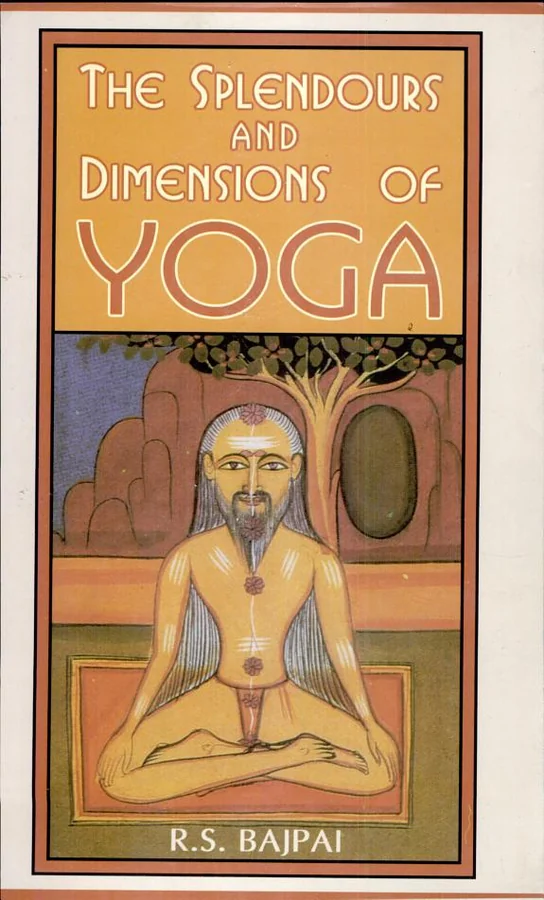
The Splendours and Dimensions of Yoga
 80
80

The Splendours and Dimensions of Yoga
R. S. Bajpai’s "The Splendours and Dimensions of Yoga" presents a scholarly, text-driven examination of yogic philosophy. Its strength lies in its meticulous coverage of the eight limbs, buttressed by extensive references to classical Sanskrit texts, including the Yoga Sutras and the Bhagavad Gita. This academic rigor offers a valuable counterpoint to more superficial modern yoga literature. However, the book’s dense presentation, while thorough, can be challenging for readers not already steeped in Indian philosophy. The detailed scriptural exegesis, particularly concerning the Upanishads, while informative, sometimes overshadows practical application or contemporary relevance. The inclusion of biographical sketches of yogins and scholars adds a unique dimension, though their integration could be smoother. Bajpai’s work is a valuable resource for dedicated scholars and practitioners seeking a deep, textually-grounded understanding of yoga's classical dimensions.
📝 Description
80
R. S. Bajpai's 2002 book examines the eight limbs of yoga and their philosophical roots.
Published in 2002, The Splendours and Dimensions of Yoga by R. S. Bajpai provides a detailed look at yogic philosophy and practice. The work systematically explains the eight limbs of yoga, giving readers a solid understanding of the subject. It goes beyond just physical poses to discuss the philosophical ideas found in important Indian writings.
This book is best for serious yoga students who want to learn about its philosophical and historical background, separate from modern popular versions. It suits people looking for the scientific and scriptural foundations of yoga as described in old Indian literature. Scholars of religion and Eastern philosophy will also find its academic approach useful. Bajpai's book comes from a long history of yoga study, building on many years of interpretation and practice.
Bajpai's work situates itself within the classical Indian tradition of yoga, a lineage stretching back millennia. It engages directly with foundational Sanskrit texts like Patanjali's Yoga Sutras and the Bhagavad Gita, which are central to various schools of Indian philosophy and spiritual practice. The book grounds contemporary understanding in these ancient scriptural commentaries and practices, emphasizing yoga as a comprehensive system for self-knowledge and spiritual attainment, not merely a physical discipline.
💡 Why Read This Book?
• Gain a detailed understanding of the eight limbs of yoga, as explained through classical Sanskrit texts like Patanjali's Yoga Sutra, moving beyond common modern interpretations. • Explore the philosophical depth of yoga as presented in the Upanishads and the Bhagavad Gita, understanding its integration into broader Indian spiritual thought. • Discover the historical context of yoga through biographical insights into prominent yogins and scholars, appreciating the lineage and evolution of this ancient practice.
⭐ Reader Reviews
Honest opinions from readers who have explored this book.
❓ Frequently Asked Questions
What are the primary Sanskrit texts referenced in "The Splendours and Dimensions of Yoga"?
The book extensively references the Yoga Sutras of Sage Patanjali, a foundational text for classical yoga philosophy. It also draws heavily from the Upanishads and the Bhagavad Gita, illustrating the broader scriptural context of yogic principles.
Does the book focus on the physical postures of yoga?
While it covers the eight limbs of yoga, which include Asana (postures), the primary focus is on the philosophical, ethical, and meditative dimensions. It seeks to present the 'science of yoga' in its entirety, not just its physical aspects.
Who is R. S. Bajpai and what is his background?
While specific biographical details are not elaborated here, the book's content suggests Bajpai is a scholar with deep knowledge of Indian philosophy and Sanskrit literature, aiming to present yoga from a classical, scriptural perspective.
When was "The Splendours and Dimensions of Yoga" first published?
The book was first published in 2002, placing it within a period of increasing global interest in yoga, yet it emphasizes the tradition's ancient roots.
What distinguishes this book from contemporary yoga guides?
Unlike many modern guides, Bajpai's work prioritizes scriptural authority and philosophical depth. It offers a scholarly analysis of texts like the Yoga Sutras, rather than focusing primarily on asana or wellness trends.
Is "The Splendours and Dimensions of Yoga" suitable for beginners?
It is more suited for intermediate to advanced students or scholars of yoga who have some familiarity with Indian philosophy. Beginners might find the dense textual analysis challenging without prior foundational knowledge.
🔮 Key Themes & Symbolism
The Eight Limbs of Yoga
The work meticulously details Ashtanga Yoga, the eight-limbed path expounded by Sage Patanjali. Each limb—Yama, Niyama, Asana, Pranayama, Pratyahara, Dharana, Dhyana, and Samadhi—is explored not just as a practice but as an integral component of a holistic spiritual discipline, grounded in scriptural authority and philosophical reasoning.
Scriptural Foundations
Bajpai grounds the exploration of yoga in its primary textual sources. Significant attention is given to the philosophical dialogues found within the Upanishads and the Bhagavad Gita, demonstrating how yoga is interwoven with the broader Vedic and Vedantic traditions, offering insights into its metaphysical underpinnings.
Biographies of Yogins and Scholars
The book provides background on key figures associated with the art of yoga. This includes not only ancient sages but also more recent scholars, saints, and Tantriks, offering a historical perspective on the transmission and evolution of yogic knowledge and practice across generations.
The Science of Yoga
Beyond spiritual aspiration, the book frames yoga as a 'science'—a systematic path to self-realization and understanding the nature of consciousness. It emphasizes the logical progression and interconnectedness of the various yogic practices and philosophical concepts presented.
💬 Memorable Quotes
Direct passages from the work, attributed to the author.
“The Book Entitled, The Splendours And Dimensions Of Yoga Brilliantly Covers Up Eight Limbs Of Yoga.”
— This statement highlights the book's core structural element, emphasizing its comprehensive approach to the foundational framework of yogic practice as established by classical traditions.
“Very Remarkable Chapters Covering The Entire Gamut Of Science Of Yoga Mostly Dealing With Upanishads And Gita.”
— This suggests the book extends beyond practical techniques to explore the philosophical and metaphysical dimensions of yoga, drawing deeply from authoritative Indian scriptures.
“Total Sanskrit Texts To Yoga Sutra Of Sage Patanjali To Prove It A Master-Piece.”
— The author's method involves rigorous textual analysis, using original Sanskrit sources, particularly Patanjali's Yoga Sutras, to substantiate the profound nature and scope of yoga.
“A Good Background Of Few Well-Known Yogins And Most Imminent Yoga Scholars, Saints And Tantriks.”
— The work enriches its academic content with biographical context, introducing readers to significant historical figures who have shaped and contributed to the yogic tradition.
“Original Effort To Depict Th[e...]”
— This phrase implies the author makes a unique contribution to the understanding and presentation of yoga, likely through original interpretation or synthesis of complex ideas.
🌙 Esoteric Significance
Tradition
This work aligns with the Indic esoteric traditions, specifically classical Yoga and Vedanta. It departs from more syncretic or Westernized interpretations by adhering strictly to the scriptural lineage originating from Patanjali, the Upanishads, and the Bhagavad Gita. Its focus on the systematic unfolding of consciousness through the eight limbs places it firmly within the yogic path toward liberation (moksha) or self-realization.
Symbolism
Key symbols include the concept of 'Prakriti' (primordial matter) and 'Purusha' (pure consciousness), central to Samkhya-Yoga philosophy, explaining the dualistic nature of existence. The 'eight limbs' themselves function as symbolic stages of ascent. Furthermore, the implicit symbolism within the Upanishadic and Gita verses discussed represents the journey from ignorance to knowledge, the dissolution of ego, and the attainment of divine union.
Modern Relevance
Contemporary scholars and practitioners seeking to reconnect with the philosophical roots of yoga, beyond purely physical or therapeutic applications, draw on works like Bajpai's. It informs those exploring comparative mysticism, the history of consciousness studies, and the non-dualistic philosophies prevalent in modern Advaita Vedanta and Integral Yoga circles.
👥 Who Should Read This Book
• Advanced practitioners and scholars of yoga seeking a rigorous, text-based understanding of the philosophy behind the practice, moving beyond contemporary popularizations. • Students of comparative religion and Eastern philosophy interested in the scriptural foundations of yoga as presented in the Yoga Sutras, Upanishads, and Bhagavad Gita. • Indologists and researchers of Indian intellectual history looking for a detailed exploration of classical yogic thought and its historical context.
📜 Historical Context
Published in 2002, R. S. Bajpai's "The Splendours and Dimensions of Yoga" entered a global discourse where yoga was rapidly gaining popularity, often presented in simplified, Westernized forms. This work stands in contrast by grounding its exposition in classical Indian philosophical traditions and scriptural authority. It specifically engages with the foundational texts of the Yoga Sutras of Patanjali, the Upanishads, and the Bhagavad Gita, situating yoga within its original intellectual milieu. While contemporary scholars like Georg Feuerstein were also actively researching and publishing on yoga history and philosophy around this time, Bajpai's approach emphasizes a direct textual exegesis. The book's meticulous referencing of Sanskrit sources and its focus on the philosophical 'science' of yoga offered a scholarly counter-narrative to the prevailing trends, aiming to preserve and present the tradition's integrity.
📔 Journal Prompts
The eight limbs of yoga as presented by Patanjali, from Yama to Samadhi.
The philosophical divergence between Prakriti and Purusha.
The Upanishads and the Bhagavad Gita as sources for yogic science.
The role of prominent yogins and scholars in the tradition's history.
The concept of yoga as a systematic science for self-realization.
🗂️ Glossary
Ashtanga Yoga
The 'eight-limbed yoga' system outlined by Sage Patanjali, comprising Yama, Niyama, Asana, Pranayama, Pratyahara, Dharana, Dhyana, and Samadhi, representing a progressive path to spiritual realization.
Yoga Sutras
A foundational Sanskrit text attributed to Sage Patanjali, systematically organizing the principles and practices of classical yoga philosophy, considered the primary scripture for the yogic path.
Upanishads
A collection of ancient Sanskrit texts forming the theoretical basis of Hinduism, discussing concepts like Brahman, Atman, karma, and moksha, often through philosophical dialogues and metaphysical inquiry.
Bhagavad Gita
A 700-verse Sanskrit scripture, part of the Hindu epic Mahabharata, that details the dialogue between Prince Arjuna and Lord Krishna, expounding on dharma, karma yoga, bhakti yoga, and jnana yoga.
Yama
The first limb of Ashtanga Yoga, referring to ethical restraints and moral disciplines such as non-violence (ahimsa), truthfulness (satya), and non-stealing (asteya).
Niyama
The second limb of Ashtanga Yoga, encompassing observances and self-discipline, including purity (saucha), contentment (santosha), and self-study (svadhyaya).
Samadhi
The final limb of Ashtanga Yoga, representing a state of profound meditative absorption and spiritual consciousness, often translated as 'super-consciousness' or 'blissful union'.
This book appears in 1 collection
🔮 Readers Also Liked
Browse all →









From the “Hatha Yoga” Collection
View all →








More Free Occult Philosophy Books
View all →