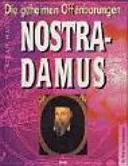
Die großen Weissagungen des Nostradamus (5048 613).
 79
79

Die großen Weissagungen des Nostradamus (5048 613).
The Centgraf edition of Nostradamus's prophecies offers a direct encounter with the quatrains, a strength for those who prefer minimal interpretive overlay. The stark presentation of the verses, divorced from extensive modern analysis, allows for an unadulterated study of the seer's cryptic pronouncements. However, this very lack of annotation can also be a significant hurdle. Without contextual notes explaining obscure references or potential linguistic nuances, readers unfamiliar with 16th-century French or esoteric symbolism may find themselves adrift in a sea of ambiguity. A particular passage, often cited as predicting the rise of Napoleon (e.g., quatrain I.50), exemplifies this challenge: deciphering such verses requires considerable background knowledge or a willingness to engage with multiple scholarly interpretations outside this specific volume. While valuable for its textual purity, the book demands substantial prior research from the reader to yield meaningful insights.
📝 Description
79
Alexander Centgraf published this 1981 edition of Nostradamus's quatrains.
This 1981 edition by Alexander Centgraf presents the quatrains of Michel de Nostredame, the 16th-century French seer known as Nostradamus. It functions primarily as a compilation of his cryptic verses, intended for direct interpretation by the reader. The book focuses on delivering the original text, or a close translation, allowing individuals to engage with the prophecies without significant modern commentary.
The volume is suited for dedicated researchers of prophetic literature and historians of esotericism. It attracts those who view Nostradamus as a historical figure reflecting the spiritual currents of his era, rather than a mere fortune-teller. Readers who wish to grapple directly with the ambiguity of the quatrains will find this edition valuable.
Nostradamus's *Les Prophéties*, first published in 1555, belongs to a tradition of prophetic literature that spans centuries. This 1981 Centgraf edition follows a long history of reinterpreting these verses, which gained significant cultural traction by the late 20th century. The mid-20th century saw renewed interest in occultism and prophecy, making this publication relevant for those studying such movements and their historical roots.
💡 Why Read This Book?
• Gain direct access to the unvarnished quatrains of Nostradamus, allowing for personal interpretation of prophecies first published in 1555, distinct from later editorial commentary. • Engage with the historical phenomenon of prophetic literature as it was presented in 1981, understanding its place in esoteric discourse during that era. • Study the unique linguistic style and symbolic language employed by Nostradamus, encountering terms and concepts that have challenged interpreters for centuries.
⭐ Reader Reviews
Honest opinions from readers who have explored this book.
❓ Frequently Asked Questions
What is the primary language used in Nostradamus's quatrains?
Nostradamus primarily used a mix of 16th-century French, but also incorporated Latin, Greek, and his native Occitan dialect. This linguistic blend contributes to the cryptic nature of his prophecies, often requiring translation and deep linguistic analysis.
When were Nostradamus's prophecies first published?
The earliest known edition of Nostradamus's prophetic quatrains, titled *Les Prophéties*, was published in 1555. This foundational text has been subject to countless reprints and interpretations since then.
What historical events are commonly associated with Nostradamus's predictions?
Interpretations frequently link Nostradamus's quatrains to major historical events such as the French Revolution, the rise of Napoleon Bonaparte, the assassination of John F. Kennedy, and World War II. However, these connections are often debated.
Does this edition by Alexander Centgraf offer commentary on the prophecies?
This specific edition focuses on presenting the quatrains themselves. While Centgraf's role was likely in editing and compiling, it generally provides the text for reader interpretation rather than extensive scholarly commentary within the main body.
What is the significance of the term 'quatrain' in relation to Nostradamus?
A quatrain refers to a stanza of four lines, which is the specific poetic form Nostradamus used for all his prophecies. His predictions are organized into collections of these four-line verses.
Are Nostradamus's prophecies considered literal or symbolic?
The interpretation of Nostradamus's prophecies is highly contested. Many scholars and interpreters view them as symbolic, allegorical, or metaphorical, rather than literal predictions, due to their ambiguous language and astrological references.
🔮 Key Themes & Symbolism
Ambiguity and Interpretation
The core of Nostradamus's work lies in its deliberate ambiguity. The quatrains, often written in a dense, multilingual style, resist straightforward translation or prediction. This invites a vast array of interpretations, ranging from historical event correlations to symbolic readings of human destiny. The 1555 original publication set a precedent for how readers would grapple with these verses, a challenge amplified in later editions like the 1981 Centgraf compilation. The text serves as a Rorschach test for the subconscious, revealing as much about the interpreter's worldview as about any supposed future event.
Astrological and Celestial Influence
Nostradamus was a skilled astrologer, and his prophecies are deeply interwoven with celestial observations. References to planets, stars, comets, and eclipses are frequent, suggesting that cosmic alignments play an important role in the unfolding of human affairs. The quatrains often employ astrological imagery to signify specific periods or influences. Understanding the astrological context of the 16th century, when his work *Les Prophéties* first appeared, is vital for grasping the intended layers of meaning, even if those meanings remain veiled.
Historical Foretelling
The enduring fascination with Nostradamus stems from the belief that his quatrains predict significant historical occurrences. From the French Revolution to more modern events, interpreters have sought to match verses to specific happenings. The 1981 edition, by presenting the raw text, allows readers to undertake this comparative analysis themselves. This theme explores the human desire to find patterns and foresight in chaos, positioning the seer's work as a potential, albeit obscure, historical record or premonition.
The Seer's Enigmatic Persona
Michel de Nostredame cultivated an image of a divinely inspired seer. His use of obscure language, anagrams, and veiled references was not accidental; it served to protect him from accusations of heresy or witchcraft while simultaneously ensuring his prophecies would be debated for centuries. The 1981 edition contributes to this mystique by offering a direct portal to his pronouncements, allowing the reader to engage with the persona of the prophet without the filter of extensive contemporary commentary from the time of Centgraf's publication.
💬 Memorable Quotes
Direct passages from the work, attributed to the author.
“The language is a mixture of French, Latin, Greek, and Occitan.”
— This observation highlights the linguistic complexity of Nostradamus's quatrains, a deliberate choice that obscures direct meaning and necessitates scholarly translation and interpretation for modern readers.
“Many quatrains contain astrological terms and references to celestial bodies.”
— This points to the significant influence of astrology on Nostradamus's prophetic system, suggesting that cosmic events are viewed as indicators or causes of earthly occurrences.
“Verses often refer to places, names, and events in a coded or allegorical manner.”
— This characteristic of the prophecies explains why deciphering them is so challenging, requiring readers to decode symbolic language and historical allusions rather than accepting them at face value.
“The 1981 edition by Alexander Centgraf serves as a compilation of these prophecies.”
— This note contextualizes the specific publication, indicating its role in disseminating Nostradamus's work in a more accessible format for a late 20th-century audience interested in esoteric texts.
“The prophecies are believed by some to be structured chronologically.”
— This interpretation suggests a linear progression in Nostradamus's visions, implying that the quatrains might be arranged to depict a sequence of future events over time.
🌙 Esoteric Significance
Tradition
Nostradamus's work is situated within the Western esoteric tradition, drawing heavily on Renaissance Hermeticism, Kabbalah, and astrological divination. His method of prophecy, particularly the use of cryptic language and symbolic imagery, aligns with the Neoplatonic and Hermetic emphasis on hidden correspondences between the macrocosm (the universe) and the microcosm (human affairs). Unlike purely scholastic or religious prophecy, his approach is infused with a mystical, almost alchemical process of transforming astrological data and historical patterns into veiled pronouncements, intended for initiates or dedicated seekers.
Symbolism
Key symbols in Nostradamus's quatrains include celestial bodies (Sun, Moon, planets) representing divine influence or cosmic cycles, and animals (e.g., lions, eagles) often symbolizing nations, rulers, or archetypal forces. The 'great fire from the sky' is a recurring motif, frequently interpreted as war, destruction, or divine judgment. These symbols are not merely decorative; they function as coded language, requiring knowledge of astrological lore and classical/biblical allegories for decipherment, connecting earthly events to celestial patterns.
Modern Relevance
Contemporary esoteric practitioners, particularly those involved in ceremonial magic, astrology, and comparative prophecy studies, continue to engage with Nostradamus's work. Thinkers within the Traditionalist School, who posit a decline from a primordial spiritual age, sometimes view Nostradamus as a figure who preserved ancient prophetic knowledge. His quatrains are frequently cited in discussions of global events, conspiracy theories, and end-times eschatology, demonstrating an enduring, if often speculative, relevance in popular occultism and predictive arts.
👥 Who Should Read This Book
• Students of historical prophecy and divination seeking primary source material from a central figure in the genre. • Researchers of Renaissance esotericism interested in the intersection of astrology, Hermeticism, and predictive literature of the 16th century. • Dedicated seekers of occult knowledge who prefer to engage directly with cryptic texts and form their own interpretations of prophetic verses.
📜 Historical Context
Michel de Nostredame, a physician and astrologer, first published his collection of prophecies, *Les Prophéties*, in Lyon in 1555. This important work emerged during the Renaissance, a period marked by a resurgence of interest in classical learning, Hermeticism, and astrology, alongside burgeoning scientific inquiry. Competing with the more structured and mathematically grounded astronomical predictions of the era, Nostradamus's allegorical and cryptic quatrains offered a different, more intuitive approach to foresight. His writings were met with a mixture of fascination and suspicion, leading to later editions being banned by authorities, such as the one compiled by the Sorbonne in 1781. By the time Alexander Centgraf published this edition in 1981, Nostradamus had become a global phenomenon, extensively referenced in popular culture and esoteric circles. This late 20th-century publication exists within a milieu where occultism and New Age thought were gaining traction, distinct from the intense religious and political climate of 16th-century France where censorship was a constant threat to unconventional thinkers.
📔 Journal Prompts
The astrological references in quatrain X.Y, and their potential meaning.
Ambiguous place names within the prophecies, and their possible historical or symbolic referents.
Nostradamus's use of anagrams and coded language for specific predictions.
The concept of celestial influence on human events as presented in the quatrains.
Matching a specific quatrain to a known historical event and documenting the interpretive process.
🗂️ Glossary
Quatrain
A stanza or poem consisting of four lines. Nostradamus's prophecies are composed entirely of these four-line verses, often rhyming ABAB or AABB, though variations exist.
Les Prophéties
The original title of Nostradamus's collection of prophecies, first published in 1555. It comprises thousands of quatrains organized into 'centuries' (groups of 100).
Centurie (Century)
A collection of 100 quatrains within Nostradamus's work. The prophecies are divided into ten centuries.
Hermeticism
A philosophical and religious tradition based on writings attributed to Hermes Trismegistus. It emphasizes hidden knowledge, correspondences between the microcosm and macrocosm, and spiritual transformation.
Kabbalah
A system of Jewish mysticism that explores the nature of God and the universe through esoteric interpretations of scripture and symbolic diagrams, such as the Tree of Life.
Divination
The practice of seeking knowledge of the future or the unknown by supernatural means. Nostradamus's work is a form of astrological divination.
Occitan
A historical Romance language spoken in southern France and parts of Italy and Spain. Nostradamus, from Provence, was a native speaker and incorporated it into his writings.