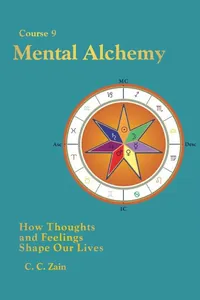
Mental Alchemy
 78
78

Mental Alchemy
Ralph Lewis’s *Mental Alchemy* (1978) attempts to demystify the esoteric tradition of alchemy by reframing it as a psychological process. The strength of the work lies in its detailed mapping of alchemical operations onto stages of internal development. Lewis posits that the 'Great Work' is an inward journey, a concept explored by many esoteric writers but presented here with a specific, systematic framework. However, the prose can be dense and occasionally opaque, demanding considerable reader investment. A particularly striking section discusses the 'Calcination' stage, likening the burning away of impurities to the ego's dissolution required for spiritual growth. While the book provides a unique lens, its accessibility is limited by its academic tone and lack of practical exercises, making it more of a theoretical exploration than a workbook. It is a valuable, if challenging, contribution to the literature on psychological alchemy.
📝 Description
78
Ralph Lewis's 1978 book, Mental Alchemy, maps psychological individuation onto alchemical processes.
Mental Alchemy, by Ralph Lewis, first published in 1978, presents a systematic approach to the transformation of consciousness. It is not a manual for material wealth, but rather a guide to the inner workings of the mind and spirit. Lewis draws parallels between alchemical processes and psychological evolution, positing that the 'Great Work' is an internal, not external, endeavor.
This text is suited for serious students of esoteric philosophy and psychology prepared to engage with dense conceptual material. It appeals to those interested in the intersection of ancient wisdom traditions and modern psychological theory, particularly individuals seeking to understand the mechanisms of self-transformation through disciplined mental and spiritual practice. It is not for the casual reader.
Emerging in the late 1970s, a period of burgeoning interest in consciousness studies and alternative spirituality, Mental Alchemy situated itself within the ongoing discourse on Hermeticism and occult philosophy. Lewis's work offered a distinct perspective, framing alchemical symbolism as a direct map for psychological individuation.
Published in 1978, Mental Alchemy arrived during a period of heightened interest in consciousness studies and alternative spirituality. It engaged with the long tradition of Hermeticism and occult philosophy. Following the popularization of Theosophical ideas and coinciding with growing fascination with Jungian psychology, Lewis's work provided a unique lens. He interpreted alchemical symbolism as a direct representation of the psychological process of individuation, connecting ancient symbolic language to the modern exploration of the self.
💡 Why Read This Book?
• Understand the alchemical process as a metaphor for psychological transformation, a concept Lewis details through the stages of calcination and dissolution, offering a unique internal framework. • Gain insight into the 'Prima Materia' not as a physical element but as the raw potential of consciousness, a core concept for understanding self-directed evolution. • Explore the symbolic representation of the 'Philosopher's Stone' as a metaphor for spiritual attainment, providing a goal for internal alchemy distinct from external achievement.
⭐ Reader Reviews
Honest opinions from readers who have explored this book.
❓ Frequently Asked Questions
What is the primary goal of Mental Alchemy?
The primary goal of Mental Alchemy is to guide the reader through the internal processes of psychological and spiritual transformation, using the ancient framework of alchemy as a symbolic map for personal evolution.
Is Mental Alchemy about turning lead into gold?
No, the book reinterprets the alchemical goal of turning lead into gold as a metaphor for the inner transformation of consciousness, not for material gain.
When was Mental Alchemy first published?
Mental Alchemy was first published in 1978, placing it within the late 20th-century surge of interest in esoteric studies and consciousness exploration.
What are the key alchemical stages discussed in the book?
The book discusses key alchemical stages such as Calcination, Dissolution, Separation, Conjunction, and Fermentation, reinterpreting them as phases of psychological purification and integration.
Who is the author of Mental Alchemy?
The author of Mental Alchemy is Ralph Lewis, a writer who explored the intersection of esoteric traditions and psychological development.
Does the book offer practical exercises?
While deeply theoretical, the book implicitly guides the reader toward internal practices through its detailed explanation of alchemical symbolism and psychological correspondences.
🔮 Key Themes & Symbolism
Alchemical Operations as Psychological Stages
Lewis meticulously details the traditional alchemical operations—calcination, dissolution, separation, conjunction, fermentation, distillation, and coagulation—and frames each as a distinct phase in the human psyche's purification and integration process. Calcination, for instance, is presented not as literal burning, but as the ego's dissolution and the breaking down of false self-identities. This systematic mapping offers a structured path for understanding the arduous work of self-mastery, moving beyond mere intellectual comprehension to a framework for lived experience.
The Prima Materia of Consciousness
The book redefines the 'Prima Materia,' or First Matter, from a physical substance into the undifferentiated, unformed potential of human consciousness. This raw material is seen as the starting point for the Great Work. Lewis explores how this primal essence, often obscured by societal conditioning and personal neuroses, must first be recognized and then worked upon through deliberate mental and spiritual effort to yield higher states of awareness.
The Philosopher's Stone Within
Contrary to popular belief, the 'Philosopher's Stone' in Lewis's interpretation is not an external elixir but the achieved state of integrated consciousness and spiritual enlightenment. This Stone is the result of successfully reading through the alchemical stages, leading to a profound transmutation of the individual's being. The book posits that this inner attainment is the true 'gold' sought by alchemists throughout history, representing perfected awareness and self-realization.
Symbolism as a Psychological Language
Central to Mental Alchemy is the assertion that alchemical symbols—the alembic, the dragon, the sun, the moon—are not mere allegories but direct representations of psychological forces and processes. Lewis argues that understanding these symbols unlocks a deeper comprehension of the unconscious mind. By engaging with this symbolic language, practitioners can decode their own inner landscapes and guide their personal evolution towards greater wholeness and wisdom.
💬 Memorable Quotes
Direct passages from the work, attributed to the author.
“The Great Work is the transformation of the individual.”
— This statement captures the book's central thesis: that alchemy's esoteric purpose is not about material manipulation but about the profound inner restructuring of one's own being and consciousness.
“Calcination is the dissolution of the ego's solidified forms.”
— This highlights how Lewis interprets the alchemical process of burning away impurities as a metaphor for breaking down false ego structures and attachments that hinder spiritual progress.
“The Philosopher's Stone signifies perfected consciousness.”
— This interpretation emphasizes that the ultimate alchemical goal, the Stone, represents the attainment of integrated awareness and spiritual realization, not a physical substance.
“Symbolism provides the map for the inner journey.”
— This conveys Lewis's belief that the rich symbolic language of alchemy serves as a crucial guide for reading through the complex terrain of the unconscious and the path of self-transformation.
💡 Key Ideas
Editorial paraphrase of the work's core concepts — not direct quotes.
The Prima Materia is the unformed potential within.
This paraphrase points to Lewis's redefinition of the alchemical starting substance as the raw, unmanifested capacity for consciousness and being that exists within every individual.
🌙 Esoteric Significance
Tradition
Lewis's work is firmly rooted in the Western Esoteric Tradition, particularly drawing from Hermeticism and the symbolic language of Alchemy. It departs from purely spiritual or magical interpretations by emphasizing a psychological framework, aligning it with modern esoteric thought that seeks to integrate ancient wisdom with contemporary understanding of the human mind, much like later psychological alchemy movements.
Symbolism
Key symbols include the 'Prima Materia,' representing the undifferentiated potential of consciousness, and the 'Philosopher's Stone,' symbolizing the achieved state of integrated awareness. The alchemical operations themselves—such as 'Calcination' (ego dissolution) and 'Dissolution' (breaking down rigid structures)—are treated as potent psychological metaphors for the stages of inner purification and transformation.
Modern Relevance
Contemporary practitioners of psychological alchemy and those interested in Jungian psychology continue to find value in Lewis's systematic approach. His work informs modern explorations of consciousness, self-transformation, and the therapeutic application of symbolic systems. Thinkers and authors focusing on the integration of esoteric symbolism with psychological development often reference or build upon the conceptual foundations laid out in *Mental Alchemy*.
👥 Who Should Read This Book
• Students of Hermeticism and Alchemy seeking a psychological interpretation of alchemical texts, offering a structured approach to internal transformation. • Jungian psychology enthusiasts interested in how archetypal symbols and processes described in alchemy map onto individuation and the unconscious. • Individuals on a path of personal development who are looking for a theoretical framework to understand and guide their inner work and self-mastery.
📜 Historical Context
Published in 1978, Ralph Lewis's *Mental Alchemy* emerged during a period of intense interest in esoteric philosophies and the human potential movement. The late 1970s saw a confluence of Jungian psychology, which was exploring archetypes and the unconscious, and a renewed engagement with Hermetic and alchemical traditions, often popularized through works like Man, Myth and Magic. Lewis's book positioned itself within this milieu, offering a systematic, psychological interpretation of alchemical processes. It diverged from more mystical or magical interpretations prevalent at the time, focusing instead on the internal, transformative work. While figures like Carl Jung had previously linked alchemy to psychological individuation, Lewis provided a more direct, step-by-step framework, drawing from earlier esoteric writers but synthesizing them into a cohesive psychological model. The work’s reception was primarily within niche esoteric and occult circles, contributing to the ongoing dialogue about the inner meaning of ancient traditions.
📔 Journal Prompts
Reflect on the concept of the Prima Materia within your own consciousness.
How does the alchemical stage of Calcination manifest in your current life challenges?
Consider the symbolism of the Philosopher's Stone as an internal achievement.
Map the alchemical operation of Dissolution onto a specific psychological pattern you wish to transform.
What personal 'impurities' does the process of Separation aim to remove?
🗂️ Glossary
Prima Materia
The fundamental, undifferentiated substance from which all things are made; in this context, it represents the raw, unformed potential of human consciousness before its transformation.
Philosopher's Stone
The legendary alchemical substance capable of turning base metals into gold and/or granting immortality. In *Mental Alchemy*, it symbolizes the enlightened, integrated state of consciousness.
Calcination
The first stage of alchemical purification, involving heating a substance to remove impurities. Psychologically, it represents the breakdown of the ego and the burning away of false identities.
Dissolution
A stage involving dissolving a substance, often in water. It symbolizes the breaking down of rigid mental structures and emotional blockages.
Separation
The process of distinguishing and isolating the desired elements from the unwanted. In psychological terms, it relates to discerning higher truths from lower desires or illusions.
Conjunction
The bringing together of separated elements, often masculine and feminine principles. It signifies integration, balance, and the union of opposites within the psyche.
The Great Work
The overarching process of alchemical transformation, understood in *Mental Alchemy* as the complete transformation and perfection of the individual's consciousness and being.