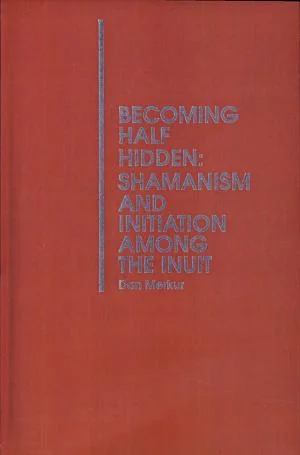
Becoming Half Hidden
 71
71

Becoming Half Hidden
Merkur's *Becoming Half Hidden* is a valuable, if dense, examination of shamanic initiation, distinguished by its commitment to understanding these phenomena from the insider's viewpoint. The author's strength lies in his meticulous effort to decode the shaman's own language, moving beyond external interpretation to grasp the internal logic of initiatory experiences. He effectively illustrates how concepts like soul-flight are not mere metaphors but deeply felt realities for practitioners. A notable passage explores the symbolic death and rebirth inherent in many initiations, framing it as a fundamental psychic reorganization. However, the book’s academic rigor can sometimes lead to a certain detachment, occasionally making the human element feel distant amidst the theoretical dissection. Its primary limitation is the accessibility for a non-specialist audience, demanding considerable prior knowledge of anthropological and religious studies. Nevertheless, for those willing to engage with its scholarly depth, *Becoming Half Hidden* offers a unique perspective on the transformative power of shamanic paths.
📝 Description
71
Daniel Merkur's 1993 study analyzes shamanism from the practitioner's subjective viewpoint.
Daniel Merkur's *Becoming Half Hidden*, first published in 1993, examines shamanism and initiation rites. Unlike many anthropological works that focus on external observation, Merkur prioritizes the internal experience and language of shamans. The book attempts to clarify the symbolic expressions and cultural stories surrounding shamanic events to grasp the lived reality of individuals undergoing these transformative journeys.
This text is for serious students of comparative religion, anthropology, and esoteric traditions. It will interest scholars aiming to go beyond simple descriptions of ritual and investigate the psychological and phenomenological aspects of altered consciousness. Those interested in initiation processes, altered states, and the indigenous origins of spiritual practices will find ample material for reflection and further study. It is not an introductory text but one for those ready for deep academic inquiry.
Published in 1993, *Becoming Half Hidden* emerged during a period of renewed academic interest in shamanism, following figures like Mircea Eliade. Merkur's work countered the prevailing theoretical frameworks by emphasizing the shaman's direct voice and internal perspective. This approach aligns with later shifts in religious studies that sought to decolonize the understanding of indigenous practices and incorporate indigenous viewpoints.
💡 Why Read This Book?
• Gain an insider's understanding of shamanic initiation, moving beyond external anthropological observations to grasp the shaman's own language and subjective experiences, as explored in Merkur's analysis of soul-flight. • Understand the concept of the 'shamanic double' and its role in spiritual transformation, a core theme Merkur dissects by examining the internal narratives of practitioners. • Appreciate the psychological and phenomenological dimensions of spiritual death and rebirth rituals, particularly how shamans articulate these profound internal shifts through specific symbolic frameworks.
⭐ Reader Reviews
Honest opinions from readers who have explored this book.
❓ Frequently Asked Questions
What is the primary aim of Daniel Merkur's 'Becoming Half Hidden' regarding shamanism?
The primary aim is to analyze shamanism and initiation from the perspective of the shamans themselves, rather than from an external, lay viewpoint, seeking to understand their lived experiences and internal language.
When was 'Becoming Half Hidden' first published, and when was its second edition released?
The book was first published in 1993, with a subsequent reissue appearing on March 18, 2014.
How does Merkur's approach to studying shamanism differ from earlier works?
Merkur's approach prioritizes the subjective experience and internal language of shamans, moving beyond the more theoretical or externally focused analyses common in earlier anthropological studies of the subject.
What specific concepts related to shamanic experience does Merkur explore?
He explores concepts such as the 'shamanic double', soul-flight, spiritual death and rebirth, and the symbolic language shamans use to articulate their visions and altered states.
Is 'Becoming Half Hidden' suitable for readers new to the study of shamanism?
While informative, the book's academic rigor and focus on internal phenomenological analysis make it more suitable for serious students and scholars rather than absolute beginners.
What is the significance of the 'shamanic double' in Merkur's analysis?
The 'shamanic double' is a key concept representing the shaman's soul or spiritual counterpart, which Merkur examines through the lens of the shaman's own descriptions of soul-flight and spiritual journeys.
🔮 Key Themes & Symbolism
The Shaman's Inner Language
Merkur's central thesis is the necessity of understanding shamanism through the subjective lexicon of its practitioners. He argues that concepts like soul-flight and spiritual encounters are not mere poetic metaphors but are experienced and articulated by shamans using a distinct internal language. The work meticulously attempts to decode this language, revealing how shamans conceptualize their own initiatory ordeals and their relationship with the spirit world, moving beyond the often-reductive interpretations of Western observers.
Initiation as Psychic Reorganization
Beyond viewing initiation as a social rite of passage, Merkur frames it as a profound process of psychological and spiritual metamorphosis. He examines the symbolic death and subsequent rebirth that frequently characterize initiatory journeys, interpreting these as stages in a radical restructuring of the individual's consciousness and identity. This perspective highlights the transformative power inherent in shamanic practices, emphasizing the internal death and renewal required to achieve shamanic status.
Phenomenology of Altered States
The book explores the phenomenology of shamanic altered states of consciousness. Merkur seeks to map the contours of these experiences as reported by shamans, paying close attention to the sensory perceptions, visionary encounters, and cognitive shifts involved. By focusing on the 'how' and 'what' of these states from the practitioner's viewpoint, he aims to provide a more accurate and empathetic understanding of the shamanic journey, differentiating it from mere hallucination or dissociation.
The Shamanic Double and Soul-Flight
A significant focus is placed on the concept of the 'shamanic double'—often understood as a spiritual counterpart or soul-component—and the associated practice of soul-flight. Merkur analyzes how shamans describe the separation and journeying of this double as a core element of their practice and power. This exploration is crucial for understanding the shaman's ability to traverse different realms, interact with spirits, and retrieve lost souls or knowledge.
💬 Memorable Quotes
Direct passages from the work, attributed to the author.
“The work seeks to get behind the shamans' language in order to understand their experiences.”
— This core statement expresses Merkur's methodological commitment: to move beyond surface-level descriptions and look at the internal cognitive and linguistic frameworks that shamans use to make sense of their profound altered states and initiatory journeys.
“Initiation often involves a symbolic death and rebirth.”
— This interpretation highlights a recurring motif in shamanic traditions where the initiate undergoes a metaphorical death, shedding their old self, followed by a spiritual rebirth into a new identity as a shaman, signifying a profound personal transformation.
“Understanding shamanism requires prioritizing the practitioner's own account.”
— This emphasizes Merkur's core argument against purely external or academic interpretations, stressing the importance of phenomenological and insider perspectives for accurately comprehending shamanic practices and beliefs.
“Soul-flight is described by shamans as a literal journey through other realms.”
— This highlights Merkur's effort to present the shaman's experience of soul-flight not as a metaphor but as a perceived reality within their cosmology, underscoring the unique nature of shamanic consciousness.
💡 Key Ideas
Editorial paraphrase of the work's core concepts — not direct quotes.
The shamanic double represents a key aspect of the practitioner's spiritual anatomy.
This paraphrased concept points to the idea that shamans perceive themselves as possessing a spiritual counterpart or 'double' that can detach and travel independently, a crucial element in their ability to engage with the spirit world.
🌙 Esoteric Significance
Tradition
While not strictly adhering to a single Western esoteric lineage like Hermeticism or Kabbalah, Merkur's work engages with themes that resonate across many esoteric traditions, particularly those concerned with altered states, spiritual journeys, and the nature of consciousness. It intersects with psychodynamic approaches to spirituality and comparative shamanism, offering a framework for understanding initiation processes that share commonalities with mystical disciplines focused on inner transformation and ecstatic experience.
Symbolism
Key symbols Merkur examines include the 'shamanic double,' representing the soul or spirit-body that can separate from the physical form. 'Soul-flight' is another central motif, symbolizing the shaman's ability to traverse different planes of existence, often depicted as journeys through cosmic trees or tunnels. The symbolic death and rebirth inherent in initiation rites also feature prominently, representing the shedding of the old self and the emergence of a new, empowered spiritual identity.
Modern Relevance
Contemporary scholars and practitioners in fields like transpersonal psychology, consciousness studies, and neo-shamanism continue to draw on Merkur's emphasis on the subjective experience of altered states. His work provides a valuable resource for understanding the phenomenological underpinnings of practices that involve intentional soul-journeys or initiatory ordeals, contributing to a more sophisticated discourse on the psychological and spiritual dimensions of these ancient traditions.
👥 Who Should Read This Book
• Students of comparative religion and anthropology: To gain a deeper understanding of methodological approaches that prioritize indigenous perspectives in the study of ritual and belief systems. • Researchers of altered states of consciousness: To explore detailed analyses of phenomenological experiences related to shamanic journeys, soul-flight, and initiatory ordeals. • Practitioners and scholars of esoteric traditions: To find connections between shamanic initiation and other paths focused on spiritual transformation, inner death/rebirth, and the exploration of non-ordinary reality.
📜 Historical Context
When *Becoming Half Hidden* was first published in 1993, the study of shamanism was still heavily influenced by Mircea Eliade's foundational work, *Shamanism: Archaic Techniques of Ecstasy* (1951). Eliade's scholarship, while influential, often presented a more generalized, comparative, and sometimes romanticized view. Merkur's book emerged as part of a scholarly shift, particularly within anthropology, that sought to decenter Western perspectives and engage more directly with indigenous epistemologies. This period saw critical reassessments of earlier ethnographic methods and a growing emphasis on phenomenological approaches, influenced by thinkers like David Carrasco. Merkur's specific focus on the internal language and subjective experience of shamans positioned his work against those who might prioritize sociological function or comparative mythology over the lived reality of practitioners. While not a widely controversial book, its methodological rigor and insider focus contributed to a more nuanced understanding of shamanic traditions, moving away from earlier, more speculative interpretations.
📔 Journal Prompts
The shamanic double's journey: How might your own 'spiritual counterpart' navigate different realities?
Symbolic death and rebirth: Reflect on a past personal transformation that felt like shedding an old self.
The internal language of altered states: What unique vocabulary might describe your own peak experiences?
Initiation as psychic reorganization: Consider the internal shifts required for significant personal growth.
Merkur's focus on the practitioner's perspective: How does this contrast with how you typically learn about spiritual paths?
🗂️ Glossary
Shamanic Double
A concept referring to a spiritual counterpart or soul-component of the shaman that is believed to be capable of independent existence and travel, often associated with soul-flight.
Soul-Flight
The shamanic belief and practice of the soul or spirit-body journeying to other realms, often for healing, divination, or to retrieve lost souls or power.
Initiation Rite
A ritual or ceremony marking a person's transition into a new stage of life, social status, or spiritual understanding, often involving trials and symbolic transformations.
Phenomenology
The philosophical study of the structures of experience and consciousness as experienced from the first-person point of view.
Altered States of Consciousness
Any mental state significantly different from a normal waking state, often induced by practices like meditation, trance, or visionary experiences.
Insider Perspective
The viewpoint or understanding of phenomena from within a specific group or tradition, emphasizing subjective experience and internal meaning.
Symbolic Death and Rebirth
A common motif in initiation and spiritual traditions where the individual undergoes a metaphorical death of their old self, followed by a spiritual rebirth into a new identity or state of being.