Religious Therapeutics
 80
80

Religious Therapeutics
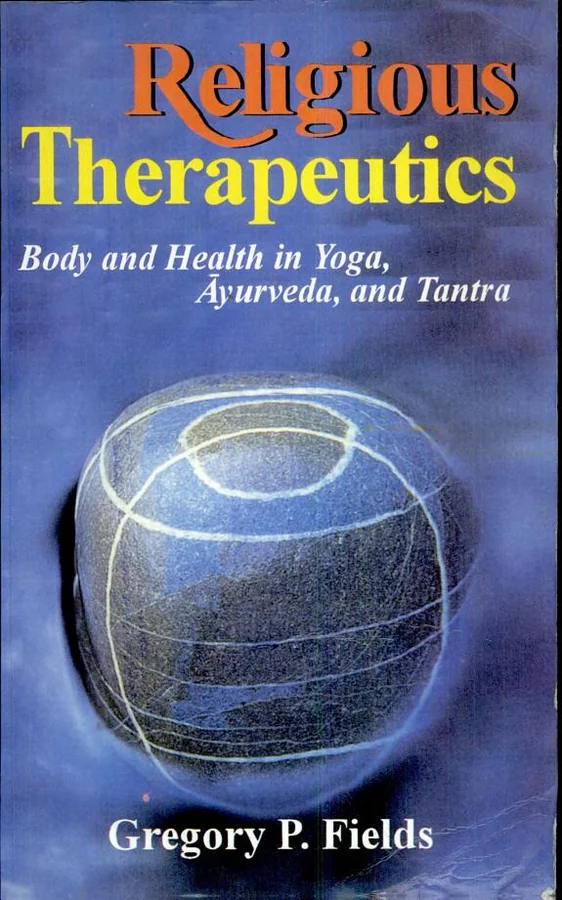
Gregory P. Fields' Religious Therapeutics offers a scholarly examination of how spiritual traditions, particularly Hindu ones, conceptualize and enact healing. The work is commendable for its direct engagement with classical yoga, Ayurveda, and Tantra, moving beyond superficial treatments of these complex systems. Fields' comparative approach, juxtaposing Indian philosophies of the body with Anglo-European thought, provides a valuable academic framework. A particular strength lies in his detailed exposition of how these traditions view the body not as a mere vessel but as an active participant in spiritual realization and health maintenance. However, the dense academic prose, while precise, may prove challenging for readers less accustomed to philosophical discourse. The book’s exploration of Tantra, while insightful, could benefit from further nuance regarding its diverse sub-traditions. Nevertheless, Fields delivers a rigorous study for those seeking a deep, comparative understanding of religion and medicine.
📝 Description
80
Gregory P. Fields' 2002 book analyzes the intersection of religion and medicine across cultures.
Published in 2002, Religious Therapeutics by Gregory P. Fields offers a comparative study of psychophysical health and spiritual traditions. The book centers on a model that understands the connection between religion and medicine across various world cultures. Fields specifically examines classical yoga, Ayurveda, and Tantra, highlighting how these Hindu traditions emphasize the body's role in both spiritual and physical well-being. This work emerged during a time of growing academic interest in integrating Eastern philosophies with Western medicine.
Fields' analysis contrasts Anglo-European and Indian philosophies regarding the body and health, providing a counterpoint to Western biomedical models that often separate mind and body. The central argument is built around a framework that interprets the links between religious beliefs and medical practices. It investigates how traditions like yoga, Ayurveda, and Tantra view health as a state of holistic balance rather than just the absence of illness. Specific yogic postures, Ayurvedic principles of doshas, and Tantric energy systems are presented as integral elements of spiritual therapeutics.
This book situates itself within traditions that view the body as a vehicle for spiritual development. Classical yoga, Ayurveda, and Tantra, as examined by Fields, all propose systems where physical practices and understanding the body's subtle energies are directly linked to liberation or enlightenment. These traditions share an understanding that well-being is not solely a physical state but is inseparable from mental, energetic, and spiritual conditions. Fields contrasts this holistic view with Western dualistic perspectives, positioning these Eastern systems as sophisticated methods for achieving a unified state of being.
💡 Why Read This Book?
• Gain a structured model for interpreting the relationship between religious practices and psychophysical health, as presented through Fields' comparative analysis of Anglo-European and Indian philosophies. • Understand the specific roles of classical yoga, Ayurveda, and Tantra in conceptualizing health and the body, moving beyond superficial understandings of these traditions. • Explore the historical dialogue between spiritual systems and medicine, contextualized by Fields' 2002 publication date and the intellectual currents of that era.
⭐ Reader Reviews
Honest opinions from readers who have explored this book.
❓ Frequently Asked Questions
What is the primary focus of Religious Therapeutics by Gregory P. Fields?
The book's primary focus is exploring the intricate relationship between psychophysical health and spiritual traditions, presenting a model to interpret connections between religion and medicine across world cultures, with a deep dive into Hindu traditions.
Which specific Hindu traditions are examined in detail in the book?
Gregory P. Fields specifically examines classical yoga, Ayurveda, and Tantra in detail, noting their significant emphasis on the body as central to spiritual and health practices.
What kind of model does the book propose for understanding religion and medicine?
The book proposes a model that interprets the connections between religious beliefs and health practices, emerging from an investigation into health and religiousness within specific traditions.
Who is the author of Religious Therapeutics?
The author is Gregory P. Fields. The book was first published in 2002, making it a significant contribution to the study of religious therapeutics in the early 21st century.
How does Fields compare Indian and Anglo-European philosophies in this work?
Fields compares Anglo-European and Indian philosophies of the body and health, using these traditions to build his model for understanding the interplay between spirituality and physical well-being.
What is the significance of the body in the traditions discussed by Fields?
In the traditions explored, such as classical yoga, Ayurveda, and Tantra, the body is not merely a passive entity but plays a central and active role in achieving spiritual goals and maintaining health.
🔮 Key Themes & Symbolism
Body as Spiritual Instrument
Fields argues that traditions like yoga, Ayurveda, and Tantra view the physical body not as an impediment to spiritual growth but as a primary vehicle. This perspective contrasts sharply with ascetic traditions that might seek to transcend or negate the body. The work meticulously details how practices within these Hindu traditions, from asanas in yoga to the concept of doshas in Ayurveda, are designed to purify, balance, and enhance the body, thereby facilitating spiritual awareness and well-being.
Comparative Philosophy of Health
A core theme is the juxtaposition of Western biomedical perspectives with Eastern philosophical understandings of health. Fields contrasts the often dualistic Anglo-European approach to mind and body with the more holistic and integrated Indian philosophies. This comparison highlights how different cultural and intellectual frameworks shape the very definition of health and the methods employed for its attainment, revealing a rich diversity in human approaches to well-being.
Religion as Therapeutic Practice
The book posits that religion, in its various forms, inherently possesses therapeutic dimensions. Fields explores how rituals, doctrines, and practices within spiritual traditions function as systems of healing, addressing not just physical ailments but also psychological and spiritual distress. This perspective reframes religious engagement as a vital component of holistic health, deeply intertwined with personal and communal well-being across diverse cultures.
The Body in Classical Indian Traditions
Fields dedicates significant attention to the specific conceptualizations of the body within classical Indian thought. This includes exploring the energetic systems in Tantra, the physiological and psychological theories of Ayurveda, and the physical discipline of yoga. Understanding these distinct, yet often overlapping, frameworks is crucial to grasping the book's central argument about the body's integral role in spiritual therapeutics.
💬 Memorable Quotes
Direct passages from the work, attributed to the author.
“The body is central to spiritual practice in traditions like yoga, Ayurveda, and Tantra.”
— This statement captures Fields' argument that these Hindu traditions do not see the body as separate from or antithetical to spiritual goals, but rather as an essential tool and locus for spiritual development and health.
“Comparing Indian and Anglo-European philosophies reveals different views on body and health.”
— Fields highlights the divergence between holistic, body-integrated Indian philosophies and often dualistic Western approaches, underscoring how cultural frameworks profoundly shape understanding of health and the self.
“Religious systems offer comprehensive models for psychophysical well-being.”
— This concept suggests that spiritual traditions provide not just dogma, but practical frameworks and methodologies for achieving and maintaining health on physical, mental, and spiritual levels.
“Ayurveda, yoga, and Tantra are noteworthy for their focus on the body.”
— Fields identifies these three Hindu traditions as particularly significant case studies due to their explicit and central integration of bodily practices and understanding into their spiritual and therapeutic systems.
“A model is presented for interpreting religion-medicine connections.”
— This refers to the analytical framework Fields develops, designed to understand how spiritual beliefs and medical practices interact and influence each other across different cultural contexts.
🌙 Esoteric Significance
Tradition
While not strictly belonging to a single Western esoteric lineage like Hermeticism or Kabbalah, *Religious Therapeutics* engages with traditions that are foundational to many esoteric systems, particularly those influenced by Indian thought. Its exploration of yoga, Ayurveda, and Tantra aligns with the broader esoteric interest in achieving spiritual and physical perfection through disciplined practices. The work fits within the larger esoteric project of understanding the human being as a microcosm, where the body is a key element in the path to cosmic understanding.
Symbolism
The book implicitly engages with the symbolism of the body in Indian traditions. For instance, the concept of *nadis* (energy channels) and *chakras* (energy centers) in Tantra and Yoga represent a symbolic map of consciousness and vitality within the physical form. Ayurveda's *doshas* (Vata, Pitta, Kapha) symbolize fundamental energetic principles governing physiological and psychological states, offering a symbolic language for health and imbalance that is deeply spiritualized.
Modern Relevance
Contemporary thinkers and practitioners in fields ranging from transpersonal psychology to integrative medicine draw upon the foundations laid by works like Fields'. The growing acceptance of mindfulness, yoga therapy, and Ayurvedic principles in mainstream health contexts owes much to scholarly efforts that elucidate their sophisticated theoretical underpinnings. Fields' comparative model continues to inform discussions on the efficacy and philosophical basis of these ancient healing systems in the modern world.
👥 Who Should Read This Book
• Scholars of comparative religion and philosophy: Gain a nuanced understanding of how health and spirituality are interwoven in non-Western traditions, particularly Hindu ones. • Practitioners of yoga, Ayurveda, and Tantra: Deepen your theoretical knowledge by exploring the philosophical basis of your practices concerning the body and well-being. • Researchers in medical anthropology and history of medicine: Access comparative insights into diverse models of health and healing that bridge spiritual and physical dimensions.
📜 Historical Context
Published in 2002, Gregory P. Fields' *Religious Therapeutics* entered a scholarly landscape increasingly interested in holistic health and the integration of Eastern spiritual traditions into Western discourse. At this time, comparative religion and medical anthropology were actively exploring the interplay between belief systems and healing practices. Fields' work contributed by offering a structured comparative model, specifically contrasting Indian philosophies of the body, exemplified by classical yoga, Ayurveda, and Tantra, with prevailing Anglo-European conceptions. His approach provided an academic counterpoint to the burgeoning popularity of yoga and Ayurvedic practices in the West, grounding them in their philosophical origins. This period also saw ongoing dialogue with thinkers like Fritjof Capra, whose work on the Tao of Physics had popularized Eastern scientific and philosophical ideas, though Fields' focus remained more strictly on religious and philosophical therapeutics.
📔 Journal Prompts
The body's role in classical yoga, Ayurveda, and Tantra: How does Fields' framing challenge conventional Western views?
Fields' model for religion-medicine connections: What are its strengths and limitations for analyzing contemporary spiritual healing trends?
Anglo-European vs. Indian philosophies of health: Identify one key difference and its practical implications for personal well-being.
The concept of 'spiritual therapeutics': How might this apply beyond the specific traditions discussed by Fields?
Ayurvedic doshas: Reflect on how these principles, as described by Fields, could offer a different perspective on personal health patterns.
🗂️ Glossary
Religious Therapeutics
The practice and study of healing through religious beliefs, rituals, and spiritual disciplines, examining the intersection of faith and physical, mental, and spiritual well-being.
Psychophysical Health
A state of well-being that encompasses both psychological (mental and emotional) and physical aspects, recognizing their interconnectedness and mutual influence.
Classical Yoga
The philosophical and practical system of yoga as codified in ancient texts like the Yoga Sutras of Patanjali, emphasizing physical postures (asanas), breath control (pranayama), and meditation for spiritual liberation.
Ayurveda
An ancient Indian system of holistic medicine that focuses on balancing the body's three essential principles, or doshas (Vata, Pitta, Kapha), to maintain health and prevent illness.
Tantra
A complex spiritual tradition originating in India, often involving ritual, meditation, and esoteric practices aimed at harnessing bodily energies and consciousness for spiritual transformation.
Doshas
In Ayurveda, the three fundamental bio-energetic forces (Vata, Pitta, Kapha) that govern physiological and psychological functions. Their balance is considered essential for health.
Anglo-European Philosophies
Refers to the philosophical traditions originating in Europe, often characterized by a historical tendency towards dualism, separating the mind and body, as discussed in contrast to Indian philosophies.
This book appears in 1 collection
🔮 Readers Also Liked
Browse all →








From the “Yoga” Collection
View all →





More Free Occult Philosophy Books
View all →