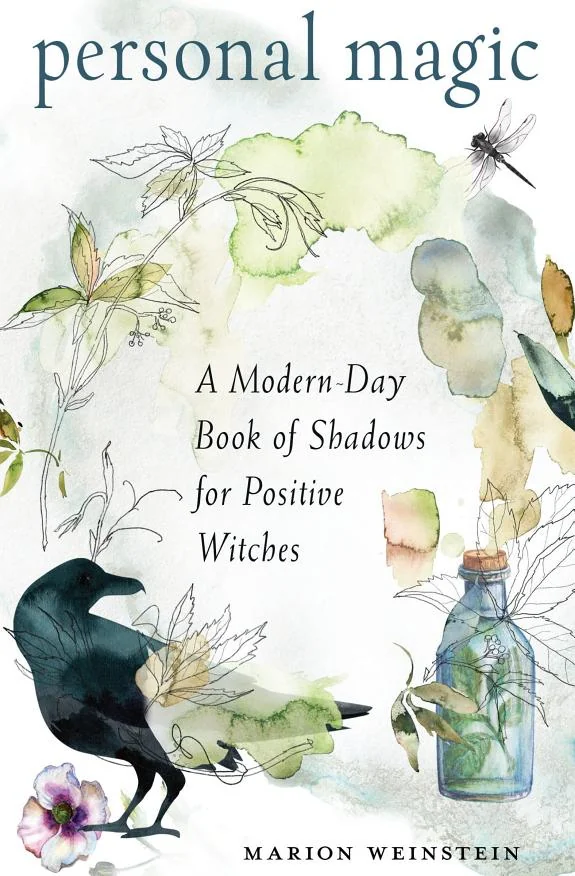
Personal Magic
 72
72

Personal Magic
Marion Weinstein's 'Personal Magic' offers a candid look at a life dedicated to witchcraft. Unlike many contemporary texts that synthesize existing traditions, this book presents Weinstein's own evolving practice, functioning as her intimate Book of Shadows. Its strength lies in this raw, personal perspective; the sections on invoking deities and working with moon power feel particularly grounded in lived experience. However, the book's structure can sometimes feel less like a cohesive manual and more like a collection of deeply personal notes. A limitation is the occasional reliance on assumed prior knowledge, which may challenge absolute beginners. The discussion of pagan holidays, for instance, assumes familiarity with their deeper meanings that could be further elaborated. Nevertheless, 'Personal Magic' serves as a valuable artifact of witchcraft's development.
📝 Description
72
Marion Weinstein's Personal Magic, first published in 2021, details her witchcraft practice as a personal grimoire.
Marion Weinstein's Personal Magic functions as her personal grimoire, or 'Book of Shadows.' It distills her decades of experience into practical guidance for engaging with magical principles. The book provides an insider's look into the development of modern witchcraft, presenting a working system rather than just theory. It is intended for serious students of witchcraft and esoteric traditions who value a grounded, personal approach. Readers interested in the roots of contemporary paganism and witchcraft will find material on deity invocation, pagan holidays, and the use of lunar energies. Weinstein was a notable figure in the mid-20th century witchcraft revival. This work emerges from a lineage including Gerald Gardner and early Wicca, but it highlights her individual path. It stands apart from more codified witchcraft systems, reflecting a time when personal revelation and eclectic practice gained prominence. The book covers the practical application of magical theory, focusing on direct interaction with spiritual forces. It details invoking gods and goddesses, the cycle of pagan festivals like Samhain and Beltane, and harnessing lunar phases for spellwork. A core element is a witch's essential toolkit, including spells and rituals for personal empowerment and spiritual connection.
Marion Weinstein was active during the witchcraft revival of the mid-20th century. Her work stands in a lineage that includes Gerald Gardner and the early forms of modern Wicca. However, 'Personal Magic' emphasizes an individual, eclectic path rather than codified systems. It reflects a historical shift within occultism towards personal gnosis and practice, moving away from institutionalized forms of witchcraft.
💡 Why Read This Book?
• Gain insight into the personal magical system of a founder of modern witchcraft, understanding her decades of practice and unique approach to invoking deities, as detailed in the book's core teachings. • Learn practical methods for working with lunar power throughout its phases and honoring pagan holidays, drawing directly from Weinstein's specific rituals and interpretations of these cycles. • Discover the essential components of a witch's toolkit, including spells and rituals, as presented in 'Personal Magic,' offering concrete examples beyond theoretical discussions.
⭐ Reader Reviews
Honest opinions from readers who have explored this book.
❓ Frequently Asked Questions
When was Marion Weinstein's 'Personal Magic' first published?
'Personal Magic' by Marion Weinstein was first published in 2021, presenting her lifetime of witchcraft experience.
What is a 'Book of Shadows' according to 'Personal Magic'?
In 'Personal Magic,' a 'Book of Shadows' is described as a personal grimoire, containing an individual witch's spells, rituals, and accumulated magical knowledge.
Does 'Personal Magic' discuss working with deities?
Yes, the book covers how to invoke deities or spirit powers, including the gods and goddesses that inhabit our world, from Weinstein's personal perspective.
What pagan holidays are discussed in 'Personal Magic'?
The book addresses pagan holidays, explaining their meanings and offering guidance on how to honor them, reflecting Weinstein's understanding of these observances.
What kind of spells are included in 'Personal Magic'?
'Personal Magic' includes a witch's toolkit of spells and rituals, reflecting Weinstein's decades of practice and personal magical system.
Who is Marion Weinstein in the context of witchcraft history?
Marion Weinstein is recognized as one of the founders of modern-day witchcraft, and 'Personal Magic' serves as her personal grimoire.
🔮 Key Themes & Symbolism
Personal Grimoire Tradition
'Personal Magic' functions as Marion Weinstein's distinct Book of Shadows, emphasizing the deeply individual nature of magical practice. Unlike standardized grimoires, it showcases her unique path developed over decades, offering a rare glimpse into how one practitioner synthesized knowledge and personal revelation into a functional magical system. This approach highlights the importance of personal experience and intuitive development within witchcraft.
Deity Invocation and Pagan Cycles
The book provides practical methods for invoking deities and spirit powers, connecting practitioners with the divine pantheon recognized within pagan traditions. It equally stresses the significance of lunar phases and the observance of pagan holidays, detailing how to honor these cyclical events. This integration of celestial timing and divine communion forms a core part of Weinstein's approach to witchcraft.
The Witch's Toolkit
Central to 'Personal Magic' is the concept of a witch's essential toolkit, comprising practical spells and rituals. Weinstein details the components and application of these tools, moving beyond abstract theory to concrete magical actions. This section serves as a guide for practitioners seeking to build their own repertoire of effective magical workings based on established principles.
Foundations of Modern Witchcraft
As a foundational text by one of modern witchcraft's pioneers, 'Personal Magic' offers historical context for the evolution of the craft. It illustrates the transition from earlier forms of occultism to the more personalized and nature-focused practices that characterize contemporary witchcraft. The book represents a significant contribution to understanding this development.
💬 Memorable Quotes
Direct passages from the work, attributed to the author.
“how to invoke the deities or spirit powers, the gods and goddesses that inhabit our world”
— This phrase highlights the book's focus on direct engagement with the divine, presenting invocation not as a theoretical concept but as a practical skill for practitioners.
“the pagan holidays, what they mean and how to honor them”
— This indicates the book's emphasis on the cyclical and seasonal aspects of witchcraft, guiding readers on understanding and participating in traditional pagan observances.
“working with moon power throughout its phases”
— This points to a core technique within the book, demonstrating how to harness lunar energies for magical purposes, a common but crucial element in many esoteric practices.
“a witch's toolkit of spells and rit”
— This suggests the practical, hands-on nature of the book, offering concrete magical tools and methods rather than solely theoretical discussions.
“her personal approach to witchcraft”
— This emphasizes the unique, subjective nature of the content, positioning the book as a record of one individual's developed magical system.
🌙 Esoteric Significance
Tradition
This work firmly resides within the Western Esoteric Tradition, specifically the lineage of modern witchcraft and Neo-Paganism that coalesced in the mid-20th century. It departs from strictly Hermetic or Kabbalistic systems by focusing on nature-based spirituality, deity worship, and practical spellcraft. While drawing on older folk magic and ritualistic elements, Weinstein's 'Book of Shadows' emphasizes personal gnosis and direct experience over adherence to rigid dogma.
Symbolism
Key symbols include the Moon, representing cyclical change, intuition, and the divine feminine, vital for understanding spell timing and energy work. Deities, encompassing gods and goddesses, symbolize archetypal forces and aspects of the divine accessible through invocation. Pagan holidays, such as seasonal festivals, act as symbolic markers of cosmic and terrestrial cycles, providing focal points for ritual and community.
Modern Relevance
Weinstein's emphasis on personal practice and the creation of an individual Book of Shadows continues to influence contemporary witchcraft and Neo-Paganism. Modern practitioners often engage in eclectic approaches, blending various traditions, a path exemplified by Weinstein's work. Her insights into deity invocation and lunar magic remain relevant for those seeking direct, experiential spirituality outside of more dogmatic religious structures.
👥 Who Should Read This Book
• Beginning students of witchcraft seeking a grounded, personal perspective on magical practice, who will benefit from Weinstein's foundational explanations of deity invocation and lunar cycles. • Experienced practitioners interested in the historical development of modern witchcraft, gaining insight into the personal grimoires of its early figures like Marion Weinstein. • Comparative religion scholars studying the evolution of Neo-Paganism, who can analyze Weinstein's 'Book of Shadows' as a primary source documenting individual spiritual paths.
📜 Historical Context
Marion Weinstein's 'Personal Magic' emerges from the fertile ground of the mid-20th century witchcraft revival, a period marked by figures like Gerald Gardner who sought to reconstruct or reinvent pagan traditions. Published in 2021, the work reflects on decades of practice initiated during a time when occultism was gaining broader, albeit often sensationalized, public attention. Weinstein, recognized as a founder of modern witchcraft, offers a perspective distinct from the more formalized Wiccan traditions that developed concurrently. While authors like Doreen Valiente were also codifying elements of Wicca, Weinstein's approach, as presented here, underscores an individual's journey and the creation of a personal grimoire. The book’s late publication date allows for a retrospective view on the movement's evolution, contrasting with the initial enthusiasm and sometimes contentious reception of early witchcraft literature.
📔 Journal Prompts
Reflect on the concept of a personal grimoire as presented in 'Personal Magic'.
Consider the significance of lunar phases in your own life, inspired by Weinstein's work.
Analyze the meaning of one specific pagan holiday discussed in the book.
Identify potential deities or spirit powers you might wish to invoke, based on the book's guidance.
Outline the essential elements you would include in your own witch's toolkit.
🗂️ Glossary
Book of Shadows
A personal grimoire containing spells, rituals, magical knowledge, and personal observations compiled by a witch over time.
Grimoire
A textbook of magic, typically containing instructions on how to create magical tools, perform rituals, and cast spells.
Invocation
The act of calling upon a deity, spirit, or supernatural power, often for guidance, assistance, or presence during a ritual.
Deities
Divine beings, gods and goddesses, who are worshipped or invoked in various religious and magical traditions.
Pagan Holidays
Festivals and observances rooted in pre-Christian, nature-based religions, often tied to seasonal cycles and astronomical events.
Moon Power
The magical energies and influences associated with the different phases of the moon, utilized in spellcasting and ritual.
Witch's Toolkit
The collection of essential tools, spells, and ritual components a practitioner uses in their magical work.
This book appears in 1 collection
🔮 Readers Also Liked
Browse all →








From the “Book of Shadows” Collection
View all →






More Free Occult Philosophy Books
View all →