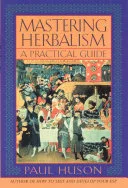
Mastering Herbalism
 84
84

Mastering Herbalism
Paul Huson's Mastering Herbalism offers a welcome antidote to the often superficial modern approach to plant medicine. Unlike many contemporary guides that focus solely on biochemical compounds, Huson grounds his work in a rich, often overlooked, esoteric tradition. His exploration of plant spirits and correspondences, drawing implicitly from systems like the Hermetic Qabalah, provides a unique lens. A particular strength lies in his detailed descriptions of preparing remedies, which feel both practical and imbued with ancient wisdom. However, the sheer density of information can sometimes feel overwhelming for absolute beginners; a more explicit glossary of less common esoteric terms might have been beneficial. The passage discussing the 'doctrine of signatures' is especially illuminating, showcasing how perceived resemblances between a plant's appearance and a human ailment were historically used to determine its medicinal application.
This book is a valuable resource for those seeking to deepen their relationship with plants beyond mere pharmacology.
📝 Description
84
Paul Huson's Mastering Herbalism, published in 2001, examines the energetic and spiritual dimensions of medicinal plants.
Mastering Herbalism, by Paul Huson, goes beyond the basic identification and use of medicinal plants to consider their deeper energetic and spiritual qualities. First released in 2001, the book connects herbal practices to a history of folk magic and esoteric traditions. It guides readers from fundamental knowledge to more advanced applications of working with herbs.
The text is for those seriously studying botany, folk magic, and esoteric paths. It appeals to individuals wanting to know not only how plants work pharmacologically but also their historical, symbolic, and spiritual importance. Readers aiming to build a stronger relationship with the plant world, whether for personal healing, ritual, or environmental care, will find this work detailed.
Huson's writing appeared at a time when interest in natural remedies and esoteric studies was increasing. Following the counterculture movements of the 1960s and 70s, there was a growing need for texts on witchcraft, folklore, and plant lore that were both accessible and well-researched. Mastering Herbalism provided a more thorough, historically informed viewpoint compared to many popular guides, drawing from older works and traditions that had been overlooked or misunderstood.
This book sits within the Western esoteric tradition, specifically connecting folk herbalism with magical practice. It emphasizes the animistic view of plants possessing unique spirits or intelligences, a concept found in animistic and shamanic traditions worldwide. Huson's approach incorporates principles of sympathetic magic and elemental theory, common in Renaissance grimoires and later ceremonial magic systems. The focus on correspondences between plants and celestial or elemental forces is a key feature of traditional magical herbalism, linking the microcosm of the plant world to the macrocosm.
💡 Why Read This Book?
• Gain practical skills in preparing herbal remedies, including tinctures and infusions, as detailed in Huson's methods, moving beyond basic recipes. • Understand the esoteric principles of plant correspondences and spirits, as explored in the "Key Concepts" section, fostering a deeper, more intentional connection with flora. • Learn about the historical context of herbalism, referencing traditions that influenced the work's creation around the turn of the millennium, offering unique insights not found in contemporary texts.
⭐ Reader Reviews
Honest opinions from readers who have explored this book.
❓ Frequently Asked Questions
What esoteric traditions does Paul Huson draw upon in Mastering Herbalism?
The work draws implicitly on Western esoteric traditions, including Hermeticism and folk magic. It explores concepts like plant spirits, correspondences with celestial bodies, and the doctrine of signatures, which are common threads in these lineages.
When was Mastering Herbalism first published, and why is this significant?
Mastering Herbalism was first published in 2001. This timing placed it within a renewed interest in esoteric studies and natural healing, offering a more in-depth perspective than many popular guides emerging at the time.
Does the book cover the practical preparation of herbal remedies?
Yes, the book provides detailed guidance on practical preparation methods, including tinctures, poultices, and infusions, emphasizing how intent and ritual can enhance their efficacy.
What is the 'doctrine of signatures' as discussed in Mastering Herbalism?
The doctrine of signatures is an ancient belief system where a plant's physical characteristics (shape, color, habitat) were thought to indicate its medicinal properties for specific ailments.
Is Mastering Herbalism suitable for complete beginners in herbalism?
While comprehensive, the book's depth and esoteric focus might be best suited for those with some foundational knowledge or a strong interest in the spiritual and magical aspects of plants, rather than absolute beginners seeking only basic remedies.
What does Huson mean by 'plant allies'?
The concept of 'plant allies' suggests that each herb possesses an individual spirit or intelligence with which a practitioner can form a relationship, facilitating deeper understanding and more potent use of the plant.
🔮 Key Themes & Symbolism
Plant Spirits and Allies
Huson's work posits that plants are not merely inert substances but possess their own consciousness and spirit. He encourages readers to view herbs as "allies" with whom one can develop a reciprocal relationship. This perspective moves beyond a utilitarian approach to herbalism, framing it as a dialogue with the natural world. The book guides practitioners on how to attune to these subtle energies, fostering a deeper connection that can enhance the efficacy of remedies and rituals alike, aligning with animistic and shamanic traditions.
Doctrine of Signatures
A central concept explored is the doctrine of signatures, an ancient system of understanding plant properties based on their physical appearance, habitat, or perceived resemblance to human organs or ailments. Huson explores how this symbolic language was used historically to divine a plant's medicinal purpose. This principle connects herbalism to broader systems of symbolic interpretation and divination, suggesting that the natural world itself contains coded wisdom accessible through careful observation and intuitive understanding.
Esoteric Preparation Methods
Beyond standard infusions and decoctions, Mastering Herbalism details esoteric methods for preparing herbal remedies. This includes the energetic charging of preparations through intent, ritual, and astrological timing. Huson emphasizes that the practitioner's state of mind and spiritual focus are integral to the healing process. These techniques are rooted in magical traditions that view the creation of remedies as a sacred act, blending practical alchemy with spiritual invocation.
Herbalism and Celestial Correspondences
The book illustrates the intricate web connecting plants, planetary energies, and the seasons. Huson explores how specific herbs are associated with particular celestial bodies (e.g., Mars, Venus, Moon) and their corresponding influences. This understanding allows for a more nuanced application of herbs in healing and magical practice, aligning remedies with cosmic rhythms. This practice is a core part of Western esotericism, linking the microcosm of the body and the earth to the macrocosm of the heavens.
💬 Memorable Quotes
Direct passages from the work, attributed to the author.
“Each plant has its own spirit, its own intelligence.”
— This core idea suggests that herbs are sentient beings, not just passive ingredients. It encourages a respectful, relational approach to herbalism, fostering a deeper connection and potentially enhancing healing outcomes through conscious interaction.
“The Doctrine of Signatures is a key to unlocking a plant's hidden virtues.”
— This highlights the historical belief that a plant's physical form or appearance symbolically indicates its medicinal use. It points to a system of natural divination and symbolic language that Huson explores within the text.
“Intent is as crucial as the ingredients in any potent preparation.”
— This emphasizes the magical and energetic component of herbalism. It suggests that the practitioner's focused will and spiritual state significantly influence the power and effectiveness of the resulting remedy.
“We must learn to listen to the whispers of the green world.”
— This evocative phrase encourages developing intuition and sensitivity to the subtle energies of plants, advocating for a more profound, non-rational understanding of their healing properties.
“The Moon governs the circulation and the watery elements within us, much like it governs the tides.”
— This illustrates the concept of celestial correspondences, linking planetary influences to human physiology and herbal actions, a common principle in traditional and esoteric medicine.
🌙 Esoteric Significance
Tradition
This work fits squarely within the Western Esoteric tradition, particularly drawing from folk magic, Hermeticism, and older systems of herbalism that incorporate spiritual and symbolic dimensions. It represents a continuation of the lineage of magical botany, where plants are understood not just for their physical properties but for their energetic signatures and spiritual essence. Huson’s approach emphasizes the practitioner’s relationship with the plant kingdom as a form of spiritual communion, aligning with animistic worldviews found across various esoteric paths.
Symbolism
Key symbols include the Doctrine of Signatures, where a plant's appearance (e.g., a liverwort resembling a liver) is seen as a divine clue to its use. Another is the concept of 'plant allies,' personifying herbs as spiritual entities with whom one can build relationships, akin to tutelary spirits. Celestial correspondences, linking herbs to planets and zodiacal signs, are also vital, symbolizing the macrocosm-microcosm relationship central to Hermetic thought and magical practice.
Modern Relevance
Mastering Herbalism remains relevant for contemporary practitioners of witchcraft, paganism, and traditional herbalism seeking a deeper, more spiritual connection with plants. It influences modern animistic practices and bioregional herbalism by emphasizing respectful engagement and understanding plant intelligence. Thinkers and practitioners interested in the intersection of botany, folklore, and magic find its detailed approach valuable for developing potent, ritually informed herbal applications.
👥 Who Should Read This Book
• Aspiring herbalists and folk magic practitioners seeking to understand the energetic and spiritual dimensions of plant medicine beyond simple materia medica. • Students of Western Esotericism interested in the historical and symbolic applications of botany within magical traditions like Hermeticism. • Experienced healers and gardeners who wish to deepen their relationship with the plant kingdom, fostering a more conscious and reciprocal connection with their herbal allies.
📜 Historical Context
Paul Huson's Mastering Herbalism, published in 2001, emerged during a period of significant revival for both esoteric studies and practical witchcraft. The late 20th and early 21st centuries saw a growing public appetite for information on alternative healing and ancient traditions, partly fueled by the internet's accessibility. Huson's work offered a more scholarly and deeply traditional approach compared to the flood of simpler, often less rigorous, guides. It stood in contrast to the purely biochemical focus gaining dominance in mainstream medicine and even some contemporary herbalism circles. While figures like Scott Cunningham had popularized a gentler, Wiccan-influenced approach to magic and nature, Huson explored older, more complex systems, implicitly drawing on Hermetic and folk magic lineages that had been less widely published in accessible formats. The book's reception likely appealed to those seeking a more grounded, historically informed practice, moving beyond New Age trends towards a more robust engagement with plant lore.
📔 Journal Prompts
Reflect on the Doctrine of Signatures and a plant you are familiar with; what might its appearance suggest about its virtues?
Consider a common herb: how might you approach it as a 'plant ally' rather than just a remedy?
Explore the concept of celestial correspondences: which planet or element might resonate with your current personal needs?
How does the idea of intent influence your perception of creating herbal preparations?
Imagine communing with a plant spirit; what questions would you ask it about its essence and purpose?
🗂️ Glossary
Doctrine of Signatures
An ancient system of herbalism proposing that a plant's physical characteristics (color, shape, habitat) symbolically indicate its medicinal properties and uses for specific human ailments.
Plant Allies
The concept that individual herbs possess distinct spirits or intelligences, with whom practitioners can form respectful, reciprocal relationships for mutual benefit and enhanced healing.
Celestial Correspondences
The practice of associating herbs, minerals, and other natural elements with specific planets, zodiac signs, or celestial bodies, based on perceived energetic similarities and influences.
Tincture
A concentrated liquid herbal extract, typically made by macerating plant material in alcohol or another solvent to draw out active compounds.
Infusion
A medicinal tea made by steeping plant material (usually leaves, flowers, or soft stems) in hot water for a short period, typically 5-15 minutes.
Materia Medica
A body of knowledge regarding the medicinal properties and uses of substances, particularly plants, used in healing.
Energetic Signature
The subtle, non-physical quality or essence of a plant, believed to influence its healing properties beyond its chemical constituents.
🔮 Readers Also Liked
Browse all →








More by Paul Huson
All books →



More Free Occult Philosophy Books
View all →