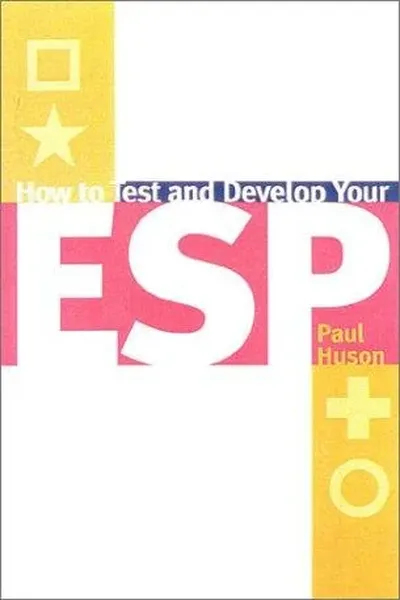
How To Test and Develop Your ESP

 71
71

How To Test and Develop Your ESP
Paul Huson's *How To Test and Develop Your ESP* is a refreshingly direct manual that sidesteps the usual spiritual grandiosity. Its strength lies in its no-nonsense approach to a subject often mired in vagueness. Huson provides concrete exercises, urging readers to become their own experimenters. A particularly effective section details methods for testing clairvoyant reception, emphasizing careful record-keeping. The book's limitation, however, is its occasional adherence to the jargon of its time, which can feel slightly dated. Despite this, the core techniques remain sound. For instance, the chapter on "thought projection" offers a clear, if simple, framework for intentional psychic communication. Huson’s work is a valuable, pragmatic addition to any serious student's library on psychic development.
📝 Description
71
Paul Huson published 'How To Test and Develop Your ESP' in 1977, offering direct methods for psychic training.
This book serves as a practical manual for individuals interested in ESP. It moves beyond theory to offer concrete exercises and techniques designed to help readers assess and enhance their own extrasensory perception. Huson emphasizes a systematic approach, encouraging self-observation and experimentation rather than relying solely on anecdotal accounts. The focus is on personal experience and the development of an inner sense for psychic phenomena.
The work is suitable for anyone curious about latent psychic abilities, from beginners to those who have had prior experiences. It is particularly useful for those who prefer a hands-on learning style and are committed to self-directed practice. Readers looking to connect abstract occult ideas with personal, tangible results in their spiritual or psychic development will find this guide valuable.
Published in 1977, this book arrived during a period of heightened public interest in parapsychology. The 1970s saw a broader cultural fascination with spiritual exploration and alternative practices, including ESP, astrology, and channeling. This era, marked by events like Uri Geller's televised psychic demonstrations, created an environment receptive to tangible evidence of extraordinary human capacities. Huson's work tapped into this moment, providing a structured approach for personal psychic development.
💡 Why Read This Book?
• Learn specific, actionable exercises for testing clairvoyance and telepathy that move beyond mere theory, allowing for direct personal verification of psychic phenomena. • Understand Paul Huson's concept of "thought projection" and practice techniques to intentionally send mental impressions, providing a tangible method for psychic communication. • Gain practical techniques for developing "receptive clairvoyance" by focusing on systematic observation and interpretation of subtle impressions, as outlined in the book's practical sections.
⭐ Reader Reviews
Honest opinions from readers who have explored this book.
❓ Frequently Asked Questions
What year was Paul Huson's 'How To Test and Develop Your ESP' first published?
Paul Huson's 'How To Test and Develop Your ESP' was first published in 1977, a period of heightened interest in parapsychology and psychic phenomena.
Does the book provide actual exercises for developing ESP?
Yes, the book is structured around practical exercises designed to help readers test and cultivate their extrasensory perception, focusing on methods like thought projection and receptive clairvoyance.
Is 'How To Test and Develop Your ESP' suitable for beginners?
Absolutely. The book is written for individuals curious about their psychic abilities, offering a clear, step-by-step guide that doesn't require prior esoteric knowledge.
What is 'receptive clairvoyance' as discussed by Paul Huson?
Receptive clairvoyance, in Huson's framework, refers to the ability to passively receive psychic impressions or information from external sources, which the book provides exercises to develop.
What historical context is relevant to this 1977 ESP book?
The book was published during the 1970s, an era marked by widespread fascination with psychic phenomena, influenced by public figures and a general openness to alternative spiritualities.
Can the techniques in this book be used for personal development?
Yes, the book emphasizes self-testing and personal development, encouraging readers to build confidence and understanding in their psychic faculties through structured practice.
🔮 Key Themes & Symbolism
Practical ESP Training
The core of Huson's work lies in its systematic approach to training extrasensory perception. It moves beyond mere theory, offering concrete exercises for testing and developing abilities like telepathy and clairvoyance. The emphasis is on personal experimentation and diligent record-keeping, encouraging readers to become their own parapsychological researchers. This practical methodology distinguishes it from more philosophical or purely theoretical texts on the subject, grounding esoteric potential in actionable steps.
Mind-Body Connection
Huson consistently links the development of ESP to a state of inner balance and focus. Techniques such as meditation and visualization are presented not as ends in themselves, but as crucial tools for clearing the mental channels required for psychic reception. The work suggests that a disciplined mind, free from excessive distraction, is more attuned to subtle energies and impressions, highlighting the interconnectedness of mental states and psychic sensitivity.
Subjective Verification
A significant theme is the importance of subjective experience and personal verification. Huson guides the reader to trust their own perceptions and to develop an internal framework for evaluating psychic phenomena. The book champions self-discovery over reliance on external validation, empowering individuals to explore their psychic landscape with confidence and a critical yet open mind. This focus on internal authority is central to developing authentic psychic awareness.
Astral Projection Principles
The work touches upon the concept of astral projection as a means to expand consciousness and perception beyond the physical body's limitations. While not a primary focus, it is presented as a method that can enhance psychic faculties by allowing for experiences outside the normal spatio-temporal framework. Understanding these principles is framed as a way to broaden one's awareness of different planes of existence and their potential influence on ESP.
💬 Memorable Quotes
Direct passages from the work, attributed to the author.
“The first step in developing your ESP is to believe it is possible.”
— This highlights the crucial role of belief and positive affirmation in psychic development. Huson suggests that overcoming skepticism and embracing the potential for extrasensory perception is foundational to unlocking one's abilities.
“Keep a detailed record of your experiments and impressions.”
— This emphasizes the scientific, methodical approach Huson advocates. Consistent documentation allows for pattern recognition, learning from mistakes, and objective assessment of progress in developing ESP.
“Meditation is essential for clearing the mind and enhancing receptivity.”
— This points to the connection between mental discipline and psychic ability. By quieting internal chatter, one becomes more open to receiving subtle, non-physical information, as explored in the book's practical sections.
“Thought projection requires clear intent and focused visualization.”
— This expresses the active component of psychic communication. Huson suggests that directing one's mental energy with precision is key to successfully transmitting thoughts or intentions to another.
“Trust your intuition; it is your inner guide.”
— This encourages readers to develop confidence in their own inner knowing. The book posits intuition as a primary faculty for psychic perception, urging its cultivation and respect.
🌙 Esoteric Significance
Tradition
While not strictly tied to a single esoteric lineage, Huson's work draws heavily from the practical, experiential traditions within Western esotericism, particularly those emphasizing personal development and the cultivation of inner faculties. It reflects the Hermetic principle of 'As Above, So Below,' suggesting that the microcosm (the individual's consciousness) can be trained to perceive and interact with the macrocosm (subtle energies and realms). The emphasis on systematic practice aligns with training methodologies found in disciplines like ceremonial magic, albeit presented in a more generalized, accessible format.
Symbolism
Key symbols and motifs often revolve around the concept of 'channels' or 'pathways' for psychic energy, frequently visualized as lines of light or subtle streams within the energetic body. The 'third eye' or 'pineal gland' is implicitly referenced as a focal point for clairvoyant perception, though not always explicitly named. The act of 'projection' itself can be seen as a symbolic journey beyond the physical, representing the soul's capacity for non-local consciousness, a concept resonant with Gnostic and Hermetic ideas of divine spark within humanity.
Modern Relevance
Huson's emphasis on practical, self-directed exercises for developing psychic abilities remains highly relevant. Contemporary practitioners in fields like energy healing, intuitive development, and even some forms of modern witchcraft often employ similar techniques for grounding, visualization, and cultivating sensory awareness beyond the physical. The book’s direct, no-frills approach can be seen as a precursor to many modern online courses and workshops that aim to explain and teach psychic skills to a broader audience.
👥 Who Should Read This Book
• Individuals new to psychic development seeking a structured, practical guide to testing their ESP abilities without overwhelming theoretical jargon. • Students of parapsychology interested in historical methods for experimental psychic training and self-observation from the late 1970s. • Anyone curious about their own latent extrasensory perception who prefers a hands-on approach focused on personal experimentation and tangible results.
📜 Historical Context
Published in 1977, *How To Test and Develop Your ESP* emerged during a vibrant period for parapsychology and occult studies. The 1970s were characterized by a widespread cultural fascination with the paranormal, fueled by media portrayals and public figures like Uri Geller, whose televised demonstrations of psychokinesis captured global attention. This era saw a surge in interest in alternative spiritualities and esoteric practices, moving beyond the more structured Theosophical movements of earlier decades. Huson's work offered a practical, hands-on approach that contrasted with the more academic or philosophical explorations of ESP prevalent at the time. While figures like J.B. Rhine had laid groundwork in the mid-20th century with his parapsychology research at Duke University, Huson's book provided accessible techniques for the layperson seeking direct experience, aligning with a broader counter-cultural interest in unlocking human potential.
📔 Journal Prompts
Your experience with the "thought projection" exercise: describe the target and any impressions received.
Reflect on the "receptive clairvoyance" techniques; what subtle signs did you notice?
Analyze your record-keeping for one ESP experiment: what patterns emerged?
Consider the role of "astral projection" principles in your own psychic awareness.
Evaluate the effectiveness of meditation for enhancing your sensitivity, as suggested by Huson.
🗂️ Glossary
ESP
Acronym for Extrasensory Perception, encompassing abilities such as telepathy, clairvoyance, and precognition that are believed to operate outside the known sensory channels.
Telepathy
The direct transmission of thoughts, feelings, or images from one person's mind to another's without the use of the recognized senses.
Clairvoyance
The faculty of perceiving things or events in the future or beyond normal sensory contact; 'clear-seeing'.
Thought Projection
A technique described by Huson for intentionally sending mental energy or specific thoughts towards a designated recipient or target.
Receptive Clairvoyance
The ability to passively receive psychic impressions or information about distant people, places, or events, often experienced as images or feelings.
Astral Projection
The experience of leaving one's physical body to travel in a non-physical form (astral body) to other locations or planes of existence.
Visualization
The mental process of creating images or scenes in one's mind, often used as a tool to focus intention or prepare for psychic work.
🔮 Readers Also Liked
Browse all →









More by Paul Huson
All books →



More Free Divination & Tarot Books
View all →