Mastering Witchcraft
 73
73

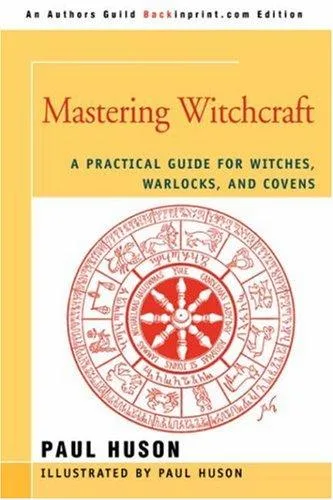
Mastering Witchcraft
Paul Huson’s *Mastering Witchcraft* arrived in 1970 not as an academic treatise, but as a direct transmission of practical magic. Its strength lies in its unvarnished approach; Huson doesn't shy away from the mechanics of spellcraft, the consecration of tools, or the precise wording of invocations. The chapter detailing the construction and use of a wand, for instance, offers a level of granular instruction rarely found in less focused guides. However, the book's directness can sometimes feel stark. The ethical considerations, while present, are not as deeply explored as the mechanics, leaving a reader to infer much about the responsible application of these potent techniques. For those seeking a foundational manual for active practice, it remains a significant, if sometimes unadorned, resource.
📝 Description
73
Paul Huson's Mastering Witchcraft, published in 1970, is a practical manual for modern magical practice.
Published in 1970, Paul Huson's Mastering Witchcraft offers direct instruction in the practice of modern witchcraft. It moves beyond theory to detail specific rituals, spells, and the construction of magical tools. The book covers how to perform various rites and addresses the ethical considerations for those who practice witchcraft. It is written for individuals serious about actively learning and performing witchcraft, rather than for casual observers. Those willing to gather components and practice the described techniques will find the material valuable.
Huson emphasizes the importance of personal will and clear intention in magical workings. He details how to create sacred space and invoke elemental forces, often tying magical practice to lunar phases and seasonal festivals. The text covers concepts like the use of consecrated tools such as the athame and wand, and the structure of successful magical operations. Its approach is hands-on, aiming to equip practitioners with concrete knowledge for contemporary use.
Emerging in the late 1960s and early 1970s, a time of growing interest in counter-cultural spiritualities, Huson's work provided a structured, hands-on guide for contemporary witchcraft. It differed from some contemporary occult texts that focused on philosophical speculation or historical research. Mastering Witchcraft served to codify established witchcraft lore for a new generation of practitioners. It presented a clear path for those seeking to engage actively with magical traditions.
💡 Why Read This Book?
• Learn the specific method for consecrating a wand, as detailed in Huson's practical chapters, offering a tangible starting point for ritual tool preparation. • Understand the importance of personal will and intent in magical workings, a core principle Huson emphasizes throughout the text for effective spellcasting. • Explore the ritual structure for invoking elemental forces, a technique presented with clarity, providing insight into the foundational elements of many magical systems.
⭐ Reader Reviews
Honest opinions from readers who have explored this book.
❓ Frequently Asked Questions
When was Paul Huson's Mastering Witchcraft first published?
Mastering Witchcraft by Paul Huson was first published in 1970, a significant year for occult literature as interest in alternative spiritualities grew.
What kind of witchcraft does Mastering Witchcraft focus on?
The book focuses on practical, modern witchcraft, providing instructions for rituals, spells, and the use of magical tools rather than historical or theoretical aspects.
Does Mastering Witchcraft require specific tools for practice?
Yes, the book details the importance of and methods for creating and consecrating various magical tools, such as the athame and wand.
Is Paul Huson's book suitable for complete beginners?
It is suitable for beginners who are serious about learning practical witchcraft. Huson provides clear instructions, but the intent is for active practice, not passive reading.
Where does Mastering Witchcraft fit within the history of occult literature?
Published in 1970, it emerged during a period of increased interest in esoteric subjects, offering a hands-on manual that contrasted with more philosophical or historical texts of the era.
What is the general tone of Mastering Witchcraft?
The tone is direct and instructional, aiming to impart practical knowledge and techniques for performing witchcraft with clarity and purpose.
🔮 Key Themes & Symbolism
Ritual Mechanics and Tool Consecration
Huson's work meticulously details the 'how-to' of witchcraft. This includes the practical steps for creating and consecrating essential magical tools like the athame, wand, and chalice. He emphasizes that these are not mere symbolic objects but conduits for focused energy. The book guides the practitioner through the process of purification, invocation, and dedication, ensuring each tool is imbued with magical purpose, a critical step for effective working in many Western magical traditions.
The Power of Will and Intent
A central tenet of Huson's approach is the primacy of the practitioner's will. The book stresses that magic is not an external force to be passively received, but an active manipulation of energies directed by personal intention. Mastering Witchcraft guides readers on how to clarify their desires, focus their mental energies, and project them effectively through ritual and spellcraft. This concept aligns with many Hermetic principles, where the adept seeks to align their will with the divine or cosmic order.
Elemental Invocation and Sacred Space
The book provides practical methods for establishing sacred space, a fundamental practice in many magical systems. Huson outlines techniques for banishing unwanted energies and invoking the aid of the four elements—Earth, Air, Fire, and Water. This involves specific rituals and symbolic gestures designed to create a controlled environment conducive to magical work, drawing upon ancient traditions of elemental magic that have persisted through various esoteric lineages.
Ethical Practice and Magical Responsibility
While primarily a practical manual, Huson touches upon the responsibilities that come with wielding magical power. The work implicitly suggests that magic should be wielded with purpose and awareness, avoiding frivolous or harmful applications. This ethical dimension, though not always explicitly detailed, is crucial for understanding witchcraft not just as a set of techniques, but as a path requiring discipline and a considered approach to influencing the world.
💬 Memorable Quotes
Direct passages from the work, attributed to the author.
“A witch must learn to command his will.”
— This statement underscores the book's focus on personal agency and the active role of the practitioner. It suggests that effective witchcraft relies not on external powers alone, but on the disciplined direction of one's own inner force and intent.
“The athame is the witch's primary weapon and tool of direction.”
— This highlights the functional importance of the athame in Huson's system. It's presented as a key instrument for cutting, directing, and manifesting magical energy, more than just a symbolic object.
“Sacred space must be prepared before any important working.”
— This emphasizes the foundational necessity of creating a consecrated and protected environment. It signals that the efficacy of any magical act is significantly dependent on the quality and preparation of the space in which it occurs.
“The circle is a symbol of the universe and a protective boundary.”
— This interpretation of the magic circle connects its practical function of containment and protection with its deeper symbolic meaning, representing the cosmos and the witch's dominion within it.
“Intent is the engine of all magic.”
— This concisely captures the book's emphasis on mental focus and clear purpose. It posits that the driving force behind any successful spell or ritual is the clarity and strength of the practitioner's intention.
🌙 Esoteric Significance
Tradition
Mastering Witchcraft draws heavily from the Western esoteric tradition, particularly its practical, ritualistic aspects. While not explicitly tied to a single lineage like Kabbalah or Hermeticism, it reflects the operational magic found in many grimoires and ceremonial magic texts. Huson synthesizes elements of folk magic and what became known as modern witchcraft, focusing on the direct application of will and energy manipulation, aligning with the Hermetic principle of 'As Above, So Below' through practical manifestation.
Symbolism
Key symbols in the book include the athame, often depicted as a ritual dagger used for directing energy and commanding spirits, and the wand, representing will and the element of Air or Fire. The circle, a recurring motif, symbolizes the cosmos, sacred space, and the boundary between the mundane and the magical. Huson's approach imbues these tools and concepts with practical power, viewing them as essential components for focusing and channeling magical forces effectively.
Modern Relevance
Huson's work continues to be referenced by modern witches and occultists seeking foundational knowledge in practical spellcraft and ritual construction. Its emphasis on clear intention, tool consecration, and elemental invocation speaks to many contemporary practitioners who value direct experience over purely theoretical study. It serves as a bridge between older magical traditions and the diverse range of modern witchcraft, influencing independent practitioners and various eclectic covens.
👥 Who Should Read This Book
• Aspiring practitioners of practical witchcraft seeking a structured guide to rituals, spellcasting, and tool preparation. • Students of Western esoteric traditions interested in the operational aspects of magic as presented in the post-1960s era. • Occult historians and researchers looking to understand the development of modern witchcraft manuals and their historical context.
📜 Historical Context
Paul Huson's *Mastering Witchcraft*, published in 1970, emerged during a fertile period for esoteric exploration in the West. The late 1960s and early 1970s saw a resurgence of interest in occultism, paganism, and alternative spiritualities, partly fueled by counter-cultural movements. Unlike earlier grimoires or more scholarly works on magic, Huson's book offered a direct, practical manual for contemporary practitioners. It stood apart from the more ceremonial magic traditions like the Golden Dawn or the burgeoning Wicca movement led by figures like Gerald Gardner, by focusing on a generalized, accessible form of witchcraft. Its publication provided a concrete guide for individuals seeking to actively engage with magical practices outside established religious or esoteric orders, making it a significant text for its time.
📔 Journal Prompts
The consecration of the athame: what personal intent do you imbue?
Reflect on the concept of 'personal will' in your own life.
How does the idea of 'sacred space' apply outside of ritual contexts?
Consider the balance between elemental forces in your immediate environment.
What ethical considerations arise when directing magical intent?
🗂️ Glossary
Athame
A ritual dagger, typically with a double-edged blade and a hilt, used by witches and ceremonial magicians primarily for directing magical energies and commanding spirits, rather than for physical cutting.
Wand
A slender rod, often made of wood, used in magical practice to direct energy, cast spells, and invoke elements or entities. It symbolizes the will and power of the practitioner.
Consecration
The act of purifying and dedicating a tool, object, or space for magical use. It involves rituals to imbue the item with sacred purpose and specific energies.
Sacred Space
An area ritually prepared and consecrated to create a protected and energized environment suitable for magical workings, often established by casting a circle.
Invocation
The act of calling upon or inviting a deity, spirit, element, or energy to be present or to assist in a magical working.
Banishment
A ritualistic process used to clear a space or oneself of unwanted energies, entities, or influences, often performed before or after other magical work.
Will
In a magical context, the focused intention and directed psychic energy of the practitioner, considered the primary force for manifesting magical effects.
🔮 Readers Also Liked
Browse all →









More by Paul Huson
All books →



More Free Occult Philosophy Books
View all →