How to Read Palms
 72
72

How to Read Palms
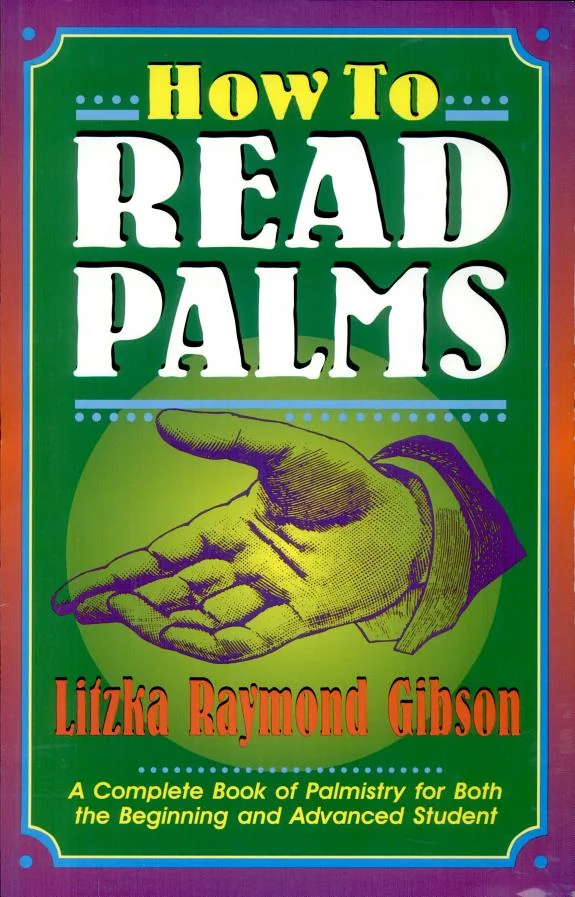
Litzka R. Gibson’s "How to Read Palms" offers a refreshingly practical entry point into chiromancy, eschewing mystical jargon for clear, actionable instruction. Its strength lies in its methodical breakdown of hand anatomy and line interpretation; the explanation of the nine vital areas of the palm, for instance, provides a solid framework for beginners. However, the book occasionally leans into a slightly dated New Age tone, particularly in its assertion of palmistry as a direct predictor of destiny rather than a symbolic guide. A passage detailing the interpretation of the Fate Line, which Gibson presents as a direct indicator of career or life purpose, exemplifies this tendency. Despite this, the work remains a valuable primer for anyone seeking to understand the foundational language of the hands.
📝 Description
72
Published in 1997, Litzka R. Gibson's How to Read Palms treats palmistry as a learnable language.
This book presents palmistry not as an inherent gift, but as a skill that can be acquired. Gibson breaks down the hand into specific components, offering a structured method for interpreting the lines, mounts, and other marks found on the palm. The central idea is that the hand acts as a 'Book of Life,' containing insights into personal understanding and potential. The text provides practical guidance for deciphering these markings.
How to Read Palms is for anyone interested in self-discovery or esoteric subjects. It is especially suited for beginners wanting to gain a new skill for personal insight and those drawn to comparative mysticism. Readers interested in understanding relationships or life path probabilities through a symbolic system will find this book useful. It speaks to those who feel their hands offer more than just a physical form, suggesting they hold a map of one's inner life.
Published in 1997, Gibson's work arrived during a time of renewed interest in New Age thought and esoteric practices. It follows in a tradition that includes early 20th-century figures like Cheiro. While palmistry has ancient origins, Gibson's book focuses on a modern, accessible interpretation. This approach differs from more academic or purely astrological methods, aiming to synthesize older traditions into a format suitable for a general audience interested in self-help and occult subjects.
💡 Why Read This Book?
• Gain a systematic method for palm analysis, learning to identify and interpret the 9 vital areas of the palm, a core concept Gibson details for understanding personality. • Discover the specific meanings of various hand markings, such as crosses and stars, as outlined in the book's sections on special signs and markings, offering unique symbolic insights. • Understand the foundational lines of palmistry—Life, Destiny, Fortune, Health, and Family—as presented by Gibson, providing a practical framework for self-reflection and future potential.
⭐ Reader Reviews
Honest opinions from readers who have explored this book.
❓ Frequently Asked Questions
What is the historical origin of palmistry as discussed in "How to Read Palms"?
While the book focuses on modern interpretation, palmistry has ancient roots, with evidence of its practice found in ancient India, China, and Egypt, predating many Western esoteric traditions.
Does "How to Read Palms" require any prior knowledge of esoteric subjects?
No, the book is designed for beginners. It explains concepts like the mounts and lines of the palm from the ground up, treating palmistry as a learnable language.
What are the '9 vital areas' of the palm mentioned in the book?
These refer to the fleshy mounds at the base of each finger and below the thumb, named after classical deities like Jupiter, Saturn, and Venus, each associated with specific personality traits and life influences.
How does Litzka R. Gibson's approach differ from other palmistry guides?
Gibson emphasizes palmistry as a learnable skill rather than an innate gift, offering a structured approach to reading hands that integrates various lines and markings for a comprehensive analysis.
Can reading palms predict the future according to "How to Read Palms"?
The book suggests that palmistry offers insights into potential paths and tendencies, enabling a 'richer and more rewarding understanding of your life,' rather than absolute future prediction.
When was "How to Read Palms" first published?
The book was first published in 1997, placing it within a wave of popular esoteric literature during the late 20th century.
🔮 Key Themes & Symbolism
The Hand as a Life Map
The central thesis posits that each palm functions as a unique "Book of Life." This perspective frames palmistry not as fortune-telling, but as a symbolic language revealing an individual's inherent character, potential challenges, and life path probabilities. The work systematically breaks down the intricate map of the palm, detailing how specific lines like the Life Line and Head Line, alongside the mounts and minor markings, contribute to a comprehensive portrait of the individual. This approach encourages self-reflection and a deeper understanding of one's personal narrative as etched onto the hand.
Palmistry as a Learnable Language
Gibson refutes the notion that palmistry is an exclusive 'gift,' advocating instead for its accessibility as a skill that can be acquired through study and practice. The book is structured to teach readers this 'language of the hand,' offering clear explanations of complex symbols and lines. By clarifying the process, it empowers individuals to perform their own palm analyses, fostering a sense of agency in exploring their personal destiny. This perspective aligns with broader Hermetic principles of understanding through knowledge.
Integration of Lines and Markings
A core element of the book is its emphasis on holistic interpretation, where the significance of individual lines (Life, Destiny, Health, etc.) is understood in conjunction with other hand features. It details how special signs and markings, such as stars, crosses, and islands, modify or enhance the meaning of the major lines. This comprehensive approach allows for nuanced readings, moving beyond simplistic interpretations to a more integrated understanding of the hand's complex symbolic language.
Self-Discovery Through Chiromancy
The ultimate aim presented is personal enrichment and a more profound grasp of self. By learning to read their own palms, individuals are encouraged to gain insight into their true nature, motivations, and life trajectory. This process of self-examination through the symbolic lens of palmistry is presented as a path to greater self-awareness and potentially, to making more informed life choices based on an understanding of one's inherent potentials and challenges.
💬 Memorable Quotes
Direct passages from the work, attributed to the author.
“Each palm is a separate "Book of Life."”
— This foundational statement frames the hand not just as a physical appendage, but as a living document containing the narrative of an individual's existence, potential, and character.
“Palmistry is not a "gift" but a language of the hand that can be learned.”
— This challenges the mystical perception of palmistry, positioning it as an accessible skill based on understanding symbols and patterns, rather than an innate, exclusive psychic ability.
“You will gain greater insight into who you really are.”
— This highlights the book's primary benefit: using palmistry as a tool for profound self-discovery and introspection, revealing deeper aspects of one's personality and life purpose.
“Discover the 9 vital areas of the palm, special signs and markings.”
— This points to the specific, practical knowledge readers will acquire, detailing the anatomical and symbolic elements of the hand that are crucial for accurate interpretation.
“Enjoy a comprehensive palm analysis and predict your future with this complete guide.”
— This expresses the book's promise: a thorough method for reading palms that equips the user with the ability to understand their life path and potential future outcomes.
🌙 Esoteric Significance
Tradition
This work aligns broadly with the Western Esoteric tradition, specifically drawing from the lineage of chiromancy that has been practiced for centuries, with roots potentially tracing back to ancient Greece and India. It departs from strictly astrological or Kabbalistic interpretations by focusing solely on the physical hand as a symbolic text. While not explicitly Hermetic or Gnostic, its emphasis on understanding the self through symbolic language and practical application echoes Hermetic principles like 'As above, so below,' applied to the microcosm of the human hand.
Symbolism
Key symbols explored include the major lines of the palm: the Life Line (vitality, physical health), the Head Line (intellect, mental approach), and the Heart Line (emotional life, relationships). The 'mounts'—fleshy pads at the base of fingers named after planets like Jupiter and Venus—represent core personality drives and potentials. Special markings like stars or crosses are interpreted as significant events or influences affecting the bearer's life path.
Modern Relevance
Contemporary practitioners of New Age spirituality and self-help often utilize palmistry as a tool for personal development and understanding. Gibson's accessible approach continues to inform beginner guides and online resources dedicated to chiromancy. Its emphasis on the hand as a map for self-discovery appeals to modern psychological interest in non-verbal communication and symbolic representation of the psyche, making it relevant for those exploring holistic wellness and consciousness studies.
👥 Who Should Read This Book
• Individuals new to esoteric studies seeking a practical, step-by-step introduction to palmistry, wanting to learn a specific, actionable skill. • Seekers of self-knowledge interested in understanding their personality traits, potential life paths, and core motivations through a unique symbolic system. • Students of comparative mysticism or those interested in divinatory arts who wish to add chiromancy to their repertoire of interpretative tools.
📜 Historical Context
Published in 1997, Litzka R. Gibson's "How to Read Palms" arrived during a resurgence of interest in esoteric subjects, fueled by the burgeoning New Age movement. This period saw a democratization of occult knowledge, with many authors seeking to present complex traditions in accessible formats. Gibson's work distinguishes itself by framing palmistry as a learnable language, directly countering the perception of it as an exclusive, innate gift. This approach resonated with a generation exploring self-help and personal growth through alternative means. While contemporaries like Kevin Quigley were also publishing on palmistry, Gibson's emphasis on systematic learning and practical application offered a distinct pathway. The late 20th century saw a broad acceptance of such works in popular culture, with fewer instances of the overt censorship or academic dismissal that characterized earlier eras, allowing books like this to find a wide audience.
📔 Journal Prompts
The Life Line's arc and any islands it contains.
Specific signs and markings on your palm and their potential meanings.
The relationship between the Head Line and the Heart Line.
The influence of the Jupiter mount on your ambitions.
Interpreting the Fate Line's presence or absence.
🗂️ Glossary
Chiromancy
The practice of palm reading, involving the interpretation of lines, mounts, and other markings on the hand to understand character and predict future events or tendencies.
Life Line
The primary line on the palm, typically curving around the base of the thumb, believed to indicate vitality, general health, and significant life events.
Head Line
The line running horizontally across the palm, often separating the palm from the fingers, interpreted as representing intellect, thinking patterns, and communication style.
Heart Line
The uppermost horizontal line on the palm, running across the hand below the fingers, associated with emotional life, romantic relationships, and heart health.
Fate Line
A vertical line on the palm, often starting near the wrist and extending upwards towards the fingers, symbolizing career, life path, and external influences.
Mounts
The fleshy, raised pads on the palm, named after planets (e.g., Mount of Venus, Mount of Jupiter), each corresponding to specific personality traits and energies.
Special Signs
Minor markings on the palm, such as stars, crosses, squares, or islands, which are believed to modify or indicate specific circumstances related to the lines or mounts they appear on.
This book appears in 1 collection
🔮 Readers Also Liked
Browse all →








From the “Palmistry” Collection
View all →







More Free Occult Philosophy Books
View all →