Investigating the Supernatural
 79
79

Investigating the Supernatural
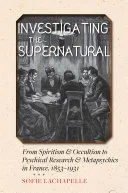
Sofie Lachapelle’s "Investigating the Supernatural" offers a sharp, critical lens on France's enthusiastic embrace of the séance between 1850 and 1930. Rather than rehashing sensational accounts, Lachapelle focuses on the intellectual and social mechanisms employed by various groups—spiritists, scientists, and the general public—to interpret and legitimize encounters with the spectral. A particular strength lies in her dissection of how concepts like "scientific spiritualism" were constructed, revealing the intricate dance between belief and the desire for empirical validation. One limitation, perhaps inherent to the source material, is the occasional density of academic discourse, which might slow readers less accustomed to historical analysis. The passage detailing the attempts to categorize ectoplasm, for instance, highlights both the earnestness of the investigators and the inherent slipperiness of their subject. Lachapelle’s work effectively demonstrates that the "supernatural" was not merely a matter of belief, but a field of active, often contentious, investigation.
📝 Description
79
Sofie Lachapelle investigates French spiritualism between 1850 and 1930.
Investigating the Supernatural examines the period from 1850 to 1930 when spiritualism and paranormal events held sway in French society. Sofie Lachapelle analyzes how various groups, from dedicated spiritists to cautious scientists, used séances to explore the unknown. The book scrutinizes the methods and motivations behind these investigations, highlighting the complex relationship between faith, scientific study, and societal worries.
This work is suited for students of history, sociology, and the history of science interested in how belief and empirical investigation interact. It will attract those curious about how spiritualism was received culturally and how societies deal with phenomena that resist simple explanations. Researchers of late 19th and early 20th-century French culture will find its detailed analysis valuable. Lachapelle places the "séance craze" within a dynamic era of scientific advancement and social change in France. This time saw figures like Allan Kardec promote spiritism, while psychology and parapsychology began to take shape. The book is set against a society looking for answers beyond traditional religion, turning to the unusual and the fringe for understanding, a trend also seen in England and America.
This book fits within the study of late 19th and early 20th-century spiritualism, a movement that sought to reconcile scientific inquiry with belief in an afterlife and communication with spirits. It engages with the specific French context where figures like Allan Kardec codified spiritist doctrines, creating a parallel spiritual framework to established religious and emerging scientific thought. The work addresses how societies navigated the blurry lines between empirical observation and subjective experience when confronting phenomena that challenged existing worldviews.
💡 Why Read This Book?
• Gain a nuanced understanding of how spiritualism was studied and debated in France between 1850 and 1930, moving beyond simplistic notions of "belief" to explore the era's specific methods of investigation. • Examine the historical attempts to legitimize séances and paranormal phenomena, appreciating the diverse approaches taken by groups like the spiritists and early parapsychologists. • Understand the cultural and intellectual climate of late 19th and early 20th-century France, recognizing how scientific curiosity and societal shifts fueled an interest in the marginal and the marvelous.
⭐ Reader Reviews
Honest opinions from readers who have explored this book.
❓ Frequently Asked Questions
What historical period does "Investigating the Supernatural" primarily focus on?
The book centers on the period in France between 1850 and 1930, a time when séances and spiritualism were particularly popular among both the general public and scholarly circles.
Which groups are examined in their attempts to understand the supernatural?
Lachapelle analyzes five distinct groups, including spiritists who sought to establish a new science, as well as other factions attempting to use and legitimize séances for their own purposes.
What was the cultural significance of séances in France during this era?
Séances were seen by many, including scholars, as a means of understanding and explaining the world, reflecting a broader societal interest in the wondrous and the marginal.
Who is the author of "Investigating the Supernatural"?
The author is Sofie Lachapelle, also known for her work "Conjuring Science."
What is "scientific spiritualism" as discussed in the book?
Scientific spiritualism refers to the attempts by groups, particularly spiritists, to apply scientific methods and principles to validate spiritualist claims and phenomena observed during séances.
What kind of "marvelous" phenomena were investigated?
The book discusses phenomena investigated during séances, which could include spirit communication, materializations, and other manifestations that were considered wondrous and sought to explain the world.
🔮 Key Themes & Symbolism
Séance as a Scientific Tool
The work details how séances, far from being mere parlor entertainment, were treated as laboratories for exploring the unknown between 1850 and 1930. Lachapelle illustrates how various groups, from spiritualists to early psychologists, attempted to develop methodologies for observing and recording phenomena like spirit communication and materialization. This theme highlights the era's earnest, albeit often flawed, efforts to bridge the gap between the empirical and the spectral, treating the séance as a legitimate site for investigation.
Legitimizing the Marginal
A core focus is the struggle for legitimacy faced by those who engaged with the supernatural. Lachapelle examines how different factions—including spiritists, scholars, and the general public—sought to validate their experiences and theories. This involved creating new vocabularies, developing specific rituals for séances, and attempting to align paranormal events with emerging scientific paradigms, demonstrating a persistent societal need to categorize and understand the inexplicable.
Science's Flirtation with the Unexplained
The book chronicles the complex relationship between established science and the burgeoning interest in spiritualism and paranormal phenomena. It shows how scientific inquiry, even when ostensibly skeptical, became entangled with the 'marvelous,' sometimes adopting its language or methods to study it. This theme explores the boundaries of scientific acceptance and how the pursuit of knowledge itself could be influenced by cultural fascination with the supernatural.
Cultural Explanations for the World
Lachapelle illustrates how séances and spiritualism offered alternative frameworks for understanding the world during a period of significant social and intellectual change in France. These phenomena provided explanations for life, death, and the nature of reality when traditional religious or scientific models seemed insufficient. The work reveals how the 'wondrous' became a significant cultural resource for making sense of existence.
💬 Memorable Quotes
Direct passages from the work, attributed to the author.
“Séances were wildly popular in France between 1850 and 1930, when members of the general public and scholars alike turned to the wondrous as a means of understanding and explaining the world.”
— This statement captures the book's central premise: the widespread societal engagement with spiritualism not just as belief, but as an active method for comprehending reality during a specific historical epoch.
“Sofie Lachapelle explores how five distinct groups attempted to use and legitimize séances.”
— This highlights the book's analytical approach, focusing on the diverse motivations and strategies employed by different factions in their engagement with paranormal phenomena.
“The author notes the "flirtation" of science with the marginal and the marvelous.”
— This phrase suggests a cautious but intrigued relationship between mainstream scientific thought and topics often relegated to the fringes of accepted knowledge.
“The work examines how the general public and scholars sought explanations for the world through the séance.”
— This emphasizes the dual appeal of spiritualism, demonstrating its relevance not only to popular culture but also to intellectual circles grappling with profound questions.
“Spiritists tried to create a new 'science' through their investigations.”
— This points to a key group studied in the book and their specific aim: to establish spiritualism on a foundation perceived as scientifically valid.
🌙 Esoteric Significance
Tradition
While not strictly adhering to a single esoteric lineage like Hermeticism or Kabbalah, Lachapelle's work engages with the broader tradition of Western esotericism by examining how marginalized or "occult" practices, like spiritualism, sought to establish their own epistemologies. It intersects with the Theosophical movement's interest in spiritual phenomena and communication with non-corporeal entities, analyzing the cultural and intellectual milieu that allowed such ideas to flourish and be debated.
Symbolism
The séance itself functions as a potent symbol, representing a liminal space where the veil between the material and immaterial is perceived to thin. Ectoplasm, a substance allegedly produced during séances, symbolizes the elusive material evidence sought by spiritualists, embodying the tangible manifestation of the spirit world. Spirit communication, a central motif, symbolizes humanity's enduring quest to connect with the deceased and understand the nature of consciousness beyond physical death.
Modern Relevance
Contemporary interest in consciousness studies, parapsychology, and even certain branches of quantum physics exploring observer effects echo the historical investigations detailed in Lachapelle's book. Modern thinkers and practitioners interested in altered states of consciousness, mediumship, and the philosophical implications of subjective experience find historical precedent in the serious, albeit often controversial, attempts to study the supernatural that occurred in the late 19th and early 20th centuries.
👥 Who Should Read This Book
• Students of history and sociology interested in the cultural reception of spiritualism and the paranormal in late 19th and early 20th-century France. • Researchers in the history of science seeking to understand how "fringe" phenomena were investigated and debated by both believers and skeptics. • Anyone curious about the historical interplay between belief, scientific inquiry, and the human desire to understand the unknown through phenomena like séances.
📜 Historical Context
Investigating the Supernatural emerges from a rich period in French intellectual history, specifically the late 19th and early 20th centuries, marked by both fervent spiritualism and the nascent development of scientific disciplines like psychology and sociology. The "séance craze" between 1850 and 1930 occurred alongside significant societal shifts, including industrialization, secularization, and a fascination with the unseen, fueled by figures like Allan Kardec. Lachapelle places this phenomenon within a broader cultural landscape where the marvelous offered explanations sought beyond traditional religious or emerging scientific frameworks. This era also saw parallel movements in England and America, with figures like Sir Arthur Conan Doyle championing spiritualism. While this work doesn't explicitly detail censorship or major reception events, it implicitly addresses the ongoing debate between empirical science and spiritualist claims, a tension evident in contemporary journals and academic discourse of the time.
📔 Journal Prompts
The "flirtation" of science with the marginal and the marvelous: Reflect on historical instances where established disciplines engaged with phenomena outside their accepted scope.
Legitimizing séances: Analyze the strategies employed by different groups to validate spiritualist claims during the 1850-1930 period.
The role of the séance as a means of understanding and explaining the world: Consider how cultural practices offer frameworks for interpreting reality.
Spiritists' attempts to create a new "science": Evaluate the criteria used to define scientific validity during this era.
The "wondrous" as a cultural resource: Explore how societies turn to extraordinary phenomena when seeking answers to fundamental questions.
🗂️ Glossary
Séance
A meeting at which people attempt to make contact with the spirit world, often involving phenomena such as spiritual communication, materialization, or psychic manifestations.
Spiritism
A doctrine of faith and philosophy that claims to communicate with spirits of the departed, often seeking to establish a spiritual science and moral code.
Ectoplasm
A supposed viscous, gelatinous substance supposedly emitted by mediums during séances, believed by spiritualists to be a physical manifestation of spirits.
Scientific Spiritualism
An approach that sought to apply scientific methods and principles to investigate and validate spiritualist phenomena and beliefs.
The Wondrous
Refers to phenomena and experiences that inspire awe, wonder, and a sense of the marvelous, often encountered at the edges of conventional understanding.
The Marginal
Phenomena, ideas, or groups that exist outside the mainstream of accepted knowledge, culture, or society.
Legitimize
To make something or someone legally or officially acceptable or valid; to justify or prove the reasonableness of something.