Mary the Prophetess
 75
75

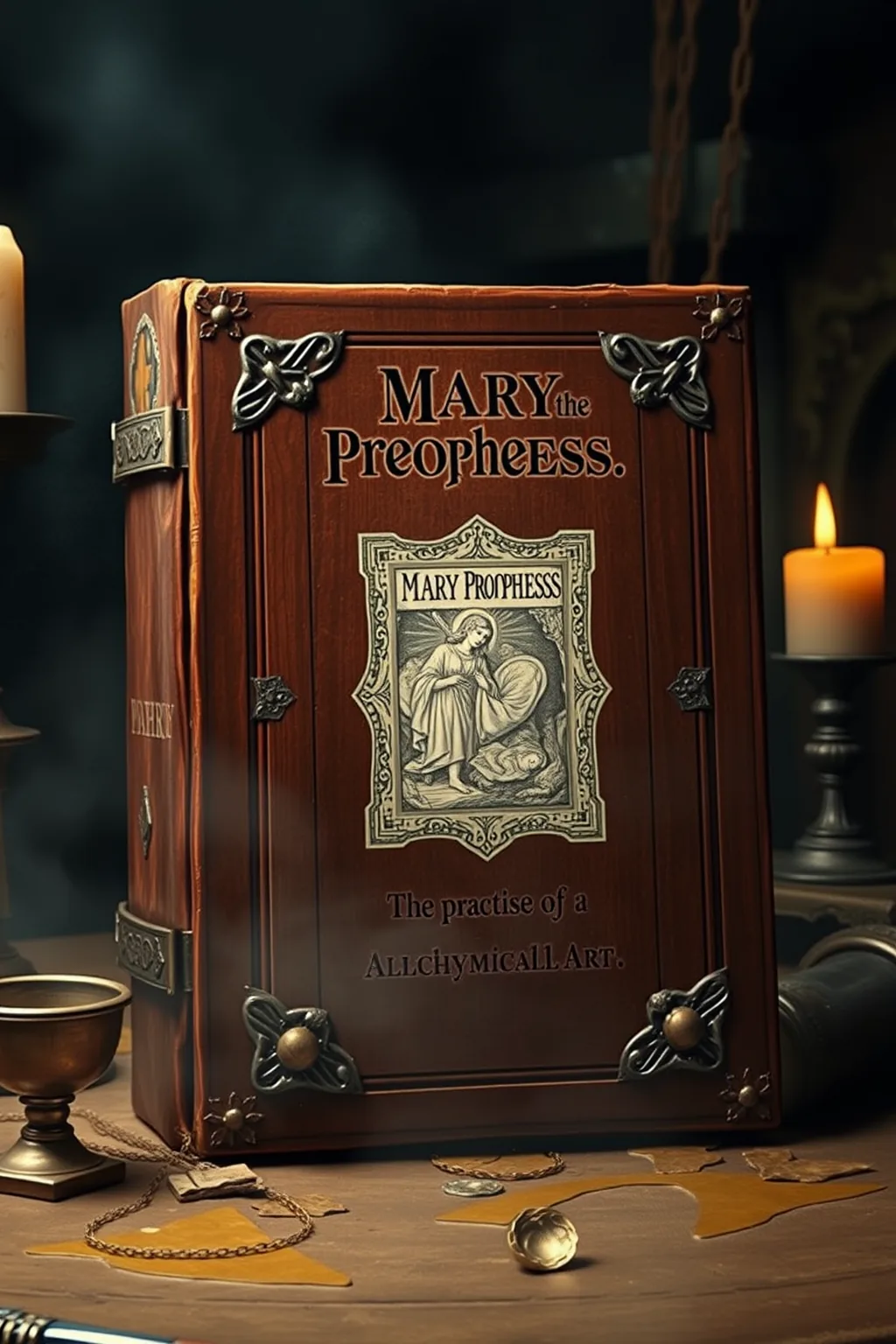
Mary the Prophetess


Lorelei Sage, Contemplative Literature Editor: 'The Practise of Mary the Prophetess' offers a rare glimpse into the heart of classical alchemy, transcending simplistic interpretations to reveal its profound spiritual dimensions. The text pulsates with an ancient wisdom, guiding initiates through symbolic landscapes and alchemical operations that mirror inner transformation. Its strength lies in its evocative prose and the implicit promise of unlocking hidden knowledge. This work is essential for serious students of Hermeticism and Gnosticism, and for any seeker drawn to the transformative power of the alchemical arts, offering a potent distillation of esoteric practice.
📝 Description
75
Published anonymously, 'The Practise of Mary the Prophetess' details alchemical procedures and spiritual philosophy.
This text, attributed to Mary the Prophetess, details alchemical practices and their spiritual implications. It moves beyond simple metallurgy, guiding the reader through stages of spiritual purification and the Great Work. The book uses symbolic language and allegorical processes to connect the external search for the Philosopher's Stone with an internal transformation.
It presents alchemy not as a historical curiosity but as a dynamic system for understanding the cosmos and achieving regeneration of both the material and the spiritual self. The work is intended for those interested in the divine structure of creation and the methods for achieving material and spiritual renewal, touching on a deep desire for knowledge.
This work belongs to the Western esoteric tradition, specifically within alchemy. It follows a lineage of texts that sought to codify not only chemical processes for transforming substances but also the parallel spiritual development of the alchemist. Such writings often employed allegory and symbolism to conceal their teachings from the uninitiated, framing the alchemical quest as a metaphor for divine union or personal enlightenment.
💡 Why Read This Book?
Uncover the profound spiritual dimensions of alchemy beyond mere metallurgy. 'Mary the Prophetess' offers a direct portal to ancient wisdom, revealing symbolic keys to inner transformation and the Great Work. Ideal for seekers of hidden knowledge, practitioners of Hermetic arts, and scholars of esoteric traditions who wish to engage with a foundational text.
⭐ Reader Reviews
Honest opinions from readers who have explored this book.
❓ Frequently Asked Questions
What is the primary focus of this text?
The primary focus is the spiritual and symbolic practice of alchemy, detailing the methods and philosophy attributed to Mary the Prophetess for achieving the Great Work, emphasizing inner transformation.
Who was Mary the Prophetess?
Mary the Prophetess is a legendary figure in alchemical history, often associated with early Alexandrian alchemy. Her specific identity and contributions are steeped in esoteric lore and symbolism.
Is this book for beginners in alchemy?
While accessible to dedicated beginners, the text's symbolic language and esoteric depth are best appreciated by those with some prior familiarity with alchemical or Hermetic principles.
What makes this text unique within alchemical literature?
Its unique value lies in its direct presentation of practices attributed to a foundational female alchemical figure, offering a potentially distinct perspective on the art.
Can this book be read for its philosophical insights alone?
Absolutely. The text is rich with philosophical concepts concerning transformation, duality, and the interconnectedness of spirit and matter, offering profound contemplative material.
🔮 Key Themes & Symbolism
The Great Work of Transformation
This theme explores the alchemical pursuit not merely as the transmutation of base metals into gold, but as a profound journey of spiritual purification and self-realization. It examines the intricate stages of the Main work, from the Nigredo (blackening) of dissolution to the Albedo (whitening) of purification and the Rubedo (reddening) of perfection. The text illuminates how alchemical processes serve as powerful metaphors for psychological integration and the ascent of the soul towards divine union, urging the practitioner toward inner perfection.
Symbolism and the Language of the Soul
Central to understanding Mary the Prophetess's teachings is the mastery of alchemical symbolism. This theme examines how the art employs cryptic imagery, allegorical narratives, and coded language to convey profound truths inaccessible to the uninitiated. From the symbolism of the sun and moon, the hermaphrodite, and the serpent, to the philosophical egg, each element represents specific energetic forces and stages of transformation. Deciphering these symbols is presented as key to unlocking the hidden knowledge of the cosmos and the inner workings of the human psyche.
The Divine Feminine in Alchemy
The presence of Mary the Prophetess herself highlights the often-overlooked role of the divine feminine in esoteric traditions. This theme explores how feminine principles—intuition, receptivity, nurturing, and creative force—are integral to the alchemical process. It posits that true mastery of the Great Work requires the integration of both masculine and feminine energies, the union of opposites, leading to a balanced and holistic transformation of the practitioner and the material world.
💬 Memorable Quotes
Direct passages from the work, attributed to the author.
“The Stone is not found, but made.”
— This emphasizes that the Philosopher's Stone, representing ultimate wisdom and perfection, is not a passive discovery but an active, internal creation through diligent alchemical practice and spiritual development.
“Seek first the inner gold, then the outer shall follow.”
— This highlights the priority of spiritual purification and self-mastery in alchemy. True transformation begins within the soul, and this inner work is the prerequisite for external manifestations of perfection.
“The serpent eats its tail, signifying the cycle of death and rebirth.”
— This refers to the Ouroboros symbol, representing the eternal return, the cyclical nature of existence, and the necessary dissolution and regeneration required for alchemical transformation.
“In dissolution, find the seed of perfection.”
— This points to the alchemical stage of Nigredo, where breakdown and chaos are necessary precursors to purification and the emergence of new, perfected forms.
“The Art demands patience, purity, and a knowing heart.”
— This succinctly outlines the core virtues required for successful alchemical practice: perseverance, moral and spiritual cleanliness, and intuitive understanding beyond mere intellectual comprehension.
🌙 Esoteric Significance
Tradition
This text is deeply rooted in the Hermetic and Gnostic traditions, which emphasize gnosis (direct spiritual knowledge) and the pursuit of spiritual enlightenment through understanding the hidden workings of the universe. It aligns with the Neoplatonic concept of emanation and the ultimate return to the divine source, viewing alchemy as a practical path to this spiritual realization.
Symbolism
The symbolism is rich and many-sided, employing concepts like the Philosopher's Stone, the union of opposites (sun/moon, king/queen), the four elements, and various mineral and animal metaphors. These symbols are not literal but represent stages of transformation, energetic forces, and psychological states essential for the Great Work.
Modern Relevance
In contemporary times, the teachings of Mary the Prophetess resonate with individuals seeking deeper meaning, self-transformation, and a connection to ancient wisdom. The alchemical principles offer useful insights into psychological integration, personal growth, and the interconnectedness of all things, making it relevant to modern spiritual seekers and contemplative practitioners.
👥 Who Should Read This Book
This text is a treasure for dedicated seekers of esoteric knowledge, offering a direct engagement with foundational alchemical principles. Scholars of Hermeticism, Gnosticism, and the history of science will find invaluable primary source material. Practitioners of contemplative arts and those on a path of self-discovery will benefit from its symbolic language and emphasis on inner transformation. While challenging, it offers profound rewards for anyone drawn to the mysteries of the Great Work and the pursuit of spiritual perfection.
📜 Historical Context
Emerging from the crucible of Late Antiquity and the early medieval period, the alchemical texts attributed to figures like Mary the Prophetess represent a fascinating synthesis of Hellenistic philosophy, Egyptian metallurgy, and early Gnostic and Hermetic thought. This era was a fertile ground for esoteric speculation, where the boundaries between science, religion, and mysticism were fluid. Alchemists sought to understand the fundamental principles of the cosmos, believing that through the manipulation of matter, they could uncover divine secrets and achieve a form of immortality or spiritual perfection. The influence of figures like Zosimos of Panopolis and the transmission of knowledge through Arabic scholars played a central role in preserving and developing these complex traditions, which would later profoundly shape Western esotericism.
📔 Journal Prompts
Reflect on a personal 'dissolution' experience and what 'seed of perfection' emerged from it.
How can the symbolism of the serpent devouring its tail be applied to overcoming cyclical negative patterns in your life?
Identify one 'inner gold' you are currently cultivating and how it might manifest externally.
What does the concept of 'purity' mean in the context of your personal spiritual or alchemical journey?
Consider the integration of 'masculine' and 'feminine' energies within yourself. How can this union lead to greater wholeness?
🗂️ Glossary
Alchymicall Art
Refers to the ancient practice of alchemy, encompassing both the material manipulation of substances and the spiritual pursuit of transformation and perfection, often termed the Great Work.
Great Work
The ultimate goal of alchemy, signifying the transformation of base matter into the Philosopher's Stone, and metaphorically, the spiritual perfection and enlightenment of the practitioner.
Philosopher's Stone
A legendary alchemical substance believed to be capable of transmuting base metals into gold and silver, and also possessing properties of rejuvenation and spiritual enlightenment.
Nigredo
The first stage of the alchemical process, often symbolized by blackness, representing dissolution, putrefaction, and the breakdown of the initial substance or the ego.
Rubedo
The final stage of the alchemical process, symbolized by redness, representing perfection, completion, and the attainment of the Philosopher's Stone or spiritual illumination.
This book appears in 2 collections
🔮 Readers Also Liked
Browse all →









From the “Hermeticism” Collection
View all →









More Free Alchemy & Hermeticism Books
View all →