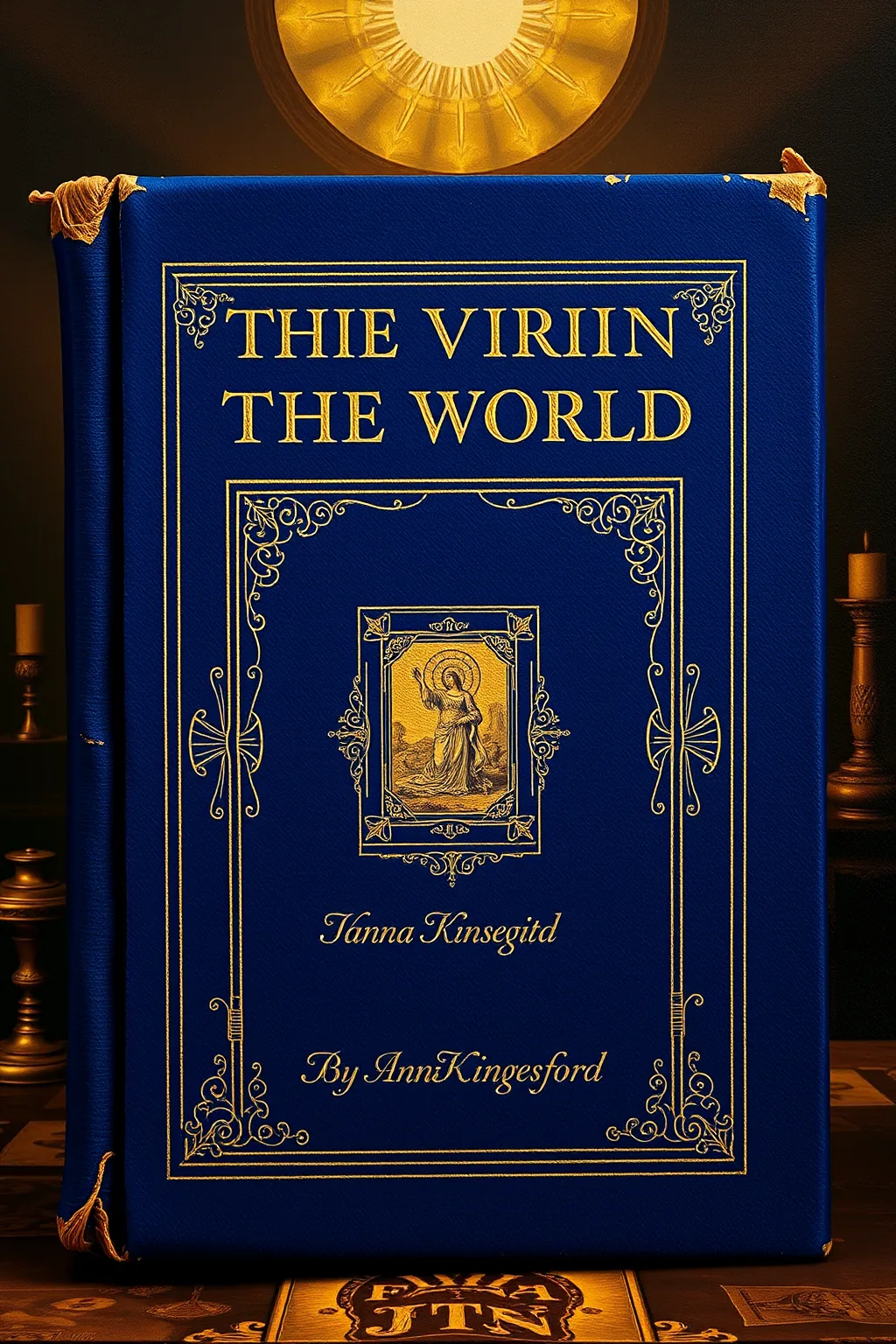
The Virgin of the World
 82
82

The Virgin of the World


Balthazar Finch (Senior Critic, Occult Philosophy) — Anna Kingsford and Edward Maitland's rendition of 'The Virgin of the World' is a cornerstone for any serious student of Hermeticism. This translation masterfully captures the profound allegorical language and esoteric insights of the original Hermetica, offering a rare glimpse into ancient cosmogonies and spiritual philosophies. The text's exploration of divine femininity and the soul's cosmic journey is particularly illuminating. Its strength lies in its accessibility without compromising its profound depth. This is an essential read for practitioners and scholars alike seeking to understand the foundational texts of Western esotericism.
📝 Description
82
First published in 1885, 'The Virgin of the World' translates key Hermetic texts attributed to Hermes Trismegistus.
This translation of 'The Virgin of the World' presents Hermetic teachings attributed to Hermes Trismegistus. The work, rendered by Anna Kingsford and Edward Maitland, addresses the origins of creation, the concept of the divine feminine, and the soul's transformation through alchemy. It uses allegory and symbolism to convey philosophical ideas about the cosmos and the human spirit.
The text aims to illuminate the foundational principles of esoteric thought that have influenced mystical traditions over centuries. It is intended as more than a historical record, suggesting a connection to ongoing spiritual understanding. The book invites reflection on reality's nature, the inner divine presence, and the pursuit of spiritual awakening. Readers may find echoes of ancient wisdom within its pages, suggesting a potentially transformative encounter for students of hidden knowledge.
This text belongs to the Hermetic tradition, a body of philosophical and religious knowledge attributed to Hermes Trismegistus. Hermeticism, which flourished in the Hellenistic period and later during the Renaissance, integrates elements of Greek philosophy, Egyptian religion, and Gnosticism. It emphasizes divine knowledge, the interconnectedness of all things, and the potential for human spiritual ascent. 'The Virgin of the World' specifically delves into creation myths and the soul's journey, aligning with Hermeticism's focus on gnosis and theurgy.
💡 Why Read This Book?
Unlock the ancient keys to cosmic understanding. 'The Virgin of the World' offers profound insights into creation, divine feminine principles, and the alchemical path to spiritual transformation. Ideal for seekers of hidden knowledge, students of Hermeticism, and practitioners drawn to foundational mystical texts. Discover timeless wisdom that resonates with the soul's deepest yearnings.
⭐ Reader Reviews
Honest opinions from readers who have explored this book.
❓ Frequently Asked Questions
Who is Hermes Trismegistus?
Hermes Trismegistus is a legendary, syncretic figure combining the Greek god Hermes and the Egyptian god Thoth. He is considered the author of the Hermetic Corpus, a collection of ancient philosophical and religious texts vital to Western esotericism and alchemy.
What is Hermeticism?
Hermeticism is a philosophical and religious tradition based on writings attributed to Hermes Trismegistus. It emphasizes gnosis (knowledge), the interconnectedness of all things, and the pursuit of spiritual enlightenment through understanding divine principles.
What is the significance of the 'Virgin of the World'?
The 'Virgin of the World' within the Hermetic tradition often symbolizes primordial, unmanifested divine potential, pure consciousness, or the cosmic feminine principle from which all creation emerges. It represents the essence of the universe before its materialization.
What is Alchemy according to Hermeticism?
In Hermeticism, alchemy is not solely about transmuting base metals into gold, but primarily a spiritual discipline. It refers to the process of purifying and transforming the soul, achieving spiritual perfection, and aligning the individual with the divine.
What is the role of Anna Kingsford and Edward Maitland?
Anna Kingsford and Edward Maitland were 19th-century esotericists who dedicated themselves to translating and disseminating ancient mystical texts. Their translation of the Hermetica, including 'The Virgin of the World,' is highly regarded for its scholarly approach and spiritual sensitivity.
🔮 Key Themes & Symbolism
The Divine Feminine and Primordial Creation
This theme studies the concept of the 'Virgin of the World' as the ultimate source of all existence, a representation of the unmanifest divine feminine principle. It explores how this primordial essence gives rise to the cosmos, emphasizing themes of fertility, potential, and the sacred feminine as the origin of life. The text invites contemplation on the inherent power and mystery of creation, suggesting that understanding this feminine aspect is crucial to comprehending the universe's fundamental nature and the soul's genesis.
Alchemical Transformation of the Soul
Beyond its material connotations, alchemy in 'The Virgin of the World' is presented as a profound spiritual journey. It signifies the process of purifying, refining, and elevating the human soul towards divine perfection. The text uses alchemical metaphors to describe the inner work required to shed ignorance, overcome limitations, and achieve gnosis. This theme highlights the Hermetic belief in humanity's potential for spiritual evolution and the meticulous, often challenging, steps involved in the soul's metamorphosis into a higher state of consciousness.
Gnosis and Esoteric Knowledge
💬 Memorable Quotes
Direct passages from the work, attributed to the author.
“For I am Isis, all that hath been, is, and shall be.”
— This powerful declaration by Isis, a central figure, signifies her as the embodiment of the totality of existence across all time, representing the eternal, all-encompassing divine mother principle.
“Know Thyself, and thou shalt know the Universe.”
— A core tenet of Hermetic philosophy, this aphorism emphasizes that true understanding of the macrocosm (the universe) begins with profound self-knowledge and introspection of the microcosm (the individual).
“As above, so below.”
— This fundamental Hermetic principle, often called the Law of Correspondence, suggests that the principles governing the spiritual and celestial realms are mirrored in the material and earthly planes.
“Wisdom is the child of the soul.”
— This poetic statement implies that true wisdom is not merely acquired through external learning but is an innate potential or product of the soul's own inner development and spiritual evolution.
💡 Key Ideas
Editorial paraphrase of the work's core concepts — not direct quotes.
The sensible world is a shadow of the intelligible.
This quote highlights the Hermetic view that the physical reality we perceive is merely a reflection or imperfect copy of a higher, spiritual, or ideal area of true existence.
🌙 Esoteric Significance
Tradition
This text is a central to Hermeticism, a philosophical and religious tradition deeply rooted in the teachings attributed to Hermes Trismegistus. Hermeticism seeks to understand the cosmos and humanity's place within it through gnosis (direct spiritual knowledge) and the study of divine principles. It emphasizes the interconnectedness of all things, the power of the mind, and the potential for spiritual transformation, laying the groundwork for later esoteric systems like alchemy, astrology, and Kabbalah.
Symbolism
The 'Virgin of the World' is rich with potent symbolism, often personifying the primordial, unmanifest divine feminine principle. Other key symbols include cosmic eggs, divine light, celestial bodies, and alchemical processes, all representing stages of creation, spiritual purification, and the journey of the soul. These symbols act as keys, unlocking deeper layers of meaning for the initiate, guiding them through allegorical landscapes towards understanding the fundamental laws of the universe and the divine.
Modern Relevance
In an age often characterized by materialism and disconnection, 'The Virgin of the World' offers a profound counterpoint. Its emphasis on inner knowledge, the sacred feminine, and the interconnectedness of all life resonates deeply with contemporary seekers of spiritual truth. The text provides a framework for understanding personal growth as a form of spiritual alchemy and encourages a holistic view of reality, making its ancient wisdom highly relevant for navigating modern existential questions and fostering a sense of purpose and transcendence.
👥 Who Should Read This Book
This key work is essential for dedicated students of Hermeticism, alchemy, and Western esoteric traditions. Scholars seeking to understand the historical roots of mystical thought will find it invaluable. Spiritual seekers yearning for deeper insights into creation, the divine feminine, and personal transformation will be profoundly moved. Practitioners of occult arts will discover foundational principles and symbolic language that inform their work. While challenging, its profound wisdom rewards diligent study, making it an indispensable guide for anyone on the path of conscious evolution and spiritual enlightenment.
📜 Historical Context
Emerging from the Hellenistic period (roughly 323 BCE - 31 BCE) and continuing through Roman Egypt, the Hermetica represent a fascinating synthesis of Greek philosophy, Egyptian religious thought, and early Gnostic ideas. Attributed to the legendary Hermes Trismegistus, a syncretic figure combining Greek Hermes with Egyptian Thoth, these texts were highly influential across various esoteric traditions, including Renaissance Hermeticism, alchemy, and Western magic. The translation by Anna Kingsford and Edward Maitland in the late 19th century marked a significant revival of interest in these ancient works, placing them within a broader context of Victorian spiritualism and occult revivalism. This era saw a burgeoning desire to reconnect with ancient wisdom, seeking answers to life's profound questions outside the confines of conventional religious dogma.
📔 Journal Prompts
Reflect on the concept of the 'Virgin of the World' as a symbol of primordial creation. What does this feminine archetype represent in your own understanding of the universe?
How do the principles of alchemy, as described in this text, translate to the 'spiritual alchemy' of transforming your own inner self?
Consider the Hermetic principle 'As above, so below.' How do you observe correspondences between the macrocosm (universe) and the microcosm (your own life)?
What does the pursuit of 'gnosis' mean to you? How can you cultivate direct spiritual knowledge in your daily life?
The text speaks of the sensible world as a shadow. How does this perspective challenge your perception of reality and your priorities?
🗂️ Glossary
Hermes Trismegistus
A legendary, syncretic figure representing wisdom, combining the Greek god Hermes and the Egyptian god Thoth. He is considered the author of the Hermetic Corpus, a body of ancient philosophical and religious texts.
Hermeticism
A philosophical and religious tradition based on the Hermetic texts. It emphasizes gnosis, the interconnectedness of all things, and the spiritual transformation of the individual through understanding divine principles.
Gnosis
Greek for 'knowledge,' specifically referring to direct, intuitive, spiritual knowledge of divine truths, often achieved through inner illumination rather than empirical study.
Alchemy
In the Hermetic context, alchemy refers to the spiritual process of purifying and transforming the soul towards perfection, mirroring the transmutation of metals in its symbolic language.
Cosmogony
The branch of science or mythology that deals with the origin and development of the universe. In Hermeticism, it refers to the divine creation and ordering of the cosmos.
This book appears in 2 collections
🔮 Readers Also Liked
Browse all →









From the “Hermeticism” Collection
View all →





![Ancient fragments of the Phœnician, Chaldæan, Egyptian, Tyrian, Carthaginian, Indian, Persian, and other writers; with an introductory dissertation: and an inquiry into the philosophy and trinity of the ancients. By Isaac Preston Cory […]](/img/thumb/ancient-fragments-of-the-ph-nician-chald-an-egyptian-tyrian-carthaginian-indian-persian-and-other-writers-with-an-introductory-dissertation-and-an-inquiry-into-the-philosophy-and-trinity-of-the-ancien.webp)

More Free Alchemy & Hermeticism Books
View all →