Alchemy

 62
62

Alchemy

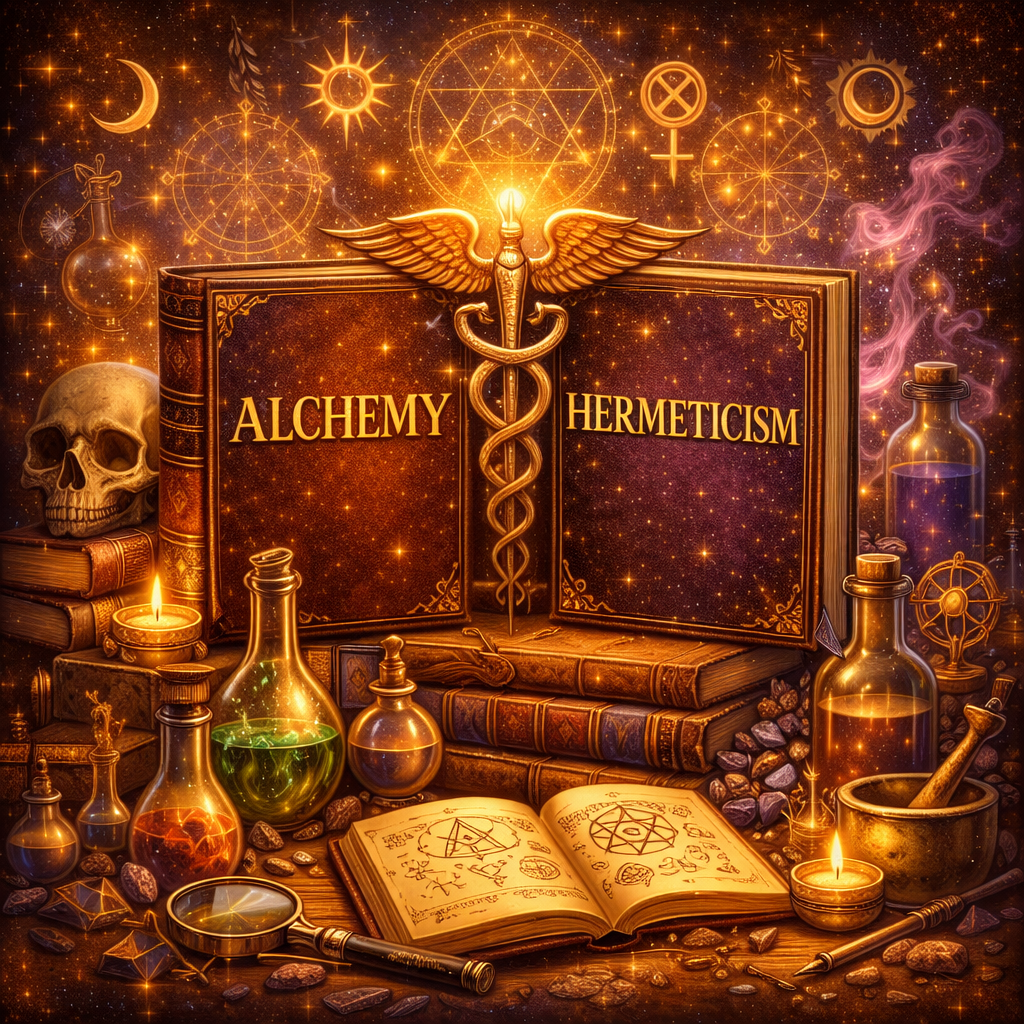

Johannes Fabricius' 'Alchemy' is a profound exploration of the mystical and occult sciences. The book stands out for its esoteric insights and deep philosophical significance. Fabricius' meticulous research and eloquent prose make this work a must-read for anyone interested in the hidden knowledge of the alchemical tradition. The author's ability to blend historical context with mystical symbolism creates a rich tapestry of understanding. This book is particularly valuable for scholars and practitioners of alchemy, as well as spiritual seekers looking to deepen their understanding of the esoteric arts.
📝 Description
62
Johannes Fabricius published 'Alchemy' in 1976, detailing its symbolic language.
Johannes Fabricius' 'Alchemy' examines the symbolic language and philosophical underpinnings of the alchemical tradition. He approaches alchemy not merely as a proto-scientific pursuit but as a metaphor for inner transformation. The text connects the material processes described in alchemical literature to spiritual development, presenting the Great Work as a path toward self-realization.
Fabricius analyzes key alchemical symbols and concepts, drawing parallels between ancient texts and the psychological experience of the adept. He discusses the symbolism of metals, planets, and mythological figures as they appear in alchemical writings. The book aims to illuminate the esoteric meaning behind these visual and conceptual elements, revealing a system of thought concerned with the perfection of both the individual and the cosmos.
Fabricius' work situates itself within the Western esoteric tradition, which often reinterprets ancient philosophies and religious ideas through a mystical or occult lens. Alchemy, in this context, is understood as a spiritual discipline rather than just a chemical practice. It shares common ground with Hermeticism, Gnosticism, and later developments like Jungian psychology, all of which look for deeper, symbolic meanings in natural phenomena and human consciousness. The book reflects this tradition's interest in hidden knowledge and the pursuit of gnosis.
💡 Why Read This Book?
Why read 'Alchemy' by Johannes Fabricius? This book offers a comprehensive look into the mystical practices of alchemy, providing seekers with a roadmap to spiritual transformation. Scholars will appreciate the detailed historical context and profound insights into medieval science and occultism. Practitioners will find valuable techniques and symbols to enhance their alchemical work. For those new to the field, this book serves as an accessible introduction to the esoteric world of alchemy.
⭐ Reader Reviews
Honest opinions from readers who have explored this book.
❓ Frequently Asked Questions
What is the main theme of 'Alchemy' by Johannes Fabricius?
The main theme is the transformation of the self through the alchemical process, blending medieval science with occult symbolism.
Is this book suitable for beginners in alchemy?
Yes, it provides a comprehensive introduction to alchemy, making it accessible for beginners while offering deep insights for experienced practitioners.
How does Fabricius' 'Alchemy' differ from other alchemical texts?
Fabricius' work stands out for its blend of historical context, mystical symbolism, and profound philosophical insights, making it a unique contribution to the field.
What are some key symbols discussed in the book?
Key symbols include the Philosopher's Stone, the Ouroboros, and the union of opposites, each explored through a mystical lens.
Why is this book important for modern practitioners of alchemy?
It offers timeless wisdom and techniques that remain relevant today, providing modern practitioners with a deeper understanding of the alchemical tradition.
🔮 Key Themes & Symbolism
The Philosopher's Stone
The ultimate goal of alchemy, symbolizing the union of the divine and the human. Fabricius explores its mystical significance, exploring the transformation of the self.
Symbolism in Alchemy
Alchemy is rich in symbolism, with each symbol representing a deeper spiritual truth. Fabricius examines key symbols like the Ouroboros and the union of opposites, revealing their esoteric meanings.
Spiritual Transformation
The alchemical process is a journey of spiritual transformation. Fabricius guides readers through the stages of this journey, offering insights into the mystical path of self-discovery and enlightenment.
💬 Memorable Quotes
Direct passages from the work, attributed to the author.
“The Ouroboros represents the eternal cycle of life and death.”
— This symbolizes the continuous process of transformation and renewal in the alchemical journey.
“Alchemy is the art of turning lead into gold.”
— This metaphor highlights the transformation of base materials into something of great value, reflecting the spiritual journey.
“The union of opposites is the key to alchemical success.”
— This principle emphasizes the balance and harmony necessary for achieving spiritual enlightenment.
💡 Key Ideas
Editorial paraphrase of the work's core concepts — not direct quotes.
The Philosopher's Stone is the culmination of the alchemical journey.
This quote underscores the ultimate goal of alchemy: the union of the divine and the human.
The alchemical process is a journey of self-discovery.
This quote emphasizes the personal and spiritual nature of the alchemical path, inviting readers to explore their inner selves.
🌙 Esoteric Significance
Tradition
This book belongs to the Hermetic tradition of alchemy, which emphasizes the spiritual and mystical aspects of the alchemical process. It draws on ancient Hermetic texts and symbols to explore the transformation of the self.
Symbolism
Key symbols include the Philosopher's Stone, representing the ultimate goal of alchemy; the Ouroboros, symbolizing the eternal cycle of life and death; and the union of opposites, highlighting the balance necessary for spiritual enlightenment.
Modern Relevance
This book remains relevant today for modern practitioners of alchemy, offering timeless wisdom and techniques. It provides a deeper understanding of the alchemical tradition, inspiring seekers and scholars alike.
👥 Who Should Read This Book
Beginners will find 'Alchemy' by Johannes Fabricius an accessible introduction to the mystical world of alchemy, providing a comprehensive overview of its principles and practices. Scholars will appreciate the detailed historical context and clear insights into medieval science and occultism. Spiritual seekers will benefit from the book's exploration of the alchemical process as a journey of self-discovery and enlightenment. Practitioners of the esoteric arts will find valuable techniques and symbols to enhance their alchemical work.
📜 Historical Context
Johannes Fabricius' 'Alchemy' was written during a time when medieval science and occultism were intertwined. The book reflects the intellectual curiosity and spiritual inquiry of the era, drawing on ancient texts and esoteric traditions. It was important for its time as it provided a comprehensive guide to the mystical practices of alchemy, influencing subsequent generations of alchemists and scholars. The book's enduring relevance lies in its timeless insights into the alchemical process and its symbolism, which continue to inspire modern practitioners.
📔 Journal Prompts
Reflect on the significance of the Philosopher's Stone in your own spiritual journey.
How do the symbols of alchemy resonate with your personal experiences of transformation?
Consider the balance of opposites in your life and how it relates to the alchemical process.
Explore the concept of the eternal cycle of life and death as depicted in the Ouroboros.
What insights have you gained from the alchemical journey described in Fabricius' book?
🗂️ Glossary
Philosopher's Stone
The ultimate goal of alchemy, symbolizing the union of the divine and the human, representing spiritual enlightenment.
Ouroboros
A symbol of the eternal cycle of life and death, representing the continuous process of transformation and renewal.
Union of Opposites
A key principle in alchemy, emphasizing the balance and harmony necessary for achieving spiritual enlightenment.
Alchemical Process
The journey of spiritual transformation, involving the purification and refinement of the self through mystical practices.
Hermetic Tradition
An esoteric tradition emphasizing the spiritual and mystical aspects of alchemy, drawing on ancient Hermetic texts and symbols.
This book appears in 3 collections
🔮 Readers Also Liked
Browse all →







From the “Hermeticism” Collection
View all →









More Free Alchemy & Hermeticism Books
View all →