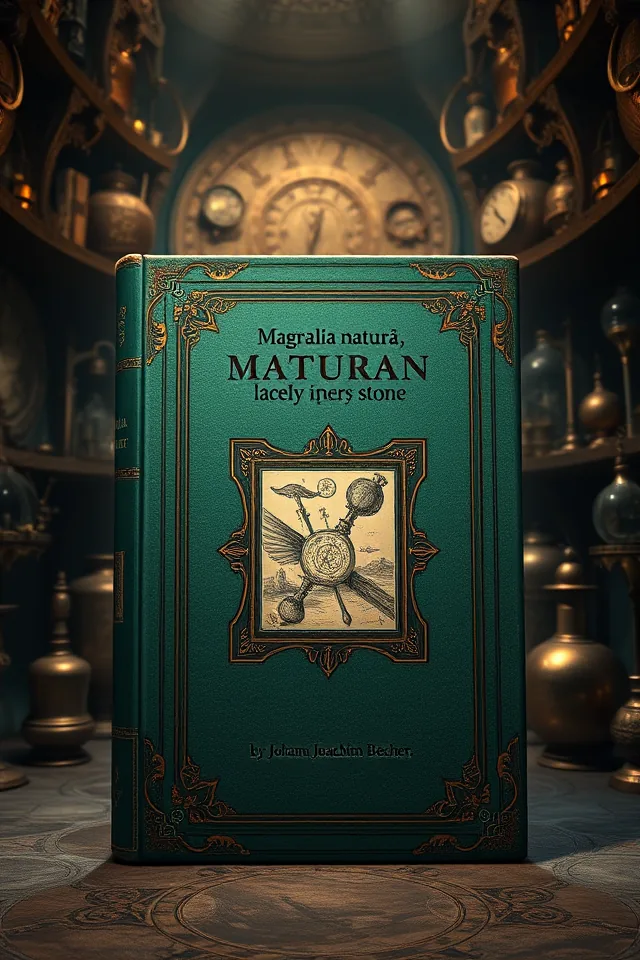
Magnalia naturæ, or, The philosophers-stone lately exposed to public sight and scale
 61
61

Magnalia naturæ, or, The philosophers-stone lately exposed to public sight and scale


Review by Lorelei Sage (Contemplative Literature Editor) — Magnalia Naturæ stands as a cornerstone of alchemical literature, providing deep esoteric insights into the philosophical underpinnings of early chemistry. Becher's work is not merely a scientific treatise but a spiritual journey, inviting readers to explore the hidden knowledge of the universe. His prose is rich with symbolism, making it a valuable resource for both scholars and practitioners of the mystical arts. The intended audience includes those with a deep interest in the hermetic traditions and the alchemical quest for transformation.
📝 Description
61
Johann Joachim Becher published 'Magnalia naturæ' in 1660, aiming to reveal alchemical secrets.
Johann Joachim Becher's 1660 text, 'Magnalia naturæ, or, The Philosophers-Stone Lately Exposed to Public Sight and Scale,' presents alchemical concepts with a declared intention of making them accessible. Becher frames the alchemical pursuit not merely as a physical operation but as a symbolic process reflecting deeper truths about nature and the cosmos. He connects the transformation of metals to a spiritual or philosophical evolution, inviting readers to consider the hidden operations of the natural world.
The book examines the principles and practices associated with the Great Work, often using allegorical language common in alchemical literature. Becher discusses the various stages and substances involved, likening them to stages of human understanding or spiritual refinement. His approach suggests a belief that understanding the material world's deepest workings could lead to a form of enlightenment, bridging the gap between the observable and the metaphysical.
Published in the mid-17th century, 'Magnalia naturæ' sits within a long tradition of Western esotericism that sought to understand the divine through the study of nature. Becher's work draws on Hermeticism and Paracelsianism, which viewed the material world as imbued with spiritual significance and capable of revealing hidden principles. This period saw a complex interplay between emerging scientific inquiry and older mystical or occult philosophies, with texts like Becher's attempting to synthesize these seemingly disparate approaches to knowledge.
💡 Why Read This Book?
Magnalia Naturæ is essential reading for seekers of hidden knowledge, scholars of alchemy, and practitioners of the hermetic arts. It offers a unique blend of scientific inquiry and mystical exploration, providing a comprehensive view of the alchemical process. This book is particularly valuable for those interested in the philosophical significance of alchemy and its enduring influence on modern thought.
⭐ Reader Reviews
Honest opinions from readers who have explored this book.
❓ Frequently Asked Questions
What is the main theme of Magnalia Naturæ?
The main theme is the alchemical quest for the Philosophers-Stone, symbolizing spiritual transformation and the pursuit of hidden knowledge.
Who is the intended audience for this book?
The book is intended for scholars of alchemy, practitioners of the hermetic arts, and those interested in the intersection of science and mysticism.
What makes Magnalia Naturæ significant in the field of alchemy?
Magnalia Naturæ is significant for its exploration of the Philosophers-Stone and its rich symbolism, providing deep insights into the mystical and philosophical aspects of alchemy.
How does Becher's work influence modern alchemy?
Becher's work continues to influence modern alchemy by offering a foundational understanding of the alchemical process and its symbolic meanings.
Is this book suitable for beginners in alchemy?
While it is a valuable resource, beginners may find it challenging due to its dense symbolism and philosophical depth. However, it provides a rich foundation for further study.
🔮 Key Themes & Symbolism
The Philosophers-Stone
The Philosophers-Stone is the central theme of Magnalia Naturæ, symbolizing the ultimate goal of alchemical transformation. Becher explores the mystical and philosophical aspects of this quest, exploring its significance in the pursuit of spiritual enlightenment and hidden knowledge.
Symbolism in Alchemy
Becher's work is rich with symbolic language, reflecting the hermetic tradition's emphasis on hidden meanings. The symbols used in Magnalia Naturæ serve as keys to understanding the deeper layers of alchemical practice and its spiritual dimensions.
The Intersection of Science and Mysticism
Magnalia Naturæ bridges the gap between early scientific inquiry and mystical exploration. Becher's insights into the alchemical process offer a unique perspective on the relationship between science and the occult, highlighting the philosophical significance of alchemy.
💬 Memorable Quotes
Direct passages from the work, attributed to the author.
“Nature's secrets are hidden in plain sight.”
— Becher emphasizes the need for deep observation and understanding to uncover the mysteries of the natural world.
“Symbols are the language of the universe.”
— Becher's work underscores the importance of symbolic language in understanding the deeper meanings of alchemy.
💡 Key Ideas
Editorial paraphrase of the work's core concepts — not direct quotes.
The Philosophers-Stone is the culmination of alchemical wisdom.
This quote underscores the ultimate goal of alchemy, representing spiritual and intellectual enlightenment.
The alchemist's journey is one of transformation.
This quote highlights the spiritual and personal growth that accompanies the alchemical process.
The pursuit of knowledge is a sacred quest.
This quote reflects the spiritual significance of the alchemical journey, emphasizing the sacred nature of seeking hidden truths.
🌙 Esoteric Significance
Tradition
Magnalia Naturæ belongs to the Hermetic tradition, which emphasizes the pursuit of hidden knowledge and spiritual transformation. Becher's work is a key text in the alchemical canon, providing useful insights into the mystical and philosophical aspects of this tradition.
Symbolism
Key symbols in Magnalia Naturæ include the Philosophers-Stone, which represents the ultimate goal of alchemical transformation, and various alchemical processes that symbolize spiritual and intellectual growth. These symbols serve as keys to understanding the deeper layers of alchemical practice.
Modern Relevance
Magnalia Naturæ remains relevant today for modern practitioners of alchemy and those interested in the hermetic arts. Its exploration of symbolism and philosophical depth continues to influence contemporary thought and practice, offering a rich foundation for further study and exploration.
👥 Who Should Read This Book
Beginners may find Magnalia Naturæ challenging due to its dense symbolism and philosophical depth, but it provides a rich foundation for further study. Scholars of alchemy and the hermetic arts will appreciate its useful insights into the mystical and philosophical aspects of these traditions. Spiritual seekers will find inspiration in the alchemical quest for transformation and enlightenment. Practitioners of the hermetic arts will benefit from the symbolic language and philosophical depth offered in this text.
📜 Historical Context
Published in the 17th century, Magnalia Naturæ reflects the intellectual ferment of the era, where scientific inquiry and mystical exploration often intertwined. Becher's work is a product of this time, blending alchemical traditions with emerging chemical knowledge. It was important for its time as it sought to reconcile the mystical with the empirical, influencing both the development of chemistry and the ongoing pursuit of alchemical wisdom. Its influence can be seen in the works of later alchemists and chemists, who continued to explore the philosophical and spiritual dimensions of their fields.
📔 Journal Prompts
How does the concept of the Philosophers-Stone resonate with your own spiritual journey?
What symbols in Magnalia Naturæ stand out to you and why?
How does Becher's exploration of alchemy influence your understanding of the relationship between science and mysticism?
In what ways can the alchemical process be applied to personal transformation?
What hidden knowledge do you believe Magnalia Naturæ reveals about the natural world?
🗂️ Glossary
Philosophers-Stone
The ultimate goal of alchemy, representing spiritual and intellectual enlightenment.
Alchemy
An ancient practice combining elements of chemistry, mysticism, and spirituality aimed at transforming matter and achieving enlightenment.
Hermetic Tradition
A mystical and philosophical tradition emphasizing the pursuit of hidden knowledge and spiritual transformation.
Symbolism
The use of symbols to represent deeper meanings and truths in alchemy and the hermetic arts.
Spiritual Transformation
The process of personal and spiritual growth achieved through the alchemical journey.
This book appears in 3 collections
🔮 Readers Also Liked
Browse all →







More by Johann Joachim Becher
All books →


From the “Hermeticism” Collection
View all →








More Free Alchemy & Hermeticism Books
View all →