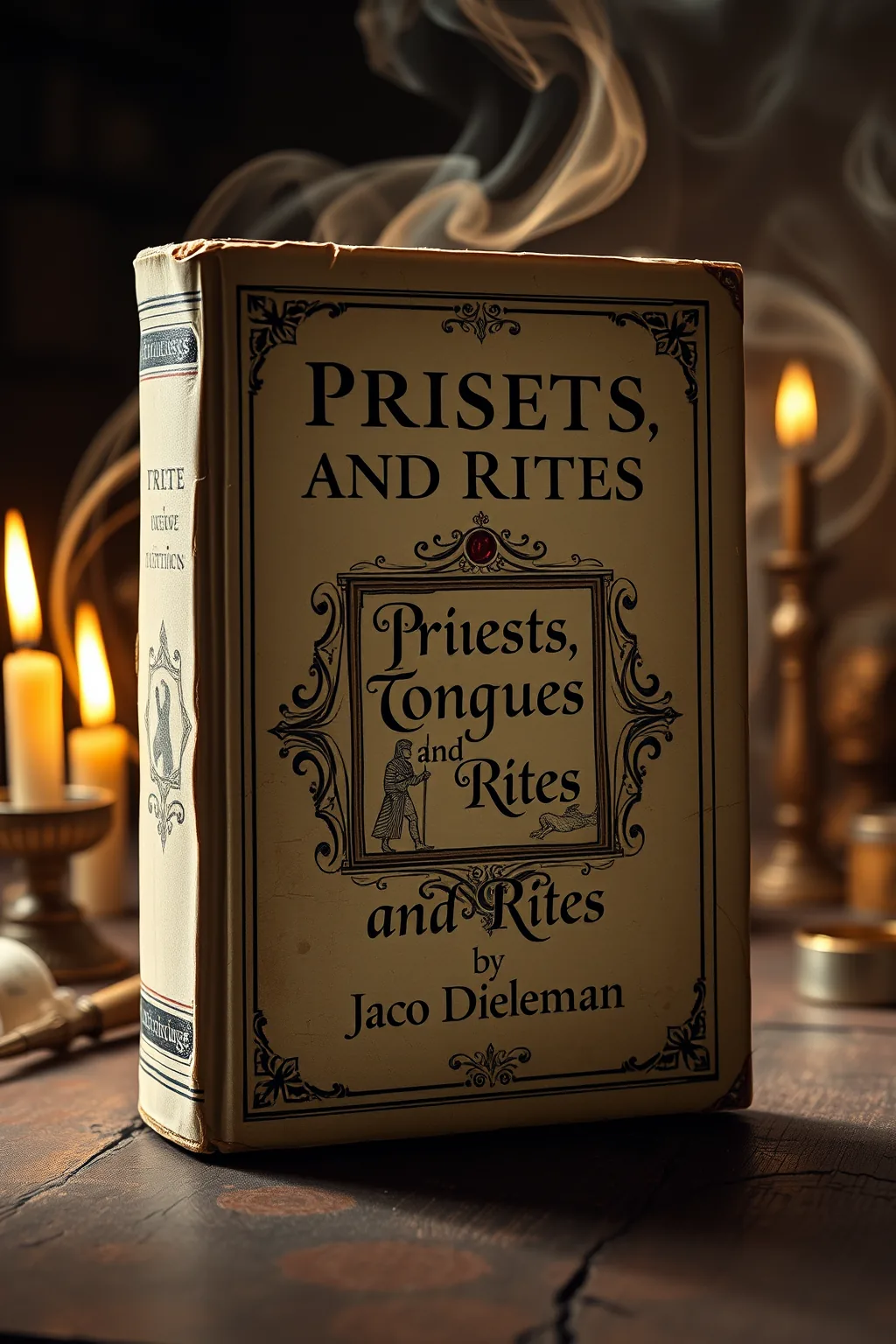
Priests, Tongues, and Rites
 62
62

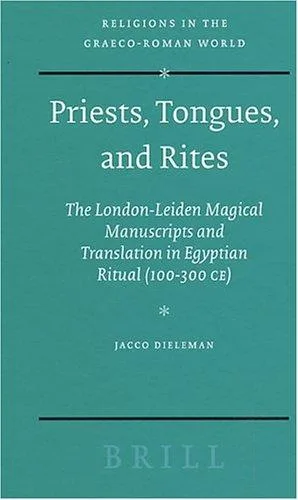
Priests, Tongues, and Rites


Aurelia Blackwood (Occult Philosophy Critic) — Jacco Dieleman's 'Priests, Tongues, and Rites' is a monumental contribution to the study of ancient magical traditions. Dieleman masterfully navigates the complex linguistic landscape of Egypt, illuminating how the bilingualism of priests and scribes served as a potent engine for esoteric transmission. His analysis of Demotic and Greek papyri unveils the intricate relationship between linguistic structure and ritual efficacy, offering profound insights into the very mechanics of ancient magic. This work is essential for serious students of Hermeticism, Egyptian magic, and comparative religious studies, providing a scholarly yet deeply resonant exploration of the sacred word. Highly recommended for its intellectual rigor and its ability to evoke the mystical atmosphere of antiquity.
📝 Description
62
Jacco Dieleman's 'Priests, Tongues, and Rites' examines the 3rd century BCE Egyptian priestly understanding of language and ritual.
This book investigates the intricate relationship between language, ritual, and religious practice in ancient Egypt, particularly during the Hellenistic period. Jacco Dieleman analyzes Demotic and Greek papyri to show how priests understood and employed sacred languages in their ceremonies. The work focuses on how bilingualism among priests influenced their approach to magic and their comprehension of divine matters. Dieleman demonstrates that the structure of language was not merely a tool for communication but a fundamental component of magical efficacy and religious expression.
The research delves into specific examples of ritual texts and practices, illustrating how shared linguistic and cultural understanding between Egyptian and Greek traditions shaped religious expression. It reveals how priests used their knowledge of different tongues to access and manipulate spiritual power. The book offers insight into the intellectual world of Egyptian priests who saw words as direct means to interact with the divine. It is a study for those interested in the practical application of language in ancient religious systems and the construction of esoteric knowledge.
This study situates itself within the academic examination of ancient Egyptian religion and its interactions with Hellenistic traditions. It addresses the ways in which religious practitioners understood and manipulated symbolic systems, particularly language, to achieve specific spiritual or magical outcomes. The focus on priests as intermediaries, employing specialized knowledge of sacred tongues for ritual efficacy, connects it to broader discussions on the role of elites in maintaining and transmitting esoteric traditions. The analysis of ritual texts and the belief in the power of words to access the divine aligns with scholarship on the development and practice of magic and theurgy in the ancient world.
💡 Why Read This Book?
Uncover the lost art of linguistic magic and the esoteric power embedded in ancient Egyptian rituals. 'Priests, Tongues, and Rites' offers a unique exploration into how language shaped belief and practice, making it indispensable for scholars, practitioners of Western esotericism, and anyone seeking a deeper understanding of the mystical connections between cultures.
⭐ Reader Reviews
Honest opinions from readers who have explored this book.
❓ Frequently Asked Questions
What is the primary focus of this book?
The book primarily focuses on the intricate relationship between language, particularly the bilingualism of priests, and the performance of magical and religious rites in ancient Egypt, drawing heavily from Demotic and Greek papyri.
Who is the intended audience for 'Priests, Tongues, and Rites'?
The intended audience includes scholars of ancient history, Egyptology, classics, religious studies, as well as practitioners of esoteric traditions and mystics interested in the linguistic and ritualistic foundations of ancient magic.
What are Demotic and Greek papyri in this context?
These are ancient Egyptian manuscripts written in the Demotic script and ancient Greek. In this book, they serve as primary sources revealing the linguistic practices and magical texts used by priests and scribes.
Does the book offer practical magical techniques?
While the book analyzes the theory and practice of ancient magic, it primarily offers historical and linguistic insights rather than direct instruction for modern magical practice.
How does bilingualism play a role in the book's argument?
Bilingualism is presented as a key factor in the transmission and evolution of magical knowledge and ritual, allowing for syncretism and the development of complex symbolic systems.
🔮 Key Themes & Symbolism
The Sacred Word and Ritual Efficacy
This theme examines the profound belief that the correct utterance of words held inherent power, capable of influencing the cosmos and invoking divine forces. Dieleman explores how the specific choice of words, their phonetic qualities, and their arrangement within ritual contexts were meticulously crafted to achieve desired magical outcomes. The book examines ancient Egyptian concepts of 'heka' (magic) as intrinsically linked to the potent force of language, revealing how priests acted as conduits, shaping reality through their sacred pronouncements and incantations.
Linguistic Syncretism and Esoteric Transmission
The interplay between Egyptian, Demotic, and Greek languages is presented as a fertile ground for the development of esoteric knowledge. Dieleman illustrates how the adoption and adaptation of foreign linguistic elements led to the creation of new magical formulations and a richer set of symbolic meaning. This theme highlights how the fusion of different linguistic traditions facilitated the cross-pollination of ideas, preserving and transforming arcane wisdom across generations and cultures.
The Priest as Mediator of the Divine
This theme focuses on the central role of the priest within ancient Egyptian society, not just as a religious officiant but as a guardian of secret knowledge and a mediator between the human and divine realms. Dieleman examines how priests, through their mastery of sacred tongues and intricate rituals, held the keys to understanding and manipulating the forces that governed existence. Their linguistic proficiency was a crucial tool in their capacity to perform rites that maintained cosmic order and facilitated spiritual communion.
💬 Memorable Quotes
Direct passages from the work, attributed to the author.
“Where languages converge, mysteries deepen.”
— Highlighting the esoteric significance of bilingualism, this suggests that the blending of different linguistic systems could create new levels of symbolic complexity and unlock profound spiritual insights.
“Ritual is the unspoken language of the soul.”
— This profound statement posits that ceremonies and sacred actions transcend verbal communication, acting as a direct expression of inner spiritual states and universal truths.
“The papyrus whispers forgotten spells.”
— This evocative phrase emphasizes the ancient manuscripts as living repositories of arcane knowledge, suggesting that by deciphering them, one can commune with the magical practices of the past.
“To know the word is to know the world.”
— This expresses the ancient worldview where language was seen as fundamental to understanding the very fabric of existence, implying that mastery of language granted a form of cosmic insight.
💡 Key Ideas
Editorial paraphrase of the work's core concepts — not direct quotes.
The tongue is a key that unlocks unseen doors.
This quote evokes the magical power attributed to language in ancient traditions, suggesting that specific words or incantations could reveal hidden truths or open pathways to other dimensions.
🌙 Esoteric Significance
Tradition
This book is deeply rooted in the esoteric traditions of ancient Egypt and the Hellenistic period, particularly as they relate to Hermeticism and the practice of magic. It explores the concept of 'heka' (magic) as an intrinsic force of the cosmos, manipulated through language and ritual by initiated priests. The work examines the hidden knowledge embedded within ancient texts, suggesting that their decipherment can lead to a deeper understanding of spiritual principles and cosmic order.
Symbolism
The symbolism explored revolves around the power of words, the sacred geometry of ritual, and the archetypal figures present in Egyptian mythology. The bilingual nature of the texts themselves becomes symbolic, representing the bridging of disparate domains of understanding. The very act of writing and reciting sacred texts is imbued with symbolic meaning, acting as a conduit for divine influence and the manifestation of desired outcomes in the material and spiritual planes.
Modern Relevance
In an age often characterized by fragmented knowledge and a disconnect from ancient wisdom, 'Priests, Tongues, and Rites' offers a vital re-connection to the foundational principles of esoteric thought. It demonstrates that the power of language and ritual remains relevant, urging modern seekers to reconsider the potency of words, the structure of ceremony, and the enduring human quest for spiritual understanding. Its insights can inform contemporary magical practices and philosophical inquiries.
👥 Who Should Read This Book
Scholars of ancient Egypt, linguistics, and religious studies will find outstanding depth and rigorous analysis. Seekers of esoteric knowledge and practitioners of Western esotericism will discover the foundational principles of ancient magical practice and the symbolic power of language. Beginners interested in the mystical aspects of ancient civilizations will find an accessible yet profound introduction to the complex interplay of culture, belief, and ritual. Anyone fascinated by the enduring legacy of ancient wisdom and the hidden currents of human spiritual inquiry will be deeply rewarded.
📜 Historical Context
This work is situated within the Hellenistic period and Late Period of ancient Egypt, a dynamic era characterized by significant cultural exchange and the fusion of Egyptian traditions with Greek influences. The discovery and study of Demotic and Greek papyri from this time provide invaluable windows into the intellectual and religious life of the period. The Corpus Hermeticum, a collection of philosophical and religious texts that emerged during this era, exemplifies the syncretic tendencies, blending Egyptian, Greek, and Jewish thought. Dieleman's research illuminates how this milieu fostered unique linguistic practices and shaped the development of magical and esoteric systems, demonstrating a profound interconnectedness between language, belief, and the evolving civilization of Egypt.
📔 Journal Prompts
Reflect on a time when the 'right' words unlocked a deeper understanding for you.
How might the structure of your native language influence your perception of reality?
Imagine yourself as an ancient priest deciphering a bilingual papyrus; what secrets might you uncover?
Consider a personal ritual and how its efficacy might be enhanced by a deeper understanding of its symbolic language.
In what ways can the study of ancient languages offer modern insights into spiritual truths?
🗂️ Glossary
Demotic
A late Egyptian script and language that emerged around the 7th century BCE, used for everyday administrative and literary purposes, distinct from earlier hieroglyphic and hieratic scripts.
Heka
The ancient Egyptian concept of magic, often personified as a deity, representing the fundamental force that underpins creation and operates through language and ritual.
Corpus Hermeticum
A collection of ancient Greek philosophical and religious treatises attributed to Hermes Trismegistus, central to Hermeticism and influential in Western esotericism.
Bilingualism
The ability to speak and understand two languages. In this context, it refers to priests and scribes who were fluent in both Egyptian (Demotic) and Greek, facilitating cultural and intellectual exchange.
Ritual
A set of actions performed in a prescribed order, often for religious or magical purposes, intended to achieve a specific outcome or to honor a deity or spiritual principle.
This book appears in 3 collections
🔮 Readers Also Liked
Browse all →
More by Jacco Dieleman
All books →
From the “Ritual Magic” Collection
View all →
More Free Magic & Ritual Books
View all →