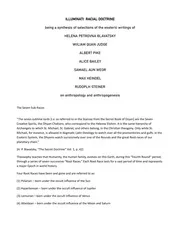
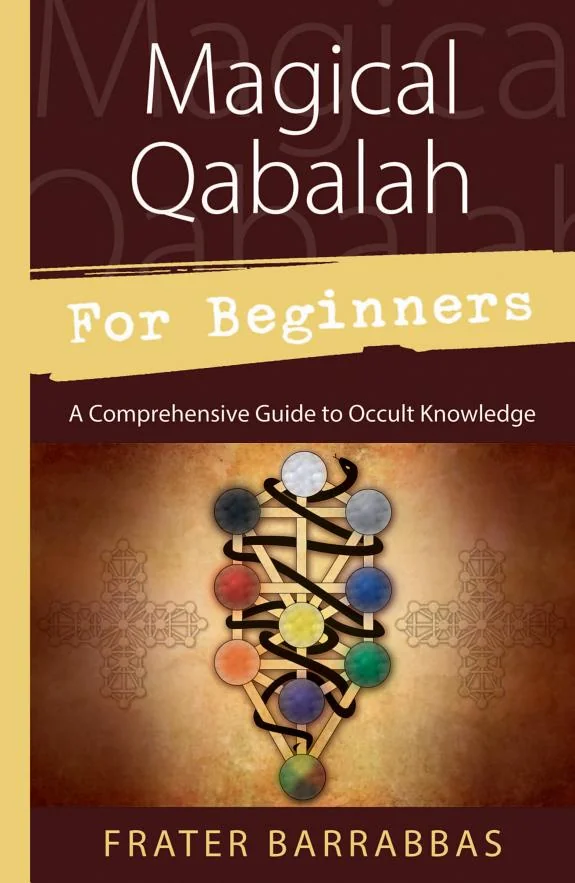
Magical Qabalah for Beginners
 72
72

Magical Qabalah for Beginners
Frater Barrabbas's *Magical Qabalah for Beginners* offers a commendably straightforward entry into a system often obscured by dense symbolism and academic jargon. The author's strength lies in his clear exposition of the Tree of Life, the Sephiroth, and the Paths, presenting them not as abstract philosophy but as tools for magical practice. The initial sections, detailing the foundational elements, are particularly effective. However, the book’s ambition to cover practical ritual uses alongside theory feels somewhat truncated. While it mentions high magic and Tarot, the actual application of Qabalah within these contexts remains at a surface level, which may leave more advanced practitioners wanting. The explanation of the Three Negative Veils, for instance, is concise but could benefit from more elaborate practical examples. Ultimately, this work serves as a competent primer, demystifying core Qabalistic concepts for the uninitiated, though its practical magic aspects are more introductory than exhaustive.
📝 Description
72
Frater Barrabbas published Magical Qabalah for Beginners in 2013 to structure Qabalistic understanding for Western esotericists.
This book breaks down the Kabbalistic system for those interested in Western occult practices. Frater Barrabbas details the ten Sephiroth, the twenty-two paths, the concept of the Four Worlds, and the Negative Veils, all organized around the Tree of Life. The author presents this structure as a symbolic language for understanding various occult disciplines.
It is written for newcomers to Qabalistic studies. The book aims to simplify complex ideas often obscured by archaic language. Readers curious about how Qabalah informs practices like Tarot, astrology, alchemy, and ceremonial magic will find explanations here. The author connects these concepts to practical magical application.
The Kabbalah, originating in medieval Jewish mysticism, was adapted by Western esotericists from the Renaissance onward. Figures like Eliphas Lévi integrated Kabbalistic concepts into Hermeticism during the 19th century. Frater Barrabbas's 2013 work engages with this lineage, providing a contemporary interpretation for practitioners. It follows in a tradition of texts that seek to connect ancient mystical frameworks with practical magical aims.
💡 Why Read This Book?
• Gain a foundational understanding of the ten Sephiroth and twenty-two paths, learning how to visualize their arrangement on the Tree of Life for personal magical development. • Explore the Four Worlds (Assiah, Yetzirah, Briah, Atziluth) as a framework for understanding consciousness and manifesting intent, a concept central to Hermeticism since the 19th century. • Discover how Qabalistic principles, as presented in this 2013 publication, function as a symbolic key to interpreting systems like Tarot and astrology, offering a practical lens for esoteric study.
⭐ Reader Reviews
Honest opinions from readers who have explored this book.
❓ Frequently Asked Questions
What is the primary purpose of Frater Barrabbas's 'Magical Qabalah for Beginners'?
The book aims to introduce beginners to the core concepts of Qabalah, specifically its application within Western magical traditions. It focuses on explaining the Tree of Life, Sephiroth, Paths, and Four Worlds as a practical symbolic system.
When was 'Magical Qabalah for Beginners' first published?
The book was first published on January 8, 2013, making it a relatively modern interpretation of Qabalistic principles for contemporary students.
How does this book connect Qabalah to other esoteric systems?
It explains Qabalah as a symbolic key that unlocks understanding in areas like Tarot, astrology, alchemy, and Hermeticism. The work outlines how the Qabalistic framework provides a common language for these diverse practices.
What are the 'Four Worlds' mentioned in the book?
The Four Worlds are Atziluth (Emanation), Briah (Creation), Yetzirah (Formation), and Assiah (Action). They represent different levels of reality or consciousness, from the purely divine to the material plane.
Is prior knowledge of magic required to read this book?
No, the book is designed for beginners. It assumes no prior knowledge of magic or Qabalah, aiming to provide a clear and accessible introduction to its fundamental concepts and their practical relevance.
Who is Frater Barrabbas, the author?
Frater Barrabbas is the author of 'Magical Qabalah for Beginners.' The pseudonym suggests an affiliation with esoteric or initiatory orders, common in the Western Mystery Tradition literature.
🔮 Key Themes & Symbolism
The Tree of Life as a Map
The central motif is the Tree of Life, presented not merely as a diagram but as a comprehensive map of creation, consciousness, and the divine. The book details its ten Sephiroth (emanations) and twenty-two Paths, illustrating how these components interrelate. This structure serves as the foundational grammar for understanding the Western Esoteric Tradition, providing a framework through which concepts in Tarot, astrology, and alchemy can be systematically approached and interpreted by practitioners.
Qabalah as Symbolic Language
Frater Barrabbas positions Qabalah as the symbolic key to the Western Mystery Tradition. The work emphasizes that understanding the Qabalistic framework is essential for deciphering the language of various occult systems. It explores how concepts like the Four Worlds and the Negative Veils provide archetypal meanings that can be applied to personal magical work and spiritual development, offering a unified perspective on diverse esoteric practices.
Practical Ritual Application
Beyond theory, the book aims to equip readers with practical tools derived from Qabalistic principles. It touches upon ritual uses, suggesting how the Sephiroth and Paths can be invoked or meditated upon for magical purposes. The text serves as an introduction to integrating this ancient system into contemporary magical practice, enabling practitioners to enhance their rituals and deepen their understanding of magical energies and forces.
Foundations of Esoteric Systems
The work systematically breaks down core Qabalistic components—Sephiroth, Paths, Four Worlds, Negative Veils—explaining their significance. This foundational knowledge is presented as vital for anyone seeking to grasp the underlying principles of high magic, Tarot, astrology, and alchemy. By clarifying these essential elements, the book empowers beginners to engage with more advanced esoteric literature and practices with a solid grasp of the underlying Qabalistic structure.
💬 Memorable Quotes
Direct passages from the work, attributed to the author.
“The Qabalah is the symbolic key to the Western Mystery tradition.”
— This statement captures the book's central thesis: that understanding Qabalistic principles provides the essential framework for deciphering the language and symbolism prevalent across various Western esoteric systems, from magic to divination.
“Explore the five basic but essential parts of Qabalah: the ten Sephiroth, the twenty-two paths, the Four Worlds, the Three Negative Veils, and the Tree of Life.”
— This highlights the structured approach of the book, identifying the core components that form the Qabalistic cosmology. It signals that the work will systematically break down these elements for beginner comprehension.
“Gain invaluable insights into all occult systems including high magic, Tarot, astrology, alchemy, hermetics, and more.”
— This suggests the broad applicability of Qabalistic knowledge, positioning it as a unifying principle that enhances understanding across a wide spectrum of esoteric disciplines and practices.
“Discover the history and theory of Qabalah as well as its practical ritual uses.”
— This frames the book as a comprehensive introduction, promising to cover both the intellectual and practical dimensions of Qabalah, appealing to readers interested in both theoretical knowledge and hands-on application.
“Magical Qabalah for Beginners shows ritual magicians...”
— This phrase indicates the intended audience and the practical focus of the text, suggesting it offers guidance and techniques specifically relevant to those engaged in active magical work and ritual practice.
🌙 Esoteric Significance
Tradition
This work fits within the Western Esoteric Tradition, specifically the Hermetic and magical Qabalistic branches that developed from the 19th century onwards. It draws heavily on the Qabalah as interpreted through the lens of Christian mysticism and occultism, rather than its original Jewish context. The book adapts these concepts for practical ritual magic, aligning with the Golden Dawn's approach to mapping Qabalistic symbolism onto practices like Tarot and ceremonial magic.
Symbolism
The primary symbols are the ten Sephiroth, representing divine attributes or stages of creation, and the twenty-two Paths, acting as connectors and dynamic forces. The Tree of Life itself is the overarching symbolic structure, a diagrammatic representation of the universe and the path of spiritual ascent. The Four Worlds (Atziluth, Briah, Yetzirah, Assiah) symbolize different planes of existence, from the spiritual to the material.
Modern Relevance
Contemporary practitioners of modern witchcraft, ceremonial magic, and neo-Hermeticism continue to utilize Qabalistic frameworks. Authors and teachers in these fields often reference or build upon the foundational Qabalistic principles explained in works like this one. The accessibility of *Magical Qabalah for Beginners* makes it a relevant starting point for individuals exploring modern magical systems that integrate Tarot, astrology, and energy work.
👥 Who Should Read This Book
• Aspiring practitioners of Western ceremonial magic seeking a clear introduction to the Qabalistic underpinnings of ritual work. • Students of Tarot and astrology who wish to understand the deeper symbolic connections and esoteric frameworks these systems draw from. • Individuals interested in comparative religion and mysticism looking for a practical guide to how Qabalah has been integrated into non-Jewish esoteric traditions since the Renaissance.
📜 Historical Context
Published in 2013, *Magical Qabalah for Beginners* enters a long lineage of Western esoteric literature that sought to synthesize Jewish Qabalah with Hermeticism and other mystical traditions. This process accelerated in the 19th century with figures like Eliphas Lévi, who adapted Kabbalistic concepts for magical practice, and later influenced groups like the Hermetic Order of the Golden Dawn. While earlier works by authors such as Samuel Liddell MacGregor Mathers or Aleister Crowley delved deeply into Qabalistic correspondences, Frater Barrabbas's 2013 text aims for a more accessible entry point for contemporary students. It follows in the tradition of accessible guides, contrasting with the more complex and sometimes esoteric language found in original Kabbalistic texts or the dense theoretical works of figures like Gershom Scholem, who critically analyzed Qabalah's historical development.
📔 Journal Prompts
The ten Sephiroth as energetic centers within the self.
Mapping the twenty-two paths onto personal life challenges.
Visualizing the Four Worlds during meditation practice.
The role of the Three Negative Veils in understanding limitations.
How the Tree of Life can structure daily magical intention.
🗂️ Glossary
Sephiroth
The ten divine emanations or attributes described in Qabalistic cosmology, often represented as a diagram known as the Tree of Life. Each Sephirah holds unique symbolic meaning and energetic qualities.
Tree of Life
A central diagram in Qabalah, depicting the process of creation and the structure of the universe through ten Sephiroth and twenty-two Paths. It serves as a map for spiritual development and understanding esoteric correspondences.
Paths
The twenty-two interconnecting lines on the Tree of Life, each associated with a letter of the Hebrew alphabet, a Tarot trump card, and specific symbolic meanings. They represent the dynamics and transitions between the Sephiroth.
Four Worlds
A Qabalistic concept dividing creation into four distinct planes or levels of existence: Atziluth (Emanation), Briah (Creation), Yetzirah (Formation), and Assiah (Action), each with its own characteristics.
Negative Veils
Three veils of nothingness or non-manifestation that separate the highest divine realms from the manifested creation, representing the unknowable nature of the absolute divine source.
Hermeticism
A philosophical and religious tradition based on the purported teachings of Hermes Trismegistus. It emphasizes the interconnectedness of all things and the possibility of attaining gnosis through study and spiritual practice.
Western Mystery Tradition
A broad term encompassing various esoteric schools and practices in Western culture, including Hermeticism, Qabalah, Alchemy, Astrology, and ceremonial magic, often sharing common symbolic languages and goals.
This book appears in 1 collection
🔮 Readers Also Liked
Browse all →








From the “Qabalah” Collection
View all →







More Free Kabbalah & Jewish Mysticism Books
View all →