THE I CHING
 76
76

THE I CHING

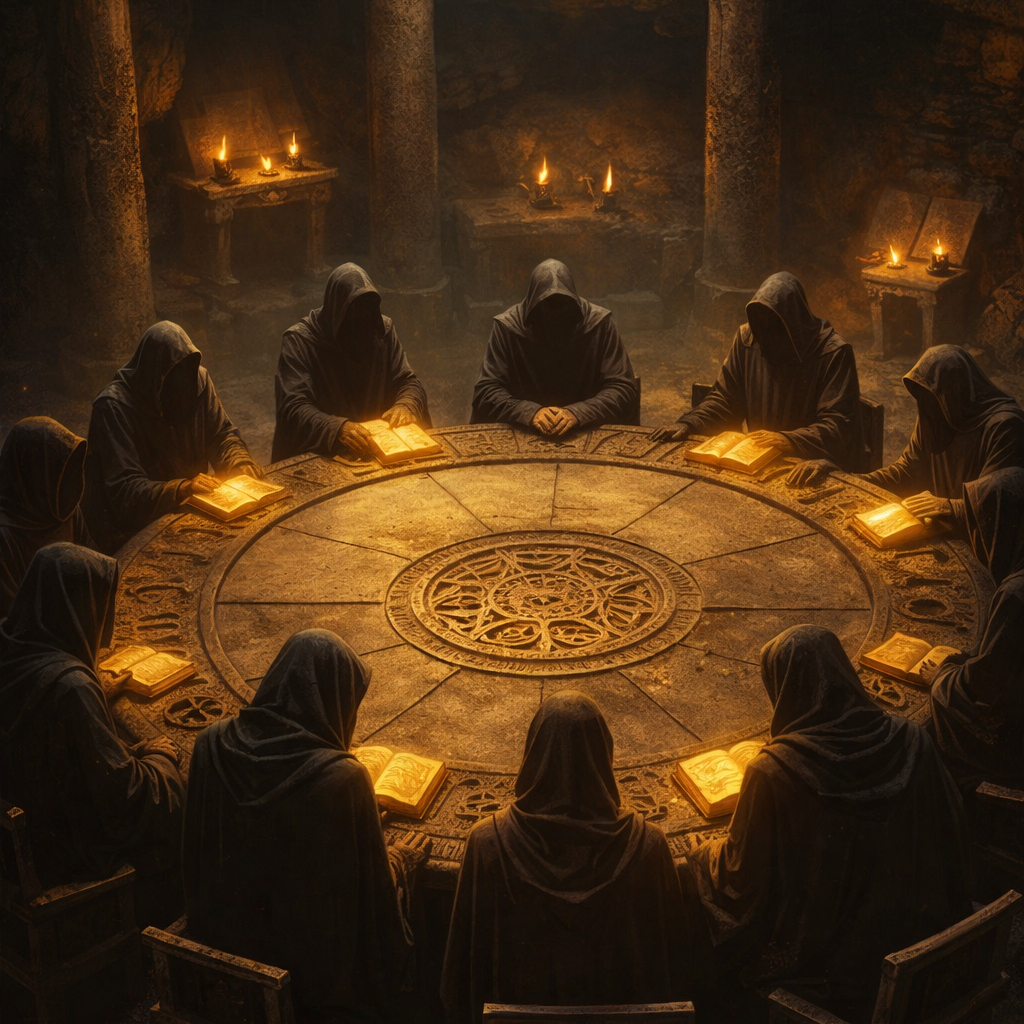

By Balthazar Finch (Senior Critic, Occult Philosophy) — The Master Therion's rendition of the I Ching is a revelation for the discerning occultist. Stripped of superfluous layers, this translation offers a direct conduit to the text's inherent mathematical and philosophical power, its cognate structure with the Qabalah immediately apparent. Therion's keen insight pierces through millennia of interpretation, revealing the elegant simplicity of its divinatory apparatus, capable of yielding profound answers with astonishing speed. This edition is a vital acquisition for practitioners of Western esotericism seeking to integrate Eastern wisdom, offering a potent tool for self-discovery and a deeper understanding of universal patterns. A masterful contribution to the literature of the secret arts.
📝 Description
76
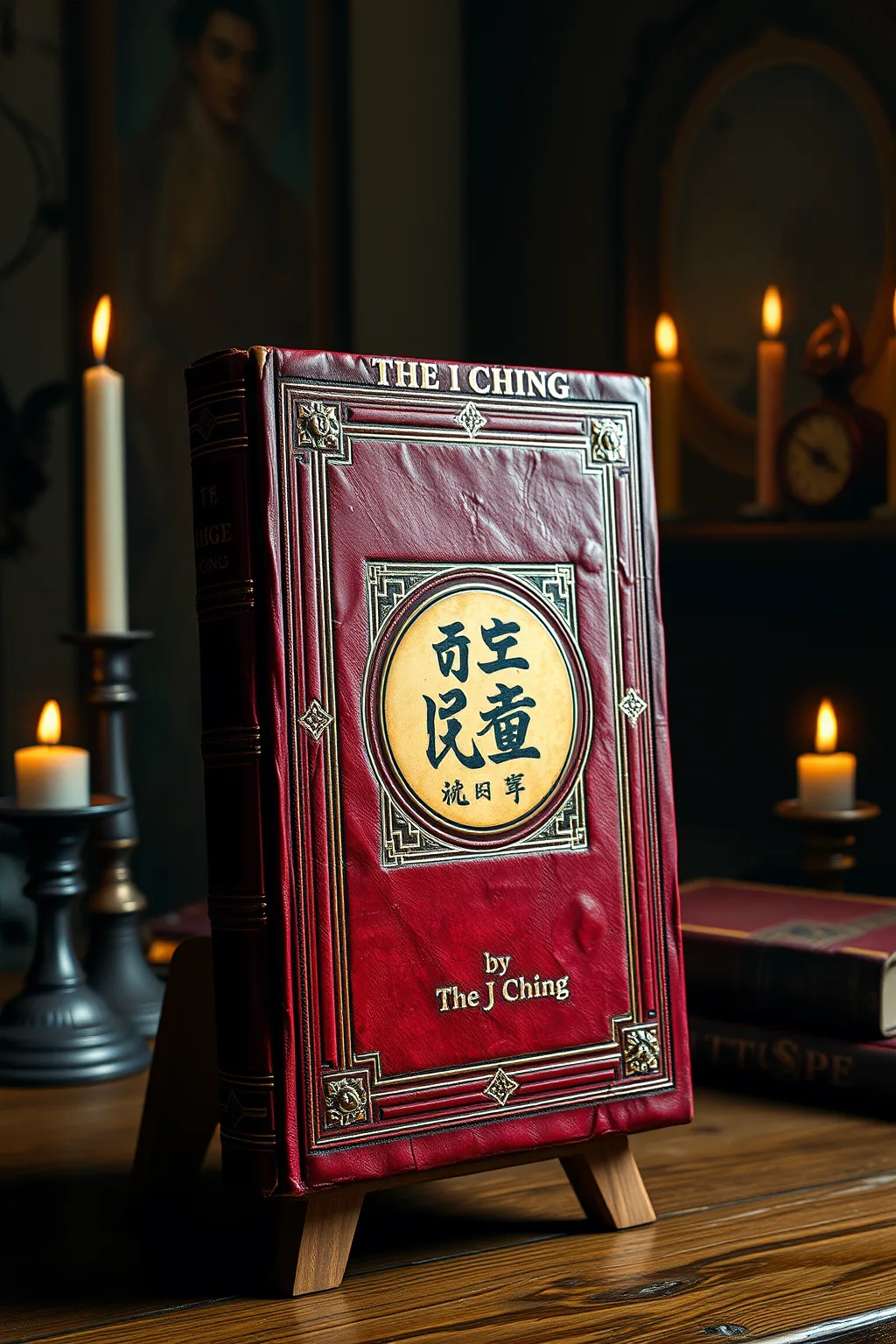
The Master Therion's 1909 translation of the I Ching presents a unique rendering of this ancient Chinese text.
This translation of the I Ching, also known as the Book of Changes, by The Master Therion was first published in 1909. It aims to clarify the text's philosophical and divinatory aspects for those interested in esoteric knowledge. The book details a system structured around 64 hexagrams, each with associated judgments and line statements. These elements are intended to provide guidance on circumstances and potential outcomes.
The translation emphasizes the I Ching as both a method of divination and a philosophical work. It suggests that understanding the text's structure, which Therion connects to broader occult traditions, can offer insights into life's complexities. The book is presented as a resource for individuals seeking deeper understanding of fate, free will, and the underlying principles of existence, particularly within an occult framework.
This translation is situated within the Western esoteric tradition, particularly influenced by Aleister Crowley (The Master Therion). The I Ching, an ancient Chinese text, was adopted by various occultists who saw parallels between its principles and their own systems. Therion's work attempts to bridge these traditions, rendering the hexagrams and their meanings through a lens familiar to students of Qabalah and Western magic. It treats the text not just as a historical artifact but as a living system for understanding universal patterns and personal development within an occult worldview.
💡 Why Read This Book?
This I Ching translation by The Master Therion offers a unique, mathematically and philosophically resonant approach, akin to the Qabalah. It provides a simple yet potent method for gaining profound insights into life's complexities. Ideal for esoteric scholars, Freemasons, and seekers of ancient wisdom who wish to understand the currents of change and unlock hidden knowledge through a time-tested, profound system.
⭐ Reader Reviews
Honest opinions from readers who have explored this book.
❓ Frequently Asked Questions
What is the I Ching and its core purpose?
The I Ching, or Book of Changes, is an ancient Chinese divination text and philosophical classic. Its purpose is to offer guidance and insight into the dynamics of change in the universe and human affairs, helping individuals navigate life's challenges and opportunities.
How does The Master Therion's translation differ?
The Master Therion's translation emphasizes the mathematical and philosophical underpinnings of the I Ching, drawing parallels with Qabalistic structures. It aims to present a clear, direct, and potent interpretation for the esoteric practitioner.
Is the I Ching difficult to use?
While the concepts are profound, the actual apparatus for consulting the I Ching is described as simple. With a few minutes of focus, one can obtain detailed answers to most questions, making it accessible to dedicated users.
What is the connection between the I Ching and the Qabalah?
The text notes a 'cognate structure' between the I Ching and the Qabalah, suggesting shared underlying principles of cosmic order, numerology, and symbolic representation that govern both systems.
Who would benefit most from this translation?
This translation is ideal for those interested in esoteric philosophy, occult studies, Freemasonry, and anyone seeking a profound system of divination and wisdom to understand life's patterns and make informed decisions.
🔮 Key Themes & Symbolism
The Dance of Cosmic Change
The I Ching is fundamentally a treatise on transformation, depicting the ceaseless ebb and flow that governs all existence. It illustrates how apparent stability is merely a momentary pause in a perpetual cycle of evolution and dissolution. By understanding the archetypal patterns of change, represented by its 64 hexagrams, individuals can align themselves with the natural order, fostering adaptability, foresight, and a deeper appreciation for the impermanence of all things. This theme explores how embracing change, rather than resisting it, is the key to harmonious living and spiritual growth.
Mathematical Harmony and Symbolic Resonance
Fundamentally, the I Ching is a sophisticated system of mathematical and philosophical representation. Its binary structure, derived from the interplay of yin and yang, mirrors the fundamental dualities of the cosmos. The text highlights the deep resonance between these mathematical principles and the symbolic language of the universe, suggesting that the patterns of change are not arbitrary but are governed by an underlying, ordered intelligence. This theme examines how the hexagrams act as microcosmic maps of macrocosmic forces, offering a framework for understanding the intricate connections between the seen and unseen realms.
The Oracle of Self-Knowledge
Beyond its divinatory function, the I Ching serves as a profound tool for self-reflection and spiritual development. Each hexagram offers insights into specific archetypal situations and the psychological states associated with them. By consulting the oracle, individuals are prompted to examine their own motivations, actions, and the potential consequences of their choices. This theme emphasizes the I Ching's role in fostering self-awareness, ethical discernment, and the cultivation of wisdom, guiding the seeker towards a more conscious and fulfilling existence through direct communion with the universal flow.
💬 Memorable Quotes
Direct passages from the work, attributed to the author.
“Structure is cognate with that of the Qabalah.”
— This points to a profound structural and philosophical similarity between the I Ching and the Qabalistic system, implying shared esoteric principles and a unified vision of cosmic order.
“Its apparatus is simple.”
— This emphasizes the accessibility of the I Ching's divinatory method, suggesting that despite its depth, the practical application is straightforward and not overly complex for the earnest seeker.
“Five minutes is sufficient to obtain a fairly detailed answer.”
— This underscores the efficiency and potency of the I Ching's oracle, implying that timely and accurate guidance can be obtained with minimal effort and time investment.
“To understand the flux is to command the current.”
— This suggests that by comprehending the nature of change and its patterns, one gains a form of mastery over life's circumstances, able to navigate them with wisdom and intention.
💡 Key Ideas
Editorial paraphrase of the work's core concepts — not direct quotes.
The Book of Changes is the very quintessence of wisdom.
This quote highlights the I Ching's status as a supreme source of understanding and enlightenment, suggesting its teachings encapsulate the highest forms of knowledge available to humanity.
🌙 Esoteric Significance
Tradition
The I Ching is a central to East Asian esoteric thought, deeply intertwined with Taoism, Confucianism, and traditional Chinese cosmology. Its philosophical framework, built upon the principles of yin and yang and the five elements, offers a profound system for understanding the interconnectedness of all phenomena. Esoterically, it functions as a sophisticated divination system, a psychological map, and a guide to aligning one's life with the natural order of the universe, making it a crucial text for those exploring Eastern mystical traditions.
Symbolism
The core symbolism of the I Ching resides in its 64 hexagrams, each composed of six lines representing either yin (broken) or yang (solid). These hexagrams are dynamic, representing archetypal situations, forces, and transformations in the cosmos and human experience. The trigrams (three-line combinations) are foundational, symbolizing fundamental elements like Heaven, Earth, Thunder, and Water. This rich symbolic language allows the text to convey complex philosophical ideas and offer nuanced guidance through the interplay of these elemental forces.
Modern Relevance
In the modern era, the I Ching remains remarkably relevant as a tool for navigating complexity and uncertainty. Its emphasis on adaptability, foresight, and understanding the nature of change offers useful insights for personal growth, decision-making, and spiritual development. For esoteric practitioners, its mathematical structure and divinatory power provide a bridge between Eastern and Western mystical traditions, offering a timeless system for self-discovery and attunement with universal principles in a rapidly evolving world.
👥 Who Should Read This Book
This translation of the I Ching is essential for a diverse range of readers. **Beginners** seeking a profound yet accessible introduction to ancient wisdom will find its clear structure and direct approach invaluable. **Scholars of comparative religion and philosophy** will appreciate its rigorous examination of the text's mathematical and symbolic depths, particularly its Qabalistic connections. **Esoteric practitioners and seekers** will discover a potent tool for divination, self-knowledge, and aligning with cosmic forces. **Freemasons and members of secret societies** will find resonance with its exploration of hidden knowledge, symbolic language, and ordered systems, making it a vital addition to their personal libraries.
📜 Historical Context
The I Ching, or Book of Changes, boasts a history stretching back over three millennia, making it one of the oldest and most influential texts in Chinese civilization. Its origins are shrouded in myth, attributed to legendary figures like Fu Xi, King Wen, and the Duke of Zhou, with Confucius and his disciples later contributing significantly to its philosophical commentaries. During the Han Dynasty, it was elevated to one of the Five Classics of Confucianism, solidifying its place as a foundational text for governance, ethics, and cosmology. Its influence extended far beyond China, inspiring thinkers and mystics across East Asia and, in the 20th century, capturing the attention of Western esotericists like Carl Jung and, significantly, The Master Therion. This translation by Therion, a prominent figure in occultism, places the I Ching within the lineage of Western esoteric traditions, highlighting its mathematical and philosophical parallels with systems like the Qabalah, and positioning it as a vital tool for modern practitioners of the hidden arts.
📔 Journal Prompts
Reflect on a recent significant change in your life. How might the principles of the I Ching offer a new perspective on this transition?
Consider the concept of 'yin' and 'yang' in your daily life. Where do you see this dynamic interplay most strongly manifesting?
If you were to consult the I Ching for guidance on a current dilemma, what question would you ask, and why?
The text mentions the I Ching's structure being 'cognate' with the Qabalah. How might these two systems of thought complement each other in your understanding of the universe?
How can the 'simple apparatus' of the I Ching be integrated into your practice of self-reflection and decision-making?
🗂️ Glossary
Hexagram
A figure composed of six stacked horizontal lines, each line being either solid (yang) or broken (yin). There are 64 unique hexagrams in the I Ching, representing archetypal situations and forces.
Trigram
A figure composed of three stacked horizontal lines, each line being either solid (yang) or broken (yin). There are eight fundamental trigrams, which form the building blocks of the hexagrams.
Yin
The feminine, passive, dark, receptive, and yielding principle in Chinese philosophy, often represented by a broken line in the I Ching.
Yang
The masculine, active, light, creative, and assertive principle in Chinese philosophy, often represented by a solid line in the I Ching.
Cognate
Of the same or similar nature, origin, or structure. In this context, it refers to the shared underlying principles and structural similarities between the I Ching and the Qabalah.
This book appears in 2 collections
🔮 Readers Also Liked
Browse all →









From the “Secret Societies” Collection
View all →





More Free Freemasonry & Secret Societies Books
View all →