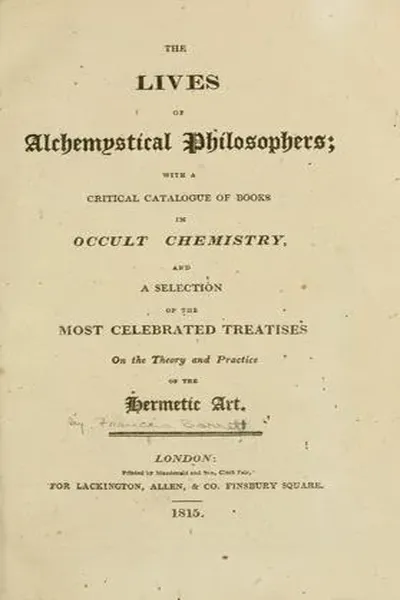
Lives of Alchemystical Philosophers Based on Materials Collected in 1815

 61
61

Lives of Alchemystical Philosophers Based on Materials Collected in 1815


Review by Cassian Rothmann (Senior Critic, Ancient Wisdom) — 'Lives of Alchemystical Philosophers' by Francis Barrett is a treasure trove of esoteric insights, meticulously compiled and presented. Barrett's work shines a light on the obscure world of alchemy, offering readers a glimpse into the lives and philosophies of legendary alchemystical figures. The book's strengths lie in its depth of research and the author's ability to weave together historical context with mystical symbolism. Ideal for serious students of the occult and those seeking to understand the philosophical underpinnings of alchemy, this text is a must-read for anyone fascinated by the hidden knowledge of the ancient world.
📝 Description
61
Francis Barrett collected materials in 1815 for this volume on alchemystical philosophers.
This book presents biographies of alchemystical philosophers, drawing from material Francis Barrett gathered in 1815. It details their lives and teachings, aiming to illuminate the philosophical aspects of alchemy. The work discusses ancient rituals and arcane symbols associated with the alchemical quest for spiritual transformation. Barrett's compilation offers a glimpse into the historical pursuit of hermetic knowledge.
The text is intended for those interested in the history of alchemy and esoteric philosophy. It covers the symbolic language and conceptual frameworks used by alchemists throughout history. Readers will find accounts of philosophical inquiries into the nature of matter and spirit, as understood within these traditions. The book serves as a historical record of alchemystical thought.
This work fits within the broader study of Western esotericism, specifically the history of alchemy. It connects to traditions that sought transformation through material and spiritual processes, often drawing on Hermetic philosophy. The book examines figures who pursued these arts, placing their pursuits within a historical and philosophical context. It reflects an interest in the symbolic language and practical application of alchemical ideas prevalent in the early 19th century.
💡 Why Read This Book?
Why read 'Lives of Alchemystical Philosophers'? This book is essential for seekers of hidden knowledge, scholars of the occult, and practitioners of alchemy. It offers a unique perspective on the lives and teachings of alchemystical philosophers, providing valuable insights into the transformative power of alchemy. Whether you are a beginner or an experienced practitioner, this text will deepen your understanding of the mystical arts and enrich your spiritual journey.
⭐ Reader Reviews
Honest opinions from readers who have explored this book.
❓ Frequently Asked Questions
Who is the intended audience for this book?
The intended audience includes seekers of hidden knowledge, scholars of the occult, and practitioners of alchemy. Anyone interested in the mystical arts and Hermetic tradition will find this book enlightening.
What is the historical significance of this book?
Compiled in 1815, this book provides a glimpse into the world of alchemy during a time when the mystical arts were shrouded in secrecy and mystery.
What themes are explored in this book?
The book explores themes of transformation, hidden knowledge, symbolism, and the quest for spiritual enlightenment through the practice of alchemy.
Are there any modern applications of the knowledge in this book?
Yes, the principles and practices discussed in this book are still relevant to modern practitioners of alchemy and those interested in the Hermetic tradition.
Is this book suitable for beginners?
While the book is rich in detail and historical context, it is accessible to beginners who are serious about exploring the mystical arts and are willing to delve into the esoteric symbolism.
🔮 Key Themes & Symbolism
Transformation
The book studies the concept of transformation, both physical and spiritual, as explored through the practice of alchemy. Alchemists sought to transform base metals into gold, symbolizing the spiritual transformation of the self. This theme is woven throughout the text, providing a deep understanding of the alchemystical process.
Hidden Knowledge
Hidden knowledge is a central theme in 'Lives of Alchemystical Philosophers.' The book reveals the secret teachings and practices of alchemystical philosophers, offering readers a glimpse into the mysterious world of the occult. This hidden knowledge is presented through the lives and philosophies of legendary figures, making it a valuable resource for seekers of esoteric truths.
Symbolism
Symbolism plays an important role in the practice of alchemy, and this book explores the detailed symbolism associated with the alchemystical tradition. From the philosopher's stone to the alchemical symbols of mercury and sulfur, the text provides an in-depth analysis of these symbols and their meanings, enriching the reader's understanding of the mystical arts.
💡 Key Ideas
Editorial paraphrase of the work's core concepts — not direct quotes.
The quest for the philosopher's stone is a journey of the soul.
This quote underscores the spiritual dimension of alchemy, emphasizing the transformative power of the alchemystical process.
Alchemy is the art of turning lead into gold.
This line symbolizes the alchemist's goal of transmuting base materials into something precious, reflecting the spiritual transformation of the self.
The secret of alchemy lies in the hidden knowledge of the ancient philosophers.
This passage highlights the esoteric nature of alchemy, suggesting that the true wisdom of the art is hidden from the uninitiated.
The alchemystical philosopher seeks enlightenment through the practice of alchemy.
This quote emphasizes the spiritual quest of the alchemystical philosopher, who uses the art of alchemy to achieve spiritual enlightenment.
The symbols of alchemy hold the key to understanding the mysteries of the universe.
This line underscores the importance of symbolism in the practice of alchemy, suggesting that the symbols hold the secrets of the cosmos.
🌙 Esoteric Significance
Tradition
This book belongs to the Hermetic tradition, which emphasizes the pursuit of hidden knowledge and spiritual transformation. The Hermetic philosophy, attributed to the mythical figure Hermes Trismegistus, is a core part of Western esotericism, blending elements of ancient Egyptian, Greek, and Jewish mysticism. Barrett's work is a valuable resource for those interested in the Hermetic tradition and its influence on the occult and mystical arts.
Symbolism
Key symbols in this book include the philosopher's stone, the alchemical symbols of mercury and sulfur, and the quest for the elixir of life. These symbols represent the transformative power of alchemy and the spiritual journey of the alchemystical philosopher. The philosopher's stone, in particular, is a powerful symbol of the ultimate goal of alchemy: the transmutation of base materials into gold, symbolizing spiritual enlightenment.
Modern Relevance
The principles and practices discussed in this book are still relevant to modern practitioners of alchemy and those interested in the Hermetic tradition. Contemporary seekers of hidden knowledge and spiritual transformation can find valuable insights in Barrett's work, which continues to inspire and inform the mystical arts. Modern practitioners use the teachings of alchemystical philosophers to guide their own spiritual journeys, seeking to unlock the secrets of the universe and achieve enlightenment.
👥 Who Should Read This Book
Beginners interested in the mystical arts will find this book an accessible introduction to the world of alchemy, with its rich historical context and esoteric symbolism. Scholars of the occult will appreciate the depth of research and the author's ability to combine together historical context with mystical insights. Spiritual seekers will be drawn to the book's exploration of the transformative power of alchemy and the quest for spiritual enlightenment. Practitioners of alchemy will find valuable teachings and practices that can enrich their own spiritual journeys.
📜 Historical Context
Compiled in 1815, 'Lives of Alchemystical Philosophers' provides a window into the world of alchemy during a time when the mystical arts were shrouded in secrecy and mystery. The book captures the essence of the alchemystical tradition, offering insights into the lives and teachings of legendary figures who sought to unlock the secrets of transformation and hidden knowledge. During this era, alchemy was both revered and feared, with practitioners often operating in the shadows, sharing their wisdom only with trusted initiates. Barrett's work is a evidence of the enduring fascination with the occult and the quest for spiritual enlightenment.
📔 Journal Prompts
Reflect on the concept of transformation as explored in the book. How does the practice of alchemy symbolize spiritual transformation?
Consider the role of hidden knowledge in the alchemystical tradition. How does the pursuit of hidden knowledge contribute to spiritual enlightenment?
Explore the symbolism of the philosopher's stone. What does this symbol represent in the context of alchemy and the Hermetic tradition?
Reflect on the lives and teachings of the alchemystical philosophers discussed in the book. How do their experiences and insights resonate with your own spiritual journey?
Consider the modern relevance of the teachings in this book. How can the principles and practices of alchemy be applied to contemporary spiritual seekers?
🗂️ Glossary
Philosopher's Stone
A legendary substance sought by alchemists, believed to have the power to transform base metals into gold and grant immortality.
Mercury
In alchemy, mercury represents the fluid, changeable nature of matter and the process of transformation.
Sulfur
Sulfur is associated with the principle of combustion and the soul or spirit in alchemy.
Elixir of Life
A substance believed to grant eternal youth and health, often sought by alchemists as part of their spiritual quest.
Hermetic Tradition
A philosophical and spiritual tradition attributed to Hermes Trismegistus, blending elements of ancient Egyptian, Greek, and Jewish mysticism.
This book appears in 3 collections
🔮 Readers Also Liked
Browse all →






More by Francis Barrett
All books →



From the “Hermeticism” Collection
View all →








More Free Alchemy & Hermeticism Books
View all →