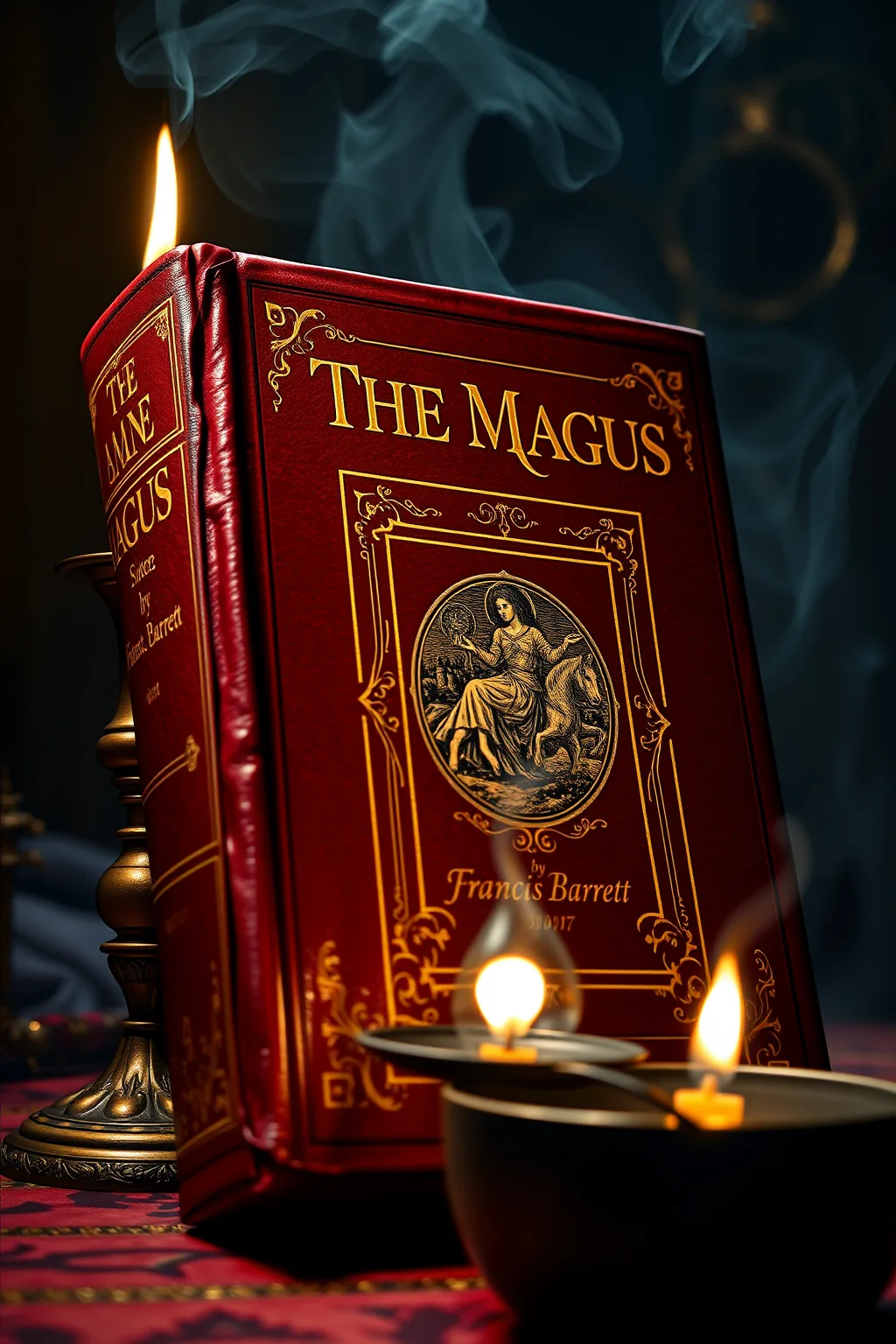
The Magus
 79
79

The Magus

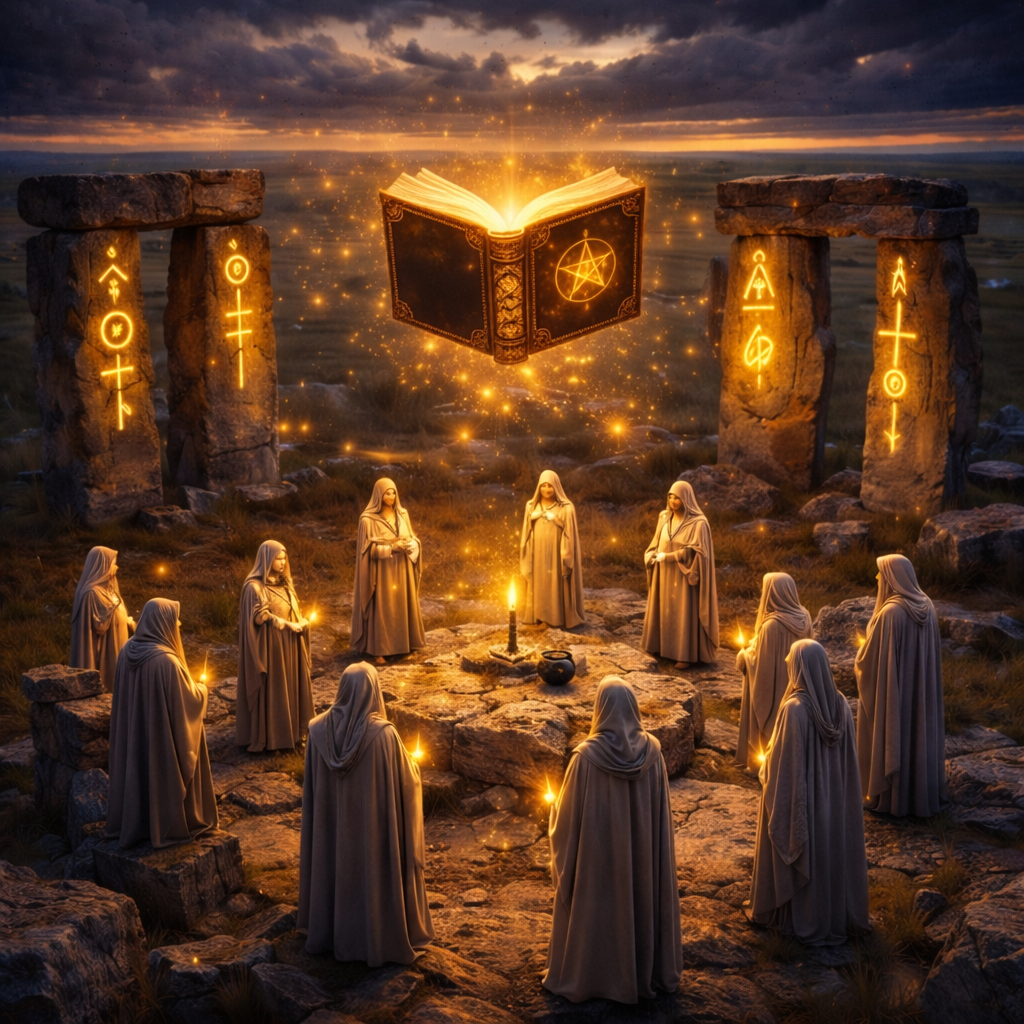

Marcus Thorne (Esoteric Sciences Reviewer) — 'The Magus' stands as a towering achievement in the annals of ceremonial magic, a text both revered and sought after for its comprehensive exploration of occult lore. Francis Barrett masterfully weaves together threads of alchemy, astrology, and Kabbalistic mysticism, presenting a coherent system for spiritual advancement. Its enduring influence on movements like the Hermetic Order of the Golden Dawn is a testament to its profound insights. While dense and demanding, this work is an essential resource for serious practitioners and scholars of Western esotericism, offering a rich tapestry of knowledge that continues to inspire and guide.
📝 Description
79
Francis Barrett published 'The Magus' in 1801, aiming to codify occult knowledge.
Francis Barrett's 'The Magus,' first printed in 1801, is a comprehensive text on Western esotericism. It synthesizes elements from various occult traditions, presenting them as interconnected systems. Barrett details practices and theories concerning natural magic, alchemy, astrology, and Kabbalistic principles. The book's structure aims to guide the student through understanding the fundamental forces of the universe and their potential application.
Barrett's intent was to provide a systematic study for those serious about the occult arts. It covers topics such as the nature of spirits, the construction of magical instruments, and the interpretation of symbols. Rather than simply listing rituals, the work emphasizes a philosophical framework for magical practice. The text serves as a manual for acquiring knowledge of hidden natural laws and achieving spiritual development through their application.
Published at the turn of the 19th century, 'The Magus' emerged during a period of renewed interest in occultism following the Enlightenment. It drew heavily on earlier grimoires and Renaissance magical philosophy, particularly the works of Agrippa. Barrett sought to create a coherent system from disparate traditions, positioning his work within the lineage of practical magic and mystical philosophy. Its detailed approach to the correspondences between the material and spiritual worlds reflects the broader esoteric currents of the era.
💡 Why Read This Book?
Unearth the foundational principles of ceremonial magic, explore the interconnectedness of alchemy, astrology, and Kabbalah, and gain access to rare occult knowledge. 'The Magus' is essential for serious practitioners, occult scholars, and spiritual seekers aiming to deepen their understanding of esoteric traditions and unlock profound insights into the workings of the universe.
⭐ Reader Reviews
Honest opinions from readers who have explored this book.
❓ Frequently Asked Questions
What is 'The Magus' primarily about?
'The Magus' is a comprehensive treatise on ceremonial magic, alchemy, astrology, and Kabbalistic philosophy, offering a detailed system for occult study and practice. It's considered a foundational text for understanding 19th-century magical traditions.
Who was Francis Barrett?
Francis Barrett was an English occultist and author, known for 'The Magus,' his magnum opus. His work synthesized various esoteric traditions and significantly influenced later occult movements.
Is 'The Magus' difficult to understand?
While rich in detail and drawing on complex philosophical concepts, 'The Magus' is accessible to dedicated students of esotericism. It requires focused study but rewards the diligent reader with deep knowledge.
What makes 'The Magus' so historically significant?
Published in 1801, it represents a rare consolidation of occult knowledge during the 'Age of Reason.' It was a primary source for subsequent influential occult organizations, bridging ancient wisdom with a more systematic approach.
Can 'The Magus' be used for practical magic?
Yes, 'The Magus' contains detailed instructions and theories related to practical magical operations, rituals, and the invocation of spiritual entities, intended for those with a serious commitment to magical study.
🔮 Key Themes & Symbolism
The Art of Ceremonial Magic
'The Magus' meticulously outlines the principles and practices of ceremonial magic, presenting it not as mere superstition but as a structured discipline for influencing the material and spiritual realms. Barrett details the necessary preparations, the construction of magical circles, the use of talismans and sigils, and the proper invocation of intelligences. The work emphasizes the importance of will, purity of intent, and a deep understanding of celestial influences as crucial components for successful magical operation, providing a robust framework for practitioners seeking to engage with higher powers and manifest desired outcomes.
Alchemy: The Great Work and Transformation
Barrett looks at the philosophical and practical aspects of Alchemy, viewing it as a path to spiritual purification and material perfection. He explores the symbolic language of the alchemical process, the transmutation of metals, and the pursuit of the Elixir of Life, connecting these physical transformations to the inner evolution of the magician. The text elucidates the parallels between the microcosm (human) and the macrocosm (universe), suggesting that the alchemical Great Work is as much about the transformation of the soul as it is about the manipulation of base elements, offering a profound perspective on self-mastery and spiritual attainment.
Astrology and Kabbalah: Celestial Influence and Divine Order
The interconnectedness of Astrology and Kabbalah forms a vital backbone of 'The Magus.' Barrett expounds on how celestial configurations influence earthly events and human destiny, providing methods for astrological calculation and interpretation. Simultaneously, he integrates Kabbalistic teachings, particularly the Tree of Life, as a map of creation and a means to understand the divine emanations. This synthesis reveals a cosmos governed by intricate correspondences and divine hierarchies, where the magician can align their will with these cosmic laws to achieve greater wisdom, power, and spiritual union. The text highlights the profound synergy between the heavens and the soul.
💬 Memorable Quotes
Direct passages from the work, attributed to the author.
“To know, to dare, to will, and to keep silent.”
— A foundational tenet of magical practice, emphasizing the four cardinal virtues: knowledge of the art, courage to act, strength of will to achieve, and discretion in revealing secrets.
“The stars incline, they do not compel.”
— This highlights the astrological principle that celestial influences suggest possibilities and tendencies, but human free will remains paramount in shaping one's destiny.
“The true alchemist seeks not gold, but wisdom.”
— This points to the spiritual and philosophical essence of alchemy, suggesting that its ultimate goal is inner transformation and enlightenment rather than material wealth.
“The circle is the beginning and the end of all magic.”
— Emphasizes the vital importance of the magical circle as a sacred space for protection, concentration, and the manifestation of magical energies, serving as both a gateway and a containment.
💡 Key Ideas
Editorial paraphrase of the work's core concepts — not direct quotes.
The whole of magic is in the universe, and the universe is in magic.
This quote expresses the holistic view of magic presented in the book, asserting that magical forces are intrinsic to the fabric of existence, and by understanding magic, one can understand the universe itself.
🌙 Esoteric Significance
Tradition
The Magus is a cornerstone text for Western Esotericism, particularly within the traditions of ceremonial magic, hermeticism, and Qabalah. It serves as a vital link between older grimoires and the more systematized occult movements of the 19th and 20th centuries, such as the Hermetic Order of the Golden Dawn. Barrett's work synthesizes elements from diverse esoteric streams, offering a comprehensive overview of magical theory and practice informed by Neoplatonism, Kabbalistic cosmology, and alchemical philosophy.
Symbolism
Barrett employs detailed symbolism drawn from alchemy, astrology, and Kabbalah. The text is replete with references to celestial bodies, divine names, angelic hierarchies, alchemical apparatus, and the Sephiroth of the Tree of Life. These symbols are not merely decorative but are presented as keys to understanding the intricate correspondences between the macrocosm and the microcosm, serving as tools for invocation, meditation, and spiritual transformation. The understanding and manipulation of these symbolic languages are central to unlocking the magical potential described within the work.
Modern Relevance
Despite its age, 'The Magus' remains highly relevant for contemporary practitioners and scholars of esoteric subjects. Its detailed approach to ritual, its exploration of psychological and spiritual transformation, and its synthesis of core Western occult traditions provide a robust foundation for modern magical study. For those seeking to understand the historical lineage of occultism or engage in serious ceremonial practice, Barrett's work offers invaluable insights into the enduring principles of magical philosophy and its application in the quest for self-knowledge and spiritual mastery.
👥 Who Should Read This Book
This important work is indispensable for serious students of ceremonial magic, occult history, and esoteric philosophy. Practitioners seeking to deepen their understanding of ritual, symbolism, and the foundational principles of Western esotericism will find 'The Magus' a valuable collection. Scholars of occultism and comparative religion will appreciate its historical significance and its comprehensive synthesis of ancient magical systems. Beginners beginning a serious path of occult study may find it challenging but immensely rewarding if approached with dedication and a spirit of diligent inquiry, providing a direct lineage to classic magical thought.
📜 Historical Context
Published in 1801, Francis Barrett's 'The Magus' emerged during a unique historical juncture. The 'Age of Reason,' dominated by scientific inquiry and rationalism, was still grappling with the legacy of the Enlightenment while simultaneously experiencing a resurgence of interest in the esoteric. Sandwiched between the scientific revolutions spearheaded by figures like Newton and the evolutionary theories of Darwin, this period offered fertile ground for works that sought to reconcile empirical observation with mystical insight. 'The Magus' represented a bold attempt to codify and present ancient magical traditions in a systematic manner, almost as a last bastion of pre-modern occultism before the seismic shifts in scientific and philosophical thought. Its existence during this transitional era underscores its significance as a bridge between older esoteric paradigms and the burgeoning occult revival of the late 19th and early 20th centuries, providing a vital reference point for those seeking to understand the spiritual undercurrents of the modern world.
📔 Journal Prompts
Reflect on the interconnectedness of alchemy, astrology, and Kabbalah as presented by Barrett. How might these disciplines inform your understanding of yourself and the universe?
Barrett emphasizes the importance of 'true intent' in magic. Explore a personal goal or aspiration and consider how you might purify and focus your intent to manifest it effectively.
Consider the symbolic language used in 'The Magus.' Choose one symbol (e.g., a planetary symbol, an alchemical element) and meditate on its potential meanings in your own life.
The concept of the 'Great Work' in alchemy often refers to inner transformation. How can the principles of transformation discussed in the book be applied to your personal growth and development?
Barrett's work was published during the 'Age of Reason.' How do you reconcile the rationalistic worldview of that era with the mystical teachings presented in 'The Magus'?
🗂️ Glossary
Grimoire
A textbook of magic, typically containing instructions on how to create magical tools, perform rituals, and invoke spirits. 'The Magus' is considered a significant example of a 19th-century grimoire.
Alchemy
An ancient practice and philosophical tradition that aimed at the transmutation of base metals into gold, the discovery of the Elixir of Life, and spiritual perfection. Barrett views it as a path to both material and spiritual transformation.
Kabbalah
A system of Jewish mysticism that explores the nature of God and the universe through symbolic interpretation of scripture, often represented by the Tree of Life. Barrett integrates Kabbalistic concepts into his magical framework.
Sigil
A symbol or emblem, often created through specific magical processes, believed to possess inherent magical power or to represent a specific intent or entity. They are used in ceremonial magic for invocation and manifestation.
Ceremonial Magic
A structured form of magic involving elaborate rituals, specific incantations, the use of magical tools, and the invocation of spiritual beings. It focuses on disciplined practice and a deep understanding of arcane principles.
This book appears in 1 collection
🔮 Readers Also Liked
Browse all →







From the “Ceremonial Magic” Collection
View all →





More Free Magic & Ritual Books
View all →