Life After Near Death
 76
76

Life After Near Death
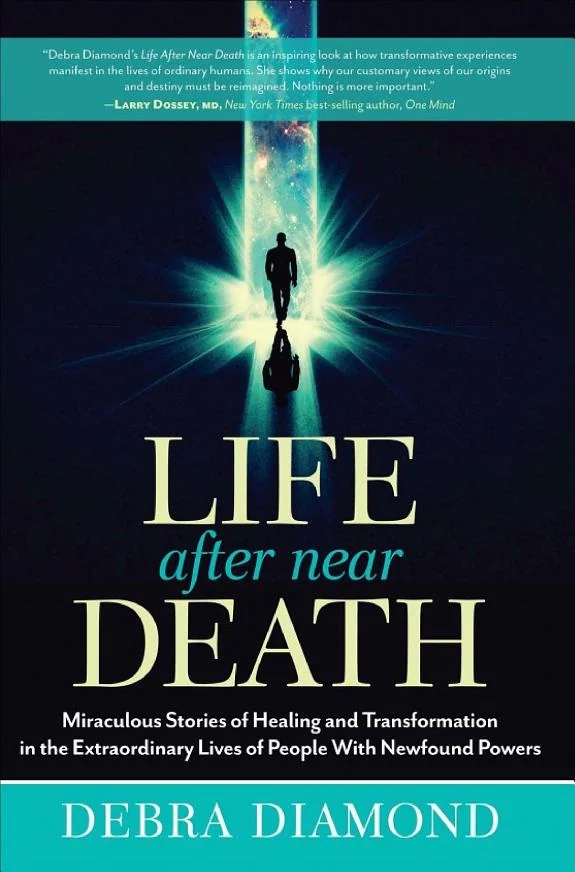
Debra Diamond's *Life After Near Death* offers a refreshingly focused perspective on a phenomenon often mired in sensationalism. By prioritizing the *aftereffects* over the clinical markers of an NDE, Diamond provides a more nuanced understanding of its true impact. The strength of the book lies in its rigorous insistence on lasting transformation as the defining characteristic of an NDE, moving beyond the checklist approach popularized by earlier researchers. A particularly compelling section discusses the shift in perception of time and space experienced post-NDE, illustrating how the ordinary world can appear both alien and profoundly sacred. However, the work could benefit from a more direct engagement with the neurological and physiological explanations for NDEs, even if only to then argue why these are insufficient to explain the observed spiritual and psychological shifts. Despite this, *Life After Near Death* is a valuable contribution for anyone seeking to understand the profound implications of experiences that transcend ordinary life.
📝 Description
76
Debra Diamond's 2016 book argues that lasting consciousness alteration defines near-death experiences.
Life After Near Death by Debra Diamond, published in 2016, analyzes the permanent changes that follow near-death experiences (NDEs). Diamond proposes that the core of an NDE is not the event itself, nor specific phenomena like out-of-body sensations, but the profound shifts in an individual's consciousness and worldview that persist afterward. These lasting aftereffects, she contends, are the true measure of an NDE's significance.
The book is aimed at those who have had an NDE and seek to comprehend their personal transformations. It also speaks to individuals interested in the psychological and spiritual consequences of these events, including researchers, therapists, and students of consciousness. Readers familiar with comparative religion, mysticism, and perennial philosophy will find relevant material.
Diamond's work builds upon a long history of studying altered states of consciousness and beliefs in post-mortem survival. Following figures like F.W.H. Myers and Raymond Moody, whose 1975 book *Life After Life* brought NDEs to wider attention, Diamond shifts the emphasis from the NDE event to its enduring aftermath. Her contribution is situated within an ongoing inquiry that connects psychology, spirituality, and parapsychology.
This book enters a discourse on altered states and survival that has roots in late 19th-century spiritualism and psychical research, notably through figures like F.W.H. Myers. It connects to the modern study of near-death experiences, popularized by Raymond Moody, but distinguishes itself by prioritizing the post-event transformation over the phenomenology of the experience. Diamond's focus on lasting shifts in consciousness and worldview aligns with perennial philosophy and mystical traditions that examine fundamental changes in perception and being.
💡 Why Read This Book?
• Understand the lasting impact of NDEs, focusing on the permanent shifts in consciousness and worldview as the defining characteristic, a concept explored extensively in the book's analysis of post-NDE transformations. • Gain insight into the commonalities of post-NDE aftereffects, such as heightened intuition and a diminished fear of death, as detailed in Diamond's examination of individuals who have undergone these profound experiences. • Explore the historical context of NDE research, recognizing Debra Diamond's 2016 work as a progression from earlier studies like Raymond Moody's 1975 *Life After Life* by emphasizing lasting change.
⭐ Reader Reviews
Honest opinions from readers who have explored this book.
❓ Frequently Asked Questions
What distinguishes Debra Diamond's approach to NDEs from earlier research?
Diamond's book, *Life After Near Death* (2016), distinguishes itself by focusing on the permanent 'aftereffects' and transformations following an NDE, rather than solely on the common phenomena experienced during the event itself, such as life reviews.
Can you have a Near-Death Experience without being clinically dead?
Yes, according to Debra Diamond's research presented in *Life After Near Death*, one does not need to be declared clinically dead to experience an NDE. The key is the lasting transformation that occurs.
What are some common aftereffects of a Near-Death Experience discussed in the book?
The book explores aftereffects such as a heightened sense of intuition, increased compassion, a diminished fear of death, and a profound shift in life purpose and values, regardless of specific spiritual encounters during the NDE.
Who is Raymond Moody and why is he mentioned in relation to NDEs?
Raymond Moody is a key figure in NDE research, whose 1975 book *Life After Life* popularized the study of NDEs and identified common elements. Debra Diamond's work builds upon and reframes this earlier research.
What is the core argument of 'Life After Near Death' regarding NDEs?
The core argument is that the true measure of a Near-Death Experience is not the occurrence of specific events during the episode, but whether the individual returns permanently transformed, as explored in Diamond's 2016 publication.
Does the book require specific spiritual or religious beliefs to understand?
No, the book focuses on the universal psychological and spiritual transformations that can follow an NDE, making it accessible to individuals from diverse backgrounds interested in altered states of consciousness.
🔮 Key Themes & Symbolism
Transformation as the Defining Factor
The central thesis of *Life After Near Death* posits that the genuine indicator of a Near-Death Experience (NDE) is not the physiological event but the enduring, permanent alteration in the individual's consciousness, values, and perception of reality. This contrasts with earlier frameworks that focused on cataloging specific phenomena like out-of-body experiences or encounters with light. Diamond argues that these aftereffects are the 'miraculous' aspect, suggesting a profound realignment of one's spiritual and psychological being that persists long after the initial event.
The Spectrum of NDE Phenomena
While acknowledging common elements reported in NDEs, such as life reviews, encounters with deceased loved ones, or feelings of peace, Diamond emphasizes that their presence or absence does not invalidate an experience. The book highlights that the intensity and specific content of an NDE can vary widely. The crucial aspect remains the return to life with a fundamentally changed perspective, often leading to increased empathy, a reduced fear of death, and a reordering of life priorities, irrespective of the specific visions or sensations experienced.
Beyond Clinical Death
A significant theme is the understanding that NDEs are not exclusively tied to a state of clinical death. Diamond explores how profound, transformative experiences resembling NDEs can occur during severe illness, accidents, or even intense meditative states. This broadens the scope of inquiry beyond the purely medical, suggesting that the boundary between life and whatever lies beyond is more permeable than conventionally understood, and that profound shifts can be accessed through various liminal states.
The Perennial Philosophy of Afterlife
The book implicitly touches upon the perennial philosophy by suggesting that the transformations observed after NDEs point towards universal truths about consciousness and existence. The common aftereffects—increased compassion, spiritual awareness, and a sense of interconnectedness—align with insights found across various mystical traditions. Diamond's work encourages readers to consider these experiences not as isolated psychological events but as glimpses into a deeper, underlying reality that informs human existence.
💬 Memorable Quotes
Direct passages from the work, attributed to the author.
“The key is whether you return from the experience permanently transformed.”
— This statement captures the book's central argument, prioritizing lasting psychological and spiritual change over the specific sensory or cognitive phenomena that might occur during a near-death event.
“You don't need to be declared clinically dead to experience an NDE.”
— This challenges the common misconception that Near-Death Experiences are solely reserved for those on the absolute brink of death, suggesting a broader spectrum of transformative consciousness states.
“Nor must you experience many of Raymond Moody's nine elements.”
— Diamond here directly addresses and reframes earlier NDE research, such as Moody's, by suggesting that a checklist of experiences is less important than the enduring impact on the individual's life.
“The only book to explore the deeper meaning of the near-death experience (NDE) through the prism of its miraculous aftereffects.”
— This highlights the unique contribution of Diamond's work, positioning it as a specialized study that focuses on the profound and often inexplicable changes that occur after an NDE.
“The miraculous aftereffects are the true indicators of an NDE's significance.”
— This reinforces the book's primary focus, suggesting that the lasting spiritual, emotional, and psychological shifts are the most meaningful outcomes and evidence of a genuine NDE.
🌙 Esoteric Significance
Tradition
This work aligns with esoteric traditions that explore the nature of consciousness beyond the physical body and the possibility of direct spiritual experience. While not explicitly Hermetic or Kabbalistic, its focus on transformation and altered states of perception appeals to Gnostic ideas of spiritual awakening and the perennial philosophy's emphasis on universal spiritual truths accessible through direct experience. It shares common ground with Theosophical explorations of planes of existence and the soul's journey.
Symbolism
The 'miraculous aftereffects' themselves function as symbolic representations of a shift in spiritual awareness. Increased compassion and a diminished fear of death symbolize a reorientation towards universal love and acceptance, moving away from egoic attachments and existential dread. The concept of permanent transformation can be seen as a form of spiritual alchemy, where the base elements of ordinary consciousness are transmuted into a higher, more refined state through the crucible of a profound experience.
Modern Relevance
Diamond's focus on lasting transformation finds resonance with contemporary explorations in transpersonal psychology, consciousness studies, and spiritual emergence. Thinkers and practitioners interested in the integration of spiritual experiences into daily life, the study of non-ordinary states of consciousness, and the potential for profound personal growth through crisis situations draw upon the insights presented. It informs modern discussions on death and dying, offering a perspective that emphasizes spiritual continuity and the potential for positive life changes post-NDE.
👥 Who Should Read This Book
• Individuals who have personally experienced an NDE and seek to understand the profound and lasting changes they are undergoing, validating their experiences and providing a framework for integration. • Researchers and practitioners in fields like transpersonal psychology, thanatology, and comparative religion interested in the psychological and spiritual impacts of NDEs, moving beyond simple phenomenology. • Skeptics and the spiritually curious who wish to explore the transformative potential of consciousness-altering events, examining the evidence for profound shifts in worldview and life purpose.
📜 Historical Context
Debra Diamond's *Life After Near Death*, published in 2016, entered a field of NDE research already significantly shaped by figures like Raymond Moody, whose 1975 book *Life After Life* was key in popularizing the concept. Diamond's work emerged in an era where NDEs were increasingly studied not just by parapsychologists but also by neuroscientists and psychologists, leading to various interpretations ranging from brain activity during trauma to genuine glimpses beyond life. The late 20th and early 21st centuries saw a diversification of NDE narratives, moving beyond the initial focus on common elements to explore variations and the profound post-experience changes. Diamond's specific contribution, emphasizing the *aftereffects* as the defining characteristic, offers a distinct lens within this ongoing discourse, differentiating itself from purely phenomenological accounts and engaging with the spiritual and existential implications that were also being explored by contemporary thinkers in consciousness studies and comparative mysticism.
📔 Journal Prompts
Reflect on the 'miraculous aftereffects' as described by Diamond; how have your own perceptions shifted permanently post-experience?
Compare the common NDE elements mentioned by Raymond Moody with the emphasis on lasting transformation in *Life After Near Death*.
Consider the concept of 'permanent transformation' as the primary criterion for an NDE; what does this imply about the nature of consciousness?
Analyze the implications of not needing to be 'clinically dead' to have an NDE, as discussed in the book.
Explore how the diminished fear of death, a common aftereffect, might alter one's life choices and priorities.
🗂️ Glossary
Near-Death Experience (NDE)
A profound personal experience associated with death or dying, often involving altered perceptions, feelings of peace, and a sense of leaving one's body. The defining characteristic, according to Diamond, is the permanent transformation that follows.
Aftereffects
The lasting psychological, spiritual, and emotional changes that individuals report after undergoing a Near-Death Experience, which Diamond identifies as the most significant aspect of the phenomenon.
Clinical Death
The cessation of heartbeat and respiration. Diamond argues that NDEs are not exclusive to individuals who have reached this state, broadening the scope of transformative experiences.
Life Review
A commonly reported element of NDEs where individuals perceive their entire life flashing before their eyes, often with a sense of detached observation and profound understanding.
Out-of-Body Experience (OBE)
A sensation of floating outside one's physical body, often accompanied by the ability to observe the surroundings from a different vantage point. This is considered one of many possible NDE phenomena, not the defining feature.
Transformation
A fundamental and enduring change in an individual's consciousness, values, beliefs, and life direction, which Diamond posits as the crucial indicator of a genuine Near-Death Experience.
Perennial Philosophy
A concept suggesting that all major religions and spiritual traditions share a common, underlying truth or wisdom about the fundamental nature of reality and the human spirit.
This book appears in 1 collection
🔮 Readers Also Liked
Browse all →








From the “Out-of-Body Experience” Collection
View all →








More Free Occult Philosophy Books
View all →