Legacy of Druids

 71
71

Legacy of Druids
Ellen Evert Hopman's *Legacy of Druids* sidesteps the common pitfall of romanticizing ancient Celtic spirituality, instead presenting a meticulously researched, if sometimes dense, account of Druidic practices. The strength of the book lies in its detailed descriptions of rituals and its commitment to historical reconstruction, particularly its engagement with the work of earlier figures in the Druidic revival. However, the narrative occasionally feels overly academic, potentially alienating readers seeking a more immediately accessible spiritual guide. A particularly compelling section details the use of sacred groves and their specific energetic properties, illustrating the tangible connection Hopman advocates for. While the book sometimes struggles to balance scholarly rigor with spiritual inspiration, it remains a valuable resource for those dedicated to a deeper understanding of this ancient path.
📝 Description
71
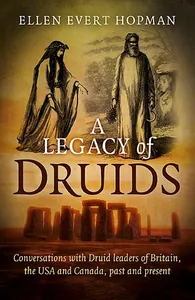
Published in 2016, Ellen Evert Hopman's Legacy of Druids moves past common ideas to show Druidry's real practices.
This book by Ellen Evert Hopman, released in 2016, offers a detailed look at the ancient practices and beliefs of Druidry. It aims to present a more accurate picture of this nature-focused spiritual path, moving away from popular myths. The text functions as both a learning tool and a spiritual guide. It covers rituals, lore, and the philosophies that have shaped Druidic traditions over time.
Hopman's work is for anyone seriously wanting to learn about Druidry from both historical and practical viewpoints. It will interest students of religion, people drawn to old European spirituality, and modern pagans who wish to understand nature-based traditions better. Readers should have a basic interest in pre-Christian European cultures and their lasting impact.
The book places modern Druid revivalism within its history, noting the efforts to recreate and rethink old Celtic practices. It follows the development of Druidic ideas from their bardic origins through various revival movements, especially those from the 19th and 20th centuries. The text also touches on discussions about how accurate these reconstructed Druidic practices are.
Legacy of Druids connects modern paganism to ancient Celtic spirituality. It examines how contemporary Druidry draws from reconstructed historical practices and beliefs, particularly those concerning nature worship and the roles of spiritual leaders. The book engages with the lineage of Druidic thought, from its bardic roots to its modern revival, situating these practices within a broader European esoteric tradition that emphasizes a connection to the land and ancestral wisdom.
💡 Why Read This Book?
• Learn about the specific rituals and ceremonies described by Ellen Evert Hopman, offering a practical gateway into Druidic practices that differ significantly from modern neopagan interpretations. • Understand the historical evolution of Druidry, referencing the efforts of revivalists since the 18th century, providing a context often missing in contemporary spiritual literature. • Explore the symbolic significance of key natural elements like the oak and mistletoe as presented in the book, offering a unique lens through which to view the natural world and its spiritual dimensions.
⭐ Reader Reviews
Honest opinions from readers who have explored this book.
❓ Frequently Asked Questions
What is the primary focus of Ellen Evert Hopman's *Legacy of Druids*?
The book focuses on the historical reconstruction and practical application of ancient Druidic practices, moving beyond modern romanticism to offer a grounded perspective on nature veneration and Celtic spirituality.
When was *Legacy of Druids* first published?
*Legacy of Druids* was first published in 2016, making it a relatively contemporary work on the subject of Druidry.
Does the book discuss specific Druidic rituals?
Yes, the book details various rituals and ceremonies associated with Druidic traditions, offering readers insights into the practical aspects of this spiritual path.
Who would benefit most from reading *Legacy of Druids*?
Students of comparative religion, those interested in ancient European spirituality, and practitioners of neopagan paths seeking deeper knowledge of nature-based traditions will find this book particularly beneficial.
What historical figures or movements are relevant to the book's context?
The book engages with the history of Druidic revivalism, implicitly referencing scholars and practitioners from the 18th century onwards who sought to reconstruct Celtic practices.
Are there specific natural symbols discussed in *Legacy of Druids*?
Indeed, the work explores the symbolic importance of natural elements central to Druidry, such as the oak tree and mistletoe, offering interpretations within the tradition.
🔮 Key Themes & Symbolism
Reconstructing Druidic Practice
This theme explores the meticulous efforts to piece together the practices of ancient Druids, acknowledging the challenges posed by fragmented historical records. Hopman examines how evidence from archaeology, folklore, and comparative studies informs modern interpretations. The work highlights the importance of oral traditions and bardic lineages as vital conduits of knowledge, even when direct written accounts are scarce, emphasizing a commitment to historical fidelity in spiritual reconstruction.
Nature as Sacred Force
Central to *Legacy of Druids* is the concept of nature not merely as environment, but as a living, sacred entity. The book details the veneration of natural forces, sacred groves, and specific trees like the oak. It explores how this reverence translates into ritual, emphasizing a reciprocal relationship between humanity and the natural world, viewing the land itself as a source of spiritual power and wisdom.
The Role of the Bard and Druid
Hopman elucidates the complex roles of the druid and bard within ancient Celtic society, extending this to modern Druidic practice. These figures are presented not just as priests or spiritual leaders, but as keepers of lore, educators, healers, and counselors. The book underscores the importance of wisdom, storytelling, and ethical guidance as fundamental aspects of the druidic path and its societal function.
Cyclical Time and Ancestral Connection
The book explores a non-linear, cyclical understanding of time, deeply rooted in the natural rhythms of the earth. This perspective is intrinsically linked to the veneration of ancestors and the spirit world. *Legacy of Druids* discusses how connecting with ancestral energies and the cycles of birth, death, and rebirth is integral to the Druidic worldview, fostering a sense of continuity and belonging.
💬 Memorable Quotes
Direct passages from the work, attributed to the author.
“The oak stands as a symbol of strength and endurance, a conduit between the earth and the heavens.”
— This highlights the deep symbolic resonance of the oak tree within Druidic tradition, representing not just physical fortitude but also a spiritual connection to cosmic forces.
“Ritual is not mere performance, but a conscious engagement with the sacred energies of the natural world.”
— This statement emphasizes the active, participatory nature of Druidic ritual, positioning it as a means of direct communion with nature's spiritual essence, rather than a passive observance.
“The wisdom of the ancestors is carried on the wind and in the rustling leaves.”
— This poetic expression conveys the Druidic belief in the immanence of ancestral spirits within the natural environment, suggesting that guidance and wisdom are ever-present.
“Mistletowes, growing high in the branches, represent a connection to the divine and the ethereal.”
— This points to the sacred status of mistletoe, associating its unique growth habit with a bridge to higher spiritual realms and divine energies.
“Understanding the cycles of the year is fundamental to aligning oneself with the flow of life.”
— This emphasizes the importance of seasonal awareness in Druidic practice, framing the natural yearly cycles as a blueprint for spiritual harmony and personal growth.
🌙 Esoteric Significance
Tradition
The work aligns with the Western Esoteric tradition, specifically its modern neopagan and nature-based branches. It draws from a lineage that seeks to reconstruct and practice pre-Christian European spirituality, particularly Celtic traditions. While distinct from Hermeticism or Gnosticism, it shares a common thread of seeking immanent divinity in the natural world and emphasizing ritual practice as a means of spiritual connection and transformation.
Symbolism
Key symbols include the oak, representing strength, wisdom, and connection to the earth and sky; mistletoe, signifying purity, healing, and a link to the divine or ethereal realms; and sacred groves, understood as liminal spaces for communion with nature spirits, ancestors, and deities. These symbols are not merely decorative but are active elements within ritual and spiritual understanding.
Modern Relevance
Contemporary Druidic orders and independent practitioners frequently reference works like Hopman's for guidance on ritual structure, ethical frameworks, and understanding the historical context of their path. It informs modern eco-spiritual movements and those seeking non-Abrahamic, nature-centric spiritualities, providing a bridge between ancient lore and present-day practice.
👥 Who Should Read This Book
• Aspiring Druids seeking a foundational understanding of historical context and practical ritual, moving beyond generalized neopaganism. • Students of comparative religion interested in the reconstruction and practice of ancient European spiritual traditions and their modern evolution. • Environmental activists and eco-spiritualists looking for deeper connections to nature-based belief systems and practices informed by historical precedent.
📜 Historical Context
Published in 2016, *Legacy of Druids* emerged during a period of sustained interest in neopaganism and nature-based spiritualities. It entered a discourse already shaped by earlier revivalist efforts, notably those of the Ancient Druid Order and later organizations that emerged in the 20th century. The book implicitly engages with scholarly critiques concerning the historical accuracy of reconstructed Druidry, a debate that has seen figures like Ronald Hutton provide significant historical analysis. Hopman's work aims to offer a more practice-oriented perspective, distinct from purely academic ethnobotany or historical linguistics, and seeks to provide a coherent framework for contemporary practitioners. It contributes to the ongoing dialogue about how ancient Celtic traditions can be meaningfully revitalized in the modern era.
📔 Journal Prompts
Reflect on the symbolic significance of the oak tree as described in the text.
Consider the concept of sacred groves and their role in Druidic practice.
Examine the cyclical understanding of time presented in the book.
How does the role of the bard influence your perception of wisdom-keeping?
Evaluate the connection between ritual and natural energies as detailed by Hopman.
🗂️ Glossary
Bard
In ancient Celtic societies, a highly respected poet, musician, and storyteller responsible for preserving history, genealogy, and law through oral tradition. In modern Druidry, the role often extends to spiritual teaching and inspiration.
Druid
A member of the priestly or scholarly class in ancient Celtic societies, believed to have had significant influence in religious, social, and political matters. Modern Druidry seeks to revive and practice these traditions.
Sacred Grove
A natural woodland area considered holy or dedicated to a deity or spiritual practice. In Druidry, these are sites for ritual, meditation, and communion with nature.
Oak
A tree highly revered in many ancient European cultures, including Celtic traditions. Often associated with strength, wisdom, endurance, and the divine.
Mistletoe
A parasitic plant growing on trees, particularly revered in ancient Druidic lore for its supposed magical and healing properties, often associated with the oak.
Neopaganism
A broad term for modern religious movements that seek to revive or reinterpret pre-Christian European pagan beliefs and practices, often with an emphasis on nature worship and polytheism.
Oral Tradition
The transmission of cultural knowledge, history, and beliefs from generation to generation by spoken word, rather than by writing.
🔮 Readers Also Liked
Browse all →









More by Ellen Evert Hopman
All books →




More Free Occult Philosophy Books
View all →