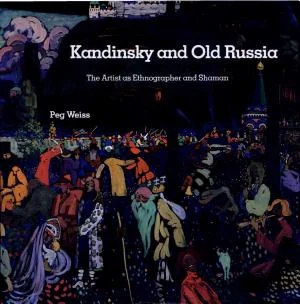
Kandinsky and Old Russia
 73
73

Kandinsky and Old Russia
Peg and Neil Weiss’s *Kandinsky and Old Russia* offers a compelling re-reading of the artist’s trajectory, anchoring his flight into abstraction not in a vacuum of pure form, but in the rich soil of his Russian heritage. The book’s signal strength lies in its meticulous tracing of Kandinsky's early ethnographic fieldwork, particularly his studies in the Vologda region, and connecting these experiences directly to the symbolic lexicon of his later paintings. The argument that Russian folklore and iconographic traditions provided a fundamental grammar for his spiritual art is persuasively made, particularly in its examination of how peasant art and fairy tale imagery informed his color theories. A limitation, however, is that while the book illuminates the 'why' of Kandinsky's Russian connection, it could more deeply explore the 'how' of its translation into the specific visual language of paintings like *Composition VII*. The exploration of the ‘Great Mother’ archetype, drawn from folklore, as a precursor to his abstract forms is particularly insightful. This study is an essential corrective to art historical narratives that have previously downplayed the artist's deep cultural roots.
📝 Description
73
Neil A. and Peg Weiss's 1987 book connects Wassily Kandinsky to Russian folklore.
Kandinsky and Old Russia, by Neil A. and Peg Weiss, examines Wassily Kandinsky's deep ties to Russian folklore and ethnographic studies. The book argues that Kandinsky's engagement with his ethnic Russian heritage, particularly his studies in the Vologda region in the 1880s, was crucial to his development of abstract art. It moves past the common view of Kandinsky as only an abstraction pioneer, highlighting how traditional Russian culture and its visual language directly shaped his revolutionary theories and paintings.
This work is for art historians, scholars of Russian culture, and students of esoteric traditions who want a fuller understanding of Kandinsky's artistic output. It will resonate with those interested in how personal heritage influences artistic innovation, especially in the early 20th century. Readers familiar with Kandinsky's writings, such as Concerning the Spiritual in Art, will find this book offers a valuable, complementary viewpoint. The authors place Kandinsky's artistic growth within the cultural changes of late 19th and early 20th century Russia, a time when many sought to reconnect with pre-industrial Russian roots amidst modernization.
This book situates Kandinsky's artistic theories within a broader interest in spiritual and symbolic dimensions often found in esoteric traditions. His engagement with Russian folklore, icons, and the spiritual essence of color aligns with movements seeking deeper meaning beyond material reality. The work suggests Kandinsky drew upon a rich, often overlooked, symbolic vocabulary rooted in ancient Russian traditions, which informed his quest for a spiritual art. This perspective connects his abstract work to a lineage of thought that values intuition, symbolism, and the transcendent qualities of art.
💡 Why Read This Book?
• Gain a new perspective on Wassily Kandinsky's journey to abstraction by understanding the direct influence of his ethnographic studies in the Vologda region in the 1880s. • Discover how Russian folklore and folk art provided a symbolic framework for his theories on color and spirituality, as explored in the book's analysis of peasant art motifs. • Explore the esoteric underpinnings of early 20th-century art movements by examining how Kandinsky integrated archetypal imagery from Russian fairy tales into his visual language.
⭐ Reader Reviews
Honest opinions from readers who have explored this book.
❓ Frequently Asked Questions
When did Wassily Kandinsky conduct his ethnographic studies in Russia?
Wassily Kandinsky undertook significant ethnographic studies in the Vologda region of Russia in the late 1880s, specifically around 1889. This period is crucial for understanding the roots of his later artistic theories.
What is the central argument of Kandinsky and Old Russia?
The book argues that Kandinsky's deep engagement with his ethnic Russian heritage, particularly folklore and folk art, was a foundational influence on his development of abstract painting and his theories on spirituality in art.
How does this book differ from standard Kandinsky biographies?
Unlike typical biographies focusing solely on his artistic evolution in Munich or Paris, this book foregrounds his early ethnographic work and the influence of traditional Russian culture, offering a fresh interpretation of his artistic origins.
What specific Russian cultural elements are discussed?
The book delves into Russian fairy tales, peasant art, icon painting traditions, and the symbolic language of the Russian Orthodox Church, presenting them as direct influences on Kandinsky's aesthetic and spiritual concepts.
Who are the authors of Kandinsky and Old Russia?
The book is authored by Neil A. Weiss and Peg Weiss, with Wassily Kandinsky himself contributing to the foundational ideas through his earlier works and life.
What is the publication year of Kandinsky and Old Russia?
Kandinsky and Old Russia was first published in 1995.
🔮 Key Themes & Symbolism
Ethnographic Roots of Abstraction
This theme explores Kandinsky's foundational period of ethnographic research in Russia, particularly his studies in the Vologda region around 1889. The book posits that this immersion in rural Russian life, its traditions, and its visual culture was not merely a biographical footnote but a critical wellspring for his later artistic theories. It highlights how his academic training in ethnography provided him with a methodology for understanding symbolic systems, which he later applied to his art, seeking the 'spiritual essence' within folk motifs and peasant art.
Folklore as Symbolic Language
The work investigates how Russian fairy tales, myths, and folk narratives provided Kandinsky with a rich vocabulary of archetypal images and spiritual concepts. These elements, deeply embedded in the collective consciousness of Old Russia, are presented as direct precursors to the abstract forms and spiritual resonance found in his paintings. The book examines specific motifs, such as the 'Great Mother' archetype or figures from popular prints (lubki), and traces their transformation into his abstract compositions.
Iconography and Spiritual Art
A significant focus is placed on the influence of Russian icon painting on Kandinsky's aesthetic and spiritual outlook. The book argues that the flat, symbolic, and transcendent nature of icons, with their emphasis on inner spiritual reality over outward appearance, offered Kandinsky a model for his own move towards abstraction. It connects the sacred function and visual language of icons to Kandinsky's belief that art could serve a similar spiritual purpose in the modern world.
The 'Spiritual in Art' Connection
This theme directly links Kandinsky's ethnographic and folkloric studies to his seminal theoretical text, *Concerning the Spiritual in Art*. The book demonstrates how his experiences with the folk traditions of Old Russia informed his ideas about the psychological and spiritual power of color, form, and composition. It presents his ethnographic findings as practical research that solidified his conviction that art could communicate profound spiritual truths independent of representational accuracy.
💬 Memorable Quotes
Direct passages from the work, attributed to the author.
“Kandinsky’s ethnographic studies in the Vologda region laid the groundwork for his abstract vision.”
— This statement emphasizes that Kandinsky’s academic pursuit of understanding Russian folk culture was not separate from his artistic development but a fundamental precursor, providing him with the symbolic language and spiritual framework for his later abstract works.
“Peasant art provided Kandinsky with a visual language to express inner spiritual realities.”
— This highlights the book's central thesis: that the direct, unadorned imagery of Russian folk art served as a crucial source for Kandinsky, allowing him to translate his esoteric beliefs about the spiritual world into a visual form that moved beyond mere representation.
“The symbolic power of Russian fairy tales informed Kandinsky's abstract compositions.”
— This interpretation underscores how archetypal figures and narratives from Russian folklore weren't just decorative elements but integral components that Kandinsky adapted to convey deeper spiritual and psychological meanings in his paintings.
“Icon painting offered a model for art’s spiritual function.”
— This points to the influence of religious art, specifically Russian icons, on Kandinsky's theory that art could transcend the material world and serve as a conduit for spiritual experience, a concept central to his move towards abstraction.
💡 Key Ideas
Editorial paraphrase of the work's core concepts — not direct quotes.
The author posits that Kandinsky's ethnic Russian heritage was a primary driver for his artistic revolution.
This paraphrased concept suggests the book's core argument: that the artist's deep connection to his cultural roots in Old Russia was not incidental but a primary catalyst for his groundbreaking shift towards abstract art.
🌙 Esoteric Significance
Tradition
This work situates Kandinsky within a lineage of artists and thinkers seeking to express spiritual realities through art, drawing parallels with Theosophy and other movements emphasizing inner vision. While not strictly adhering to a single esoteric school, Kandinsky's search for universal spiritual truths through color and form aligns with Hermetic principles of correspondence and the belief in an underlying spiritual order accessible through symbolic representation.
Symbolism
Key symbols explored include the archetypal figures from Russian fairy tales, such as the 'Great Mother,' representing fertility and the primal feminine force. The vibrant, symbolic colors found in Russian icons and peasant art are also central, interpreted not merely aesthetically but as carriers of spiritual energy and meaning. The book examines how these traditional motifs were transmuted into the abstract language of Kandinsky's paintings, retaining their symbolic potency.
Modern Relevance
Contemporary artists and theorists exploring the intersection of spirituality, psychology, and visual art continue to draw inspiration from Kandinsky's pioneering work. His theories on the spiritual impact of color and form are relevant to fields like color psychology, mindfulness art practices, and contemporary abstract expressionism. Thinkers interested in how cultural heritage informs artistic innovation find his example pertinent to understanding the deep roots of creative expression.
👥 Who Should Read This Book
• Art historians specializing in early 20th-century European art or Russian cultural history seeking a nuanced understanding of Kandinsky's influences. • Students of esoteric philosophy and symbolism interested in how abstract art can serve as a vehicle for spiritual expression and explore archetypal imagery. • Cultural anthropologists and folklorists who study the transmission and transformation of traditional motifs into modern artistic contexts.
📜 Historical Context
Published in 1995, *Kandinsky and Old Russia* emerged during a period when art historical scholarship was increasingly receptive to contextualizing artists within their specific cultural and personal backgrounds, moving beyond purely formalist analyses. The early 20th century, the era of Kandinsky's artistic genesis, was a time of intense nationalistic fervor and artistic experimentation across Europe. In Russia, this manifested as a vibrant interest in folk art and national identity, exemplified by contemporaries like the artist Mikhail Larionov and his embrace of Russian primitivism. Kandinsky’s own ethnographic expeditions in the 1880s align with this broader cultural movement. While artists in Paris were exploring Cubism and Futurism, Kandinsky, through his engagement with Russian traditions, was forging a distinct path toward abstraction rooted in spiritual and folkloric symbolism. The book's reception likely benefited from the growing academic interest in the esoteric dimensions of Modernism.
📔 Journal Prompts
Kandinsky's ethnographic studies in the Vologda region provided a foundation for his abstract vision; how might your own engagement with cultural heritage inform your creative practice?
The symbolic power of Russian fairy tales informed Kandinsky's abstract compositions; identify a fairy tale motif from your own cultural background and consider its potential abstract representation.
Consider the transition from folk art to abstract art; reflect on how direct, symbolic imagery can evolve into non-representational forms.
Icon painting offered Kandinsky a model for art’s spiritual function; how can contemporary art be viewed as serving a similar spiritual or psychological purpose?
The 'Great Mother' archetype appears in Russian folklore and Kandinsky's work; explore the manifestation of archetypal figures in art across different cultures and eras.
🗂️ Glossary
Lubki
Popular Russian woodcut prints, often featuring bold colors and narrative scenes from folklore, religion, or everyday life. Kandinsky studied these as a significant form of folk art.
Vologda Region
A region in Northern Russia where Wassily Kandinsky conducted extensive ethnographic fieldwork in the late 1880s, collecting folk art and studying local traditions.
Archetype
A universal, archaic symbol or image that derives its meaning from ancient myths and traditions, often recurring in literature, art, and the collective unconscious.
Icon Painting
A genre of religious art, particularly prominent in Eastern Orthodoxy, characterized by stylized imagery, symbolic use of color, and a focus on conveying spiritual truths rather than naturalistic representation.
Spiritual in Art
Kandinsky's concept, elaborated in his writings, positing that art possesses an inherent spiritual power capable of affecting the viewer's soul, independent of its representational content.
Ethnography
The scientific study of the customs, traditions, and social structures of human societies, often involving fieldwork and direct observation.
Peasant Art
Art produced by rural populations, often characterized by traditional techniques, local motifs, and a direct, unselfconscious expression of cultural values and beliefs.
This book appears in 1 collection
🔮 Readers Also Liked
Browse all →









From the “Shamanism” Collection
View all →







More Free Occult Philosophy Books
View all →