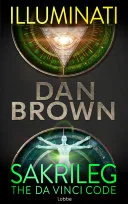
Illuminati & Sakrileg
 76
76

Illuminati & Sakrileg
Dan Brown's "Illuminati & Sakrileg" offers a potent dose of his signature blend of historical puzzle-solving and breathless chase sequences. The resurrection of the Illuminati, a group whose lore has been a staple of conspiracy theory since the 18th century, feels both familiar and perennially intriguing. Brown's strength lies in his ability to make complex symbology accessible, turning academic concepts into plot devices that propel the narrative forward with relentless momentum. However, the rapid-fire pacing, while exhilarating, sometimes sacrifices character depth for plot expediency. A particular strength is the intricate linking of scientific institutions like CERN with ancient religious iconography, as seen in the initial CERN murder scene. While the plot mechanics are expertly handled, the resolution of the Illuminati's grand scheme, particularly the proposed use of antimatter, strains credulity even within the genre's conventions. Despite these minor quibbles, the collection delivers a satisfying, intellectually stimulating thriller experience.
📝 Description
76
Dan Brown's 2026 novel, "Illuminati & Sakrileg," pits Robert Langdon against a resurrected secret society.
"Illuminati & Sakrileg" collects two Robert Langdon thrillers. The first, "Illuminati," begins with the murder of a CERN physicist. Cryptic symbols found on his body signal the return of the Illuminati. Langdon must quickly decode these symbols to stop a disaster planned by the awakened society. The second novel, "Sakrileg" (originally published as "Angels & Demons"), involves a similar race against time. Langdon is drawn into a conflict involving the Vatican and a resurgence of the Illuminati. He must uncover a plot that threatens the Church and uncover the secrets of the ancient organization.
These stories appeal to readers who enjoy mysteries filled with historical conspiracies and religious puzzles. The books combine elements of art history, secret societies, and the ongoing debate between science and faith. Fans of Dan Brown's prior work will recognize the familiar blend of fast-paced action and academic intrigue. The narrative relies on Langdon's ability to interpret symbols and historical references to solve complex threats.
Dan Brown's novels, particularly those featuring Robert Langdon, engage with popular interpretations of historical secret societies like the Illuminati. These narratives often draw on themes found in esoteric traditions, exploring hidden knowledge, symbols, and perceived conflicts between established institutions and clandestine groups. The books tap into a public fascination with conspiracies and the idea that powerful, unseen forces shape events. While fictional, they reflect a broader cultural interest in the lore surrounding groups that allegedly operate outside mainstream awareness, blending historical elements with imaginative storytelling.
💡 Why Read This Book?
• Understand the enduring mythos of the Illuminati, tracing their alleged historical influence and resurgence through Robert Langdon's investigation, providing insight into persistent conspiracy narratives. • Explore the intricate interplay between science and faith, specifically examining how institutions like CERN are woven into a fictionalized battle against ancient secret societies. • Decipher the symbolic language that underpins the narrative, learning how historical symbols and religious iconography are reinterpreted as keys to unlocking modern-day threats.
⭐ Reader Reviews
Honest opinions from readers who have explored this book.
❓ Frequently Asked Questions
What historical secret society is central to Dan Brown's 'Illuminati & Sakrileg'?
The book prominently features the Illuminati, an 18th-century Bavarian secret society known for its Enlightenment ideals and alleged opposition to monarchy and religious influence.
What scientific institution plays a key role in the plot?
The European Organization for Nuclear Research, known as CERN, is a central location and plot element, particularly in the "Illuminati" story.
Who is the protagonist investigating these conspiracies?
The protagonist is Robert Langdon, a Harvard University professor of religious iconology and symbology, renowned for his expertise in deciphering ancient symbols.
What is the symbolic significance of the 'Illuminati' title?
The title refers to the Illuminati, symbolizing enlightenment, hidden knowledge, and a clandestine force that operates in the shadows of established power structures.
What is the core conflict in 'Illuminati & Sakrileg'?
The core conflict involves Robert Langdon racing against time to prevent a devastating act of revenge by the seemingly revived Illuminati, using his knowledge of symbols and history.
When was Dan Brown's 'Illuminati & Sakrileg' first published?
The book was first published on January 1, 2026.
🔮 Key Themes & Symbolism
The Resurgence of the Illuminati
The narrative centers on the supposed reawakening of the Illuminati, an 18th-century Bavarian secret society. Brown explores their historical context, their philosophical opposition to traditional power structures, and imagines their continued, albeit clandestine, influence centuries later. The book posits a modern-day threat orchestrated by this group, drawing on lingering popular fascination with their mystique and alleged pursuit of knowledge and control.
Science Versus Faith
A significant theme is the historical and ongoing tension between scientific discovery and religious dogma. The involvement of CERN and its cutting-edge research, particularly concerning antimatter, becomes a focal point where scientific advancement is juxtaposed with the secretive, potentially dangerous agenda of the Illuminati. This conflict questions the ethical boundaries of knowledge and the potential for its misuse.
Symbolism as a Language
Robert Langdon's expertise in symbology is crucial. The book demonstrates how symbols, from ancient religious iconography to scientific diagrams, can be a form of communication and a key to understanding hidden motives. The deciphering of these symbols drives the plot, revealing conspiracies and guiding Langdon through a labyrinth of historical and esoteric clues.
The Power of Hidden Knowledge
The Illuminati are portrayed as guardians and wielders of secret knowledge, aiming to expose perceived truths and disrupt established orders. The book studies the concept of esoteric knowledge and its potential to be both liberating and destructive, depending on who possesses it and for what purpose.
💬 Memorable Quotes
Direct passages from the work, attributed to the author.
“The symbols were not random; they were a language, ancient and deadly.”
— This interpretation highlights the book's core mechanic: the deciphering of symbols. It suggests that the clues Langdon encounters are not mere decorations but a deliberate, encoded message from a dangerous entity.
“Antimatter: the ultimate power, capable of creation or annihilation.”
— This highlights the scientific element central to the plot's climax, presenting antimatter as a double-edged sword representing immense potential for both constructive and destructive purposes.
“History is a story written by the victors, but symbols tell the stories of the silenced.”
— This interpretation speaks to Langdon's role and the book's thematic exploration of hidden narratives, suggesting that official histories can be misleading, while symbolic evidence offers a more authentic, albeit obscured, truth.
“The Vatican guarded its secrets zealously, but the Illuminati sought to expose them all.”
— This captures the high-stakes conflict between powerful institutions, positioning the Illuminati as a force aiming to dismantle the secrecy and authority of religious organizations like the Catholic Church.
💡 Key Ideas
Editorial paraphrase of the work's core concepts — not direct quotes.
They called themselves the Illuminati, seekers of light in a world shrouded by ignorance.
This paraphrased concept frames the Illuminati's self-perception, emphasizing their role as enlightened figures challenging established falsehoods or oppressive systems through the pursuit of knowledge.
🌙 Esoteric Significance
Tradition
The work draws heavily from the Gnostic and Hermetic traditions, emphasizing the pursuit of hidden knowledge ('light') as a means to liberation or power. It echoes Gnostic ideas of a hidden elite possessing superior understanding, opposing a corrupt, established order. The Hermetic principle of 'as above, so below' is implicitly explored through the connection of macrocosmic forces (like antimatter) with micro-level human actions and symbols.
Symbolism
Key symbols include the 'ambigram,' a word or symbol that can be read in multiple orientations, representing duality and hidden meanings. The 'Eye of Providence,' often associated with the Illuminati and Freemasonry, signifies divine oversight and esoteric knowledge. The book also utilizes scientific symbols, such as those related to CERN and antimatter, reinterpreting them within a framework of conspiracy and hidden agendas.
Modern Relevance
Contemporary thinkers and practitioners exploring conspiracy theories, secret societies, and the intersection of ancient symbolism with modern technology often reference Dan Brown's narratives. His work has popularized esoteric concepts for a mass audience, influencing discussions in fields ranging from comparative religion to popular culture analysis. The fictionalized exploration of the Illuminati's potential modern impact continues to resonate with those interested in hidden power structures.
👥 Who Should Read This Book
• Readers fascinated by the historical mystique of secret societies like the Illuminati, seeking a fictional exploration of their alleged modern-day influence and clandestine operations. • Fans of Robert Langdon's previous adventures who enjoy intricate puzzles, art history references, and fast-paced chases through iconic European locations. • Individuals interested in narratives that explore the complex relationship between science, religion, and hidden knowledge, and how these elements can intersect in thrilling plotlines.
📜 Historical Context
Published in 2026, "Illuminati & Sakrileg" arrived at a time when public fascination with historical conspiracies remained potent, fueled by the internet's ability to disseminate information and misinformation rapidly. Dan Brown's work tapped into enduring myths surrounding the Illuminati, a real 18th-century Bavarian society founded in 1776 by Adam Weishaupt, which promoted rationalism and opposed superstition. While the historical Illuminati disbanded by the late 1780s, their legend has been continuously reinterpreted, particularly in the 20th century, often conflated with Freemasonry and accused of orchestrating world events. Brown's fictional revival of the group, set against the backdrop of modern scientific institutions like CERN, reflects a contemporary appetite for narratives that blend esoteric lore with plausible, high-stakes thrillers. The book’s reception likely mirrored that of its predecessors, drawing both praise for its pacing and accessibility and criticism for historical liberties, a common dynamic for works engaging with sensitive historical and religious themes.
📔 Journal Prompts
Robert Langdon's deciphering of the ambigram symbol.
The Illuminati's historical origins versus their fictional resurgence.
The ethical implications of harnessing antimatter, as explored in the narrative.
How the book reinterprets traditional religious symbols within a conspiracy framework.
The portrayal of CERN as a nexus for both scientific progress and potential esoteric conflict.
🗂️ Glossary
Illuminati
A historical Bavarian secret society founded in 1776, advocating Enlightenment ideals and opposing superstition and state abuses. In fiction, often depicted as a shadowy organization manipulating world events.
Robert Langdon
Fictional protagonist created by Dan Brown, a Harvard professor specializing in religious iconology and symbology, known for solving complex historical and symbolic mysteries.
CERN
The European Organization for Nuclear Research, a leading international scientific facility known for particle physics research, including experiments with antimatter.
Ambigram
A design that can be read in multiple orientations, often used in the book as a symbolic representation of duality, hidden meanings, or secret messages.
Antimatter
A substance composed of antiparticles, which annihilates upon contact with ordinary matter, releasing immense energy. It plays an important role in the book's plot as a powerful, dangerous element.
Sakrileg
German for 'sacrilege,' implying blasphemy or violation of something sacred, suggesting a theme of challenging or desecrating religious or established beliefs within the narrative.
Symbolology
The study of symbols and their meanings, a key skill of Robert Langdon, used to unlock historical secrets and decipher complex codes within the story.