 61
61

Kabbalah

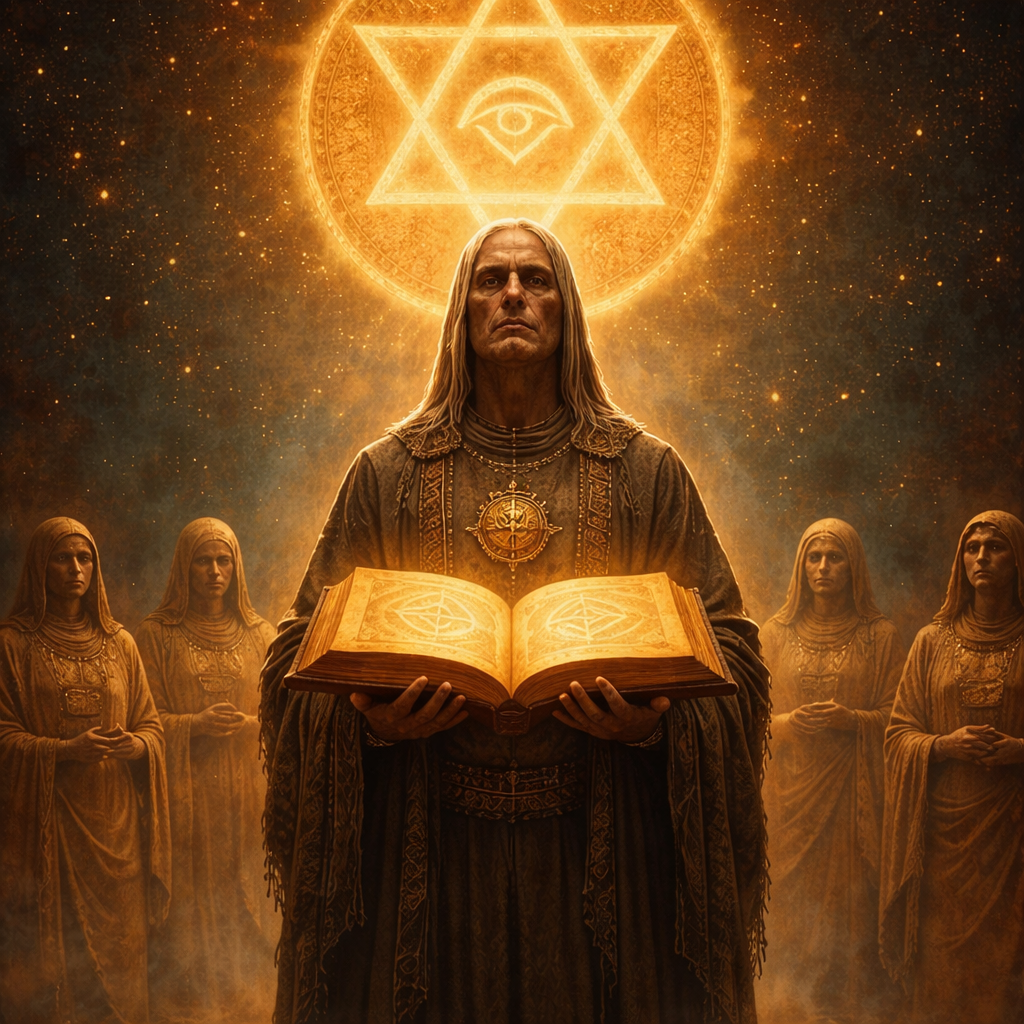

Lorelei Sage (Contemplative Literature Editor) — This is a truly groundbreaking synthesis, bridging the chasm between ancient esoteric wisdom and cutting-edge neuroscience. Arzy and Idel offer a revolutionary lens through which to view Kabbalistic phenomena, illuminating the cognitive architecture that might underpin profound mystical experiences. Their exploration of the brain's role in apprehending divine realities is both intellectually stimulating and deeply resonant for those who seek to understand the mechanisms of spiritual ascent. This work is essential for serious students of mysticism, cognitive science, and anyone fascinated by the profound interconnectedness of consciousness and the cosmos.
📝 Description
Embark on a profound journey into the heart of Kabbalah, not through ancient texts or theological discourse, but via the intricate landscape of the human brain. Shahar Arzy, a distinguished cognitive neuroscientist, and the revered scholar of Jewish mysticism, Moshe Idel, forge an unprecedented alliance. This seminal work transcends conventional approaches, delving into the neurological underpinnings of ecstatic mystical states, revealing how the brain apprehends divine emanations and the architecture of cosmic awareness. Explore the symbolic language of the Sephirot as neural pathways, the Tree of Life as a cognitive map, and the transformative power of Kabbalistic practice as a means of neurobiological evolution. For the seeker yearning to understand the mechanics of transcendence, the scholar thirsting for novel interpretations, and the practitioner desiring a deeper, science-informed connection to the sacred, this book unlocks the esoteric secrets woven into our very neurology. It is an invitation to perceive the divine not just in the heavens, but within the luminous chambers of the mind.
✍️ Author
💡 Why Read This Book?
Uncover the neurological basis of mystical states, demystifying the Kabbalistic experience through a scientific lens. Gain a fresh, unparalleled perspective on ancient Jewish mysticism, bridging the sacred and the scientific. Ideal for seekers, scholars, and practitioners who wish to understand the 'how' behind spiritual transcendence and its manifestation in the human brain.
⭐ Reader Reviews
Lorelei Sage (Contemplative Literature Editor) — This is a truly groundbreaking synthesis, bridging the chasm between ancient esoteric wisdom and cutting-edge neuroscience. Arzy and Idel offer a revolutionary lens through which to view Kabbalistic phenomena, illuminating the cognitive architecture that might underpin profound mystical experiences. Their exploration of the brain's role in apprehending divine realities is both intellectually stimulating and deeply resonant for those who seek to understand the mechanisms of spiritual ascent. This work is essential for serious students of mysticism, cognitive science, and anyone fascinated by the profound interconnectedness of consciousness and the cosmos.
📝 Share your thoughts on this book
Sign in to write a review❓ Frequently Asked Questions
What is Kabbalah?
Kabbalah, meaning 'reception' in Hebrew, is the esoteric tradition of Jewish mysticism that explores the divine nature and the relationship between God and the created universe, often through symbolic texts and practices.
How does neuroscience relate to Kabbalah?
This book proposes that Kabbalistic experiences, such as visionary states and deep meditative insights, can be understood through the cognitive and neurological processes occurring within the human brain.
Who are Shahar Arzy and Moshe Idel?
Shahar Arzy is a renowned cognitive neuroscientist and neurologist, while Moshe Idel is an internationally acclaimed scholar of Jewish mysticism and thought, bringing dual expertise to this unique study.
What are the Sephirot?
The Sephirot, often depicted as the ten divine emanations or attributes of God in Kabbalah, are explored in this work as potential organizational principles or neural patterns within the brain.
Is this book for beginners?
While it offers profound insights, the book is best appreciated by those with a foundational interest in Kabbalah or neuroscience. However, its clear prose makes complex ideas accessible to dedicated newcomers.
🔮 Key Themes & Symbolism
Neurological Foundations of Mysticism
This book posits that the profound subjective experiences described in Kabbalistic literature have tangible correlates within the human brain's architecture and functions. It explores how neural pathways, cognitive processes, and even altered states of consciousness might mirror the symbolic language and conceptual frameworks of Kabbalah, such as the Tree of Life and the divine emanations (Sephirot). The aim is to demystify ecstatic experiences by grounding them in biological reality without diminishing their spiritual significance.
The Kabbalah as a Cognitive Map
Arzy and Idel re-envision Kabbalistic concepts, particularly the Sephirot and the pathways connecting them, as a sophisticated cognitive map or operating system for the human mind. This perspective suggests that engaging with Kabbalistic teachings and practices can potentially reconfigure neural networks, leading to enhanced self-awareness, altered perception, and a deeper understanding of one's place in the cosmos. It's an exploration of how ancient wisdom might offer a blueprint for psychological and spiritual development.
Bridging Esotericism and Science
The core innovation of this work lies in its ambitious attempt to bridge the seemingly disparate worlds of esoteric mysticism and empirical science. By applying the rigorous methodology of cognitive neuroscience to the rich tapestry of Kabbalistic thought, the authors offer a novel interdisciplinary dialogue. This fusion aims to foster a more holistic understanding of human consciousness, spiritual experience, and the enduring quest for meaning, demonstrating that ancient spiritual insights can inform and be illuminated by modern scientific inquiry.
💬 Memorable Quotes
“The brain is a temple, and Kabbalah, a map of its divine chambers.”
— This highlights the book's central thesis: that the intricate structures and functions of the brain can be understood through the symbolic language of Kabbalah, suggesting an internal, neurological path to spiritual realization.
“Divine emanations are not just abstract concepts, but neural echoes.”
— This quote emphasizes the cognitive neuroscience perspective, proposing that the mystical experiences of divine presence might correspond to specific patterns of brain activity and neural processing.
“The Tree of Life, a blueprint for consciousness.”
— This suggests that the fundamental Kabbalistic diagram, the Tree of Life, can be interpreted as a model for the organization and development of the human mind and its potential for spiritual growth.
“To know the Sephirot is to map the self.”
— This implies a profound connection between understanding the divine attributes (Sephirot) and achieving deep self-knowledge, framing Kabbalah as a tool for psychological introspection and self-discovery.
“Ecstasy decoded: the synapse and the soul entwined.”
— This evocative phrase encapsulates the book's endeavor to scientifically analyze mystical ecstasy, suggesting a harmonious interplay between biological processes and spiritual states of being.
🌙 Esoteric Significance
Tradition
This work is deeply rooted in the tradition of Kabbalah, the esoteric branch of Jewish mysticism. It specifically engages with the Lurianic Kabbalah and its sophisticated cosmology, but also broader streams of Kabbalistic thought that explore divine emanations, the nature of creation, and the path to spiritual illumination. The book aims to illuminate these ancient teachings by examining their potential neurological correlates, offering a modern esoteric interpretation.
Symbolism
Key Kabbalistic symbols such as the Ten Sephirot (divine attributes/emanations) and the Tree of Life are reinterpreted not just as metaphysical concepts but as potential organizational principles or neural structures within the brain. The symbolism of divine light, cosmic unity, and the ascent of the soul are explored through the lens of brain function and cognitive processes, revealing deeper layers of meaning.
Modern Relevance
In an age seeking to reconcile scientific understanding with spiritual experiences, this book offers profound modern relevance. It provides a framework for understanding mystical states not as purely supernatural phenomena, but as deeply human experiences rooted in our biology. This can demystify the esoteric for a broader audience and offer practitioners new insights into the mechanisms of their own spiritual journeys, fostering a more integrated understanding of mind, body, and spirit.
👥 Who Should Read This Book
This book is a must-read for a diverse audience. **Scholars of Religious Studies and Jewish Mysticism** will find a groundbreaking new methodology for analyzing Kabbalistic texts and experiences. **Cognitive Neuroscientists and Psychologists** will discover a fascinating case study on the neural basis of consciousness and altered states. **Spiritual Seekers and Practitioners of Meditation** will gain a deeper, science-informed understanding of mystical states and the inner workings of their own minds. Even **Curious General Readers** interested in the intersection of science, spirituality, and ancient wisdom will find this work profoundly illuminating and thought-provoking.
📜 Historical Context
This study emerges in an era of increasing interdisciplinarity, where the perceived divide between science and spirituality is being actively challenged. The late 20th and early 21st centuries have witnessed a surge of interest in consciousness studies, neurotheology, and the scientific exploration of contemplative practices. Within this milieu, the Kabbalah, with its rich history spanning centuries of Jewish mystical thought and its complex symbolic systems, offers a fertile ground for such investigation. The work draws upon a long tradition of Kabbalistic scholarship, exemplified by figures like Moshe Idel, while simultaneously engaging with the rapid advancements in neuroscience, creating a dialogue that is both historically grounded and forward-looking.
📔 Journal Prompts
How might the concept of divine emanations (Sephirot) manifest as patterns of neural activity in your own contemplative practices?
Reflect on a moment of profound insight or transcendence: what physical or cognitive sensations accompanied it?
Consider the Tree of Life as a map for your own personal growth. Where do you see yourself situated on this map currently?
If Kabbalah offers a blueprint for the mind, what aspects of your consciousness do you feel are most receptive to its teachings?
Explore the idea of 'divine light' through the lens of neuroscience. How might the brain perceive or process overwhelming, awe-inspiring stimuli?
🗂️ Glossary
Kabbalah
An esoteric tradition within Judaism that explores the divine nature and the relationship between God and the created universe through mystical interpretation of religious texts and symbolic practices.
Sephirot
The ten divine emanations or attributes of God in Kabbalistic cosmology, often depicted as a series of interconnected vessels or qualities through which divine energy flows into the world.
Tree of Life
A central diagram in Kabbalah representing the structure of the universe and the human psyche, consisting of ten Sephirot connected by 22 paths, symbolizing the divine order and the process of creation.
Cognitive Neuroscience
An interdisciplinary field that studies the biological processes and aspects that underlie cognition, involving the analysis of brain function in relation to mental processes such as perception, memory, and thought.
Ecstatic Experience
A state of intense emotion or spiritual fervor, often characterized by a loss of self-awareness and a feeling of union with a higher power or reality, frequently explored in mystical traditions.