62
62

Heidegger and Kabbalah

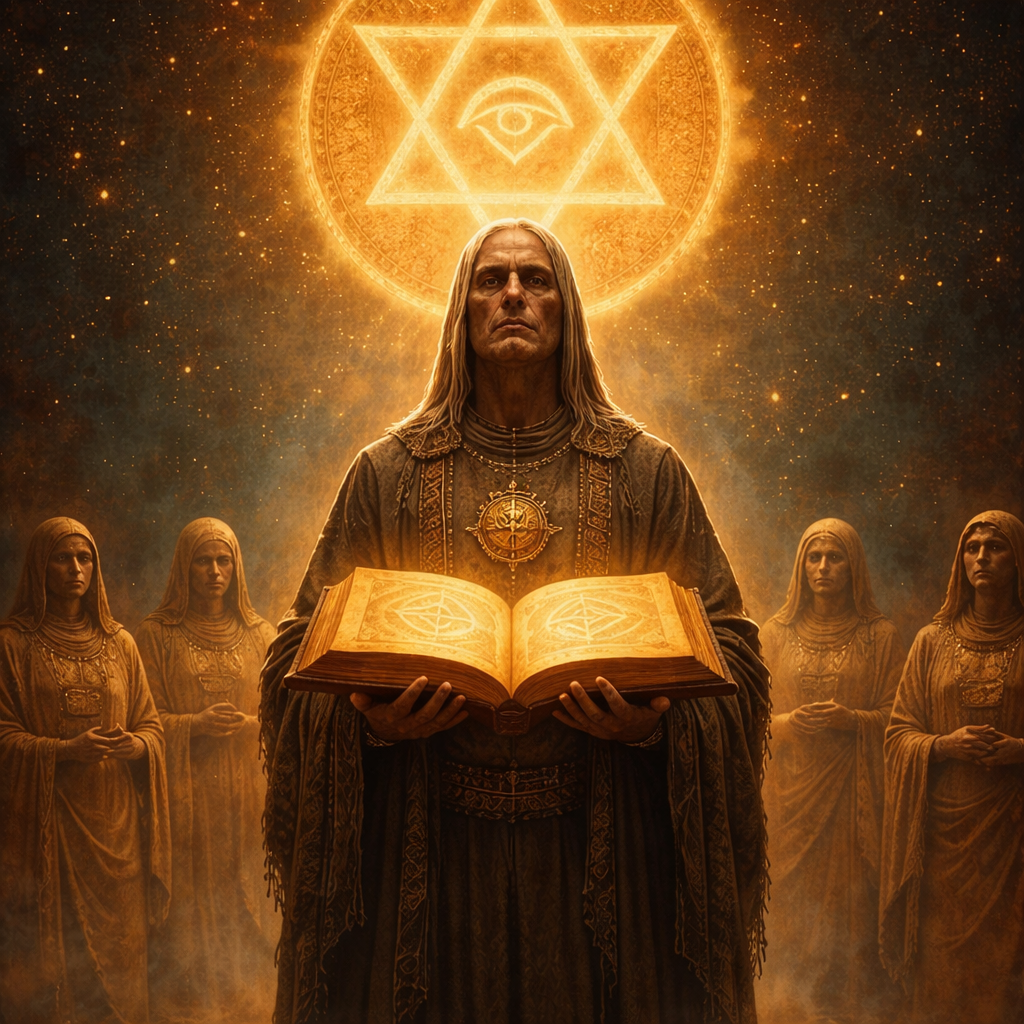

Isolde Whitaker (Sacred Texts Editor): Elliot R. Wolfson's 'Heidegger and Kabbalah' is a tour de force, masterfully bridging the chasm between 20th-century phenomenology and medieval Jewish mysticism. Wolfson’s erudition shines as he reveals startling resonances, particularly concerning the nature of divine presence, the phenomenology of religious experience, and the linguistic structures that shape our understanding of the sacred. He guides the reader through complex philosophical and mystical concepts with clarity and intellectual grace, offering profound insights into the hidden architecture of both Being and the Godhead. This book is essential reading for scholars of philosophy and mysticism, as well as for seekers yearning for a deeper apprehension of the interplay between existential thought and esoteric traditions.
📝 Description
Dive into the profound nexus where the existential inquiry of Martin Heidegger converges with the ancient, shimmering wisdom of Kabbalah. Elliot R. Wolfson, a luminary in Jewish mysticism, meticulously unravels hidden dialogues between these seemingly disparate intellectual landscapes. This work is not merely an academic exercise; it is an invitation to explore the veiled pathways of consciousness, language, and being through the lens of esoteric symbolism. Wolfson illuminates how the Kabbalistic conception of divine effluence and the unfolding of the sefirot can resonate with Heidegger’s exploration of Dasein's temporality and the revelation of Being. Prepare to encounter a rich tapestry of theological depth, philosophical rigor, and mystical insight, designed for the discerning reader who seeks to understand the perennial quest for meaning and the hidden architecture of the cosmos. It is a journey into the heart of esoteric knowledge, where the silence of Being speaks through the intricate language of divine names and primordial emanations.
✍️ Author

Elliot R. Wolfson
See also Woolf, Woolfe, Wolfe, Wolff, Wolfson and Woolfson (especially for family names). Wolfson or Volfson is a Jewish surname, and may refer to: Alice Wolfson, American activist and attorney who specializes in women's health David Wolfson, Baron Wolfson…
💡 Why Read This Book?
Uncover the profound spiritual echoes between existential philosophy and ancient Kabbalistic thought. This book offers a unique lens through which to explore the nature of Being, divine revelation, and the hidden structures of reality. Ideal for scholars, philosophers, and mystics seeking to expand their understanding of esoteric traditions and their surprising connections to modern thought.
⭐ Reader Reviews
Honest opinions from readers who have explored this book.
❓ Frequently Asked Questions
Is prior knowledge of Heidegger or Kabbalah required?
While a foundational understanding enhances the experience, Wolfson's lucid prose makes complex ideas accessible. The book thoughtfully introduces concepts, inviting both initiates and curious newcomers into its profound discourse.
What makes this comparison between Heidegger and Kabbalah unique?
The originality lies in Wolfson's deep dive into shared phenomenological concerns, the nature of language as a vessel for truth, and the existential implications of divine presence, revealing an unexpected philosophical kinship.
What kind of esoteric insights can one expect?
Readers can anticipate explorations into the Kabbalistic concept of emanation (sefirot), divine names, the hiddenness of God, and their parallels with Heidegger's notions of Being, disclosure, and the 'turn' in thought.
How does this book contribute to the study of mysticism?
It offers a novel methodological approach, demonstrating how philosophical frameworks can illuminate mystical texts and how esoteric traditions can offer unique perspectives on enduring philosophical questions about existence and meaning.
Who is the ideal reader for this challenging yet rewarding work?
This book is for the dedicated seeker of wisdom, the rigorous academic, the contemplative practitioner, and anyone fascinated by the profound interplay between philosophy, theology, and the esoteric traditions of humanity.
🔮 Key Themes & Symbolism
The Phenomenology of Divine Presence
This theme delves into how both Heidegger's existential phenomenology and Kabbalistic thought grapple with the elusive nature of divine presence. It examines how Being, in Heidegger's terms, and the divine emanations, the sefirot, in Kabbalah, manifest or conceal themselves within human experience. The focus is on the subjective encounter with the sacred and the linguistic structures that attempt to articulate the ineffable, revealing a shared concern for how truth and divinity are disclosed.
Language as a Portal to Being and the Divine
Here, the exploration centers on the profound role of language in both traditions. Wolfson investigates how Kabbalistic traditions imbue Hebrew letters and divine names with potent creative and revelatory power, acting as conduits to the divine realm. This is juxtaposed with Heidegger's emphasis on language as the 'house of Being,' crucial for understanding existence. The theme highlights how the carefully chosen word, the sacred utterance, and philosophical discourse can both veil and unveil ultimate realities.
Theopoetic Dimensions of Existence
This theme examines the 'poetic' dimension inherent in both philosophical and mystical discourse when confronting fundamental questions of existence and divinity. It explores how Kabbalah, through its rich symbolism and narrative structures, offers a 'theopoetic' vision of creation and redemption. Similarly, Heidegger's later philosophy, with its focus on the poetic dwelling of man, suggests an alignment. The theme probes how both traditions engage in a form of creative articulation that seeks to bridge the human and the divine, the temporal and the eternal.
💬 Memorable Quotes
“Language is the house of Being.”
— A core Heideggerian concept, suggesting language is not just a tool but the very medium through which existence is revealed and understood. It implies a deep connection between our linguistic structures and our apprehension of reality.
“The concealment of God is as revelatory as His presence.”
— This quote speaks to the apophatic aspect often found in mystical traditions, including Kabbalah, and resonates with Heidegger's ideas of Being's withdrawal. It highlights how absence can paradoxically point towards a profound, albeit hidden, truth.
“Emanation is the divine unfolding into being.”
— A fundamental Kabbalistic tenet, describing the process by which God (Ein Sof) manifests in the world through the sefirot. This concept offers a framework for understanding creation and the divine presence within the created order.
“Dasein's temporality is its openness to Being.”
— Heidegger's notion that human existence (Dasein) is fundamentally temporal, and this very temporality is what allows for an encounter with the mystery of Being. It frames existence as a dynamic process of disclosure.
“The shattering of the vessels is the birth of the world.”
— Referring to the Kabbalistic myth of the 'shattering of the vessels' (Shevirat HaKelim), this quote signifies the tragic yet necessary event that allows for the dispersion of divine light into the material world, making existence possible.
🌙 Esoteric Significance
Tradition
The primary esoteric tradition explored is Kabbalah, the mystical interpretive tradition of Judaism. It delves into its complex cosmology, the doctrine of divine emanations (sefirot), the nature of God (Ein Sof), the mystical significance of Hebrew letters and divine names, and the processes of revelation and redemption. Wolfson positions Kabbalah not merely as a theological system but as a profound esoteric path to understanding the hidden architecture of reality and the divine presence within it.
Symbolism
Central to the esoteric significance are the rich symbolic systems of Kabbalah, such as the Tree of Life, the sefirot, and the divine names. These symbols are not treated as mere allegories but as potent vehicles for apprehending higher realities and the divine process of creation. Wolfson examines how these symbols function as a language of the sacred, offering a framework for understanding the relationship between the finite and the infinite, the manifest and the hidden, and the human journey towards divine consciousness.
Modern Relevance
The modern relevance lies in its demonstration that ancient esoteric wisdom can profoundly inform and challenge contemporary philosophical thought. By drawing parallels between Kabbalistic concepts and Heidegger's existentialism, the book suggests that these traditions offer vital perspectives on perennial questions of meaning, consciousness, language, and our place in the cosmos. It provides tools for contemporary seekers and scholars to engage with mystical traditions in a rigorous, intellectual, and spiritually enriching manner, offering pathways to deeper self-understanding and cosmic awareness.
👥 Who Should Read This Book
This book is a treasure for the dedicated scholar of philosophy or religious studies, offering a sophisticated comparative analysis. It is essential for students and practitioners of Kabbalah seeking to deepen their understanding of its philosophical underpinnings and interfaith connections. Seekers of wisdom who are drawn to the profound questions of existence, consciousness, and the divine will find a rich tapestry of thought to explore. Even those new to either Heidegger or Kabbalah, but possessing an intellectual curiosity for the esoteric and the philosophical, will find this work a challenging yet immensely rewarding journey into the heart of mystical thought.
📜 Historical Context
This work emerges from the mid-to-late 20th century intellectual milieu, a period marked by profound engagement with existentialism and phenomenology, particularly the seismic influence of Martin Heidegger. Simultaneously, there was a growing scholarly and spiritual interest in esoteric traditions, including the Kabbalah, which had been re-examined and re-contextualized by scholars like Gershom Scholem. Wolfson's endeavor is situated within this fertile ground, where thinkers sought to reconcile modern philosophical inquiries with ancient wisdom. The era was characterized by a desire to move beyond positivism and materialism, looking for deeper meaning in human existence and the cosmos. This book represents a sophisticated dialogue born from this intellectual ferment, bridging continental philosophy and Jewish mysticism in a way that was both groundbreaking and deeply resonant with the spiritual quests of the time.
📔 Journal Prompts
How does your understanding of 'Being' align with or diverge from Kabbalistic concepts of divine emanation?
In what ways can language be considered a 'house' for your personal sense of truth or divinity?
Reflect on a moment where a sense of absence or 'concealment' led you to a deeper understanding.
Consider the 'shattering' of a personal belief or expectation. How did this lead to new growth or understanding?
How do the symbols of your own spiritual or philosophical path function as gateways to deeper meaning?
🗂️ Glossary
Ein Sof
The Kabbalistic concept of the Infinite, Unknowable God. It represents the primordial, absolute divine essence that is beyond all comprehension and manifestation before the process of emanation begins.
Sefirot
The ten divine emanations or attributes through which Ein Sof reveals itself and creates the universe. They are often depicted as a diagram known as the Tree of Life, representing a hierarchy of divine energies.
Dasein
A key term in Heidegger's philosophy, referring to 'being-there' or human existence. It emphasizes the existential nature of human beings, characterized by their relationship to time, death, and the world.
Phenomenology
A philosophical approach that studies consciousness and phenomena as they appear, without presupposing prior theoretical assumptions. It seeks to describe the essential structures of experience.
Apophatic Theology
A theological approach that defines God by what He is not, rather than what He is. It emphasizes the unknowable and transcendent nature of the divine, often found in mystical traditions.