Birth in Kabbalah and Psychoanalysis
 62
62

Birth in Kabbalah and Psychoanalysis


Ophelia Vance (Mystical Literature Reviewer) — Ruth Kara-Ivanov Kaniel’s 'Birth in Kabbalah and Psychoanalysis' is a monumental achievement, bridging seemingly disparate worlds with breathtaking erudition. Kaniel offers a rare glimpse into the Kabbalistic understanding of creation as a continuous, dynamic process, mirroring psychoanalytic theories of individuation. The author’s ability to articulate complex mystical concepts with clarity and depth is remarkable, making this work accessible yet profoundly challenging. It is a vital resource for anyone seeking to understand the spiritual underpinnings of birth, both literal and metaphorical, and its implications for personal transformation. An indispensable addition to the esoteric scholar's library.
📝 Description
62
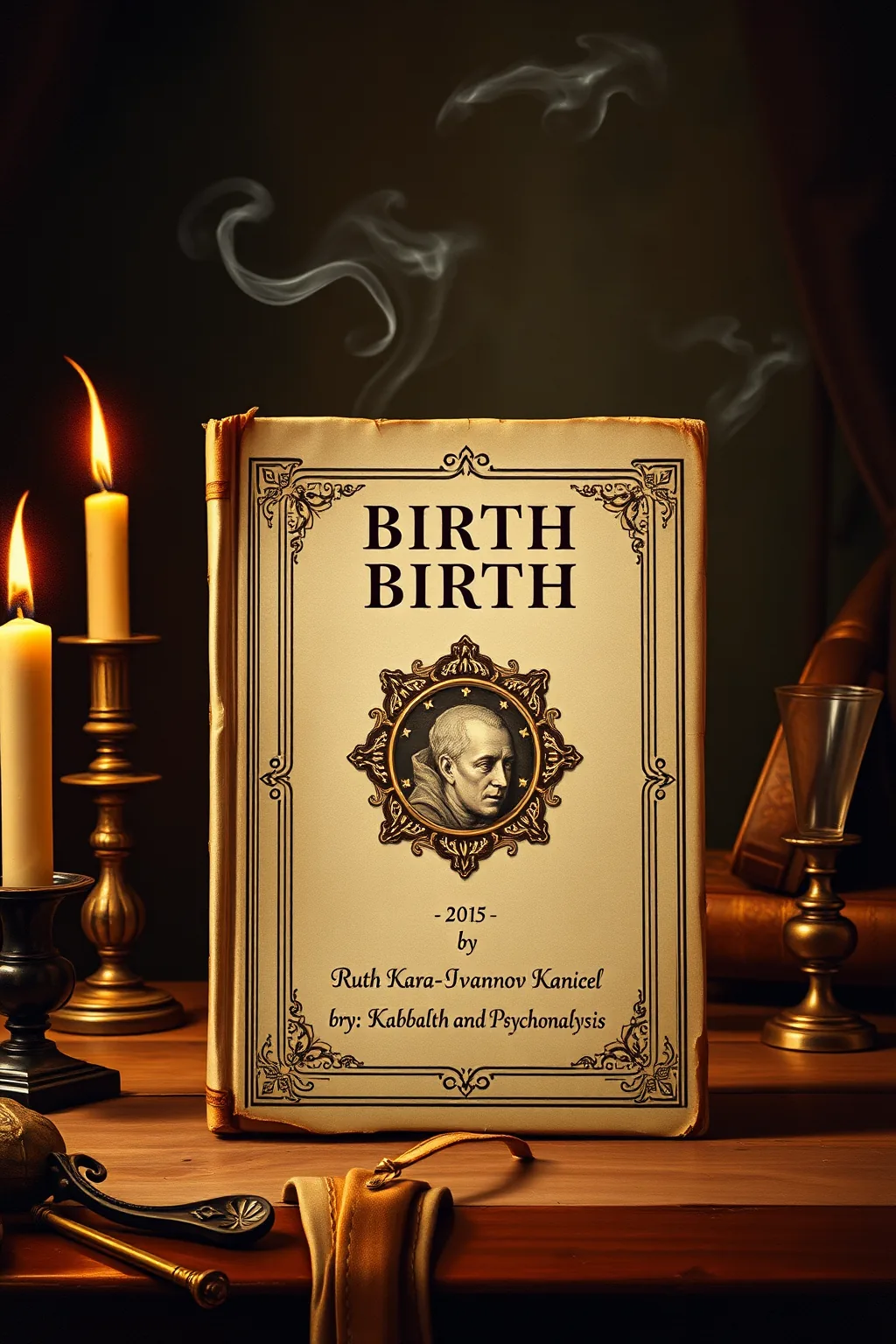
Ruth Kara-Ivanov Kaniel's 2007 book connects Kabbalistic creation myths with psychoanalytic theories of birth.
Ruth Kara-Ivanov Kaniel's book examines the concept of birth as it appears in Kabbalistic thought and psychoanalytic theory. The author draws parallels between the Kabbalistic idea of divine emanation, the Sefirot, and psychoanalytic understandings of the unconscious mind. Kaniel looks at how ancient Jewish mystical texts discuss creation and transformation, relating these ideas to the emergence of consciousness.
The work positions birth not simply as a biological event but as a spiritual metamorphosis. It discusses archetypal forces involved in genesis and the relationship between the individual and the divine. The book aims to provide a new perspective on birth, the self, and the universe through this comparative approach.
This work is situated within the study of Jewish mysticism, specifically Kabbalah, which uses symbolic language and allegorical interpretations to describe God, creation, and the human soul. It engages with concepts like the Sefirot, the ten divine emanations that form the structure of the divine and the cosmos. By juxtaposing these ideas with psychoanalytic concepts, Kaniel places the book in a unique position within esoteric studies, bridging ancient mystical frameworks with modern psychological thought.
💡 Why Read This Book?
Uncover the mystical genesis of life through the lens of Kabbalah and psychoanalysis. This book reveals the profound spiritual symbolism of birth, connecting ancient Jewish wisdom with modern psychological understanding. Ideal for spiritual seekers, Kabbalah students, and those interested in the metaphysical aspects of human experience who wish to explore the deepest origins of consciousness and transformation.
⭐ Reader Reviews
Honest opinions from readers who have explored this book.
❓ Frequently Asked Questions
What is the core connection between Kabbalah and psychoanalysis in this book?
The book explores how Kabbalistic concepts of divine emanation and creation resonate with psychoanalytic theories of the unconscious mind, ego development, and the transformative nature of birth and individuation.
Is prior knowledge of Kabbalah required?
While beneficial, extensive prior knowledge is not strictly necessary. The author provides clear explanations of key Kabbalistic principles relevant to the discussion, making it accessible to dedicated newcomers.
What kind of birth is discussed?
The book examines both the literal, physical birth and its profound metaphorical and spiritual implications, exploring birth as a symbol of consciousness emergence, renewal, and spiritual awakening.
Who is the intended audience for this book?
This book is intended for students of Kabbalah, psychoanalysis, comparative religion, mysticism, and anyone interested in exploring the spiritual dimensions of human existence and the origins of consciousness.
What esoteric traditions are primarily explored?
The primary esoteric tradition is Kabbalah, specifically its mystical and cosmological dimensions, integrated with insights from Freudian and post-Freudian psychoanalysis.
🔮 Key Themes & Symbolism
The Kabbalistic Conception of Creation
This theme examines the Kabbalistic understanding of creation not as a singular event, but as a continuous process of divine emanation and unfolding. It explores the Sefirot, the ten divine attributes or emanations, as archetypal forces that govern the universe and the human soul. The text examines how these emanations symbolize the journey from the unmanifest divine to the manifest world, providing a rich framework for understanding genesis and transformation from an esoteric perspective.
Psychoanalytic Echoes in Mystical Birth
Here, the focus shifts to the striking parallels between Kabbalistic birth symbolism and core concepts in psychoanalysis. The book investigates how the ego's emergence, the development of the psyche, and the process of individuation can be seen as mirroring the Kabbalistic journey of creation. It explores archetypal birth imagery within both traditions, revealing how the unconscious mind and the spiritual journey share profound symbolic language regarding emergence, separation, and self-discovery.
Birth as Spiritual Metamorphosis
This central theme posits birth as a potent metaphor for spiritual awakening and transformation. Beyond the physical act, the book interprets birth as the emergence of consciousness, the shedding of old selves, and the entry into a new state of being. It connects the primal experience of birth with the ongoing spiritual quest for self-realization and union with the divine, framing it as a universal, albeit often hidden, mystical rite of passage.
💬 Memorable Quotes
Direct passages from the work, attributed to the author.
“Psychoanalysis maps the descent, Kabbalah charts the ascent.”
— This highlights the complementary nature of the two disciplines, with psychoanalysis exploring the depths of the psyche and Kabbalah offering pathways to spiritual transcendence and divine connection.
“Every birth is a whispered echo of the primordial creation.”
— This evokes the idea that each new life is a re-enactment of the universe's genesis, carrying within it the same divine spark and creative energy that brought all existence into being.
“The infant's cry is the first conscious utterance of the soul's journey.”
— This poetic statement links the physical act of crying at birth to the spiritual awakening of the soul, marking its entry into the world and its path of experience.
“To understand birth is to glimpse the face of the divine.”
— This profound statement elevates the act of birth to a level of ultimate spiritual significance, suggesting that through its mysteries, we can perceive the very essence of the Creator.
💡 Key Ideas
Editorial paraphrase of the work's core concepts — not direct quotes.
The womb is the primal Kabbalistic crucible.
This quote suggests that the physical experience of gestation is a microcosm of the divine creative process, a sacred space where potential is formed and consciousness begins its journey.
🌙 Esoteric Significance
Tradition
The primary esoteric tradition explored is Kabbalah, the mystical dimension of Jewish mysticism. This tradition offers a complex cosmology and a map of divine emanations (Sefirot) that are interpreted as fundamental principles of existence. The book examines Kabbalistic concepts of creation, divine consciousness, and the interconnectedness of all things, presenting them not as abstract philosophy but as living, dynamic forces relevant to human experience and spiritual development.
Symbolism
The book meticulously unpacks the detailed symbolism associated with birth within the Kabbalistic framework. This includes the womb as a divine crucible, the process of separation from the divine source as a cosmic birth, and the emergence of the individual soul as a manifestation of divine light. It also explores how these symbols find resonance in psychoanalytic imagery, such as the unconscious as a primordial sea and the ego's development as a form of emergence from a state of undifferentiation.
Modern Relevance
In an era often characterized by fragmentation and existential questioning, 'Birth in Kabbalah and Psychoanalysis' offers a profound framework for understanding human existence as a continuous process of creation and transformation. It provides tools for introspection, encouraging readers to see their own life journeys, challenges, and moments of insight as part of a larger spiritual narrative. The book's synthesis of ancient wisdom and modern psychology offers a path towards deeper self-understanding, spiritual integration, and a more meaningful connection to the world.
👥 Who Should Read This Book
This book is a treasure for several distinct groups. For **seekers of spiritual wisdom**, it offers a profound re-framing of birth as a mystical event, providing new perspectives on life's origins and transformations. **Students of Kabbalah** will find a unique and insightful application of its principles, bridging ancient texts with contemporary psychological thought. **Psychoanalysts and psychotherapists** may discover useful parallels and new conceptual tools for understanding the deep archetypal patterns in their clients' lives. **Scholars of comparative religion and mysticism** will appreciate the sophisticated interdisciplinary approach. Ultimately, anyone drawn to the profound mysteries of existence, consciousness, and the spiritual journey will find this work deeply rewarding.
📜 Historical Context
Published in the late 20th century, 'Birth in Kabbalah and Psychoanalysis' emerges from a period of intense interdisciplinary dialogue, where scholars and thinkers sought to bridge the perceived divides between ancient mystical traditions and modern scientific and psychological thought. The late 20th century saw a burgeoning interest in the esoteric, particularly Kabbalah, fueled by counter-cultural movements and a growing dissatisfaction with purely materialistic worldviews. Simultaneously, psychoanalysis, having established itself as a dominant force in understanding the human psyche, was also undergoing evolution, with new interpretations and applications emerging. Ruth Kara-Ivanov Kaniel's work is a product of this fertile intellectual ground, offering a sophisticated synthesis that respects the integrity of both Kabbalistic wisdom and psychoanalytic theory, demonstrating their profound and often overlooked resonances.
📔 Journal Prompts
Reflect on your own birth experience, or the birth of a loved one. What spiritual or symbolic meanings emerge when viewed through the lens of Kabbalistic creation?
How does the concept of 'divine emanation' resonate with your understanding of your own consciousness and individuality?
Consider a significant personal transformation or 'rebirth' you have experienced. How did this process mirror the themes of emergence and individuation discussed in the book?
Explore the symbolism of the 'womb' in your life, both literally and metaphorically. What does this space represent for potential, creation, and containment?
If creation is a continuous process, what role do you believe you play in the ongoing unfolding of the universe or your own personal reality?
🗂️ Glossary
Sefirot
In Kabbalah, the ten divine attributes or emanations through which God reveals Himself and creates the universe. They represent a pathway from the infinite divine to the manifest world, forming a divine blueprint.
Ein Sof
The Kabbalistic concept of the 'Infinite' or 'Without End,' representing God in His absolute, unknowable, and transcendent essence before any emanation or creation.
Tzimtzum
A Kabbalistic concept describing God's 'contraction' or 'withdrawal' to create a void, making space for the creation of the universe and free will. It is the initial act of creating separation.
Individuation
A central concept in Jungian psychology referring to the lifelong process of psychological development by which a person becomes an individual, a whole, integrated self, distinct from the collective unconscious and societal pressures.
Archetype
In Jungian psychology, a primordial, universal pattern or image that is part of the collective unconscious, influencing human behavior and understanding, often manifesting in myths, dreams, and symbols.
This book appears in 1 collection
🔮 Readers Also Liked
Browse all →









More by Ruth Kara-Ivanov Kaniel
All books →
From the “Kabbalah” Collection
View all →






More Free Kabbalah & Jewish Mysticism Books
View all →