Kabbalah
 80
80

Kabbalah
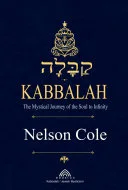
Nelson Cole and Luiz Santos's "Kabbalah" attempts to demystify a complex system of Jewish mysticism, positioning it as a universal map of existence. The authors succeed in presenting the Tree of Life and its associated Sephirot with a clarity that might appeal to newcomers. However, the work occasionally falters in its ambition to be both a scholarly treatise and a spiritual portal, sometimes sacrificing depth for accessibility. A notable strength lies in the section discussing the concept of *Tzimtzum*, the divine contraction, which is explained with a thoughtful analogical approach. A limitation is the tendency to present interpretations as definitive rather than acknowledging the vast diversity of Kabbalistic thought. The book's interpretation of the ten Sephirot as distinct stages of divine consciousness offers a solid framework for contemplation. Ultimately, "Kabbalah" serves as an introductory gateway, though seasoned practitioners may find it a starting point rather than a final destination.
📝 Description
80
Cole and Santos's Kabbalah details a universal code underlying existence and the human spirit.
This book by Nelson Cole and Luiz Santos presents Kabbalah as a framework for understanding the hidden structures of the cosmos and the human spirit. It posits that a universal code underpins all existence, aiming to clarify the soul's purpose and its link to the infinite. The authors frame Kabbalah not just as an academic subject, but as a practical method for perceiving deeper layers of reality and the forces that shape it.
Readers will encounter core Kabbalistic concepts such as the Tree of Life, its divine emanations, and the pathways that connect them. The work examines the significance of Hebrew letters as fundamental elements in creation and traces the soul's progression through various spiritual stages. Cole and Santos frequently use allegorical language to communicate abstract spiritual truths, making complex mystical ideas more approachable. The book is suited for those curious about symbolic language and ancient wisdom systems.
Cole and Santos's work is situated within the historical currents of Kabbalistic scholarship and practice. This tradition saw renewed interest and reinterpretation in the late 19th and early 20th centuries, influenced by figures like Eliphas Lévi and Gershom Scholem. The book draws on centuries of interpretation, aiming to translate these complex mystical ideas for a modern readership. It acknowledges the lineage of thought that sought to uncover the esoteric underpinnings of the universe and the human spirit.
💡 Why Read This Book?
• Gain an understanding of the Sephirot, the ten divine emanations as described in the Kabbalah, and their symbolic representation on the Tree of Life, offering a unique cosmological framework. • Explore the concept of *Ein Sof*, the Infinite, and how the Kabbalistic system maps the manifestation of the divine from this unknowable source into the created worlds. • Learn about the significance of Hebrew letters within Kabbalistic cosmology, understanding their role as building blocks of reality and tools for spiritual ascent.
⭐ Reader Reviews
Honest opinions from readers who have explored this book.
❓ Frequently Asked Questions
When was "Kabbalah" by Nelson Cole and Luiz Santos first published?
The book "Kabbalah" by Nelson Cole and Luiz Santos was first published on February 19, 2025. This recent publication aims to present ancient Kabbalistic wisdom for a modern readership.
What is the primary focus of the book "Kabbalah"?
The book focuses on Kabbalah as a mystical system, presenting it as a map of the universe and the human soul's journey towards infinity. It explores the hidden architecture of existence and the divine purpose.
Is "Kabbalah" suitable for beginners in esoteric studies?
Yes, the book is designed to be accessible to newcomers interested in mystical traditions and esoteric philosophy. It aims to explain complex concepts in a comprehensible manner for those new to Kabbalah.
What are some key concepts discussed in Nelson Cole's "Kabbalah"?
Key concepts include the Tree of Life, the Sephirot (divine emanations), the nature of *Ein Sof* (the Infinite), and the symbolic meaning of Hebrew letters in creation and spiritual journeys.
Who are the authors of this specific edition of "Kabbalah"?
This edition of "Kabbalah" is authored by Nelson Cole and Luiz Santos. Nelson Cole is credited with the conceptualization and initial work, with Luiz Santos contributing to its development and publication.
Does the book offer practical applications of Kabbalistic principles?
While primarily focused on theoretical and philosophical aspects, the book's exploration of symbolic language and cosmic mapping can inspire contemplative practices and a deeper understanding of spiritual concepts for personal growth.
🔮 Key Themes & Symbolism
The Tree of Life
The book elucidates the Kabbalistic Tree of Life, presenting it as a diagram of divine emanation and spiritual ascent. Each of the ten Sephirot is explored, detailing its unique attributes and its place within the cosmic order. The interconnected pathways between the Sephirot are also discussed, highlighting their role in the soul's journey and the manifestation of reality. The Tree serves as a central metaphor for understanding the divine structure of the universe and the human psyche.
The Infinite and Manifestation
Central to the work is the concept of *Ein Sof*, the Infinite, described as the ultimate, unknowable divine source. The book traces the Kabbalistic understanding of how existence emanates from this boundless void through a series of divine contractions (*Tzimtzum*) and emanations. This process explains the transition from the unmanifested to the manifested realms, detailing how the structured universe and individual souls arise from the primordial unity.
Symbolic Language of Creation
The authors emphasize the profound role of Hebrew letters and Gematria (numerological interpretation) as fundamental building blocks of creation. Each letter is presented not just as a linguistic symbol but as a conduit of divine energy and a key to understanding cosmic principles. The book suggests that by decoding these symbols, one can gain access to the underlying blueprint of reality and enhance spiritual awareness.
The Soul's Ascent
Kabbalah is framed as a spiritual map for the human soul's journey. The book explores the concept of the soul's descent into physical existence and its potential for ascent back towards its divine origin. This journey is often depicted through the stages represented by the Sephirot on the Tree of Life, with an emphasis on achieving higher consciousness and spiritual reintegration.
💬 Memorable Quotes
Direct passages from the work, attributed to the author.
“The universe is a divine code, waiting to be deciphered.”
— This statement captures the book's premise: that existence is not random but governed by an intelligent, hidden order. It suggests that through study and spiritual practice, particularly Kabbalah, one can access this underlying structure and understand its purpose.
“Each Sephirah is a divine attribute, a step on the ladder to infinity.”
— This highlights the functional aspect of the Sephirot within Kabbalistic thought. They are presented as essential components of God's interaction with the world, and simultaneously, as stages or levels that the soul can ascend through in its spiritual quest.
“Illusion veils the true architecture of being.”
— This refers to the Kabbalistic idea that ordinary perception is limited and often misleading. True reality, the 'divine architecture,' is obscured by sensory experience and egoic identification, requiring esoteric knowledge to penetrate.
“The soul's purpose is to return to its source.”
— This is a fundamental tenet of many mystical traditions, including Kabbalah. It speaks to the inherent drive of the individual consciousness to reconnect with the divine unity from which it originated.
“Wisdom is found not just in knowledge, but in its application.”
— This emphasizes the practical aspect of Kabbalistic study. It suggests that true understanding comes from integrating esoteric principles into one's life and consciousness, not merely accumulating theoretical information.
🌙 Esoteric Significance
Tradition
This work is firmly rooted in the tradition of Jewish Kabbalah, particularly its Lurianic and later esoteric interpretations that gained prominence in Western occultism. It seeks to present Kabbalah as a universal system of spiritual knowledge, aligning with Hermetic and Neoplatonic philosophical currents that have historically influenced its reception outside of traditional Jewish contexts.
Symbolism
Key symbols explored include the Tree of Life, a map of divine emanations and spiritual pathways, and the Hebrew letters, viewed as fundamental forces of creation. The concept of *Ein Sof* (the Infinite) represents the unmanifest divine, while the Sephirot symbolize the successive stages of divine manifestation and interaction with the created world, guiding the soul's journey.
Modern Relevance
Contemporary thinkers in consciousness studies, comparative mysticism, and Western esotericism continue to draw upon Kabbalistic frameworks. This book contributes to that ongoing dialogue by offering accessible interpretations of core concepts, influencing modern spiritual practices that seek to understand the interconnectedness of the cosmos and the inner life.
👥 Who Should Read This Book
• Students of comparative mysticism seeking to understand the theoretical underpinnings of Kabbalah and its relationship to other esoteric traditions. • Individuals interested in exploring the symbolic language of the universe and the soul's potential for spiritual growth and self-discovery. • Seekers of a coherent cosmological map that attempts to explain the relationship between the divine, the cosmos, and human consciousness.
📜 Historical Context
Nelson Cole and Luiz Santos's "Kabbalah" (2025) enters a landscape already shaped by centuries of Kabbalistic study and its modern revival. The 19th and 20th centuries witnessed a significant resurgence of interest, notably through figures like Eliphas Lévi, who integrated Kabbalistic concepts into Western esotericism, and later Gershom Scholem, whose academic scholarship revitalized the field. While Scholem's work focused on historical and textual analysis, often distinguishing between historical Kabbalah and later esoteric interpretations, works like Cole and Santos's aim to bridge this gap for a contemporary audience. This book engages with the tradition that influenced movements such as Theosophy and later New Age spirituality, while also reading through the complexities of its Jewish origins. Its publication in 2025 places it within a continuing global dialogue on mysticism and consciousness.
📔 Journal Prompts
The diagram of the Tree of Life and its ten Sephirot.
The concept of *Ein Sof* as the Infinite.
The symbolic meaning attributed to Hebrew letters in creation.
The soul's journey through the areas of manifestation.
The interplay between divine attributes (Sephirot) and human experience.
🗂️ Glossary
Ein Sof
Literally 'Without End' or 'Infinite'. In Kabbalah, it refers to the absolute, unknowable divine essence beyond all comprehension, the primordial source from which all creation emanates.
Sephirot
The ten divine emanations or attributes through which the Infinite (Ein Sof) manifests and interacts with the created universe. They form the structure of the Kabbalistic Tree of Life.
Tree of Life (Etz Chaim)
A central diagram in Kabbalah representing the structure of the cosmos and the divine emanations. It consists of ten Sephirot connected by 22 pathways, often interpreted as a map for spiritual ascent.
Tzimtzum
A concept, particularly prominent in Lurianic Kabbalah, referring to the divine 'contraction' or withdrawal that makes space for creation to exist, separating the finite from the Infinite.
Gematria
A system of Jewish numerology that assigns numerical values to Hebrew letters. It is used to interpret the deeper meanings of words and texts by finding connections between words with the same numerical value.
Keter
The first Sephirah on the Tree of Life, often translated as 'Crown.' It represents the highest divine will and the closest emanation to the Infinite, embodying pure potentiality.
Malkuth
The tenth and final Sephirah on the Tree of Life, typically translated as 'Kingdom.' It represents the manifest world, the divine presence in the material realm, and the culmination of the emanatory process.