Borges and the Kabbalah

 62
62

Borges and the Kabbalah

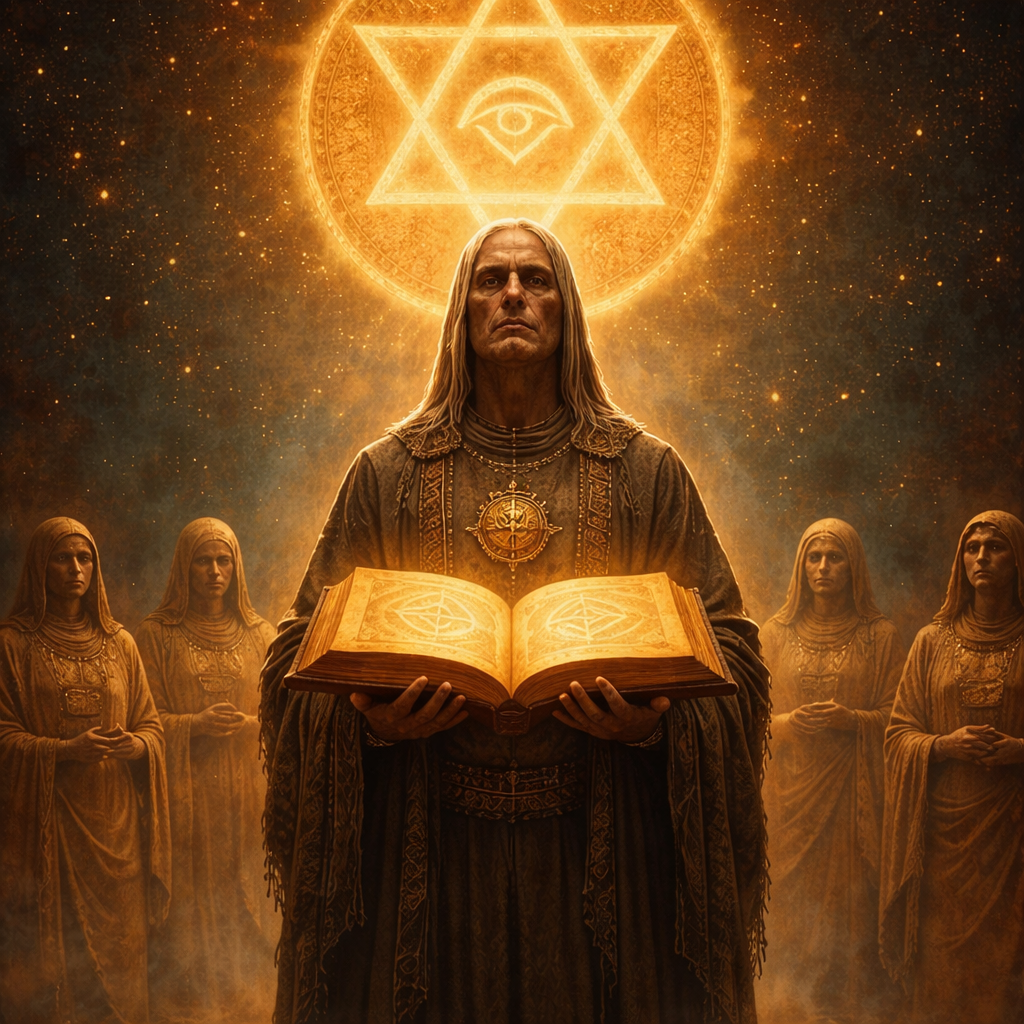

Jaime Alazraki’s 'Borges and the Kabbalah' is a triumph of esoteric scholarship, a luminous exposition that illuminates the profound, often veiled, connection between Jorge Luis Borges’s transcendent fiction and the mystical depths of Kabbalistic thought. Alazraki navigates the intricate symbolism with scholarly rigor and poetic sensibility, revealing how the Argentine master transmuted Kabbalistic concepts—from the Tree of Life to the divine tetragrammaton—into his signature dreamscapes of infinite libraries and mirror-laden realities. This work is indispensable for scholars of comparative mysticism and literary theory, offering a compelling argument for the spiritual underpinnings of Borges’s philosophical puzzles. It is a vital read for anyone seeking to apprehend the deeper currents of consciousness woven into literary genius.
📝 Description
62
Jaime Alazraki's 1992 study connects Jorge Luis Borges's fiction to Kabbalistic thought.
Jaime Alazraki's book examines the influence of Kabbalah on the writings of Jorge Luis Borges. Published in 1992, the study traces how elements of Jewish mysticism appear in Borges's narratives. Alazraki analyzes Borges's use of symbolism, his cyclical views of time, and his philosophical inquiries, showing their parallels with Kabbalistic concepts such as the Sephirotic Tree and the Ein Sof.
The work argues that Borges's fiction engages with fundamental questions about infinity, reality, and creation, often through a lens informed by these esoteric traditions. Alazraki deciphers the connections between Borges's literary constructions and the pursuit of divine knowledge. The book is not just about literary analysis but also about the metaphysical structures within literature and the links between different intellectual fields.
This book situates itself within the study of esoteric traditions as they intersect with literature and philosophy. It specifically addresses the influence of Kabbalah, a Jewish mystical tradition focused on understanding the divine nature and the creation of the universe through symbolic interpretation. Alazraki's work highlights how these ancient mystical frameworks can inform modern literary expression, suggesting a continuity of inquiry into existence and consciousness across different cultural and historical contexts.
💡 Why Read This Book?
This book is essential for those who perceive the universe as a text to be deciphered. It offers a profound lens through which to re-examine Borges's labyrinthine narratives, revealing the hidden Kabbalistic architecture that underpins his explorations of infinity, time, and consciousness. Ideal for seekers of hidden knowledge, literary scholars, and anyone fascinated by the intersection of mysticism and modern literature.
⭐ Reader Reviews
Honest opinions from readers who have explored this book.
❓ Frequently Asked Questions
Does the book require prior knowledge of Kabbalah?
While familiarity with Kabbalistic concepts enriches the reading, Alazraki’s clear exposition makes the material accessible to newcomers, guiding them through complex ideas with scholarly grace and interpretive insight.
How does this book deepen the understanding of Borges's works?
It reveals the profound esoteric influences that shape Borges's themes of infinity, infinity, the nature of God, and the human quest for knowledge, offering a richer, more metaphysical interpretation of his celebrated fiction.
What specific Kabbalistic elements are explored?
The book delves into concepts such as the Sefirot, the Ein Sof, the divine names, gematria, and the cyclical nature of creation, demonstrating their pervasive presence in Borges's literary output.
Is this book suitable for literary scholars?
Absolutely. It provides groundbreaking critical analysis, offering new avenues for understanding Borges’s intellectual and spiritual heritage, and strengthening the case for his engagement with esoteric traditions.
Can practitioners of mysticism benefit from this book?
Yes, practitioners will find resonance in Alazraki's exploration of symbolic systems and the underlying search for divine unity, offering a unique perspective on how these ancient ideas manifest in contemporary literature.
🔮 Key Themes & Symbolism
The Labyrinth of Infinity
Explore how Borges, through his masterful prose, constructs infinite bibliothecas and cyclical time, mirroring Kabbalistic notions of the boundless divine and the eternal return. This theme explores the metaphysical implications of endlessness, the nature of reality as a divine projection, and the human struggle to comprehend the incomprehensible, drawing parallels with the Kabbalistic quest for understanding the Ein Sof, the infinite and unknowable Godhead.
Symbolism and Divine Names
Uncover the intricate web of symbols and hidden meanings within Borges's narratives, akin to the gematria and mystical interpretations of divine names in Kabbalah. Alazraki illuminates how Borges employs language and imagery not merely for narrative effect, but as conduits to deeper spiritual truths, exploring the power of the word and the resonant frequencies of sacred nomenclature that echo the Kabbalistic pursuit of the divine essence.
The Gnostic Echo in Borges
Investigate the subtle yet pervasive Gnostic undertones in Borges's work, particularly as they intersect with Kabbalistic thought. This theme examines the concept of the imperfect creator, the illusion of the material world, and the soul's yearning for liberation, drawing connections to the Kabbalistic understanding of creation's complexities and the path towards spiritual illumination and reintegration with the divine source.
💬 Memorable Quotes
Direct passages from the work, attributed to the author.
“The book is a mirror reflecting ancient wisdom.”
— This suggests that Borges's literary creations act as conduits, projecting and reinterpreting the timeless truths found within esoteric traditions like the Kabbalah.
“Infinity is not a number, but a divine attribute.”
— This highlights the philosophical depth of Borges's concept of infinity, positioning it not as a mathematical abstraction but as a fundamental quality of the divine, resonating with Kabbalistic cosmology.
“Every word carries the weight of creation.”
— Emphasizes the power and significance of language in Borges's work, suggesting that each utterance is imbued with a creative force, akin to the divine utterance that brought forth existence in Kabbalistic lore.
“The labyrinth is the map of the soul's journey.”
— Interprets Borges's recurring motif of the labyrinth as a symbolic representation of the inner spiritual path, the challenges and discoveries encountered on the journey towards self-knowledge and divine connection.
💡 Key Ideas
Editorial paraphrase of the work's core concepts — not direct quotes.
Hidden knowledge lies between the lines.
This quote captures the essence of esoteric interpretation, suggesting that the true meaning and mystical insights are not overtly stated but must be sought and discovered through careful, contemplative reading.
🌙 Esoteric Significance
Tradition
This work is deeply rooted in the tradition of Kabbalah, the esoteric interpretive tradition of Judaism. It explores its complex cosmology, mystical theology, and symbolic language, positing it as a foundational element in understanding the philosophical and spiritual architecture of Jorge Luis Borges's literary universe.
Symbolism
The book meticulously deciphers key Kabbalistic symbols such as the Tree of Life (Sefirot), the divine names, gematria, and the concept of Tzimtzum (divine contraction). Alazraki demonstrates how these symbols are woven into Borges's narratives, serving as a symbolic grammar for his explorations of creation, infinity, and consciousness.
Modern Relevance
In an age often perceived as secularized, 'Borges and the Kabbalah' highlights the enduring relevance of ancient mystical thought. It shows how these profound spiritual concepts continue to resonate and inform contemporary artistic and philosophical endeavors, proving that the quest for ultimate meaning transcends time and cultural boundaries.
👥 Who Should Read This Book
This book is a treasure for the dedicated seeker of hidden wisdom, offering a profound glimpse into the esoteric foundations of one of the 20th century's greatest literary minds. Literary scholars will find groundbreaking critical insights that redefine our understanding of Borges's oeuvre. Mystics and practitioners of esoteric traditions will appreciate the clear articulation of Kabbalistic principles and their manifestation in a secular literary context. For the intellectually curious, it provides a captivating journey into the interconnectedness of philosophy, literature, and the eternal human quest for meaning.
📜 Historical Context
Published amidst a burgeoning global interest in mysticism and esoteric philosophies in the late 20th century, Jaime Alazraki’s 'Borges and the Kabbalah' emerged during a period when scholars and seekers alike were rediscovering the profound spiritual underpinnings of literature. The intellectual climate was ripe for exploring the deep connections between seemingly disparate cultural and philosophical traditions. Borges himself, a voracious reader with a keen interest in metaphysics and theology, provided fertile ground for such an investigation. This work arrived as a crucial bridge, connecting the canonical world of Latin American letters with the ancient, often recondite, wisdom of Jewish mysticism, thereby enriching the understanding of both.
📔 Journal Prompts
How does Borges's use of infinity mirror Kabbalistic concepts of the Ein Sof?
What personal 'labyrinths' in my life represent a journey towards hidden knowledge?
If words carry the weight of creation, what is the most profound word I can choose to 'create' with?
In what ways can I find 'hidden knowledge' within my own experiences or studies?
How does the concept of a 'divine name' resonate with personal identity or purpose?
🗂️ Glossary
Ein Sof
The Kabbalistic term for the infinite, unknowable, and transcendent aspect of God, existing beyond all comprehension and definition before the act of creation.
Sefirot
The ten divine emanations or attributes of God, often visualized as a tree (the Tree of Life), through which God manifests and interacts with the created universe in Kabbalistic cosmology.
Gematria
A system of Jewish numerology that assigns numerical values to Hebrew letters, used to interpret biblical texts and find hidden meanings or connections between words and concepts.
Tzimtzum
The Kabbalistic concept of divine contraction, wherein God 'withdrew' to create a vacuum or space for the existence of the universe and free will.
Tetragrammaton
The four-letter Hebrew name of God (YHWH), considered highly sacred and often the subject of profound mystical contemplation and interpretation within Kabbalah.
This book appears in 1 collection
🔮 Readers Also Liked
Browse all →







From the “Kabbalah” Collection
View all →






More Free Kabbalah & Jewish Mysticism Books
View all →