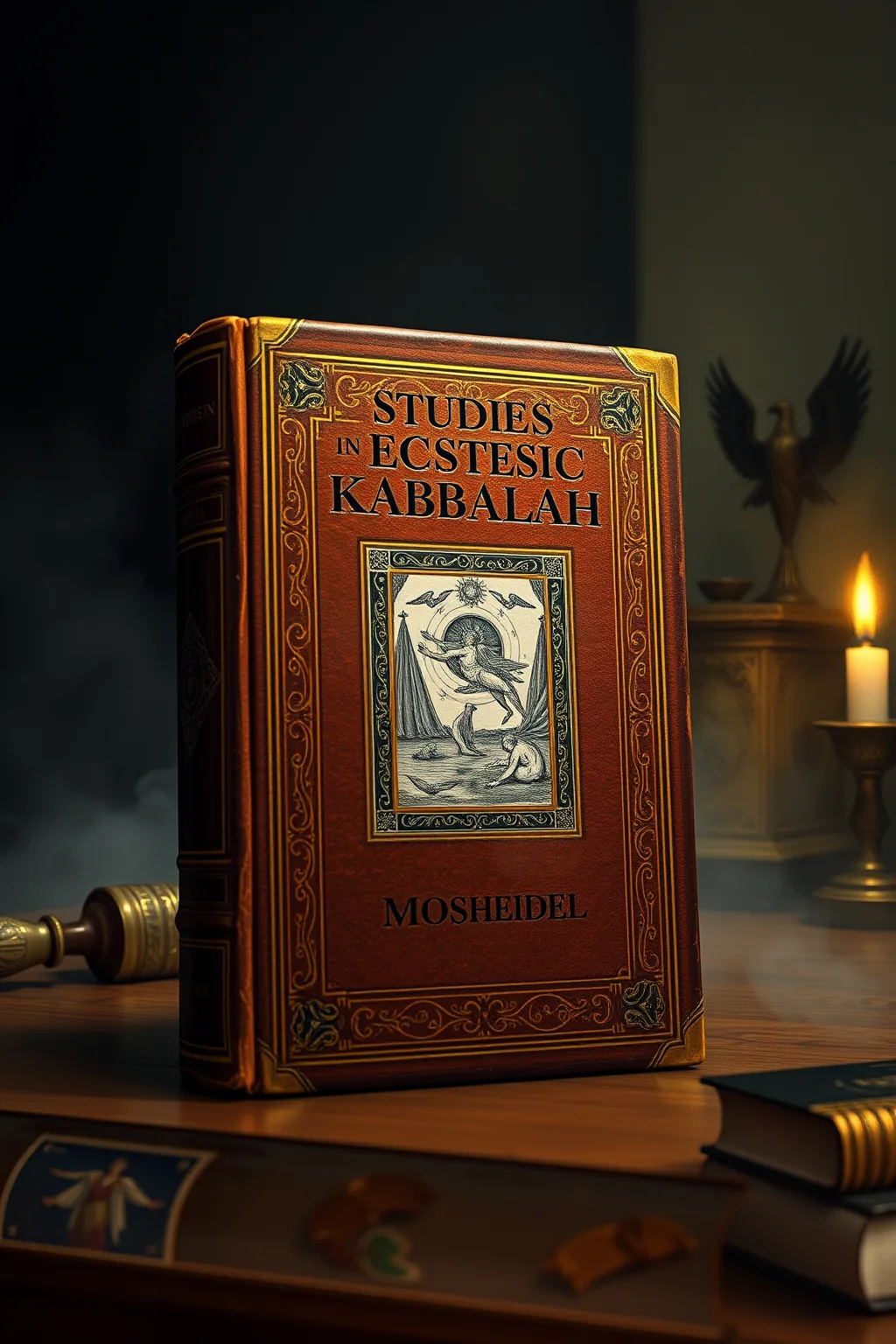
Studies in Ecstatic Kabbalah
 72
72

Studies in Ecstatic Kabbalah
Moshe Idel’s *Studies in Ecstatic Kabbalah* offers a crucial lens through which to view a vibrant, yet often overshadowed, facet of Jewish mysticism. Idel's meticulous scholarship illuminates the concept of ecstatic Kabbalah, highlighting its distinct emphasis on altered states of consciousness and spiritual union. He persuasively argues for the significance of the Spanish Kabbalistic stage and its interaction with Islamic mysticism, particularly Sufism, in shaping these ecstatic currents. The analysis of concentration as a spiritual technique is particularly illuminating, providing practical insight into the experiential core of this tradition. While the dense academic prose might present a challenge for casual readers, its rigor is precisely what makes it invaluable for dedicated scholars. The work’s strength lies in its nuanced exploration of inter-religious influence and its detailed tracing of specific mystical practices. It is an indispensable contribution for anyone seeking to understand the full spectrum of Kabbalistic thought and practice.
📝 Description
72
Moshe Idel's 1988 book examines the ecstatic currents within Kabbalah.
Studies in Ecstatic Kabbalah focuses on a less-examined aspect of Jewish mysticism: the ecstatic dimension. Idel moves past common understandings to investigate the techniques and experiences associated with heightened spiritual states in Kabbalistic practice. The book is aimed at scholars and serious students of Kabbalah, mysticism, and comparative religion, assuming a prior grasp of Jewish mystical ideas.
This work places the development of ecstatic Kabbalah in its historical setting, highlighting its origins in medieval Spain and its links to Islamic mystical traditions. It looks at the period when Kabbalistic thought interacted with its surrounding intellectual environment. Central concepts include mystical union, the function of imagination in spiritual achievement, and the use of concentration as a deliberate spiritual method. Idel traces how Kabbalistic and Sufic elements merged and influenced the wider development of Jewish mysticism.
This study situates a specific strain of Kabbalah, the ecstatic, within the broader history of Jewish mysticism. It connects this tradition to the rich contemplative and devotional practices found in Islamic mysticism, particularly Sufism. By examining the historical and intellectual exchanges between these traditions, Idel illuminates how Kabbalistic thought absorbed and transformed influences, contributing to a more dynamic understanding of Jewish esoteric development.
💡 Why Read This Book?
• Gain specific insights into the techniques of concentration and the role of imagination in achieving ecstatic states, as detailed in the book's examination of spiritual practices. • Understand the intricate historical dialogue between early Spanish Kabbalah and Eastern Muslim mysticism, a key focus of Idel's analysis of the tradition's development. • Explore the concept of mystical union within the context of ecstatic Kabbalah, as presented through the work's investigation of its unique experiential dimensions.
⭐ Reader Reviews
Honest opinions from readers who have explored this book.
❓ Frequently Asked Questions
What is the primary focus of Moshe Idel's *Studies in Ecstatic Kabbalah*?
The book focuses on the ecstatic dimension of Kabbalah, exploring mystical union, the world of imagination, and concentration as spiritual techniques. It emphasizes the historical interaction between Spanish Kabbalah and Muslim mysticism.
When was *Studies in Ecstatic Kabbalah* first published?
The book was first published in February 2012, making it a relatively contemporary scholarly work on historical Kabbalistic traditions.
What is the relationship between Kabbalah and Sufism discussed in the book?
Idel traces the influence of a Kabbalistic-Sufic synthesis on later developments in Jewish mysticism, particularly examining interactions originating in the East, like in the Galilee.
Who is the author, Moshe Idel?
Moshe Idel is a renowned scholar of Jewish mysticism, known for his extensive research into Kabbalah and its historical and philosophical dimensions.
What are some of the core themes explored in the book?
Key themes include the nature of mystical union, the imaginative faculty in spiritual practice, and the use of concentration as a method for achieving elevated consciousness.
Is this book suitable for beginners in Kabbalah?
The book is best suited for those with some prior knowledge of Kabbalah and mysticism due to its scholarly depth and focus on specific historical and theoretical aspects.
🔮 Key Themes & Symbolism
Ecstatic States
The work meticulously details the pursuit of ecstatic states within Kabbalistic traditions, moving beyond intellectual understanding to experiential attainment. It examines how practices like intense concentration and imaginative projection were employed to access altered states of consciousness, facilitating a sense of divine proximity or union. This focus distinguishes it from purely theoretical or ethical interpretations of Kabbalah, emphasizing the subjective and transformative potential of the mystical path.
Kabbalah-Sufi Synthesis
A central argument concerns the significant cross-pollination between Kabbalistic thought, particularly in its Spanish origins, and Eastern Islamic mysticism (Sufism). Idel explores how concepts and practices may have been exchanged, leading to a hybrid tradition that influenced subsequent Jewish mystical developments. This synthesis highlights the intellectual and spiritual interconnectedness of medieval esoteric traditions in the Near East and Mediterranean.
The Role of Imagination
The book examines the crucial function of the world of imagination within ecstatic Kabbalah. It posits that imagination was not merely a passive faculty but an active tool for spiritual ascent, allowing practitioners to visualize divine realms, angelic beings, or even the divine presence. This systematic use of imagination is presented as integral to achieving the desired ecstatic experiences and union.
Concentration as Technique
Idel analyzes concentration as a deliberate spiritual technique central to ecstatic Kabbalah. This is presented as a method for focusing the mind and spirit, enabling the practitioner to transcend ordinary consciousness and engage with higher realities. The text details how specific meditative and contemplative exercises were designed to cultivate this intense focus, leading to profound spiritual insights and experiences.
💬 Memorable Quotes
Direct passages from the work, attributed to the author.
“The original Spanish stage of Kabbalah interacted with Muslim mysticism in the East.”
— This statement underscores the book's thesis on the cross-cultural exchange of mystical ideas, particularly the influence of Sufism on early Kabbalistic developments originating from Spain.
“Mystical union is a central aspiration within ecstatic Kabbalah.”
— This highlights the experiential goal of ecstatic Kabbalah, emphasizing the desire for direct, profound connection with the divine, as a primary objective of its practitioners.
“The world of imagination serves as a key spiritual technique.”
— This points to the active, methodological use of imaginative faculties in Kabbalistic practice to achieve spiritual states and insights, rather than viewing imagination as purely symbolic.
“Concentration functions as a deliberate spiritual discipline.”
— This emphasizes the structured and intentional nature of contemplative practices within this tradition, where focused attention is a tool for spiritual advancement.
“The Kabbalistic-Sufic synthesis impacted later Jewish mysticism.”
— This highlights the long-term legacy of early inter-traditional dialogues, suggesting that the fusion of Kabbalistic and Sufic elements had lasting consequences for the evolution of Jewish esoteric thought.
🌙 Esoteric Significance
Tradition
This work is firmly rooted in the Kabbalistic tradition, specifically examining a current often termed 'ecstatic' or 'prophetic' Kabbalah. It departs from purely theoretical or cosmological interpretations by focusing on direct experiential states and techniques aimed at achieving mystical union. Idel situates this within the broader Kabbalistic lineage, while also highlighting its unique emphasis and historical interactions, particularly with Sufism, which shares common ground in its pursuit of direct divine experience.
Symbolism
The book explores the symbolic range of Kabbalah, particularly concerning the 'world of imagination'. While not detailing specific symbols, it discusses how imaginative projection was used to visualize divine attributes, angelic hierarchies, or mystical encounters. The concept of 'mystical union' itself functions symbolically, representing the ultimate goal of spiritual realization and ecstatic communion with the divine.
Modern Relevance
Contemporary scholars and practitioners interested in the experiential aspects of mysticism, comparative religion, and the history of consciousness find Idel's work highly relevant. Thinkers exploring altered states of consciousness, the phenomenology of religious experience, and the historical interplay between Jewish and Islamic esoteric traditions draw on his insights. The focus on techniques like concentration and the role of imagination continues to inform modern contemplative practices and studies of esoteric psychology.
👥 Who Should Read This Book
• Scholars of Jewish mysticism and comparative religion: To engage with Idel's nuanced analysis of the historical development and inter-religious influences on ecstatic Kabbalah. • Students of esoteric practices: For a deeper understanding of specific techniques like concentration and the function of imagination in achieving altered states of consciousness within a historical mystical framework. • Readers interested in Sufism and its impact: To explore the connections and potential synthesis between Kabbalistic and Sufic traditions, offering a cross-cultural perspective on medieval mysticism.
📜 Historical Context
Published in 2012, *Studies in Ecstatic Kabbalah* emerges from a rich tradition of scholarship on Jewish mysticism, building upon the work of scholars like Gershom Scholem. Idel’s focus on the ecstatic dimension and its interaction with Islamic mysticism places it within ongoing debates about the origins and development of Kabbalah. The era saw continued scholarly interest in esoteric traditions and comparative mysticism. Idel's specific emphasis on the 13th-century Spanish Kabbalistic milieu and its connections to Sufi traditions in the East, particularly in the Galilee, offers a nuanced counterpoint to earlier scholarship that might have emphasized more isolated or purely internal developments within Judaism. The work engages with intellectual currents that stressed syncretism and the permeable boundaries between religious traditions in the medieval Mediterranean world.
📔 Journal Prompts
The concept of mystical union in ecstatic Kabbalah.
The function of the world of imagination in spiritual practice.
Concentration as a deliberate spiritual technique.
The interaction between Spanish Kabbalah and Muslim mysticism.
The legacy of the Kabbalistic-Sufic synthesis.
🗂️ Glossary
Ecstatic Kabbalah
A branch of Kabbalah emphasizing direct, experiential states of consciousness and mystical union, often achieved through techniques like intense concentration and visualization.
Mystical Union
The ultimate goal in many mystical traditions, referring to a state of profound, direct communion or oneness with the divine or ultimate reality.
World of Imagination
In this context, refers to the faculty of imagination used actively and intentionally as a tool for spiritual exploration, visualization, and achieving higher states of consciousness.
Concentration
A spiritual technique involving focused mental and spiritual effort, used to control the mind, deepen awareness, and achieve specific states of consciousness or insight.
Kabbalistic-Sufic Synthesis
The historical and conceptual merging or mutual influence between Kabbalistic (Jewish mysticism) and Sufi (Islamic mysticism) traditions, particularly regarding practices and theological ideas.
Spanish Kabbalah
Refers to the forms and developments of Kabbalistic thought and practice originating in medieval Spain, often characterized by specific theological and mystical orientations.
Galilee
A region in northern Israel, mentioned as a location where interactions between Kabbalistic and Muslim mysticism occurred, influencing later Jewish mystical developments.